30.10.09

A COUPLE FOR HALLOWE'EN

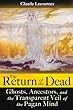
Claude Lecouteux. The Return of the Dead: Ghosts, Ancestors and the Transparent Veil of the Pagan Mind. Inner Traditions, 2009

Lecouteux argues that the 'ghosts' of mainly Norse and German antiquity are not the wispy, ectoplasmic and probably hallucinatory images of modern day ghost stories and psychical research, but very physical revenants. The dead return in, if not quite the "earthly flesh and blood" of the ballad 'The Wife of Usher's Well', then something close to it. A number of old Icelandic and Norse ghost stories are quoted to demonstrate this point. Within these stories and traditions the dead continue to live on in the tomb in some sort of parallel life. These beliefs were challenged by the rise of Christianity which allotted the dead to either heaven or hell, though the idea of the dead coming back from purgatory is never entirely lost.

In the Christian times these revenants were transformed into giants, trolls, fairies, and so forth, to accommodate the new ideology, The folk traditions survive, and though Lecoutreux does not deal to any great extent with modern beliefs, they clearly live on in the folklore of phantom hitchhikers and the like, and in popular culture as the vampires, zombies and vengeful dead of screen and literary horror. We can go further and argue that the trooping dead which seized the living, were transformed into the fairy host such as the sluagh, are now transformed into the hollow, soulless abducting aliens from desolate worlds which are not far removed from the Norse Hel. -- Peter Rogerson

Linda S. Godfrey. Hunting the American Werewolf: Beast Men in Wisconsin and Elsewhere. Trails Books, 2006

As a result of writing The Beast of Bray Road (among the books reviewed here: http://mrobsr.blogspot.com/2009/08/cryptobeast-roundup.html ) Linda Godfrey received many more accounts of bipedal wolf-like animals, and other anomalous canids, not just from Wisconsin, but from all over the States. Many of these seem to come from the proverbial 'sane and sober witnesses' and range from accounts which read like encounters with some kind of paws-and-pelt animal, to others which have a much more apparitional character. These accounts really present in fairly extreme form, the dilemma of apparently credible people reporting what must surely be impossible things, for surely there cannot really be any flesh and blood, paws and pelt upright walking super doggies.

Faced with this dilemma Godfrey, who in her previous book had rather favoured a psychosocial approach, retreats rather into paranormal speculation, much of it based a variety of theologies. For those, like myself, who do not share these theological beliefs, and see little point in trying to interpret one mystery in terms of another, there is really no alternative to psychosocial approaches. For example we might argue that reading about particular alleged phenomena causes people's memories of ambiguous events to alter to include the newly encountered interpretations; or that things seen at night are reconstructed out from vague impressions and shadows, to say nothing of the symbolism of such stories. This of course means that other night visions need to be taken equally non literally. -- Peter Rogerson

26.10.09

MYSTERY BANGS AND A EPISCOPAL MYSTERY

Yes, folks, Ye Olde Northern Echoes is back! The following piece from the Warrington Guardian of 14 October 1914, page 2, nicely illustrates many of the themes that we have set out in Magonia over the years. Remember this is in the opening weeks of the First World War:

Mysterious Noise in the Night
A Muffled Explosion
Excited Talk of Airship Invasion
The Phenomena Explained

Considerable alarm was occasioned in Warrington and district about 9 o clock on Tuesday night by an unusual noise, somewhat resembling a distant explosion.

There was a muffled sound, not repeated, but accounts differ greatly as to the direction from which it came. To some it appeared to come from the Manchester district and this led to rumours that an explosion had occurred at the Partington Iron and Steel Works, Other versions are to the effect that the noise emanated from the neighbourhood of Liverpool. and that mysterious lights had been observed in the sky from that direction.

The occurrence was the subject of general conversation in tram and bus in Warrington this morning and many theories were propounded to as to the cause.The most like explanation, however, is contained in the following, which appears in today's Liverpool Daily Post.

Some concern was occasioned shortly before nine o clock last evening by a brilliant illumination in the sky, which was followed by a loud report. It was observed more especially in the outskirts of the city, and naturally the spectacle was associated with a possible invasion of aircraft.

As it turned out, the explanation of this phenomenon was that a meteor had flashed across the sky, and this supposition is confirmed by astronomical experts, who claim that the description of the mysterious light and the noise of the explosion tallies with a meteoric visitation which might occur at this time of year.

Seen at Frodsham

Reports of the lightning like display reached us from Widnes, Prescot, St Helens, Knowlsey and other out districts and any alarm that may have arisen will be allayed by the theory already mentioned.

A Frodsham man states that at 8.45 the sky to the north was illuminated by a bright light. This was accompanied by a streak of light somewhat resembling a shooting star and was followed by a lousd report. Several people testify to hearing the noise, and agree with regard the time.

In these days it is perhaps natural that people should immediately think of an airship invasion. The Daily Dispatch publishes somewhat fantastic reports about the presence of an aircraft over a large part of Cheshire.

These reports says our contemporary bore a remarkable similarity to their description of the movements of the craft, said to have been seen a little before 9 o clock.

The most detailed description of the aeroplane or airship emanated from mid Cheshire. About the time stated two gamekeepers reported to the police that they had seen an airship or aeroplane showing a red and yellow light, high overhead, and that almost immediately they heard a loud report of an explosion.
About this time also, a signalman on the Cheshire Lines Railway in the same locality reported a similar circumstance. The aircraft at that time is said to have been crossing the West Timperley district.
From the Knutsford area comes a report that an airship carrying a red light fore and a yellow light aft passed over the Mid-Cheshire town and an explosion was heard like that of a big gun.
The Dispatch report is not without a touch of humour. A 'cross headline' gravely informs us that the acocunt has been 'Passed by the Press Bureau'.
Note the confusions of direction and how a meteorite becomes an airship with red fore light and yellow aft light. Are the exagerations from the witnesses or the press? Soon there will be physical evidence. The Warrington Guardian of 21 October reports:
Is it the Meteor? Discovery in a Field near Wigan.
The mysterious explosion which was heard in various parts of Lancashire and Cheshire on Tuesday night of last week has had an interesting sequal. Guardian readers will recollect that the phenomena was attributed to the explosion of a meteor.

It has now been announced that the remains of a meteorite have been found at Appley Bridge near Wigan on a farm occupied by Mr [?] Lyon. Two sportsmen shooting over Mr Lyon's land noticed a hole in the ground [?]feet square and 18 inches deep. In the hole was a curious reddish [mass?] which was later dug out and taken to the farm.

Dr Wilson, of Standish states that it is just like a stone, irregular in character the colour of rusty iron, or of iron which has just been withdrawn from a fire. It was about 2 feet 6 inches in circumferance and weighed about 80lb. Professor Jenkins, curator of the Godlee Observatory, Manchester, has been intensely interested in the discovery, as he was the first to suggest that the brilliant visitor was a stray object from space which had come with range of the earth's sphere of gravitiation."

No doubt if Stanton Friedman or Kevin Randle had been around at the time, this would have become a shot down German airship, and the bodies of the crew secretly buried in Bickerstaffe colliery. There is a picture and description of the meteorite here: http://www.marmet-meteorites.com/id10.html

Now for something completely different

Press reports are indicating that all sorts of treasure and artifacts belonging to the former Archbishop of Canterbury, Dr. Michael Ramsay [left], have turned up in the River Wear, probably put there by Ramsay himself. No one seems to be willing to comment that leaving great treasures in sacred waters was one of the religious traditions of pagan Iron Age Britain. Does this mean the old Archbishop was a closet pagan after all. One has images of him cavorting with sky clad maidens, of the sort who used to accompany Doc Shields, not a pretty sight I'm afraid.
-- Peter Rogerson

25.10.09

AN INFINITE NUMBER OF INFINITIES

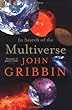
John Gribbin. In Search of the Multiverse. Allen Lane, 2009. -- Reviewed by Peter Rogerson

Time was, about 500 years ago, when the universe seemed simple, there was the earth at the centre, a few miles above it were the sun, moon and planets going about their orbits on celestial tram lines, pushed by angles, Beyond them was the crystal sphere on which the fixed stars were fixed, slowly rotating around, and beyond that heaven with God a bearded old gentleman on a throne with Jesus on his right hand side. In the centre of the earth was Hell, Satan in the exact centre, with Judas sat on his knee.

But gradually things got more complicated, the sun took over the centre of the universe, then it was relegated to just another star in the galaxy, then the galaxy just one among millions in the observable universe. As recounted by Gribbin in the last twenty years or so, things have got a lot more complicated. For many cosmologists the visible universe is just an infinitesimal speck in a humungous, possibly infinite bubble, which in turn is just one of an infinity of bubbles in some region of perpetually inflating space. And these bubbles and this space between them may be just one of an immense number of three (and other) dimensional islands in some higher dimensional superspace. Some of these islands are just separated by a trillionth of a millimetre in this higher dimensional space. If that were not enough there are all the parallel universes, all the possible histories suggested by the many worlds hypothesis of quantum mechanics. So the super multiverse is, at least, all possible histories of all possible universes.

Now this stuff, it has to be said, is not the product of some vision inspired by ingesting a surfeit of some not altogether legal substance, but serious science, backed by serious scientists and based on serious maths, and given the fact that our bit of the universe (i.e. the visible bit) seems unusually adapted to life, generally taken to be the only alternative to something pretty supernatural.

Even within the multiverse, it might be that our universe was created by aliens in some other part of the multiverse. Making universes in the laboratory is something that human beings can imagine, and can even imagine how to do; and it is probable that the sort of super aliens technically capable of doing that will know lots more physics than we can imagine and be doing things that we can no more imagine than a gerbil can imagine building a nuclear reactor. Then universe building will be something really simple, the sort of thing that the alien equivalent of school children will be doing. If the universe was created by aliens then it is much more probable that it will be as a result of a primary school science experiment than the work of main stream science in a civilisation in the narrow time band in which universe building is frontier physics.

Of course, the argument which makes Gribbin suspect that the universe was designed by aliens not too dissimilar from us - that we find the universe comprehensible - is unlikely to be valid. It seems to me that we just comprehend that part of the universe which is just about comprehensible to human beings. As Gribbin confesses, quantum physics really isn't comprehensible to human beings at all, physicists can do the maths, work with it, and build the modern array of electronic goodies with it, but no way can they understand it.

Further wild ideas follow if 'infinity' means infinity in is full mathematical sense and is not just shorthand for some inconceivably vast number. If the universe and multiverse are truly infinite, then everything that is logically possible will happen somewhere, there will be an infinite number of Peter Rogersons, John Rimmers, Gordon Brown's etc., etc. There will be an infinite number of domains almost identical to each other, ones which are slightly different, in an infinite number of worlds, you dear reader will have won the Nobel Prize, been Prime Minister/President/Pope, but also an infinite number of worlds in which you have been killed in a nuclear war, been the victim of a serial killer, and been a serial killer yourself. An infinite number of worlds in which Oliver Twist wrote a novel called Charles Dickens, with an infinite variety of plots.

Even this vast assemblage of all possible histories of all possible universes as described by Gribbin may not be enough, The physicist Mark Tegmark, has suggested there may be an infinite set of total assemblages, all underpinned by quantum mechanics. Beyond even this there might be other realms where quantum mechanics does not apply, where there is a completely different maths, or realms totally without physics and maths. One of the big mysteries is why is there is something rather than nothing. The answer might be that there is both nothing and something, and perhaps infinitely less than nothing, or more than something (whatever that might mean).

Perhaps in a century or two even this might seem as parochial as Dante's universe does to us, or the wild waffle which marked the breakdown of all of our current theories of physics.

Sadly (or perhaps not!!) as far as these theories go, these realms (or most of them) are quite inaccessible, so they are not likely to explain Fortean mysteries. There is one possible exception, though it is not one I have seen physicists speculate on, (and for all I know the science may just not work out). That would be another membrane universe so close to ours in a higher dimensional space that it would come close to the Planck length at which the uncertainty principle would come into play, so the two membranes have a tendency to merge and re-seperate back and forth. I leave this idea for science fiction writers to develop.

23.10.09

SPRING-HEELED JACK, THE TERROR OF BARNES COMMON

Dave Clarke posted this over at the UfologyinUK mailing list, but I think everyone over here would like to know about it as well:

"Some of you with an interest in folklore and crypto-zoology might be aware of the Victorian bug-a-boo Spring-heeled Jack, a mysterious fleet-footed character who terrorised London in the 1830s and visited other towns and cities in the late 19th and early 20th century. Since the 1960s, when a writer in Flying Saucer Review claimed Jack was really an extraterrestrial, versions of the legend have turned up in the UFO/supernatural press.

"Next year sees the publication of a new book on the SHJ legend, edited by Mike Dash and containing contributions from yours truly [DC] (2 chapters) and other scholars of folklore and Victorian literature.

"Here's the book blurb from Mike Dash's website http://www.mikedash.com/

"Publishing in 2010, Spring–heeled Jack: Sources and Interpretation will be the first detailed, fully–referenced study of perhaps the strangest and most enduring of contemporary legends. Spring–heeled Jack — a leaping, fire–breathing bogeyman who terrorised Victorian Britain — emerged from a welter of wild rumour in January 1838 and has never quite gone away.

"This new study, edited by Mike Dash with contributions from an international line-up of scholars, is firmly based on a comprehensive survey of in excess of 200,000 words of primary source material. It includes brand–new research examining how the Spring–heeled Jack legend originated in the years 1804–1837 and how and why the nineteenth century media reported the story. The book discusses Jack’s impact on the popular culture of the Victorian era, and analyses the spread of his legend around the world, from pre-revolutionary Russia to modern Somalia via Newfoundland, New Zealand and Argentina. Details of how to order the book will appear here closer to the publication date.

"In the meantime, Mike will be appearing on BBC1's The One Show on Friday, 30 October to coincide with Hallowe'en, some time after 7pm that evening, to talk about the legend and the new book.

"He writes: 'I helped them film this last year and it should feature some footage of me tramping around the old cemetery on Barnes Common where SHJ was allegedly first seen in the autumn of 1837.'"

Barnes Common cemetery is just a short stroll from Magonia Central, and it is everything that a spooky old graveyard should be!

20.10.09

FALSE HISTORY, FAKE SCIENCE

Ronald D Fritze. Invented Knowledge: False History, Fake Science and Pseudo-religions. Reaktion Books, 2009.

This book, by a history professor at the Athens State University in Alabama, examines a range of fringe ideas in history and archaeology, set out in a series of broad themes; Atlantis; early Old World discoveries of America; the racist cosmologies of Identity Christians and the Nation of Islam; the fantasies of Eric Daniken and their ilk, and the disputes around claims that classic Greece was greatly inspired by Middle Eastern, and in particular, Egyptian culture.

In the approach to history there have always been two grand narratives, the older of these harks back to a lost golden age, Eden before the fall, the Golden Age of Hesiod or the Satya Yuga of the Hindus. In more recent times a second narrative, that of progress up from ape man, cave man, savagery, barbarism and civilisation emerged. These two themes constitute the basis on which much of the pseudohistory discussed in this book developed.

The vanished Golden Age surfaces in tales of Atlantis, Lemuria and other lost continents discussed in the first chapter. Though Atlantis was created by Plato as a dystopia, perhaps the original evil empire, whose depredations were halted by the plucky little Athenians, and whose evil inhabitants were given a deserved come uppance by the gods, in the work of many later writers it became the Ur-civilisation, the source of all human arts and culture. For occultist writers such as H. P. Blavatsky and her followers it became the home of supernatural beings possessed of psychic powers even more amazing than her own.

This myth of the Golden Age clearly also inspires a couple of other topics discussed here, Charles Hapgood's notion of the lost civilisation of the 'Sea Kings', a set of prehistoric James Cooks who went circumnavigating the world at some remote age when Antarctica was free from ice. Perhaps even more amazing claim than that was the notion that despite the total destruction of the Sea Kings' worlds in some great catastrophe caused by the shifting of the poles, their maps (or copies of copies of copies of the same) managed to survive the millennia down to the 16th century, when one was acquired by the Turkish Admiral Piri Reis. The myth of the lost civilisation is now kept going by writers like Graham Hancock and Robert Bauvel, along with others not mentioned here.

The view that human ancestors, or the various subaltern ethic groups were 'savages' who couldn't possibly have done anything on their own account, no doubt helped to inspire the claims of Eric Daniken, his predecessors and successors, that just about anything interesting in the ancient world was constructed by extraterrestrials. By arguing along these lines writers like Daniken and Zecharia Sitchin were able to meld these two narratives together. Like many a traditional golden age, there was a time when the gods, now euhemised into extraterrestrials walked the earth with humans, and helped convert the near-animal humans into people.

The progressivist narrative also fueled some of the theories of early old world colonisation of the Americas, obviously the 'savages' who now lived there, not being white folks, could not have built a variety of structures found there, these must have been the work of noble civilisations from the old world. Which one depends on the ethnic background of the claimant.

For centuries in Europe, the lost golden age, the time and place of ancient wisdom was located in Pharonic Egypt. A collection of esoteric writings were identified as the work of Hermes Trismegistus and assumed to be of vast age. In the late 16th century this idea was discredited by the scholar Isaac Casaubon, and Egypt began to slip down the social scale. However the idea of Egypt as being the source of all civilisation was re-established in the early 20th century by diffusionist writers like Grafton Elliot Smith. Its latest manifestation is in the writings of Martin Bernal, the son of the communist physicist and popular science writer John Desmond Bernal. Martin Bernal, in books like Black Athena has argued that classical Greek civilisation owed a huge debt to Egypt and other middle eastern states, an idea which has sparked furious controversy (contrary to the title of the book Bernal never claimed that the Egyptians were black).

Another central theme of writings in fringe history and archaeology is that of reading ancient myths as literal historical works. Emmanuel Velikovsky combined this with another old, though more recent belief, catastrophism. In the early 19th century as the evidence of geology began to disprove the traditional biblical chronology of Archbishop Ussher, attempts were made to reconcile them, by positing a succession of creations, each destroyed in a catastrophe, the most recent being Noah's flood. By the end of the 19th century this scheme was replaced by uniformatism, the idea that geological changes were produced by gradual processes over vast lengths of time.

While uniformatism is now much amended by our knowledge of the role of dramatic events such as cometary impacts, massive volcanic eruptions etc., Velikovksy's catastrophism was extreme by any standards, arguing that the planet Venus started out as a comet spewed out by Jupiter, and both it and Mars nearly collided with the Earth in biblical times. One cannot help feeling that the horrors of the Second World War and the Holocaust may have had some role in the creation of such grand-guignol visions. Velikovsky also tapped into the catastrophist tradition which conveniently explained why various 'advanced' ancient civilisations were conspicuous by their absence in today's world.

Other fringe ideas discussed by Fritze are the product of racism and ethnic chauvinism. The two examples he chooses are those of Identity Christianity and the Nation of Islam. Both divided the world into ethnic battle grounds, between the (Ayran in one case, Black in the other) Children of Light, and the opposite Children of Darkness. It is these two that Fritze designates 'pseudo-religions', having little connection with historic Christianity or Islam. However it has to be said that there has been a long tradition of anti-Semitism in mainstream Christianity, only systematically challenged since the defeat of Nazi Germany.

The notion of pseudo-religion strikes me as going beyond anything that a scholarly interpretation of history could attempt. There may be reasonable hope of building up a consensus view of some basic facts of history, or at least an agreement about basic ways of interpreting historical documents or artifacts, but the notion of a pseudo-religion is a theological one.

I don't know if this idea has any connection with what might strike the British reader as the major lacuna in this book, the absence of any critique of the by and away most popular false science and fake history in the United States, young earth creationism. The fact that the author is a professor in Bible belt Alabama may have a bearing on this. Also absent are the 'Holy Blood and Holy Grail' stuff, or our pet British topic: leys and mystical archaeology.

The material in here ranges from, what would hope to be self evident nonsense such as the claims of Daniken etc. and Velikovsky; through stuff which is just about possible; through the not impossible but not proven such as early Old World contacts with the Americas; to topics such as the role of Middle Eastern cultures in the development of classical Greece which would require highly specialised knowledge to comment on. Whether all these should be classed together is a moot point.

Though much of this will be familiar to long term Magonia readers, for much of this has been discussed and analyzed several times before, in several cases in more detail, there is still much of interest.

13.10.09

GHOSTLY ROUND-UP

Joanne Austin (compiler). Weird Hauntings: True Tales of Ghostly Places, illustrated by Ryan Doan. Sterling Publications, 2006.
This book in the Weird US series presents a collection of memorates and folklore, much of the latter coming from essentially teenage lore. Clearly many of the memorates reflect a crafting of what might have been more fragmentary experiences. Of these experiences perhaps the most interesting are cases where odd noises and movements in outdoor quasi-wilderness locations are interpreted as ghostly phenomena, whereas in other contexts they might have been interpreted as the presence of Bigfoot.


Michelle Belanger. Haunting Experiences: Encounters With the Other Worldly. Lleweylln, 2009
Set of first person accounts which seem to inhabit the liminal zone between personal experience and short story. They are certainly more literate and less in your face ego centric that much of this type of literature, and though they are expressed within the language of pop spiritualism/occultism/paganism, as mediated by Hollywood, (e.g., 'spirits' as lumps of energy which can be dealt with by energy work) there are signs of a more thoughtful approach under the surface.


Bowen Pearse. Ghost Hunter's Casebook: The Investigations of Andrew Green Revisited. Tempus, 2007


There are a couple of interesting things in this book, a forward by Alan Murdie and introduction by the author giving some details of the life and career of Andrew Green. While Green was convinced that some experiences of ghosts and apparitions had an anomalous origin, he rejected explanations in terms of human survival or non-human entities. His own explanations in terms of 'electricity' however had no scientific basis as was pointed out several times during his lifetime.


However it did mean that he had little patience with the legions of 'mediums' and 'psychics' who could leech on people who had anomalous experiences, and often add considerably to their distress. He was also very clear that many of the experiences reported were caused by a variety of medical, psychological and social causes, and that the investigator needed to be often more of a councillor and social worker than a ghost hunter. A couple of fairly sensational sounding cases turned out to have been generated by the side effects of misused medication, and Green quickly solved the problem without being tempted to write a sensationalist book on the case.


From the point of view of the reader there was something of a downside, in that because he considered his most interesting and instructive cases to be private matters not to be exploited for sensation and profit, that the bulk of his published works tended to concentrate on the usual tourist industry locations, and this is definitely true of this book, which retells some of the hoariest old stories going, and with only one or two exceptions, is devoted to ye typical olde haunted pile or olde haunted pub, and their legends are usually the products of about 250 years of tourist industry fakelore. Of course the older fakelore sooner or later becomes part of the local storytelling scene.


Michael J Hallowell. Paranormal South Tyneside. Amberley Publishing, 2009
Despite the title, this is an eclectic collection of memorates, folklore and some probable fakelore covering a wide range of paranormal and Fortean topics taken from the author's WraithScape column. Newspaper columns like this, and talk in radio shows are clearly the modern version of the storytelling sessions around the cottage fire. There is also quite a large amount of obvious padding, general idle speculation etc.


There is however, one quite illuminating example of how precognitive experiences are generated. On 9th September 2001 a psychic predicts "I have an awful feeling something terrible is going to happen. What ever it is it will happen soon and the whole world with be forced to sit up and take notice". What an amazing prediction of 9/11, except of course it wasn't, it was an completely open ended prediction, specific neither as to the nature of the "something terrible" nor the time frame meant by "soon". Scarcely a week goes by without something "terrible" happening somewhere in the world. I can do just the same and predict that in October 2009 something truly terrible will happen and cause a great deal of grief. Sadly I don't need psychic powers to do this provided I remain vague enough. [Within a week of Peter writing this we had the South Pacific tsunami and the Indonesian earthquake, resulting in massive damage, and loss of life]


Darren Ritson. Paranormal North East: True Ghost Stories. Amberley Publishing, 2009
The title might suggest that this book will contain a wide selection of memorates of anomalous personal experiences provided to the author by members of the public, or at least a regional guide to ghost lore. Sadly this is just an account of the 'vigils' conducted by the author and fellow members of his GHOST group, all with obligatory 'psychic' in tow. In my first letter to the old Merseyside UFO Bulletin as a teenage UFO enthusiast 40 years ago I suggested that John Keel's 'flap areas' were haunted houses writ large; this book makes me suggest that these ghost hunting vigils are skywatches writ small. They suffer from exactly the same problems as skywatches, in that the combination of expectancy, suggestion, sensory restriction, fatigue and group dynamics can produce some very strange experiences indeed.


That the experiences are generated by the dynamics of the group rather than any possible environmental factors is strongly suggested by an unwitting experiment in which they conduct a 'diagnostic investigation' of an old church hall which they admit has no local reputation for being haunted and from which there have been no reports of anomalous personal experiences. Despite this they experience all sorts of odd effects. This ought to tell them something, but doesn't. Needless to say they were not invited back and have been forbidden from mentioning its name!


The rise of the these ghost hunting groups parallels the phenomenal rise in the interest in family history, and is perhaps a similar attempt to reach out to an elusive and fading past. Often however the past that ghost hunters reach out to is an imaginary one. Nowhere is this more apparent than in the story of the Wheatsheaf pub in West Boldon, where on the word of a self proclaimed psychic, police conducted an investigation into the alleged murder of a Jessica Ann Hargreaves by a Joseph Lawrence in 1908, one of many children murdered, she claimed. About 20 minutes investigation in Ancestry showed that only one Jessica Hargreaves was born between 1897 and 1907, in Burnley in 1902, where she died 2 years later. Only one adult Joseph Lawrence was living in Durham in 1901, in Felling not Boldon. A complete and utter delusion which has cost taxpayers money and police time which could have been spent dealing with real crime. -- All above reviewed by Peter Rogerson
Daniel Love. Scottish Ghosts. Amberley Publishing, 2009.


This new edition of a title originally published in 1995 covers a much more traditional range of hauntings than the two volumes from the same publisher above. Scotland's long and often violent history has provided a prolific source of ghost legends, particularly associated with the country's many castles, battlefields and stately homes -- council houses hardly figure in these accounts.


The story of the 'Big Grey Man of Ben McDhui' (or more accurately, it would seem, Beinn Macduibh) is recounted, with the comment that local legend claims it as the ghost of a poet who died on the hills. Love points out that the writer actually died in action in the Peninsular Wars. The 'Grey Man' is more likely a manifestation of the sense of panic which often affects mountaineers and walkers in remote and lonely places. Andy Roberts has written about this, for example here:


Like most books of this nature, it's hard to distinguish between the stories which emerge from local historical traditions - the 'literary criticism' which some ufologists are accused of - and those which emerge from accounts of actual experience. As this book is not a scholarly thesis in the style of Hufford's 'Terror...' it would be unfair to suggest it should attempt such an analysis. However as a tourist-oriented introduction to some of the more traditional haunting legends of a ghost-rich nation, which avoids dysfunctional families and violent poltergeists, this is an excellent guidebook. -- John Rimmer


Gordon Rutter. Paranormal Newcastle. The History Press 2009.
Rather like the Mike Hallowell volume for Amberley, this book covers a wide range of folklore, with a short chapter on UFOs. There are lots of nice photographs, and I suspect part of the aim of this series is to introduce local history to a wider range of the public, with a paranormal sugar coating. The word is fairly stretched here with chapters on witchcraft, the Newcastle mummies, and fairy ring mushrooms. Ghosts, which are the mainstay of volumes like this, are relegated to a few vague rumours and a rather tedious account of a seance at the Newcastle Lit and Phil.


One possible reason why books like this tend increasingly to rely on vague folklore, antique sources or the author's personal experiences is a European Union directive which bans most public libraries and record offices from supplying photocopies of anything which might be in copyright for "commercial research", which includes research for any book or periodical article written for a fee. -- Peter Rogerson

MAGONIA RECOMMENDS