20.12.09

THE PELICAN LOOKS FOR PHYSICAL EVIDENCE

THE PELICAN WRITES:

The Pelican is pleased to note that he has received an Honourable Mention in Tim Printy's excellent SUNlite newsletter http://home.comcast.net/~tprinty/UFO/SUNlite1_4.pdf, which derives its inspiration from the Skeptics UFO Newsletter, edited by the late, lamented, kindly old Uncle Phil. This mention consists of brief remarks about The Pelican's discussion of Richard Doty in his previous contribution to this blog. These remarks are indicative of the strange lack of curiosity concerning Doty's activities among American ufologists, and your feathered friend hopes to treat this matter at greater length in one of his future columns.

The main article in this issue of SUNlite is by Peter W. Merlin on physical evidence. Curtis Peebles has written on this theme in Magonia and Merlin has also worked extensively on the recovery of debris from crashed military aircraft, and has been able to prove that attempts to recover all the bits of wreckage are never entirely successful. The relevance of this to UFOs is of course that UFO crash retrieval enthusiasts insist that every scrap of wreckage from crashes of alien craft is always recovered.

Merlin's account of how he tried to convey the results of his investigations to ufologists also gives us (or, at least, The Pelican and his acolytes) further confirmation of the determination of ufologists, at least of the prevailing North American variety, to ignore or deny any evidence which might lead to rational, mundane explanations for UFO events, and to take seriously absurd and implausible claims, and faked documents.

When Merlin had obtained a great deal of data about the crash sites of experimental aircraft, technical details of these aircraft which had eventually been declassified, and bits of wreckage which the search teams had failed to find, his attention was drawn to the online UFO UpDates forum whose members "included a wide cross-section of people including some well-known names in ufology . . . " Starting a new thread "Crash Retrieval: A New Perspective", he gave details of the crash of an A-12 spy plane, near Wendover, Utah, in May 1963, and of his investigation of the crash site many years later.

He then awaited the response, expecting his contribution to start a spirited debate. However, after a month there had not been a single response. It seemed that the crash-retrieval UFO experts just didn't want to know.

Merlin also presented his findings to the 4th Annual UFO Crash Retrieval Conference, in November 2006 at Las Vegas. At the conclusion of his lecture he received "polite applause", and someone later told him that Linda Moulton Howe (she seems to pop up everywhere in American ufology, doesn't she?) suggested that he was "an obvious government agent".

As The Pelican never tires of pointing out, such well-meaning attempts at enlightening the ufological community are a waste of time. They are not interested in reality (at least so far as UFO stories are concerned), they are interested only in a make-believe world in which alien craft fly at will through our atmosphere, sometimes even shooting down military aircraft.

They and the general public have no proof of all this, of course, because the physical proof is kept secret by the US government which is apparently omniscient and omnipotent in matters ufological, but just very powerful, and sometimes prone to error and even failure in many of its other activities. This is, The Pelican supposes, analogous to the Pope being infallible in matters of faith and morals, but not in other matters, such as predictions of horse races and other sporting events (which is perhaps just as well). However, the analogy should not be pressed too far, for as the Monty Python team used to say: "Nobody expects the Spanish Inquisition!"

The point here, of course, is that the ufologists' fantasy world does not even have its own internal logic, unlike most fantasy and science fiction stories. They are happy with their dreams of aliens, their spacecraft and government cover-ups, and will continue to denounce or ignore anything which threatens to destroy their subject's mystique.

18.12.09

ENCOUNTERS WITH THE OLD HAG

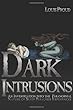
Louis Proud. Dark Intrusions; An Investigation into the Paranormal Nature of Sleep Paralysis Experiences. Anomalist Books, 2009. -- Reviewed by John Rimmer

One of the most important books about ufology, or indeed any kind of visionary experience, is David Hufford’s The Terror That Comes in the Night. Peter Rogerson reviewed it in Magonia when it was first published, and you can read his review HERE. I suggest you click and read it, then come back here.

OK? As you will have seen, Hufford was one of the first people to study such incidents as actual experiences rather than legend, rumour or ‘just folklore‘. Hufford’s book was published almost thirty years ago, it still remains the key text on the ‘Hag experience'. One noticeable omission from the subsequent literature on the experience has been a detailed account from any of those who have suffered from it.

We are used to books from UFO contactees and abductees telling us what their contacts mean to them and the rest of us, and whether they describe their experiences in strictly literal terms like George Adamski, or in a more nuanced way, like Whitley Strieber, they can still tell us a great deal about the nature of that experience.

Louis Proud, the author of this book, is a young man who has experienced the Hag phenomenon since the age of seventeen (at the time of writing he is 25). He has a very clear idea of what is causing these experiences. The opening sentence of his book states: “When I was seventeen years old, something changed within my mind; a shift of awareness occurred and I became receptive to the presence of invisible beings - and I still am. Call them spirits if you like”.

Having come to that conclusion Proud then began searching for some explanation of the nature and origins of these ‘spirits’, and this book is largely an account of his quest, rather than an analysis of his personal experiences, which are mostly described in the first three chapters.

Firstly he consults Hufford’s works, which confirm that he is not alone in his situation, and that the type of Hag he encounters is as a result of sleep paralysis. But this, he feels is not enough of itself to explain what he considers to the ‘external’ and ‘objective’ aspects on the phenomena. He begins a search for the origins and nature of the ‘spirits’ behind his experiences.

This takes him from the Enfield poltergeist to the Spiritism of Brazil, channelling, mediumship, Stan Gooch, Robert Monroe’s out-of-body experiences, Swedenborg, Albert Budden, Whitley Strieber, even Trevor James Constable’s UFO ’critters’ feature in his search. but I do not see that they provide a coherent background to explain the Hag itself

Many of these people have something interesting to say about the Hag phenomenon as part of a larger phenomena, and they all seem to supply something which Proud can apply to his own experience, but the author is not able to make a single coherent explanation for what he has experienced.

And, of course, it would not be reasonable to expect him to do so, as the experiences are themselves so incoherent, so disturbing and so random. Perhaps the real purpose of this book is explained in the final sentence, where Louis Proud, having gone through this intellectual journey into the nature of his own personal experiences, concludes: “ … the [sleep paralysis] state puts you in direct contact with your soul allowing you to experience the spirit real first-hand. This is immensely significant, even revolutionary.”

Proud seems to have come to terms with his own ‘Dark Intrusions’, but his is not the only way. By coincidence, while reading this book the Daily Mail (8 December 2009), in its ‘Good Health’ section published the story of another Hag-experiencer, Hannah Foster, also 25 years old. She reported the classic symptoms: paralysis, the sense of something heavy pressing on her. She would see grotesque ‘demons’ .

She believed her attacks were triggered by the stress of leaving university and starting work. Interestingly, Proud’s experiences began when he had just graduated from high-school and “events had taken a rather unfortunate turn”. He gives no details of these events, but they seem to involve a major change in lifestyle.

Hannah Foster did not begin a search through the esoteric literature to find a way of coping with her experiences, she seems to have gone a more conventional medical route in seeking information about her condition. Unlike Proud, she accepts that, however overpowering the effects of sleep paralysis may be, they are something that is happening within herself, and she ultimately can control them: “Each time it happens, I tell myself not to panic, that it’s not real. But even though I know rationally what’s going on, it can still be pretty frightening … Knowing there are other people out there going through the same thing really helps”.

Two very different ways of dealing with the Hag, and I feel that Hannah’s will be, for most people, the best way, but Proud’s account still gives us an insight into this strange and disturbing condition, but it needs to be read carefully, with an understanding of just how personal it is.

[Hannah Foster's account of her experiences can be read HERE. There are some interesting readers' comments to the story]

10.12.09

WHAT IS A 'BUFORA'?

I was looking through a catalogue of twentieth-century Norwegian piano music (the way you do) when I came across an interesting short piece by Geirr Tveitt (b. 1909, Bergen; d. 1981) called 'Huldre - bufora'. Well as we all know, and Wikipedia is always ready to remind us, in Scandinavian folklore a huldre is a stunningly beautiful, sometimes naked woman with long hair; though from behind she is hollow like an old tree trunk, and has an animal's tail.

Well, I suppose 'hollow like an old tree trunk' is a pretty accurate description of BUFORA these days, but I couldn't make out why a Norwegian composer would be celebrating a British UFO group. The catalogue helpfully gave an English translation of the title as 'Huldre - transhumans'. This was even more puzzling. I found that American ufologist Mac Tonnies was claiming to be a practitioner of 'transhuman ufology' HERE, but its relationship to Norwegian piano music seemed marginal. Then I noticed that the word was actually transhumance and all became clear(ish).

Another source told me that transhumance is the "transfer of livestock from one grazing ground to another, as from lowlands to highlands, with the changing of seasons".

So in Norwegian, bufora is the practice of moving cattle around in large numbers. Having learned this I wish I could make some smart, satirical comment, but I just don't seem to be able to.

By the way, if you'd like to hear some of Tveitt's music, and it's really rather lovely, here's a link to buy the CD with the bufora piece on it in an orchestral arrangement.:

4.12.09

M.O.D. SHUTS UP UFO SHOP

The closure of the 'UFO desk' at the Ministry of Defence has has already been welcomed by some Serious Ufologists (as they are sometimes referred to). Other Serious Ufologists are less happy about this, but mainly because it leaves them with no point of contact in the MoD to assist them in identifying the causes of some UFO reports.
It has been suggested that the reason for the closure of this small department is to save money, but the real reason is probably because that it has been decided that information received by the UFO desk is of no use for defence or national security purposes. It is less easy for potentially hostile aircraft to sneak through these days, thanks to improvements in radar and other remote sensing devices, such as satellites.

Of course, Really Serious Ufologists are aware that there is no such thing as the 'True UFO', which is 'really' an ET spacecraft, in the opinion of many American Serious Ufologists. There are undoubtedly many different causes of unsolved UFO cases, if only we knew the full and true details, and it is unlikely that any of them are of vital interest to the MoD.

By closing this facility, the MoD can dispose of a possible unnecessary distraction and source of embarrassment, and leave UFO investigation to the ufologists, serious or otherwise. -- John Harney

1.12.09

MAGONIA 17, OCTOBER 1984

One feature of the old print version of Magonia that I quite liked doing was the ‘25 Years Ago’ piece. One reason was that it was always useful for filling in the odd half page that invariably seemed to be left over once I’d got everything else laid out for the printers.

The other, rather better, reason was that it gave a glimpse of how attitudes to UFOs and ufology had changed in the intervening quarter-century - or more usually how little had changed. So I thought I’d start giving it a go here on the blog.

For some reason the October 1984 Magonia was a special ETH issue, with contributions from Jenny Randles and Luis Gonzáles, as well as Magonia’s regular mobsters, John Harney and Peter Rogerson.

Jenny’s piece was a careful bet-hedging exercise, concluding: “…are the UFO phenomena alien in origin? If we mean in the traditional sense of gravity-powered spaceships from Alpha Centuri my answer must be no.” But not so fast, chaps: “But I have a growing suspicion that the ETH is a more subtle - or quasi-conscious - sense may yet provide a few surprises.” Well, 25 years on and we’re still waiting!
Peter Rogerson’s article, People of a Different Shape, pointed out the basic contradiction in the ETH argument, in that all attempts to define it are constrained by our own evolution and culture, and that even those things we take as universal constants - physics, chemistry, mathematics - are themselves “products of the way we human beings perceive the universe”.

As Magonia’s professional contrarian, John Harney came up with a Plea for the ETH, even going so far as to look at the question from the ET’s point of view, and raising the possibility that they might be here, but we haven’t noticed them. Rather like Jenny, he concludes: “There is a chance that the revival of the ETH in a more subtle and sophisticated form might possibly yield interesting results”. Hmmm.

Luis Gonzáles’s piece considered something also touched on in John’s article: that ET contact with Earth may have been operating over a timescale of several centuries, imagining a self-sustaining ‘world ship’ ship with a population of up to a million ETs, settled somewhere in the asteroid belt. He makes quite a good case for it, confessing that he almost convinced himself. But in a mood of regret concludes: “We need the ETH. If UFOs were explained and psychologists, sociologists, geophysicists, etc., etc., take over, what are we poor ufologists going to talk about?”

Indeed!

MAGONIA RECOMMENDS