31.1.10

HOAXES AND MISPERCEPTIONS

Here's a couple of postings from other people's blogs which might be of interest.

Kentaro Mori, he's the very nice guy from Brazil who keeps Magonia's Archive site up and running, runs the 'forgetomori' blog ("Extraordinary claims, ordinary investigations" is their motto). Being Brazilian, naturally he's interested in the Trindade Island hoax - sorry, 'unexplained due to insufficient data' case, and has been diligently tracking down information from local sources. Key witness and photographer Barauna's propensity for hoaxing photographs before the Trindade incident is something that many ufologists try to downplay, or dismiss as irrelevant. However, a report detailing some of Barauna's hoaxes has been published on Tim Printy's SUNLite website, and Kentaro Mori introduces it here:

http://forgetomori.com/2010/ufos/ufo-photos/almiro-baraunas-many-hoaxes/

A strange story of radical misperception has appeared on the UFO Iconoclast site. They make a comparison to the Rendlesham case, and get taken to task for doing so. I must say, I can see their point. What do you think? Get the details here:

http://ufocon.blogspot.com/2010/01/cautionary-story.html

21.1.10

1897 AND ALL THAT

J. Allen Danelek. The Great Airship of 1897. Adventures Unlimited Press, 2009.

The 1897 airship is a vital part of the UFO story, and is used to reinforce a number of contrasting narratives. For the psychosocial ufologist it is a classic example of the spread of a rumour, fuelled by misleading and spurious newspaper reports. The fact that these events were being reported at the same time as international tensions which led up to the Spanish-American War has led some commentators to suggest that the ‘sightings’ were part of a war panic. Indeed some reports claim that witnesses met ‘pilots’ who actually made comments about ‘flying to Cuba’. Critics note that the pro-war Hearst newspapers were more inclined to cover the story more sensationally than others. (See http://magonia.haaan.com/2009/in-the-west/ )

The alternative interpretation has always been that the reports from 1896/7 were actually sightings of extraterrestrial craft, and in a different age would be reported as UFOs or flying saucers, except that in the late 19th century they were being reported in terms familiar to people at the time. Ufologists point to the range of ‘radical misperceptions’ which generate UFO reports from mundane stimuli, and suggest that the same processes were creating the 1897 airship sightings. The ‘rumour’ hypothesis has been further refined by claims that the stories were transmitted by railroad telegraphers to while away the long night hours.

What you might think was the obvious solution to the mystery - that actual airships were flying over America at this time - seems to have been pushed to the margins by proponents of both sides of the debate. Is that such an impossible claim? We know that quite large dirigible lighter-than-air craft were operating in Europe at the time, is it possible that someone had built a viable airship in America?

Of course, here we enter the world of the mysterious eccentric secret inventor, and getting worryingly close to the fantasy aeroforms of Dellschau and the Sonora Aero Club. But is it possible that at least some, and maybe even most, of the 1897 airship sightings were just that - the sightings of a real, nuts and bolts airship?

Allen Danelek thinks so, and this book makes out an impressive, if not perhaps warertight case. He works methodically through the evidence for and against each hypothesis. The American newspapers were perhaps not quite such a haunt of ‘liars clubs’ as some historians have suggested, and much of the newspaper reporting seems to be sound. Danelek is well aware of the strengths of alternate interpretations, and accepts that many reports were indeed misinterpretations of astronomical and natural phenomena. But he claims that there are patterns in how the story developed and was reported that suggest this is not a complete explanation.

Would it be possible for an unknown airship builder (not ‘inventor’ because all the necessary technology was already known and often in use elsewhere) to have constructed and flown a vehicle which would have accounted for at least a significant proportion of the reports? Danelek goes, step-by-step through every detail of the technology he claims would be involved, and step-by-step demonstrates that such a craft could, theoretically, have been constructed and flown.

The key word, of course, is theoretically, because although each individual step is plausible enough, doubts begin to enter when you consider what would be involved in putting all these small steps together to produce the desired outcome.

Having itemised and considered the technical details with a great deal of background knowledge, Danelek attempt to tie them all together in a novel way - by writing a dramatised fictional account of how it could all work; creating characters and locations which could have come together at particular points in time, and resulted in the construction and destruction of the airship of 1897.

I can’t say I’m convinced, but this is a fascinating book which presents a viewpoint on 1897 which I do not think has been presented in such detail before. It is a stimulating and provocative thesis which deserves careful consideration. -- Reviewed by John Rimmer

18.1.10

ENIGMATIC ESP

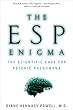
Diane Hennacy Powell. The ESP Enigma: The Scientific Case for Psychic Phenomena. Walker and Company, 2009.

Powell is a psychiatrist and psychotherapist, with a training in neuroscience, and is therefor better able than many to be aware of the various problems integrating "ESP" into modern neuroscience based views of consciousness. We would expect someone with her background to examine the problem in a scientific fashion Well she does treat her own subject of neuroscience in this fashion, with discussions of some recent research, the results of damage to specific areas of the brain, the possible role of dreamlike states in the production of out of the body and near death experiences etc. There is much of interest in these portions.

When it comes to the evidence for ESP and PK, the tone seems very different; for while her boggle factor is clearly more sharply set than many in this field, clearly excluding macro PK and seance room phenomena, much of her discussion in this area is anecdotal and shows little appreciation of the complex psychological, social and cultural background of much of this testimony. Worse still is her rapid descent into the kind of promiscuous paranormalism, in which the likes of Edgar Cayce, Peter Hurkos, Carlos Casteneda, Fitjof Capra, David Bohm , Rupert Sheldrake and Harold Burr all rub shoulders with one another, alongside discussions of relativity, quantum mechanics, string theory, chaos theory, interconnectedness, eastern world views, reflexology and iridology. All that is left out is Uncle Tom Cobleigh and his old grey mare. The assumption seems to be that if enough ingredients are thrown into the pot something tasty will emerge.

Part of Powell's problem is that she, like many in this field, is essentially looking for anomalies to use as ammunition against the dreaded materialism, because she cannot see how anything as special as consciousness can arise from a material brain. I rather suspect that this is more of a cultural or aesthetic problem than a scientific one, and one that ultimately comes from the class structure of classical Greek civilisation, where the pure, sacred world of the mind, the province of gentleman philosophers such as Plato, was contrasted with the grubby, profane, polluted world of matter, the realm of subaltern groups such as women, artisans and slaves.

This Hellenistic world view was early incorporated into Christianity and some of its offshoots, and has greatly influenced Western thought ever since. This tendency to try and separate consciousness from brain activity leads her into more problems such as "we do not know how the desire to drink creates the brain cell activity" which sets up the chain of nervous action which leads to the lifting of a glass. From the monist point of view there is no problem, because the decision to the pick up the glass is the product of the brain activity, and the 'desire' is the experiential part of that activity.

Of course it is hard to imagine how patterns of electrical and chemical activity in the human brain can give rise to conscious experience, but if you really think about it, it is no easier to really understand how activity in fields, energies, astral bodies, unextended mind stuff or whatever can give rise to conscious experience. All that makes it appear so, are the cultural prejudices described above.

As with many such writers, Powell really does not do justice to the many complexities and disputes within this field, and barely touches upon the sceptical critiques of many of the topics and personalties covered. The approach to parapsychology is not really scientific, and I doubt that this book will convince many agnostics let alone sceptics, though it may impress some arts graduates with little background knowledge of science or the history and intricacies of parapsychology and psychical research.

17.1.10

DARK AND DARKER

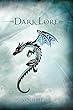
Dark Lore. Volume IV, edited by Greg Taylor. Daily Grail Publishing, 2009.
There are some good things in this issue which should be of interest to Magonia readers. For new material, the prize goes to 'The Newhallville Terror' by Theo Paijmans, which looks at some previously forgotten Spring Heel Jack type stories from the USA. SHJ might almost be Magonia's mascot, for it was interest in that character that caused John Rimmer to get in touch with me 40 years ago; and our much missed colleague Roger Sandell wrote his first piece on the subject for Flying Saucer Review back in the early 1970s.

The historical roots of modern mysteries are covered by several writers. Neil Arnold who traces the history of the protean chupacabra or goat-sucker of Latin America, through European and even Arabian root stories of vampires and blood suckers, which have taken multitudinous forms, Arnold makes it clear that this is not, to any great extent, a some paws and pelt (or scales) creature which can be caught in a trap, but a creature of the dark imagination, changing its form as it migrates from culture to culture. Nigel Watson in a piece on the MIB traces their origins in spy stories circulating around the time of the airship epidemics of the early 20th century.

The ufological theme is continued by 'The Emperor' in a further examination of the roots of early ufology in the cultures of the science fiction and what is often called the cultic milieu. His studies are increasingly showing that the hard division between East Coast nuts-and-bolts ufology and West Coast contacteedom is rather fictional, and in reality there was much greater permeability between them. Only with the publication of major biographies of many of the central characters of this period is this likely to be clarified much further.

The folkloric roots of cryptozoology are explored by Richard Freeman, taking the case of Japan where are a whole range of supernaturals are known by the generic label Yokai, some of which manifest as what would now be called cryptids. This is an area that is not well known, if at all, in the west, and though Freeman evokes rather silly notions such as tulpas, an interpretation in terms of cultural tradition is entirely probable, in which cryptids are secularised supernaturals.

There is a straight forward and uncritical retelling of the story of Lurancy Vennum, 'the Wateska Wonder', and her alleged possession by her deceased neighbour Mary Roff. The non-spiritualist is likely to suspect that there is far more behind this story than these true believers' accounts relate, and that the real story is likely to be a good deal more interesting that the standard one.

Nick Redfern explores the interest of the US 'intelligence' services (though stupidity services often seems a better name) in the use of animal ESP, including at least one particularly revolting use of a kitten which we will not distress our readers by rehearsing.

There are several archaeological pieces which are rather off topic for Magonia, although the story of Joseph Williamson the Edge Hill mole takes us back to our Merseyside roots. There is a sceptical piece on an alleged Egyptian helicopter, and reasonable fairly mainstream pieces by Filip Coppens, John Higgs and Robert Beuval, while Greg Taylor's piece on the obelisks erected in Georgia giving rather authoritarian messages for the future can perhaps be described as tomorrow's archaeology. (Which perhaps might warn us that archaeology we take to evidence of a particular culture might actually be the work of some tiny dissident group!).

There are only two barmpot pieces in here, a wild piece by Blair MacKenzie Blake on Rennes le Chateau which makes the claims of Dan Brown and company positively staid in comparison. (if I say it appears to revolve around a secret society of cannibalistic Cathars I think you get the gist!)

Then there is poor dear old Robert Schoch. The words 'out of your depth' have rather different connotations between being out of your depth in nice tepid, clear, spring water, with some ability to swim; and being out of your depth in a fetid sewer swimming in human shit and surrounded on all sides by rabid rats. It is the latter into which Schoch has fallen. It is the completely mad world of Romanian Neo-Ceauscescuist conspiracy theory. In this the Dear Leader and Great Conducator was not brought down by the fact that even his own party were sick to the guts with him, and decided to give more than a little help to the fermenting popular revolution - possibly with the aid of the decaying remnants of the Soviet KGB - as is generally supposed, but by the wicked forces of the west, using amazing psychotronic weapons, in order to enfeeble the Greater Romanian Fatherland. Suffice it to say, if Schoch had actually set out to ensure that no-one ever took him seriously again, he could not have done better. -- Reviewed by Peter Rogerson

14.1.10

SCIENCE FICTION SECRETS

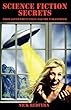
Nick Redfern. Science Fiction Secrets: From Government Files and the Paranormal. Anomalist Books, 2009.

With twenty five chapters covering a wide range, this is a rather difficult book to get a handle on. Some of the topics discuss government, mainly the US FBI‘s, interest in a variety of outré topics. A couple of examples of this suggest that they spent sizeable amounts of their taxpayers dollars following up things such as the allegations of the probably schizophrenic science fiction writer Philip K Dick about a Neo-Nazi plot to infiltrate science fiction, or a crank letter to Carl Sagan.

There are the UFO related stories, many based on allegations that science fiction stories and films, particularly those of Steven Spielberg, are part of a government education programme to condition people to accept that 'they' are here. Given than all of this has been going on for 60-plus years without any grand revelation, this doesn't seem to have been a very successful operation.

Some of the stories depend upon various claims by alleged whistleblowers, none of whom ever provide any evidence, as opposed to assertion. There are the people who claim to have been part of top secret teams, to have been witness to films of alien autopsies and the like. While some of the later may just have 'genuine' false memories, most are likely to be fully paid up members of the Universal Union of Liars, Bullshitters, Linespinners and Bandwagon Jumpers. Why anyone takes these people seriously for even a moment baffles me.

Of course it is not only the naive UFO buffs who can be taken in: the United States government, which seems to have such difficulties in providing proper health care for its citizens has no problems on throwing taxpayers dollars at some guys who claim to be a research organisation studying teleportation, or on an analysis of the annotated copies of Jessup's Case for the UFO.

Tales of teleportation, death rays, and other wondrous inventions which never see the light of day are, of course, exciting, they are good science fiction, and rather contrast with the often dull and methodical work of real science.

Ideas of conspiracy are also exciting. The idea that the world's governments are engaged on a great plot to fake UFO stories to unite humanity against a common enemy was the topic of the first flying saucer science fiction story, Bernard Newman's Flying Saucer published before any of the factual books on the subject, and was one of the sinister plots in the satirical Report from Iron Mountain both of which are discussed here, and in Hawkey and Bigham's Wild Card which isn't. This was an idea which President Reagan who often had difficulty in distinguishing real life from the movies was enamoured of. It's an idea I've speculated on a couple of times, and even given it the appropriate name of 'Project Far Stranger'. Whether there ever was a real life Project Far Stranger is a moot point.

It is also a moot point whether any of the bizarre tales one encounters here and elsewhere are deliberately circulated by governments to baffle foreign intelligence services and to protect real secrets and scandals with a bodyguard of cranks, or as black propaganda. The claims that the United States manufactured the AIDS virus as part of a biological weapons programme seems indeed to have been Soviet propaganda, and the claim, in another chapter of this book, that the Soviet Union was planning to breed an army of human chimpanzee hybrids looks like propaganda from the other side.

There is no doubt that Nick Redfern gives us an exciting read, but it has to be said that if there is a bodyguard of cranks, he doesn't half help it along. The true, the plausible, the implausible, the nutty and the obvious fakes get all mixed together. A jolly good read but keep a full salt-cellar handy. -- Peter Rogerson

13.1.10

TALKING TO THE ALIENS

Andrz Kukla. Extraterrestrials: A Philosophical Perspective. Lexington Books, 2010.

In this short and highly technical monograph, retired psychology professor Andre Kukla examines the possibility of communicating with extraterrestrials. Firstly he critically examines the various arguments for and against the possibility of extraterrestrial intelligence and finds the sort of arguments from large numbers used by both sides wanting. Astronomers tend to argue that "ghee whiz the universe is so big and is so full of stars that there must be other intelligences out there" while biologists tend to reply "ghee whiz, there have been so many species on earth and only one has developed intelligence, so intelligence must be very rare". Kukla argues that these are both invalid arguments, based on a single case. The reality is that we cannot say whether or not life or intelligence is widespread or not.

He then tackles the question as to whether hypothetical aliens would share our science or not, and again comes to the conclusion that we just don't know. Nor do we know whether they would even our most basic mathematical ideas. We simply don't know how much overlap between their science and ours there might be, we don't even know that if they shared the ability to communicate with us through radio, their understanding of radio and the means to produce it would be the same as hours.

In the final and most difficult part of the monograph argues that even if we grant all the most optimistic interpretations about the extraterrestrial intelligence, if, as is argued by Noam Chomsky and his followers, human language is based on some evolved neural substrate, then we could not ever learn their language. This would be true whether or not the pre-diaspora ancestors of modern humans already spoke a grammatically rich language, or something more primitive. A language with a completely different evolutionary history could never be learned by human beings. -- Reviewed by Peter Rogerson

12.1.10

EMILY BRONTE AND FANTASY PRONENESS

Mike Dash has kindly sent me a link to an article he has recently posted on the Charles Fort Institute website, at http://blogs.forteana.org/node/98 . It is a fascinating article and raises many interesting questions about the perception of reality, and the nature of creativity.

Peter Rogerson first raised the issue of fantasy-proneness as a factor in UFO and other anaomalous experiences in a 'Northern Echoes' column published in Magonia 23 in 1986 (read it at: http://magonia.haaan.com/2009/fpp/ ), a piece which Mike references in his article.

Both articles are well-worth reading.

6.1.10

GHOSTLY ROUND-UP

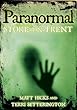
Matt Hicks and Terry Setterington. Paranormal Stoke on Trent. The History Press, 2009.

The usual mixture of memorates, folklore and fakelore that we have come to expect with this series. Unlike some of the other works in the series, this does have some modern ghost stories, most notably from the North Staffordshire Hospital. Hospitals seem to be one of the major places where people report all sorts of anomalous experiences, perhaps because they are the places where, at least in modern times, life begins and ends. They are also places where people are often under great stress and staff especially can be operating in conditions of great fatigue and sleep loss.

What is noticeable from this and other similar works, is the decline of the domestic ghost, fading away with council and other social housing. Now protecting property prices means that such experiences and stories are driven underground, to be replaced by the marketable haunted pub or cinema which can draw in ghost hunting tourists. -- Reviewed by Peter Rogerson

Ian Addicote. Haunted Pubs of the South West. Amberley, 2009.
Roger Guttridge. Paranormal Dorset. Amberley, 2009.


The haunted pub is, as Peter remarks above, a marketable property, especially in a popular holiday region like the South West of England. Ian Addicote's book certainly does as much as it can to encourage the tourist trade in the counties it covers, and it seems at times that there is hardly a pub in the South West which is not haunted! Most of the hauntings described are of the rather vague doors slamming, lights turned on, sudden cold draughts, variety. But a few do seem to have some historical background, and in an area with a considerable maritime history there are stories of smugglers' tunnels, ghosts of seafarers, wreckers, etc. The book is primarily a guide for tourists, which makes it rather odd that the entries are in alphabetical order of the name of the pub, rather than being grouped by town and county. And it would have been really useful to have had a note of the draught beers available at each pub!

Roger Guttridge's volume is of rather more interest to the serious anomalist, as, although it has its quota of fairly humdrum ghost stories, it covers a wider range of Forteana. Although there are the usual haunted pub stories, most of the reports given here have a more substantial history, often with a grounding in local folklore. How many of these are accounts of actual experiences rather than rumour and local gossip?

There are several longer pieces of particular interest, including a 1981 account from Bournemouth which seems a classic template for poltergeist activity: a mother suffering from a wasting disease, a 17-year-old adopted daughter, and an 8-year-old foster son with learning difficulties, who seems to have been blamed for the outbreaks of destructive activity.

Other item of interest to Forteans include Conan Doyle's account of fairies in Branksome Park, Bournemouth, which brings to mind the stories of the Liverpool Leprechauns; and the curious Moign Down UFO incident of 1976, involving an object looking like the skeleton of some kind of folding umbrella. It caused a great furore in ufological circles at the time because of the perceived reliability of the witness, but is now almost forgotten.

Many of the accounts are given in quite considerable detail, which makes it all the more unfortunate that there are no references given for any other the sources other than the odd passing mention in the text; or an index. But an interesting read nevertheless. -- Reviewed by John Rimmer

4.1.10

THE REAL OCCULT HISTORY OF AMERICA

Mitch Horowitz. Occult America: The Secret History of How Mysticism Shaped our Nation. Bantam Books, 2009. -- Reviewed by Peter Rogerson

No, despite the title and front cover, this isn't another Dan Brown style book extolling how the Masons founded America with the help of the Illuminati and Soroptimists, instead it is sympathetic but never credulous account of the role of 'occultist' and other dissident religions in American history from the revolution down to the early 1960s. Horowitz traces these down from the role of such charismatic women as Ann Lee, the founder of the Shakers and Jemina Wilkinson 'The Universal Public Friend', though the history of Mormonism, Spiritualism, theosophy, multiple channels (no pun intended) of mind cure, new thought and related groups. Some of these are well know, others, prominent in their day, now forgotten.

There are two big themes in Horowitz's study, one is that most of these people and groups weren't actually occult in the true sense of the word, they rejected the secrecy and elitism of European occultism in favour of a much more open and democratic vision. The other, is that they represented a much more inclusive vision, both religiously and socially than the mainstream, pioneers in women's rights, racial equality and a sense of a universal humanity. They made a sharp contrast to the narrow, exclusivist and harsh fundamentalism, which seemed to characterise much of American religion in the days of George Bush.

There were exceptions, William Dudley Pelley, who journeyed from occultism into a form of imitation Nazism and virulent anti-Semitism, the influence of which goes on today, and which helped propel Ezra Pound down his path of treason.

Looking at many of the other characters, one can perhaps see many a trickster figure, half visionary, half rogue, seeking their way in the capitalist world. One such visionary, Henry Wallace, would have become president of the United States had Roosevelt died a year earlier than he did, there are several topics there for the producers of alternative histories.

In some ways this book stops short at an interesting period, there is only the briefest mention of flying saucer contactees, and the new age movement, and none of the new religious movements of the 1960s onwards. Perhaps it would not have been possible to present such a positive image of these.

3.1.10

ANOMALOUS EXPERIENCES

Matthew D. Smith. (editor) Anomalous Experiences: Essays from Parapsychological and Psychological Perspectives. McFarland and Company, 2009.

These papers, classed into two sections, parapsychological approaches and psychological approaches, are based on those presented to a one-day conference at Liverpool Hope University in June 2005. There are several papers which should be of interest to Magonia readers. Of particular interest is Simon Sherwood's study of phantom black dog experiences. Traditionally regarded as products of cultural source and folklore, he demonstrates that there are modern encounters, including his own, and that Hufford's experiential source model is probably the more nearly correct. That being said there are no obvious explanations either normal or paranormal for such experiences. When looked at critically, the same might be said of the haunting experiences discussed by Ciaran O Keefe and Steve Parsons. They look at possible environmental factors which could generate such experiences, as well as, more briefly, the role of expectancy and the like.

If in such spontaneous experiences there are transcultural themes, there are also clearly cultural and metacultural influences. One of these deep metacultural influences might be the very way human beings spontaneously use language to describe personal experience, a theme developed by Robin Wooffitt in his paper on a 'sociological parapsychology'. While he was studying the use of language by people describing their experiences in laboratory ESP tests, the insights will have as great, if not greater relevance to spontaneous experiences.

Also of potential interest is the study by Chris French and his co-workers of the prevalence of 'false recall' a form of false memory among a group of people they characterise as 'UFO abductees' (but which, however, looks rather broader, encompassing people who would generally be classed as contactees). They claim to have detected a higher than baseline incidence of false recall among 'abductees'. This is, however, one of those papers which require a knowledge of statistics in order to evaluate its findings.

Readers of Magonia (whether in hard copy or online) will know that Martin Kottmeyer has discussed the role of boundary deficiency in the generation of anomalous experiences. This seems to be connected to the 'positive schizotypy' discussed by Christine Simmonds-Moore. These are associated with increased creativity, increased perception of patterns where none exist and increase communication between the brain's hemispheres. She leaves open whether this means that people in this population have an increased tendency to generated patterns and meanings in noise, or have an increased awareness of subliminal information, including ESP.

Richard Wiseman discusses his fake séances, and shows how even in rather artificial conditions, people can misperceive and misremember, and that believers seem to do this more than sceptics, and suggests that this much be a much stronger factor in real séances.

Daryl Bem and Caroline Watts both report positive correlations, which might be seen as evidence for psi, yet together they show how these claims can lead to major complications, Basically Bem argues he has shown that people can become bored by pictures before they have seen them, he does this by showing them two fairly neutral pictures, and asks which they prefer. Then the computer selects one at random and flashes it to them several times. They tend to prefer the picture they are not going to see than the one they do (by a small margin). Bem argues that this demonstrates precognition. But Watts paper claims to show that the beliefs of the experimenters produce above chance variations, so if you think ESP and PK are plausible but precognition is not you could argue that the experimenter learned which of the pictures was chosen by ESP and then used his PK to influence the computer to produce results which fitted his theory.

Of course if you are prepared to accept precognition, but not ESP or PK, you could interpret those results in terms of precognition (you foresaw the result and chosen your guess to tie in with the result), and this is at least partially suggested in the piece by Paul Stevens, in which he argues that things like ESP might not be quite as anomalous as parapychologists want them to be. He may well be on to a point here, but I suspect he does not go far enough. One of the central problems of parapsychology is that many (perhaps the majority) of those involved in it are not so much interested in the various anomalies in and of themselves, but using them as battering rams against 'materialism'. Therefore non-transcendialist interpretations of even possible 'genuine' anomalies are rarely looked at.

It is for perhaps this reason and not just the artificiality of the experimental situation as suggested by Jezz Fox, that neither experimental parapsychology nor spontaneous experiences will ever 'prove' psi. Both may indeed generate curious coincidences and correlations which cannot be explained by conventional theories, but that this demonstrates some positive thing called ESP is quite another matter.

There are also two chapters by Etzel Cardena and Chris Roe which deal with the role of hypnosis and other forms of altered states of consciousness in the generation of anomalous experiences and correlations. Chris Roe makes the important point that it is no use studying the relationship between ASC's and parapsychological experiences/correlations unless you can prove that the subject was indeed in an ASC!


2.1.10

CONSPIRACY CORNER

Richard Roeper. Debunked! Conspiracy Theories, Urban Legends and Evil Plots of the 21st Century. Chicago Review Press, 2008.

Kathryn S Olmsted. Real Enemies: Conspiracy Theories and American Democracy; World War One to 9/11. Oxford University Press, 2009.

  • Mark Fenster. Conspiracy Theories: Secrecy and Power in American Culture. 2nd edition. University of Minnesota Press, 2008.
Conspiracy theories continue to multiply, from the novels of Dan Brown, and beliefs that the X-Factor is rigged, down to the belief that the attack on the twin towers was the work of George Bush in alliance with the Israelis and the Illuminati. The existence of such theories, both darkly sublime and hilariously ridiculous, posses a major challenged to the gatekeepers of democratic consensus.

One answer, that taken by Roeper is the simple one, attack the lot of them, assume they must be false and defuse their power by laughing at them. So Roeper runs through a range of modern conspiracy theories and other quasi magical beliefs such as belief in showbiz psychics or the appearance of the face of the Jesus or Mary in cookies. The conspiracies run from the grandiose (the conspiracy to destroy our way of life by the terrible others) to the petty (our team lost, the ref was bent, its all a fix). One advantage of this is that the sheer implausibility of the megaconspiracies involving hundreds or thousands of actors, can be used to nullify notions of minor conspiracies involving a very limited number of actors.

If the conspiracies theories were the beliefs of just a tiny section of the radically estranged, then perhaps Roeper's response would be adequate, but polls show that large numbers of people actually believe these accounts, even those the largest of the megaconspiracies. It might be better to understand them.

Historian Kathryn Olmsted tries do this by constructing a meta-narrative. In her study of the role of conspiracy theories in American politics since time of the First World War and the subsequent red scare down to 9/11, she reminds us that conspiracy theories are not the sole preserve of radicalised outsiders, but that the establishment has its own conspiracy theories, whether it was seeing opposition to the First World War as the work of red agitators, through to the McCarthyite period, to the paranoia about dissent in the administrations of Richard Nixon and George Bush. The belief that they are under siege from the forces of evil and chaos, drives establishments to acts of repression and conspiracy of their own.

Equally, "democratic" politicians may feel real tensions between what they genuinely to be in the best interest of their countries, and what they have to say to get re-elected (as in the case of Wilson and Roosevelt and US entry into the two wars), which also leads to secrecy and conspiratorial behaviour. These actions by the establishment further fuel radical oppositionist sense of paranoia and belief in conspiracies against them. Olmsted's remedy, in so far has she has one, is greater transparency, but one wonders whether any kind of transparency could remedy the sense of alienation behind the truly global megaconsipracy theories.

Mark Fenster approaches these from the perspective of cultural studies, which among other things, does not produce the simple meta-narrative of Kathryn Olmsted. Rather this is a richly layered book, which proceeds downwards into various conspiracy worlds, including those of the X-files, the militias of the 1990s, and the world of radical religious right. He argues that the demonisation of conspiracy theory by the likes of Richard Hofstadter, who constructed the phrase "paranoid style" acts as a way of delegitimizing any radical opposition to the hegemony of the prevailing political consensus. Not all populism is bad he argues.

Fenster explores the world the radical eschatological religious right, with its sense of the final battle to come, and the absolute, literally demonic evil of the enemy. This sense of being "at the battle of Armageddon and in the army of the Lord" goes back to the Battle Hymn of the Republic and much further, as part of American political rhetoric. In many of the conspiracy theories, secular political opponents become identified with these forces of cosmic evil, they are no longer fellow citizens whose ideas we may disagree with, or are just foolish or misguided in their beliefs and opinions, instead they are monstrous enemies, capable of any perfidy, any crime imaginable (or indeed unimaginable), apes of Satan, witches whose crimes will bring destruction on the people, and who must be opposed by any means imaginable.

Fenster suggests that these theories operate as narratives by which people can structure and make sense of the formless chaos of events, and centre themselves in these contests of absolute value, they become consuming lifestyle options, as witness for example the huge investment in time and money amateur investigators will engage in order to uncover "the truth" about the assassination of President Kennedy or the flying saucers in the Pentagon Pantry.

MAGONIA RECOMMENDS