27.2.10

PSYCHIC GERMANY

Heather Wolffram. The Stepchildren of Science: Psychical Research and Parapsychology in Germany c. 1870-1939. Editions Rodopi, 2009. (Clio Medica 88) -- Reviewed by Peter Rogerson

While there have been a number of substantive histories of psychical research in the United Kingdom and the United States, this is the first detailed study of its history in Germany and as such is a major contribution to the history of the subject.

Wolffram tracks the history from the early interest in hypnotism by groups of scientists seeking an alternative to the dominant materialist psychology in Germany at that time. These studies seem to have existed in a sort of liminal zone between scientific enterprise and public performance, featuring such female performers as Lina Matzinger who claimed to be able to read books through various portions of her body, and the 'sleep dancer' Magdeleine G whose ecstatic performances prefigured those of Isadora Duncan.

Attempts to set up psychical research societies met with some problems, mainly the differences between those who wanted to use anomalous experiences to bolster transcendentalist world views, and those who wanted them to be objects of scientific study.

The dominating figure in this field and indeed the whole of German psychical research and parapsychology, until his death in 1929, was the wealthy and egotistical Albert von Schrenck-Notzing. Though S-N's experiments with the likes of Eva C. (Marthe Beraud), or Willy and Rudi Schneider had some of the feel of scientific experiments, and were conducted in a room made up to look like a scientific laboratory, these also had elements of performance and were often under the control of the medium. S-N's arguments were often typical of psychical researchers' arguments, arguing from authority and social standing. Though Wolffram reproduces a couple of the strange photographs of Eva and her ectoplasm, she does not include the most famous of these, the one which clearly shows the words 'Le Mirroir' on the back of the cut out attached to her hair.

Notzing. like Charles Richet in France was more attracted to an explanation of these phenomena in terms of what might be called parabiology rather than in terms of either spirits or fraud. Whether it is in spite, or because of their scientific pretensions, both were completely credulous over performances which strike the modern viewer of the photographs produced, as rather poor frauds.

This parabiological interpretation was helped along by the existence of a range of para or metabiological theories, such as those of Bergson and Driesch, which involved vitalistic concepts such as 'entelechy', aided by the still relative ignorance of genetics.

S-N and the psychical researchers did not have the field uncontested, among their critics were former colleagues such as Max Dessoir (the man who invented the term parapsychology) and Albert Moll. This group called themselves 'Critical Occultists' and can be seen as ancestors of the modern skeptics movement. They and the psychical researchers fought in the public prints, as expert witnesses in either side of law cases, and in psychoanalysing each other.

As with CSICOP today, the skeptics movement, in alliance often with the churches, orchestrated campaigns against charlatanism and superstition, which they feared would bring about the downfall of rational civilisation. Needless to say there was in Germany at this time an unimaginably greater threat to rational civilisation than the village herbalist, the newspaper horoscope or the antics of mediums.

What is interesting is how much the themes encountered here still apply, the contested facts, the attempts to draw demarcation lines between science and pseudoscience, the appeal of transcendentalist world views and the mutual recriminations between believers and sceptics.

The author paints a fascinating picture of psychical research and related topics in Imperial and Weimar Germany, and the story she tells has many resonances even today. Without a fuller knowledge of the background and sources, which probably no-one in the UK has, it is difficult to see how this account could be bettered.


26.2.10

BELIEF & SCEPTICISM

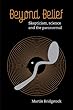
Martin Bridgstock. Beyond Belief: Skepticism, Science and Belief in the Paranormal. Cambridge University Press, 2009.

This book by an Australian academic and member of the Australian skeptics movement, is not particularly concerned with refuting specific paranormal claims, but with a more general defence of skepticism as a mode of thought. It includes a brief history of skeptical thought from the Greeks onward, including a detailed examination of Hume's position on miracles, an examination of the scientific method, and its contrasting with various protoscientific, cryptoscientific and pseudo scientific claims.

He next examines the nature of paranormal claims and makes the interesting point that if any of these claims could be verified and subject to real scientific study, by many definitions of paranormal, they would be immediately cease to be paranormal and become part of normal science. He might have gone on to argue that if scientists then used these new findings or principles to explain further tranches of anomalous phenomena, they would be accused of 'explaining away' by paranormalists.

There is a useful discussion of the various ways in which paranormal claims can be based on false premises, errors of perception and memory and so on, and notes how advocacy groups such as the creation science movement can manipulate evidence and misquote sources (sadly some skeptics are not beyond this either).

He follows sociologist Erich Goode in classifying proponents of paranormal and other anomalous claims into several categories, these range from protoscientists (or wannabe scientists) such as academic parapsychologists who at least try to use the language and protocols of science in their work, through pseudoscientists, practitioners such as alternate medicine practitioners, religious groups such as creation scientists, grass-roots movements such as ufology, through to the socially isolated crank. Of course, it must be said, in the real world things are never as clear cut as that, for example many cranks are not socially isolated, they are able to gather followers or create communities, and much of the motivation behind parapsychology lies in a quasi-religious concern for the preservation or restoration of a transcendentalist and anti-materialist world view, combating what one might call secular modernism.

Critics will point out that at least some of these trends appear in the organised skeptics movement itself, groups such CSI(COP) and its offshoots do not actually conduct any critical scientific studies of paranormal or other anomalous claims. Bridgstock accepts that they fall into the category of grass-roots social organisations, but if you look at the associations of the initials CSI COP (ie police) or CSI (officially standing for Committee for Scientific Investigation but the association of those initials with Crime Scene is total in the popular imagination and their use deliberate).

This shows that the role that the organised skeptics movement sees for itself is not a scientific or even primarily educational one, but as a policing one. They are what sociologists call 'moral crusaders' or 'vigilante movements'. These are groups which organise to protest, witness and campaign against social ills real or imaginary. Though these terms are often used just as terms of abuse, the ills against which they campaign are often real, and their causes by no means absurd. However they do have a tendency towards an increasingly radical Manichian world view, seeing themselves as the children of righteousness and light battling the forces of cosmic darkness.

Many of these organisations have arisen from an evangelical religious background, and often they can be seen as defending the fundamental structures of society against the forces of antinomian chaos, defending habitat against wilderness. CSI(COP), though many of its members are ostensibly atheists or humanists, has many features of religiosity: a sense of evangelical mission, of proclaiming a saving message, of tales of conversion and even the idea that just reading a sacred text can produce a metatonia which will transform your life.

Furthermore the ills against which the moral crusaders campaign are often metaphors for deeper changes in society, and for the campaigners perceived loss of status. Psychical research arose in England partly as a defensive move among sections of the classicist élite against the 'materialism' associated with the new forms of industry and social organisation. Creation science and intelligent design organise against the mid/late twentieth century rise in secularism. As science and secularism moved from being outsider forces in society into the mainstream, they too became elates which looked out to protect their roles. CSICOP emerges in response not to Joseph Rhine's psychical research but in response to the youth antinomianism of the 1964-72 period.

If CSI(COP) and its fellows are moral crusaders, against what might they best crusade? The obvious examples are those elements of paranormalism/fringeism which are primarily after wallets and credit cards, and which feed on the lonely, gullible, bereaved and desperate. The sort of people who sell worthless mine-detection devices to third world countries for example, and who offer worthless, pain free alternative cures for cancer to parents who cannot bear the sickness and distress that chemotherapy causes their toddlers, or those who promote a narrow sectarian and completely false worldview and at worst pathological hatreds.

In other areas actual scientific enquiry, such as the replication attempts by Marks and Kammann on Targ and Puthoff's remote viewing experiments would seem to be a good way forward. The real sceptical viewpoint lies in attempts at impartial investigation, rather than the battle between often uncritical promotion of paranormal claims by believers, and the often equally uncritical debunking of them by skeptics.

24.2.10

A SHIVER OF SPOOKS

Jill Armitage. Haunted Derbyshire. The History Press. 2009

David Brandon. Haunted Bath. The History Press, 2009.

Alan Brooke. Haunted Whitby. The History Press, 2009

Carmel King. Haunted Essex. The History Press, 2009

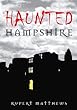
Rupert Matthews. Haunted Hampshire. The History Press, 2009.

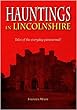
Stephen Wade. Hauntings in Lincolnshire. Halsgrove, 2009.

This collection of books of regional ghost stories illustrate the various approaches and purposes behind such collections.

Rupert Matthews takes on the role of the travel writer, visiting various historical and other alleged haunted locations and listening to the stories that people tell of strange experiences. Stephen Wade takes on the role of the story teller, telling various 'spine chilling' ghost stories which may or may not have some basis in actual experience. The other writers in this group are producing works which are more like catalogues or gazetteers. David Brandon uses this technique to provide quite a lot of local history of Bath, and this is one of those ghost books which uses local legends to explore the wider history of the town or area. The works by Jill Armitage, Alan Brooke and Carmel King are more of straightforward tourist guides to alleged haunted spots.

While Matthews and Wade deal with modern memorates, the other writers rely mainly on old legends or legend remnants, often reduced to the level of "Rogerson Towers is said to be haunted by a maid made pregnant and murdered by Sir Rufus Rogerson in the 1620s" and such like. These legends and remnants often refer to periods well covered by historical novels of the type popular in preceding generations. Still others derive from the chapbooks and broadside ballads of the 18th and early 19th centuries. Many of these dealt with the sort of topics still popular in the tabloids of today, the crimes and debaucheries of the rich and famous, 'orrible murders, rapes and other outrages and human eccentricity

Many of these stories also exhibit a strong class consciousness, centring around the ruining of poor working class girls by a variety of class enemies, such as debauched aristocrats, lecherous butchers, randy publicans and the like. Judging by the alleged number of cases of murdered maids, life in some English villages may have been almost has hazardous as in Midsomer*.

Behind these stories and legends and legend fragments lies an ambivalence towards history, which is seen both as a source of nostalgia (as witness the success of costume dramas) and fear of an oppressive past which somehow still has hold of us.

* For American and other overseas readers. Midsomer is a small village in a popular TV detective series, which began as a spoof but now appears to take itself seriously, where the number of murders must by now have far exceeded the resident population.

22.2.10

MONSTERS, ANCIENT AND MODERN

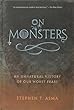
Stephen T Asma. On Monsters: an Unnatural History of Our Worst Fears. Oxford University Press, 2009. -- Reviewed by Peter Rogerson

Monsters, prodigies, ill omens, images of raw wildness and chaotic disorder haunt the human imagination and have done, presumably from earliest period of our humanity. Whether manifesting as huge, lumbering beasts, or physically or morally deformed human beings, they have inspire terror and awe through the ages.

Philosopher Stephen Asma here traces reactions to these monsters in the western tradition from classical and biblical times to the modern period. The monsters change over time, and have gradually become secularised from signs of God's wrath to either genetic flaws (which are now seen as providing important evidence for evolutionary development theory) or zoological or cryptozoological creatures. Once fearsome beasts such as wolves and gorillas are now re-presented as warm loveable creatures.

Whatever form they take monsters remain however as images of the "other", in which this "other" becomes "the worst thing there is".

Through much of this history there two or three basic types of monster: those which are monstrous in their predation, symbols of the raw forces of wild nature, the leviathans, behemoths and their modern equivalents; and the monsters of disorder, the chaotically deformed foetuses in medical museums (some of which are illustrated here).

These two images of the monster are perhaps best seen as aspects of the wilderness, the zone of primal chaos, as opposed to the ordered habitat of human society, the realm of right and order, whether everything is in its correct place and proportion.

Among those who violate this realm of proper place and proportion are liminal beings such as hermaphrodites (neither male nor female), or the imaginary or semi-imaginary creatures which straddle the human/animal divided such as 'wildmen'; centaurs, and werewolves, which straggle various animal classifications; or those which straggle the line between life and death such as ghosts, vampires and zombies, or between the organic and inorganic such as cyborgs and androids.

Even if these traditional monsters are now either relegated to the realms of horror fiction or popular paranormalism, looked at now as rare and endangered species, or are medicalised, and treated (correctly) as just people of a slightly different shape, our society still has its monsters.

These are the demonized others, who are seen as both monsters of disorder and monsters of predation. the serial killers, the terrorists, the foreigners, the 'terrible others' who are seen as the source of all heartache, pain and suffering in the world. In this way we can distance ourselves from the extremes of human behaviour and relegate these extremes to the realm of the totally anti-human. In doing so we open up the overwhelming temptation to act monstrously towards this unacknowledged other.

Though this a broad brushed book there are areas which are not covered, for example there is little coverage of such modern folk monsters as bigfoot, abducting aliens and other even stranger creatures, or the monsters of the imagination conjured up in sleep paralysis episodes. He might have also comented on the stigmatisation as monsters of groups such as the obese or the poor (the underclass), the role of the voluntary monster from the side-show geek to modern cultures such as the Goths. and those who most of us would not even remotely recognise or regard as monsters, who see themselves such, in various forms of body dismorphia.

11.2.10

POET'S CORNER

Our more literary aware readers may have noticed that the 2009 T S Eliot Prize for Poetry - one of the most prestigious literary prizes - had been awarded to Philip Gross for his book of poems, The Water Table, a collection inspired by the changing landscapes and waterscapes of the Severn Estuary. You can read about it HERE.

All very interesting, but what has this got to do with Magonia? Just that it was the very same Philip Gross, at the time working for the same library service as I was, who wrote the review of my book Evidence for Alien Abductions for Magonia magazine.

I'm glad to say he seemed to like it, and you can read that review HERE.


6.2.10

DARK DEEDS IN FULHAM

A few weeks ago I was walking past the Aetherius Society headquarters on Fulham Road, south-west London, and stopped to admire the display of UFO photographs, videos, and quotations from the thoughts of George King, when I noticed someone carrying out large cardboard boxes and stacking them in a van. I thought little of it and strolled on.

However, when passing by last week, the window display had changed radically. Not a mention of UFOs, no photographs, and no quotations from the Great Leader. Instead lots of stuff about the power of healing prayer and quotations from Richard Lawrence. A quick scan of their website also seems to show a remarkable lack of any mention of UFOs.

Maybe someone better informed can tell me if there has been some sort of internal coup-d'etat. Did I see the clandestine disposal of the embarrassing UFO material, ready for the Society's transformation into a vague New Age franchise like the crystals and aromatherapy shop next door? Is 'Dr' King about to become a non-person? Just asking.

3.2.10

MIND AND BODY

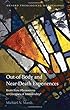
Michael N. Marsh. Out of Body and Near Death Experiences: Brain State Phenomena or Glimpses of Immortality. Oxford University Press, 2009. (Oxford Theological Monographs) -- Reviewed by Peter Rogerson
There is a surgical procedure in which corpus callosum is cut, resulting in a loss of communication between the two hemispheres, such that they might start to develop separate personalities. This is a split brain book, one hemisphere of which is the work a scientific rationalist trained as "an academic clinical biomedical research physician", the other is the work of a fairly conservative Christian theologian. There is however just the one author.

There is a huge literature on Near Death Experiences, most of which is aimed at championing what we might call 'envelope dualism', the idea that the body is nothing more than a lump of meat, which houses the true person, a detachable, usually otherly physical soul or astral body, which in NDEs ascends to transcendential realms, which might be identified with the realm housing an afterlife.

Michael Marsh, rightly in my view, rejects envelope dualism, arguing that modern biology, in particular neuroscience, show that consciousness and human personality are fundamentally routed in the embodied human brain, rooted within human society (and one might add the whole biosphere).

Marsh critically examines the various NDE accounts and argues that they represent accounts of fragmentary experiences, lasting in total only a few minutes of what are prolonged periods of unconsciousness. In some senses his assessment is even bleaker than say Susan Blackmore's. She regarded NDEs as illusions of a dying brain (which suggests we might have one before we finally pop off), Marsh regards them as illusions of the reviving brain, coming into existence in the minutes before the return to consciousness.

He examines a wide range of neurological conditions which might underlie such experiences, ranging from radical neurological events such as migraine, epilepsy, to discussions of dreaming. He argues that contrary to the NDEs claims many of these episodes do have the bizarre, illogical quality of dreams. He further argues that few of the NDE proponents have really critically examined these stories, and does show how respondents at times are subjected to leading questions.

Can this book be recommended then as a good quality sceptical treatment of NDEs? I am afraid not. For one thing, for all Marsh's obsessions with the (I must say not inconsiderable) motes in the NDE's eyes, he seems oblivious to fairly large beams in his own.

Even as sceptical observer in this scene, I got the impression that Marsh was not really confronting how strange some of these accounts are, and that his study was rather superficially dismissive. There is a worse problem; now I haven't the time to check all the accounts in this book for errors, but one screams out. He describes the famous account of 'Pam Reynolds' starting on page 19 with this sentence: "Pam Reynolds was a 35 year old woman who came to Dr Sabom's attention twenty years (my highlighting) after an operation for a basilar artery aueurysm..." This was an operation which involved draining the blood from the super cooled brain, and effectively putting it out of operation for a few minutes. Reynolds claims a dramatic NDE over that period.

Now, reading that I first thought that I hadn't ever realised that such a length of time occurred between the alleged event and the account, then remembering that Sabom's account was published in 1998, and thought "could such a radical procedure have been performed in the late 1970s". A quick check showed that all published reports claim that Reynolds operation took place in 1991, in which case at most 7 years, probably less occurred between the operation and the report. I have not seen any skeptical posting which challenges that 1991 date. so I am afraid I am very suspicious of that 20 year claim.

There is an even bigger problem, which is that it becomes clear in the second part of the book that Marsh's scepticism is as much motivated by theological animus as by science. He opposes transcendentalist interpretations of the NDE basically because they do not support his own interpretation of Christian dogma and tradition. Judging empirical claims by reference to ideological dogmas whether Christian, Islamic, Hindu, Marxist-Leninist or whatever is not a good idea at all.

To an extent I would agree with him that the 'afterlifes' revealed in some of these stories, especially in the rather literalistic interpretations of them, are rather banal; they resemble nothing so much as a theme park heaven. However one must be alive to the possibility that some of this banality results from an attempt to translate ineffable experiences into the nearest available vocabulary. and most of these people are not academic medical researchers or theologians, so the language they will use will be that of folk religion and popular culture. This holds true equally whether these experiences are the product of neural events or revelations of a transcendential realm. One case from Papua New Guinea involves an NDE in which the percipient meets his grandfather, dressed in his old grey cardigan. How banal, except that this is probably someone who in life had few personal possessions. The grey cardigan may have been his most prized possession, not just as a material object, but as perhaps the symbol of his transition from 'savagery to civilization' or similar; something of great meaning.

Marsh's alternative to the continuing 'soul' is quasi-bodily resurrection in some alternate universe by God's grace. As he quotes Jesus's alleged comment about not marrying in heaven, one assumes that this is some sort of birthless, deathless, sexless realm where one neither eats nor excretes. Somehow God transfers memory traces to this new body (how, for Marsh had argued that memory was based on the physical brain, so presumably memory traces and hence God must have some sort of physical substrate).

Now as I pointed out earlier, and Marsh and seemed to agree, human beings and the human personality and much more than memory traces, or patterns of information, they are products very much of the wet-ware of the human body and the global environment. Thus a totally different environment and body could not sustain anything that one could call a human life - could one even call it life? Curiously there is a secular version of this sort of austere existence, it is the idea of humans downloading themselves onto/into computers to find some secular version of passionless crystalline perfection. This argument equally applies to the 'astral bodies' of envelope dualism. Clearly there are some people who feel discontented with being human beings.

Though some interesting critical points are made about the NDE, this is ultimately a flawed book, which if it points to anything, is that science and theology are not natural bedfellows.

MAGONIA 18, JANUARY 1985.


This was quite a significant issue of Magonia, as we had just aquired the readership of Kevin McClure's Common Ground magazine, which not only considerably increased our circulation, but also gave us a stimulus to extend even further the range of topics that Magonia covered.

A short piece from Kevin bade farewell to Common Ground, and introduced his readers to their new magazine. He suggested that paranormal research of all kinds should concentrate on the basics, on the principle that "...our first responsibility must surely be to accept as the most reasonable explanation for any phenomenon that which is least unreasonable, unless we have any clear evidence to the contrary. And on that basis, after a good deal of thought, any theory I put forward must (unless other evidence arises) rest on the premise that there is no external agency involved ..." Or, as Sherlock Holmes said, "When you have eliminated the impossible, whatever remains, however improbable, must be the truth".

Today's apocalypic predictions seem to be based on something rather ill-defined which is supposed to be going to happen in 2012. We have of course been here before, particularly with the conveniently vague prediction of Nostradamus. Roger Sandell took a critical look at some of the interpretations which have been put on his works, and with his deep historical understanding was able to place them into a contemporary context. Read his article HERE. Elsewhere in this issue Roger also examined some aspects of the Rendlesham affair.

Wojtek Gaworzewski, who was at the time the ASSAP librarian, introduced us to a prophetic voice from Poland, an anonymous pamphlet circulating in the 1950s, but which had been around for a lot longer. Wojtek was amazed that one of the prophecises therein was right on target: "... will give three crowns to the anointed one from Krakow" seemed to be a pretty accurate prophecy of Cardinal Wojtyla of Krakow receiving the papal triple tiara in 1979.

But, as Wojtek goes on to ask, was it really so remarkable: "The tenor of the whole article speaks of Poland's rise to eminence. A Polish pope would be quite a likely ingredient in such a scenario." Krakow, for historical reasons, would be the see mostly likely to produce such a pope. Another part of the prophecy which seemed then (and now!) to be even less likely was the union of Hungary and Romania with Poland, from the Baltic to the Black Sea!

Peter Rogerson looked at some of the conceptual linkages between witchcraft and ufology HERE, and we were introduced to the Liverpool Leprechauns by Nigel Watson, Ian Cresswell and Granville Oldroyd. This is a fascinating account of a rumour-panic, and you can read it HERE. But make sure to scroll down and read the comments which have been added subsequently. These are first hand accounts from people who were involved in the events as children, and from a policeman who tried to cope with the mayhem at the time. They have a number of, sometimes contradictory, explanations for what was going on at the time. A bizarre piece of social history.

1.2.10

MARFA LIGHTS

James Bunnell. Hunting Marfa Lights. Lacey Publishing Company, 2009

Marfa is a small community in the west of Texas noted for the appearance of strange lights. For some these lights are a paranormal visitation, for others merely the misperception of the lights of distant vehicles. Retired NASA engineer James Bunnell has spent 8 years studying these lights, and concludes that while many can be explained in terms of well understood causes, others are much more puzzling. He has managed to obtain films and/or spectrographical analysis of some of these lights, which seem to rule out some of the more obvious explanations.

What makes this study interesting is that Bunnell has eschewed interpretations in terms of UFOs, paranormal phenomena or even speculative natural phenomena such as earthlights. Instead he has taken the scientific line of trying to discover exactly what the lights are. There are no grand conclusions, some of the spectrographic analysis points to plasma phenomena, others to forms of chemical combustion. Whether these are two aspects of the same phenomenon, or two separate phenomena remains to be determined. Another group of lights seem to be produced by nocturnal mirages.

By establishing remote monitoring stations in various locales in the general area, well removed from much light pollution he has been able to observe and photograph a wide range of rare atmospheric phenomena, including a very rare photograph of a blue jet lightning event, as well as several examples of 'sprites', meteorites and some other events which seem to relate to uncatalogued phenomena including a couple of more classically ufological nocturnal lights (again Bunnell does not claim these represent alien spaceships) as well as observations on the local nocturnal wildlife.

This study perhaps gives us an idea of what a scientific ufology might actually look like. It would be great to see this expanded on a proper professional basis, "the atmospheric rare events survey" or some such, with large numbers of sophisticated web cams in remote places away from light pollution, and to document these before light pollution becomes universal.

MAGONIA RECOMMENDS