31.3.10

A VERY BRITISH HAUNTING

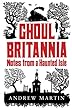
Andrew Martin. Ghoul Britannia: Notes from a Haunted Isle. Short Books, 2009
The British love a good ghost story, and in this book journalist Andrew Martin looks at that obsession, concentrating on the golden age of the ghost story, before the First World War. He quotes historian of ghost stories Julia Briggs as arguing that the carnage of that war effectively killed off the traditional ghost story, as has the electric light.

The excepts here show how fictional and "true" ghost stories often have a symbiotic relationship, with shared literary styles and borrowings. They rely on narrative techniques and settings (old musty houses lit by flickering gas lamps for example). To be effective the spookiness must gradually build up, and should avoid anything of the blood and guts about it. They should involve a sense of growing estrangement from a house or dwelling which turns increasingly into an anti-home, and to which the narrator(s) is/are incomers.

Perhaps this is one reason why haunted council houses took over from the haunted middle-class leasehold property. Council house sales, have driven even these ghosts away, leaving the pubs as perhaps the only properties with a cycle of incomers and a lack of sense of belonging.

The age of the classic middle class ghost discussed in this book, and in fictional terms taken to an apotheosis by M. R. James, and in factual terms by some of the early cases from the SPR are now over. They are succeeded by the poltergeist, a much more working class, if not underclass, phenomenon. Here the fear instilled in the reader is not that of a troubling past which will not lie down, but a troubling future and the headlines it will bring. -- Peter Rogerson

28.3.10

KEEPING IN CONTACT

Nick Redfern. Contactees: a History of Human-Alien Interaction. New Page Books, 2010. -- Reviewed by Peter Rogerson

Nick Redfern here takes us on a reprise of the world of the contactees. The people, mainly in the early days of ufology, who claimed to have had contact with nice long-haired, blond Ayrian Venusians who told us to be nice and stop making atom bombs and having wars. Their message was taken straight out of the film The Day the Earth Stood Still, omitting the threatening robot Gort. From the perspective of the 21st century their tales seem incredibly naive, and it is difficult to believe how many people who weren't altogether stupid or ill-educated came to believe them.

Redfern concentrates on some of the well known figures of this period, such as George Adamski, Truman Bethurum, George Van Tassel, Howard Menger, etc. There are some lesser known characters such as Dana Howard, or Ralph Lael who had stood as a candidate for Henry Wallace's Progressive Party in North Carolina in 1948, and in the 1950s claimed contact with the intelligences behind the Brown Mountain Lights. I was also surprised to see that an author I had seen in bibliographies, Margit Mustapha, was allegedly a real person, a Finnish singer. I had always assumed the name had been Mustapha Margit and was a joke, actually spelling 'Must Have a Market'! (Obviously it is possible to be too cynical)

British readers will be sorry to see that well known British contactees such as Jim Cooke, Arthur Shuttlewood, Philip Rogers, etc., are not included. I would have thought that Shuttlewood would have appealed to Redfern's rather conspiratorial agenda, as there is at least an outside possibility that his contacts were staged by the Moonies. There is, of course, no mention of the fictitious 'Cedric Allingham', played by a guy called Davies to a script written by Patrick Moore!

Perhaps the British contactees are omitted because they don't have FBI files, whereas Adamski and some other American contactees did. In Adamski's case it would seem that having lost his first love, Hitler, he turned to Stalin as second best. His side kick Williamson (who later claimed to be the heir to the throne of Serbia) stayed with his old Nazi friend William Dudley Pelley right to the end.

Reading these tales, there are a number of reasonable possibilities. They are all clearly the work of the human imagination (or perhaps lack of same), and the only question that remains is whether they came from the spontaneous imagination of dreams, hypnogogic and other visionary experiences; or from the crafted imagination, and in the latter case whether the contactees wanted a powerful imperative for their own religious and political views, or were in it mainly for the money.

Redfern does note these possibilities, but prefers to invoke all sorts of complicated, baroque explanations, ranging from mind control experiments by secret government agencies, Mac Tonnies' 'crypto-terrestrials' (ie up-market Deros) or intelligent plasmas. As Redfern seems to act as a lightening rod for a sizeable proportion of the International Union of Fantasists, Bullshitters and Allied Liars, there are the usual whistle blowers of negligible credibility to back up some of these claims.

25.3.10

LOST IN SPACE?

Paul Davies The Eerie Silence: Are We Alone in the Universe? Allen Lane, 2010

As a boy and teenager in the 1950s and 1960s Paul Davies was fascinated by science fiction and tales of aliens, and like many such teenage boys turned to ufology for 'the evidence'. For quiet a time, like many of us, he was intrigued by the 'evidence' collected by the likes of J Allen Hynek, whose house he visited on occasion. By this time Davies was a post doctoral researcher in astrophysics and was clearly getting seriously involved in the subject.

Needless to say, exposure to actual ufology on the ground, as opposed to the sanitised material in books and magazines soon began to change his mind. There is a brief description of his investigation of a case from Warminster, which showed that a mysterious light was in fact an army flare, but would the witnesses believe that ... ?

More to the point perhaps was his growing realisation that the aliens in UFO reports and their mysterious craft were just not, well, alien enough, they were obviously the product of the human imagination and human concerns. Whatever puzzling UFO reports represented (and he says he keeps his mind open to the possibility that some might represent novel physical and/or psychological phenomena), they did not represent the visits by extraterrestrial.

Davies moved on from this youthful interest, becoming a lecturer in cosmology at the University of Sussex before moving to Adelaide, and becoming the author of both textbooks and popular science works, several with rather edgy agendas moving close to theology. However his interest in extraterrestrial life has not left him, and he is now involved in the SETI project as well as running something called the Beyond Centre for Fundamental Concepts in Science.

Davies is rather more cautious than many writers in this field and continuously points out that our position is one of almost total ignorance, as we do not really know how life originated or whether it is very widespread or extremely rare, perhaps unique to earth. Until we discover completely alien life forms, we will not be able to answer that question. That is not going to be very easy, even if we found primitive life or its relics on Mars, that life could have had a common origin to earths, as meteorites are transferring material from one to the other.

Obviously waiting until we can explore the oceans of Europa or the methane lakes of Titan for 'life' might take a very long time, but there might be a closer location for exotic life forms, earth itself. All known life on earth has a common genetic origin, shares a common ancestry and is part of the one kindred. Might there be other life on earth though, which evolved separately, for example organisms in which phosphorus is replaced by arsenic? Scientists are not searching remote, isolated and extreme environments for such exotic life. If it could be shown that life evolved on earth more than once, then that might be evidence that life is something which arises easily and may indeed be common.

Finding evidence for 'intelligent', i.e. techno-linguistic life, may be much more difficult. The example of earth suggests that it is rare, only one among the billions of life forms that have existed on earth has developed techno-linguistic ability. Davies suggests that science may be even rarer, a product of very special historical circumstances, in particular the fusion of Greek rationalism with Judaeo-Christian monotheism. Indeed not any old monotheism would seem to do, only one where God like the king was bound by his own laws (e.g. England after the defeat of Charles the First). Nature like the Commonwealth is regarded as being bound by laws, administered by a constitutional God.

While this probably overestimates the particularism, and underplays developments within Greek and other protosciences, it does point to the possibly that science may not be universal. A different ideological background might produce a different science, one in which the 'laws' of physics might be regarded as having altered or evolved for example.

When it comes to accumulating evidence for techno-linguistic ETs, the situation becomes worse, and Davies like most previous authors tends towards rather self contradictory arguments: alien civilisations must be much older than ours and possess all sorts of wonderful knowledge and wisdom, but they are assumed to communicate by means of such 20th century products and discoveries such as radio telescopes, lasers, and neutrino detectors. However wild our imagings, space travel, time travel, 'brane-hopping', building universes in the back garden or emulating them on super-super-computers, nanomachines, organic-machine hybrids or giant quantum computers, are all just that, products of the human imagination in our time and culture. Odds are overwhelming that the products of really alien mental activity wouldn't be like anything that human beings could ever imagine.

Given that, the chances of us ever receiving a message through a radio telescope, or finding an alien artefact we could recognise as an artefact must be exceptionally slim. Even if we did receive a message, the chances of deciphering it would seem to be near zero (best case Virgil trying to decipher a textbook on quantum mechanics, more likely a gerbil trying to decipher it)!, and even if by some miracle we could decipher it, it would be irrelevant to the human condition, you know something like "we have found that the perfect path to global peace is to eat each others detachable and regenerable third tentacles", very useful for us!

Perhaps what books like these really reveal is the imaginations of their authors, and Davies, whose website suggests is a personable enough fellow with an interest in a number of semi-Fortean and quirky topics, such as strange geographical enclaves, lets his imagination go into some very murky places.

There is the notion that human beings should aim to transcend the human condition, at first by means of genetic engineering and chemical coshes, so we all become nice and bland, and loose our fire, passion and rage. Then we turn ourselves over to or into machines which aren't machines because they have organic components (Davies does not give any suggestions as to where these organic components might come from, so why does a little voice in my head whisper aborted foetuses), through to slow and plodding planet-wide or Dyson-sphere sized organo-computers, to the ultimate quantum computers. Quantum computers are tricky things however, too much heat upsets them, they have to exist at near absolute zero, so they would have to be in the cold of interstellar space. There they would live in their own virtual worlds solving ever more abstruse mathematical puzzles.

So the future of intelligence is a self absorbed computer with Asperger's syndrome, 'existing', preferably entombed in a glacier of solid hydrogen, on some wandering world, sling shot out from the warmth of its sun and solar system into the boundless cold, darkness, silence and ineffable loneliness of the "unhallowed spaces between the stars". Surely a vision of Hell for our age, compared with which Budd Hopkins' grey vivisectors, to say nothing of the hot fiery devil of the medieval imagination, seem positively benign.

In which case it is with some relief that we learn than "the scientist" in Davies thinks its not altogether unlikely that we are alone.

22.3.10

MORE FROM THE HAUNTED WING

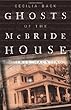
Cecilia Back. Ghosts of the McBride House: A True Haunting.
Llewellyn Publications, 2009.

 For 25 years Cecilia Back has lived in a house in Oklahoma which she perceives as being haunted. What is interesting about this story is that this family is haunted by a spectral parody of the bourgeois nuclear family, man, woman, boy, girl. However this "family" is a mere facade, not only in the sense of being both simultaneously present and absent, but in that its members are not envisaged as a real family, even a dead one. They are rather more like an accidental assemblage made up to look like a family. This shadow family mirrors and presages the author's own (father, mother, son, daughter), though the daughter is born in the house, and perhaps mirror their lives

Feminists will probably regard it as significant that only the patriarch of this pretend family is given a name and identity: Doctor McBride the builder of the house, who like the writers husband was a general practitioner. The others are simply labelled as 'The Victorian Lady', 'The Boy' and 'The Girl'. They have no historical personality, being in some sense stock figures, as little more the appendages to the house, or even vagrants attracted in from outside.

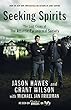
Jason Hawes and Grant Wilson with Michael Jan Friedman. Seeking Spirits: The Lost Cases of the The Atlantic Paranormal Research Society. Pocket Books, 2009.

The Atlantic Paranormal Society run by Hawes and Wilson features in the popular TV series Ghost Hunters. That series though initially suggesting at least a facade of science and scepticism, rapidly descended into employing 'demonologists' and the like. The present book is written well within the pop spiritualist world view, and contains claims by Wilson to have had regular communication with a strange entity in a forest since childhood, and by the group to have been threatened by a group of devil worships (their video of this was confiscated by said Devil worshipers of course), to have a video of a small elemental rearranging someone's kitchen, another video of grey alien hanging around someone's house (neither reproduced of course), to say nothing of the woman who was in two places at once, or the various growling demons summoned up by using ouija boards. After this catalogue comment would seem to be superfluous.

Andy Matthews. Andy Matthew's Greatest Haunts. Foulsham, 2010
Andy Matthews book is a spin off of one of the British ghost hunting TV series, this one by the BBC (can I have that part of my licence fee back please?), and being British is rather less dramatic, furniture moving elementals, dopplegangers and growling demons being notable for their absence. Instead we get a medium producing historical romances and acting various parts out. Andy Matthews also claims mediumistic ability, and occasionally sees ghosts. Many of the experiences recounted here would seem to be explicable in terms of expectation, sleep paralysis and perhaps occasionally some kind of micro climatic or environmental effects such as standing columns of air.

PANIC IN THE GRAVEYARD

 Here's a link to a fascinating article with many points of interest for Magonians:

http://news.bbc.co.uk/1/hi/scotland/8574484.stm

It is extremely reminiscent of the Liverpool Leprechaun story in the Magonia Archive:

http://magonia.haaan.com/2009/leprechauns/

Make sure to read the comments, from some of the people who were involved in the Liverpool incident at the time.

WIERDNESS UNLIMITED

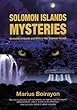
Marius Boirayon. Solomon Islands Mysteries: Accounts of Giants and UFOs in the Solomon Islands. Adventures Unlimited, 2009

A most curious book, a mixture of travel adventure, biography, folklore and classical paranoia. Much of this centres around the author's (mis)adventures in the Solomon Islands, from which he alleges he was forcibly deported by the Australian intervention force. This, I suspect had less to do with his chasing strange lights in the sky, which locals allegedly call Dragon Snakes, and he attributes to UFOs flying from underground bases, than he would have us believe.

The folklore about the giants, if indeed it is genuine folklore -I have been unable to find references to this outside of pop paranormal websites - is fascinating. The giants would appear to occupy much the same role in local culture as do, say, the fairies of Ireland, and would seem to be euhemised petty supernaturals. The stories of cannibalistic giants, may contain several layers of meaning, as symbols of the voracious forces of nature, the notion of human wildness when separated from social bonds and rules, and mythologised accounts of past ethnic conflicts.

As the book ends, the author seems to fall increasingly into a paranoid world view in which the Australian intervention in the islands is somehow tied up with his own activities, and is aimed at protecting the bases of the secret world government which exist under the Solomons.

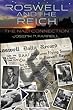
Joseph P Farrell. Roswell and the Reich: The Nazi Connection.
Adventures Unlimited, 2010

If the author had confined himself to a critical analysis of the evidence surrounding Roswell, this book would not have been without interest, for he is able to show how much of it is secondary and long after the fact, and even then is hardly suggestive of some super-technology capable of traversing interstellar space.

However he goes on into wild speculation about surviving Nazis and their amazing technologies. These technologies of course did nothing to save Hitler and his chief gangsters, did nothing to save Eichmann, or to assist such presumed allies as the Argentine military junta at the time of the Falklands war.

The author presents himself as an anti-Nazi, despite the constant references to the amazing achievements of Nazi Germany and their secret super-technology; which seems to be part of the universal fascination with radical evil, which makes the Nazis one of the prime subjects of high school history in Britain.

Of course the idea of the super conspiracy by the forces of radical evil possessed of superhuman powers is the old witchcraft repackaged. It is perhaps no coincidence that in effect what this book is partly doing is refashioning old antisemitic fantasies right out of the Protocols of the Elders of Zion, with the word Jew replaced by the word Nazi: the Protocols of the Elders of Nuremberg, presumably!The best one can say to this is that if you must demonise something, the Nazis are better than most - there are not all that many of them, and if they end up getting a good kicking they deserve it.

Fortunately for the peace of mind of the sort of people who take this sort of thing seriously, the evidence that Farrell adduces for the exotic properties of the Roswell debris all turn out to come from revisionist memories years after the event. Contemporaneous sources and actions show otherwise. They are consistent with the actions of people who had only the vaguest idea as to what the words "flying saucer" meant (and certainly not thinking of extraterrestrials or the like), had found no evidence which pointed towards either a secret American or Soviet project or high technology and thought they could earn brownie points by finding a low tech, really mundane answer as to what the "flying saucers" which had been puzzling their colleagues really were, only to be hauled over the coals for compromising an actual secret project. Simples, as the meercat would say. -- Peter Rogerson

18.3.10

A BEGINNER'S GUIDE

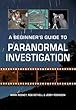
Mark Rosney, Rob Bethell and Jebby Robinson, A Beginner's Guide to Paranormal Investigation. Amberley, 2010. -- Reviewed by John Rimmer
Back in the day, every medium-sized town used to have its own UFO 'research' group. Magonia magazine grew, through a long process of evolution, from such a group in Liverpool. Holding meetings in community halls, scout huts (and in one case the canteen of a plastic-coatings factory - a location with an almost archetypal ambience of suburban anonymity!) these groups would host talks by various visiting speakers (been there, done that, no tee-shirt), discuss the latest books and magazines, and sometimes conduct investigations.

And this usually was where things started to go wrong. Very few of the original UFO groups were equpped for scientific observation, and many were simply advocate groups for the ETH. 'Research' often consisted of a desperate attempt to rule out conventional explanations for sightings in order to force an 'extraterrestrial' conclusion.

Of course, not all groups had such abysmal standards of investigation, SIUFOP was one notable exception, and despite its many faults BUFORA did produce some excellent investigation reports, but as with all such groups, they were usually a result of the efforts of a few individuals, often acting semi-autonomously from the group the nominally represented.

With the growth of the Internet, the decline of the duplicated 'zine, and the lifestyle changes which have meant the end of thousands of small social organisations from brass bands to ferret-fanciers, the local UFO group is very much an endangered species. But new media and publication outlets have developed as well - individual researchers are now linked by Internet newsgroups and discussion forums, and the inky duplicated 'zine is replaced by the blog.

But there is still room for the amateur investigator, and particularly, it seems, in the field of ghost-hunting. There have been a number of recent TV shows featuring all-night vigils in spooky locations, and as we've noted before, the ghost story and the haunted house are being re-invented as part of the heritage industry. The authors of this book are an investigation team based in the north-west of England, and are regular guests on TV and radio talking about the paranormal and explaining their investigation techniques.

The book looks at a range of paranormal phenomena, and the ways in which they can be investigated in a scientific manner. I think it's fair to say that the authors are of their opinion that the events they study probably represent real, and as yet unexplained phenomena, however this does not mean they have compromised the objectivity of their approach.

They look at the techniques for investigating reports of ghosts, photographic anomalies, cryptozoolog, UFOs and, rather surprisingly the Raudive-style electronic voice phenomenon, which I thought had rather fallen of the edge of psychic research. They describe the types of equipment and techniques that a group would need to provide instrumented evidence of such phenomena; including infrared cameras, various kinds of recording instruments, how to plan an investigation in a logical way, as well as useful tips for dealing with interviewing witnesses, analysing eyewitness reports, etc. They warn of the pitfalls of inadequate investigation and the types of misinterpretations that can occur, particularly in analysing photographic and video evidence.

The UFO section takes particular care in describing investigations that have resulted in clear identifications for reports and gives a very fair account of the ambiguity inherent in eyewitness accounts.

I think it would have to be a very well financed group to be able to afford all the equipment which is described, but any group using this book as its basic guide would be able to compile a pretty good account of any events it investigated, and avoid some of the horrors that have passed for 'case reports' in the past. Recommended.

14.3.10

GHOSTLY GAZETTEERS

  • Ross Andrews. Paranormal Cheltenham. Amberley, 2010. 
  • Janet Cameron. Paranormal Brighton and Hove. Amberley, 2010. 
  • Darren Ritson. Supernatural North. Amberley, 2010. 
  • Peter Underwood. Haunted Gardens. Amberley, 2010. 
  • Peter Underwood. Haunted Wales. Amberley, 2010.
In reviewing other books in this series, and a similar collection from History Press, my colleague Peter Rogerson has pointed out that ghosts, hauntings and the paranormal are now as much a part of local nostalgia and the heritage industry as they are of psychical research, an impression which is reinforced by this current crop of titles.

The most substantial collection from a researcher's point of view is Darren Ritson's, although the title is slightly misleading, as the book deals mostly with the author's home area, the North-East, with comparatively little on the western half of Brigantia (which Ritson has dealt with in another book). The controversial South Shields poltergeist case is summarised, with the author taking the opportunity to get in a little retaliation to some of his critics, who may or may not include Magonia! This book has much more hands-on investiagtion than the other titles reviewed here, via Ritson's group, Ghosts and Hauntings Overnight Surveilance Team (G.H.O.S.T.S. - best acronym since Jim Moseley's Saucer and Unexplained Celestial Events Research Society - S.A.U.C.E.R.S!)

An account of an investigation of a haunting at a Miners' Welfare Institute in South Yorkshire, and the description of the almost superfluous haunting of the Blackpool Pleasure Beach's ghost-train, shows perhaps the way the ghost-story is moving: from the castles and abbeys, decayed relics of a vanished aristocracy, to the Miners' Institutes and closed-down pits of the post-industrial era, and the fading remnants of the once raucous, lively, working-class British seaside holiday.

Janet Cameron gives a gazetteer of odd events and happenings in the 'city' of Brighton and Hove, many from the pages of the local paper, but there are no accounts of investigations such as in the Ritson book, and this title is firmly in the local history/heritage camp.

This format is taken further in the Paranormal Cheltenham volume, which is designed as a series of guided walks around the town, with directions leading you from one haunted location to another. There are a couple of brief accounts of investigations by the author's 'Parasoc' investigation society, but again, this is primarily a local-interest gazetteer.

Underwood's Welsh title is a reprint of a book first published in 1978 as Ghosts of Wales, and is in much the same style, largely a series of brief accounts of traditional hauntings arranged alphabetically town-by-town. There is also a rather one-sided account of the UFO-related events at Ripperston Farm in 1977, as well as a description of a ghost ship at Milford Haven which recalls some Scottish legends of phantom vessels which Peter Rogerson has written about in Magonia.

The same author's Haunted Gardens is a new and more substantial work, and covers locations in Europe and America. The most famous haunted garden is of course the Petit Trianon at Versailles, and Underwood gives an account of this, as well as the goings-on at Borley Rectory. Underwood is a much more traditional raconteur than the other writers here, and his haunted gardens are all attached to stately homes or country estates, there are no council house gardens or haunted municipal parks. But the accounts of the hauntings are fuller than in the other titles, and this book is more likely to be of interest to the general reader rather than local ghost-hunters. -- Reviewed by John Rimmer

7.3.10

KLASS ACT

 I was rather surprised to see Philip Klass appearing in the Daily Telegraph obituary column last week (2 March 2010) believing that lovable old Uncle Phil had died a couple of years ago. However this was not the curmugeonly old skeptic that we at Magonia Mansions revere. Instead it turned out to be the real name of science fiction writer William Tenn. Curiously 'our' Phil Klass was for some time believed by some ufologists to be 'really' William Tenn (as well as being a CIA agent paid to debunk UFOs). Of course, at one time 'William Tenn' was thought to be a pen name of Tennessee Williams - not someone I would imagine writing science-fiction on his days off, but there you go.

To distinguish between them, consult this cut-out-and-keep guide:


Incidently, those who miss L. O. Uncle Phil's distinctive Skeptics' UFO Newsletter, will know that the tradition is being carried on by Tim Printy in the form of the on-line journal SUNLite, but without the master's characteristically deranged typography.

MAGONIA RECOMMENDS