26.4.10

ELECTRICITY OF THE MIND

Electricity of the Mind: The Anomalist no 14, edited by Ian Simmonds. Anomalist Books, 2010.

Texts contain hidden secrets, and new technologies are helping to unearth them. Older texts may contain the strangest stories and the ones that require the most textual analysis to help tease out their meaning. An example of this may well be the strange tales of volcanoes where no volcano should be, as featured in several old chronicles and documented by Ulrich Magin in this issue. Magin points out that despite these reports of volcanoes in places such as Scotland, Wales, France and Germany, no geological evidence of such activity in historical times exists. Magin suggests that while some may have been generated by actual physical phenomena ranging from methane fires to landslides, others are perhaps best seen as descriptions of actual volcanoes in foreign lands transplanted to local mountains. He argues that these out of place volcano stories help us to critically analyse less obviously impossible Fortean events in.

These texts can illuminate past cultures, as in Patrick Gyger' s brief look at the beginning of the witchcraft persecutions as revealed in the "black books" or crime registers of the town of Friburg at the very end of the medieval period. Here witchcraft still existed in the liminal zone between "ordinary" crime and grand heresy, but already many of the features of the later epidemics of witch hunting, derived from the ideology of the interrogators orthodox Catholic ideology were emerging.

It is not just medieval texts that reveal strange secrets, The new digital technologies are opening up the lost worlds of 19th century American local newspapers, and this allows Theo Pajimans to track the stories behind several of the brief notes in Fort's books. There is for example the story of Isaac Martin who is supposed to have disappeared in a field. The newspaper stories unearthed by Pajimans show that Martin was found hung in a nearby tree some six weeks later. As he points out this creates its own mystery, as once presumes the area had been searched pretty thoroughly beforehand (the modern CSI-sensitised reader might suspect that Martin had been murdered and his body later placed in the tree to make it look like suicide).

Then there is the great bird of Copiapo, which mutated as some form of flying machine appears, for some reason that is not easy to understand, as the first case in Jacques Vallee's original Century of Landings. The original stories are of a great bird "its great wings covered with a brown plumage, the head of the monster was in shape similar to that of the grasshopper, with enormous eyes wide opened and brilliant as stars and covered with something like hair or bristles, the body lengthening out lie that of a serpent, was covered with brilliant scales which emitted metallic sounds as the animal moved itself along."

This reads like one of the less salubrious beasties out of the Book of Revelations, surely on its way to pickup breadcrumb sins.

To understand what these and other stories are about, we would have to know a lot more about the context in which it was originally reported in Chile (assuming that it actually was) and about the Copiapo mines and how they were regarded at the times.

As Paijmans shows these and many other Fortean stories made their rounds from newspaper to newspaper, they must have been read or heard being read by large groups of people. While it is very useful that these newspapers are now being digitialised, there needs to a a caveat entered. It is that this digitialisation can rob stories of their contexts, to grasp that we have to look at the whole page in which they appeared, and that page in other copies of the paper, to assess whether this was a page devoted to serious news, to entertainment, the telling of moral tales or whatever. Even so there will always be nuances lost to time. Were the "sober and honest" Bert Scoggins or "the respectable " Miss Cynthia Stoatstrangler, really that, or did the original readers know that they were the town drunk and the town whore. We have no way of knowing.

Local newspapers fulfilled a wide variety of functions in a society without cinema, television, radio, widespread sound records or telephones, and often with a scarcity of printed matter. They published local news, abstracted the interesting and sensational stories from the national and local press which they exchanged with, told stories, circulated gossip, provided sources of humour and entertainment, but also moral positions, and were often filled with adverts not clearly distinguished from the rest of the text. Making them even more difficult for modern readers to evaluate is their often sober and bland presentation which can give an aura of false authenticity.

Such strange stories from the bowels of the newspapers come from the 20th century also. One such is the vision in the sky reported by some of the residents of Helterville PA in July 1914 as recounted here by Dwight Whalen. It was, according to at least one witness "an immense house filled with children dressed in white with a black band on the arm of each" coming out of the house in columns of two, dividing at the door and then going in opposite directions. An image of two tribes going to war. Another witness described it as like a picture thrown on a screen, waving in the wind.

Clearly in a European Catholic country this would have become a Marian apparitions and a centre of pilgrimage, in Midtown USA it becomes a misidentified searchlight from a carnival. Here the vision is perceived in terms of the latest medium, the cinema, and perhaps in particular the travelling outdoor cinema screens run by fairgrounds and travelling carnivals.

One person who would have been fascinated by the tale of Helterville was Samuel Taylor Coleridge, the subject of an important essay by Mike Jay. Jay shows that Coleridge, based on his own hallucinatory and illusionary experiences was developing a theory of "radical misperception" of the sort we have speculated on in the pages of Magonia. Coleridge argued that it was the human imagination which constructed a coherent narrative from fragmentary perceptions, that some experiences particularly those in the boundary world between sleep and waking "the matrix of ghosts", allowed a revelation what is usually hidden, the process by which perceptions are constructed, and more importantly these gaps in perception allowed the deep imagination to use perceptions as tools for works of art. These experiences he called "supersensory.

The visions at Helterville, would thus have been supersensory experiences, they may or may have been stimulated by a searchlight or a mirage or the northern lights or whatever, but that would have just been the scaffolding on which the deep imagination, or spontaneous imagination could work. He further argued that much of crafted art must use attempts to stimulate this deep and spontaneous realm of the imagination.

The liminal zone between imagination and consensus reality is apparent in the writings of people like Carlos Castaneda and Whitley Streiber, the subjects of Aeolus Kephas's paper, and in the art of the crop circle makers. Both construct images which powerfully resonate within the deep imagination. The crop circle makers for example seem to have been anticipated by such science fiction films as Phase IV issued in 1974, which featured a huge crop circle and pictograph. Though Kephas takes a more literalistic line, seemingly unaware that Castaneda did most of his "fieldwork" in libraries in California rather than in the outback of Mexico, but it is perhaps best to see both as people who became consumed by their own imagination, metaphorically eaten by their novels. Even the before the Communion cycle, Streiber had made himself a character in the novel War Day, a novel of nuclear apocalypse. These novels then use ideas, whether from the byways of academia, as in the case of Castaneda, or the realm of popular folklore as in the case of Streiber, which send them on shamanic journeys into the deep imagination.

This theme of deep imagination and the artists ability to evoke this, lies at the heart of another form of modern shamanism, that of the conjurer, the subject of the paper by Richard Wiseman, who links the professional conjurer and the medium as people who are able to deconstruct perceptions. It is precisely the circumstances in which seances are held, even the "faked" ones of Wiseman, the darkness, expectancy, mixture of tension and fatigue, take participants into the matrix of ghosts and into what Coleridge called the "willing suspension of disbelief".

As shamanic figures conjurers are always ambiguous, trickster figures, what such is Randall Zwinge alias James Randi, whose career is lovingly taken apart by rival performer Tim Cridland alias Zamora the Torture King. Cridland suggests that Randi's past is much more ambiguous than that of the pure hearted crusader against paranormal pornography which he now portrays himself.

It is not just cultural factors which can open up the deep imagination and transport us to the matrix of ghosts, the environment can do that just as well. Sometimes this is caused by the general ambience, but perhaps other factors, elements of nanoclimate, electromagnetic anomalies, infrasound and the rest can all play a part, and Bryan Williams, Annalisa Ventola and Mike Wilson suggest some ways in which ghost hunters can test for some of these effects.

Of course all human societies contain at least some individuals who can access this matrix of ghosts, and in many societies artists are the ones who do that. This is of course true of many small scale low-tech cultures, something which is entirely lost on one Cameron Matthew Blout who actually argues that "it is likely that early man had neither the time nor expendable resources to devote to such speculative activities as creating complex and abstract mythology" or abstract art. Mr Blout is an administrator (what else could he be) at a university, presumably one without a modern anthropology department.

I have done quite well to link most of the contents of this issue of Anomalist to a common theme, but some papers are harder to fit in. Gary Lachman provides some additional notes omitted for space reasons from his book Politics and the Occult, John F Caddy (any relation to Peter Caddy?) goes on about chakras and weird physics, and Chris Payne uses advanced mathematics to estimate the likely populations of surviving thylacines in an article which makes me suspect it has escaped from the 1st April edition of some mathematics journal.

As always in the Anomalist the good stuff far outweighs the dross, and recommended to all Forteans and explorers of the matrix of ghosts. -- Peter Rogerson

19.4.10

BRIEF GUIDES

Malcolm Gaskill. Witchcraft, A Very Short Introduction. Oxford University Press, 2010.

John Michael Greer. Secrets of the Lost Symbol. Oxford University Press, 2010
Short it may be (just 146 small format pages), but Gaskell's book is still a very comprehensive history and analysis of witch belief in (mostly) the western world. The author is Reader in Early Modern History at the University of East Anglia, and has written extensively on witchcraft and witch trials. He is the author of Hellish Nell, an account of England's last 'witchcraft' trial in the 1940s.

Gaskell sees witchcraft developing not as a hold-over from a previous, more 'primitive' belief system, but as part of the process of the development of the modern world. This was a world where misfortunes could no longer be blamed on impersonal supernatural forces, there would have to be an identifiable cause, a culprit who could be dealt with by society. Gaskell points out that the disturbing growth of forms of witchcraft in modern Africa is not a revival of earlier beliefs but something which has arisen in societies which are moving into the modern world.

The 'witch-hunts' in Europe in the early modern periods were generally not the result of uncontrolled mob action as depicted in innumerable films and novels, but were largely very carefully conducted according to contemporary legal standards. Within the societies in which they took place they seemed a totally rational response to a perceived threat to the established order, and to understand them we have to examine how they fitted in with the social and legal realities of the era.

Gaskell refutes many of the popular beliefs about the witch hunts; in many areas the most likely result of a witchcraft trial was a 'not guilty' verdict. Even at the time there was a great deal of scepticism about the reality of witchcraft, and the official attitude varied greatly from place to place.

The author touches briefly on modern witchcraft and Wicca, pointing out that is largely a re-invention inspired by writers like Margaret Murray, and sees it developing from the rise of occult and spiritualist belief in the nineteenth century, which in itself was a process of creating a series of scientific 'laws' to define and control the supernatural, in the same way that the earlier witch trials were an attempt to create a system of legal control over the supernatural.

Although a compact work, and very accessible, it is scholarly and repays careful reading,; highly recommended. It also it has a full index and a very comprehensive bibliography

... unlike Greer's book, which lacks both. Although its format as an alphabetical listing of topics means it can be usefully accessed without an index, one would have been useful and a bibliography would have been very helpful.

The book is marketed as an 'unauthorised guide' to the latest Dan Brown film, and without this link it would be hard to see exactly who it is addressed to. It gives brief explanations of a variety of esoteric and occult topics, as well as explaining the meanings of specialist terms, and brief notes on individuals and various occult movements and masonic organisations.

All the entries seem to be straightforward and accurate descriptions, not pushing any particular viewpoint, and they would certainly be very useful to anyone working their way through the Dan Brown oeuvre and other books of that genre. Without this link I just cannot see the book standing alone as a particularly useful reference tool, but that clearly is not its purpose, as the saying goes, "it does what it says on the tin". -- Reviewed by John Rimmer

10.4.10

EXCUSES, EXCUSES

Just had to pass this on, from the Daily Telegraph, via UfologyinUK:

"A motorist fined for straying into a bus lane claimed he swerved to avoid a UFO, according to a list of bizarre excuses used by errant drivers.

"The man was given a £120 fine after being caught on camera veering into the bus lane to dodge a traffic queue.

"But instead of paying up the driver claimed that he was 'forced' to swerve into the bus lane to avoid an alien spaceship which was 'hurtling towards him' in Southwark, south London.

"He told parking appeals bosses that he would 'never normally' use a bus lane, but that he had to take 'avoidance action' to swerve the UFO.

"Parking chiefs rejected his appeal, telling him the camera did not catch the UFO, and forced him to stump up the fine."

7.4.10

SEX, DRUGS AND SÉANCES

 Marlene Tromp. Altered States: Sex, Nation, Drugs and Self-transformation in Victorian Spiritualism. The University of New York Press, 2006

Concentrating on a forgotten group, the Victorian female materialisation medium, Marlene Tromp explores how they constructed liminal personalities and behaviours. There was the séance room with its atmosphere of suppressed sexuality, one of the few places where men and women could actually touch each other in the dark, and the materialised spectres produced by these mediums. These materialisations, far more scantily clad than any respectable Victorian lady was allowed in mixed company, were often described in remarkably erotic terms by their male admirers. Their spectral nature allowed liberties to be taken which would otherwise have not been allowed. The relationship between William Crookes and Florence Cook/Katie King is an excellent example of this.

Sometimes this went to very dark lengths indeed, a modern reader finds the account of the spiritualist James Burn reporting of a spirit child named 'Cissie' giving him a "fervent kiss" which gave him a "peculiar thrill", and at another time had a round of kissing and hugging including "an altogether rich kiss", very disturbing, and hopes that on these occasions Cissie was played by the adult medium in disguise or by a doll, rather than by a child actor.

Even within the context of the spiritualist ideology there was little to distinguish between the medium and the spirit. The spirits were supposed to be built up from ectoplasm taken from the medium's body, and Tromp cites how mediums would often regard themselves as being doubly presented in their materialised role and in their bodies in the cabinet. Seeing these accounts one immediately connects them to comments made by actors as to how they can become caught up in roles, so that the boundaries between their identities and those of the part become blurred.

If the dead represent the outer world of the wilderness, the dead from 'primitive' societies represent this even more so. According to Tromp while American mediums materialised Native Americans, British mediums materialised African or Indian spirits. These materialisations represent the return of the suppressed 'other' invading the Victorian drawing room.

Tromp diverts from her main study to example a number of fictional ghost stories set in India, in which the oppression of the native masses produces dark revenges, and in which the land takes its revenge. Several of these stories struck me as not unsimilar to some of the allegedly true stories in collections such as Phantasms of the Living.

If sex was one problem faced by mediums, drink was another, as exemplified by the sad careers of the Fox sisters which Tromp documents, but fails to spot the obvious connections: that the Fox sisters, and indeed several of the mediums discussed here were early victims of the celebrity culture, and have many similarities to the sort of celebrities and reality TV stars whose emotional and marital problems are the constant fodder of the gossip magazines.

Indeed what struck me throughout this book was the strong connection between this 19th century spiritualism and show business, the culture of fame, the playing of roles, the sense of transgression, the loss of personal boundaries, the sense of being public property always on display and having to perform. We might argue that these mediums, because they were playing such often raw emotional roles, were even more subject to psychological problems.

Like many of these academic books, this one has lots of interesting insights and ideas, but does get trapped on more than a few occasions into the academic jargon and the almost by rote politically-correct citations. (Is it actually a professional requirement in these departments that one must refer to Jacques Derrida on a set number of occasions? I only ask)


5.4.10

A MIXED BAG


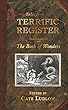
 Cate Ludlow (editor). Tales from the Terrific Register: The Book of Wonders.
The History Press, 2009.

The Terrific Register was a sort of early 19th century cross between Fortean Times, Bizarre, True Crimes and True Adventures, much of its readership being the Georgian equivalents of Richmal Crompton's William Brown. This one is full of 'people wot gets eaten by lions and tigers and bears and 'orrible snakes, and plagues of rats', other strange deaths, thrilling deeds, amazing survivals, terrific thunderstorms, spontaneous human combustion, Gods wrath on sinners, amputations, savage battles and so on. Much loved by Dickens, but hated by clergymen, magistrates etc.

As an example there is the fearful death of Thomas Clements, who while fishing, put a little sole in his mouth to hold, whereupon "the fish with a sudden spring forced itself into his throat and choked him. The unfortunate man had just time to call for assistance, but it came too late; he expired soon afterwards in dreadful agony".

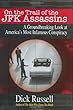
Dick Russell. On the Trail of JFK's Assassins: a Groundbreaking Look at America's Most Infamous Conspiracy. Skyhorse Publishing, 2008.

This collection of old articles and updates has little to say on exactly what happened in Dallas on November 22 1963. Rather it deals with the claims of a variety of 'whistleblowers' and conspiracy theorists. Magonia readers will note the similarity between the sort of claims made here and those made by various characters in ufology. Indeed in some cases they are the same, for on pp. 126/7 we encounter non other than Philip J Corso, of Roswell back-engineering infamy. The conspiratorially minded may see him as a general disinformation specialist, the more cynical (such as yours truly) are more likely to see him as a sad, bitter old man, willing to say anything to anyone in exchange for a sympathetic chat and a beer.

Another feature of this book which will be familiar to those examining paranormal claims is the escalation of claims until they strain the boggle ceiling of even the most open minded. Among those included here is that Lee Harvey Oswald was programmed from childhood onward by CIA mind controllers, that Kennedy's body was altered before the autopsy, that the Zapruder film was altered and so on.

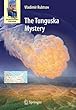
Vladimir Rubtsov. The Tunguska Mystery. Springer, 2010
A detailed examination of the aerial phenomenon or phenomena which exploded over the Tunguska region of Siberia on 30 June 1908. He claims that there are many anomalies which mean standard explanations in terms of stony meteorites or even a comet head are unviable, and that much of the research and study on this phenomenon has never been available in the west. If all the anomalies claimed here are correct, then it would seem to have been something very anomalous indeed. That does not mean it is likely to be an extraterrestrial 'star ship' as the Rubtsov hints but never quite says. It strikes me as implausible to say the least that such a star ship would involve a technology which just seems a century or two ahead of our own, and as to the latest theory that one star ship shot down another, that seems rather like something out of Star Wars.

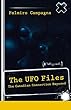
Palmiro Campagna. The UFO files: The Canadian Connection Exposed.
Dundurn Press, 2010 (sic)
An un-amended reissue of the 1998 paperback edition of a 1997 title. It has some interesting background on the Steve Michalak case, but much of the content is padding about Roswell, Nazi secret weapons, Wilbert Smith (anti gravity flying saucer propulsion theory/contactee hugging crank who led a Canadian official or semi official UFO investigation back in the early 1950s) and etc.

3.4.10

WICCA MEN

Michael Howard, Modern Wicca: A History from Gerald Gardner to the Present. Llewellyn Publications, 2009. -- Reviewed by Gareth J. Medway.

‘Wicca’ is usually understood to mean ‘witchcraft’, but as Howard observes, this has caused some controversy in places such as South Africa, where witchcraft is understood in a wholly negative way. I would suggest that witchcraft could be defined as ‘the exercise of occult arts’, which may be done by people of any faith, whereas Wicca is a religion, distinguished by the fact that unlike most other religions it encourages the exercise of occult arts.

In 1951, when Gerald Gardner started to give publicity to Wicca, the total number of adherents was apparently less than twenty. Today, it flourished in places as far away as California and New Zealand, and there are also many people who identify themselves by the more general label of ‘Pagan’, but who are normally influenced by Wicca.

In the U.K. census of 2001, 30,569 people gave their religion as Paganism. Estimates of the numbers in the U.S.A. vary widely, but the most modest put it at more than 100,000. This is all the more remarkable because in 1951 the vast majority of people regarded witchcraft as an extinct superstition, indeed the 1735 Witchcraft Act was repealed that very year as being an anachronism. Some people thought that Christianity would triumph in the end, others expected a move towards universal atheism, but no-one anticipated a revival of Paganism.

Michael Howard (no relation, I think, to the former leader of the Conservative Party whose home was in the vicinity of a celebrated UFO sighting back in 1997), who since 1976 has been editor of the small but influential magazine The Cauldron, does not try to explain the popularity of this spiritual path, but he has produced what is I think the best account of the history of the movement to have appeared so far.

Apart from the lack of an index, I have a couple of criticisms: in the very first paragraph, he writes of Gerald Gardner that: “Over forty years after his death, controversy still rages as to whether he created Wicca from an eclectic combination of material drawn from esoteric sources, or was the rightful heir to a genuine historical witchcraft tradition.” People do indeed argue in these terms, failing to notice that there is a fallacy implicit in this sentence: they say that Wicca is either ancient, or it was the invention of Gardner, not considering that there are other possibilities. In particular, in a so-called ‘Gardnerian’ coven it is always a High Priestess who is in charge. This suggests that the movement was started by a woman, which Gardner was not. Also, Wicca was evidently influenced by various other occult movements of early twentieth century England, such as the Golden Dawn, the Ancient Druid Order, and the adult section of the Order of Woodcraft Chivalry. Gerald Gardner was not involved with any of these, because from 1900 to 1936 he lived in the Far East.

The basic rituals of Wicca are contained within what is termed ‘The Book of Shadows’, which is supposed to be secret but has in fact been published several times. It is full of quotations from books that appeared in the late nineteenth and early twentieth centuries, making its modern origins quite certain, but this has not prevented wild and extravagant claims being made for it. Howard is able to explain the background to one of these from his own experience: in 1971 ‘Lady Sheba’ (Jessie Bell), who described herself as “America’s Witch Queen”, issued a Book of Shadows which, she said, she had first copied from a manuscript when she was initiated into a local coven in her home state of Kentucky in the 1930s, having been born into a family who had practised witchcraft for seven generations.

One reader who was unimpressed by this claim was Doreen Valiente, who, upon opening the book, found that the very first words upon which her eyes rested were those of her own poem ‘Invocation of the Horned God’, first published in 1965, though with the last few lines omitted. This was not her first experience of this kind – in the 1960s she had read, in the newspapers, various quotations from the Book of Shadows of Alex Sanders, which, he said, he had copied from that of his grandmother, again in the 1930s, but which likewise included material that Valiente had written in the 1950s. Howard reveals that Bell, in 1969, had corresponded with him and his own initiator Rosina Bishop and, since she could not afford to travel to England, they allowed a postal ‘initiation’, sending her a copy of their own Book of Shadows – in which they had curtailed the ‘Invocation of the Horned God’ for their own purposes – and it was this that she had published, in violation of her oath of secrecy, because, she said, the Goddess had told her to do so.

A chapter is devoted to the claims of Bill Liddell (some of which first appeared in The Cauldron), according to whom the Wiccan ‘revival’ began with George Pickingill (1816-1909), who lived in Canewdon, Essex, but is alleged to have gone around England setting up nine covens in different counties. Since this story has come to be widely believed, I should say that years ago I did some investigation of my own and found that Liddell’s claims, which he said he derived from unnamed ‘Craft Elders’ were false in almost every detail that could be checked. Pickingill was not a witch, he did not travel about the country, and he could not have founded any covens, at least not by that name, as it is a Scottish word that was then unknown in England.

To particularise: according to the folklorist Eric Maple, George Pickingill was a ‘Master of Witches’, i.e. a cunning man or wizard, who could master witches because he was more powerful than them, and was thus a useful person to go to if you believed that you were bewitched. Evidently the originator of the ‘Nine Covens’ fantasy had read Maple, but failed to grasp this. Less than a year before he died Pickingill gave an interview to a newspaper reporter, in which he mentioned that he had never in his life been to London, which is only about twenty-five miles from Canewdon. Like many of the old style peasantry, he never travelled at all. In 1662 Isobel Gowdie of Auldearne told a court that “there is thirteen persons in ilk Coven”; in 1921 Margaret Murray cited this in The Witch-Cult in Western Europe, and suggested on very little evidence that a similar organisation had existed in England, an idea that proved popular enough for people such as Liddell’s Elders to forget that the word had never been heard of here before that.

Among many interesting sections is an account of the Coven of Atho, named for the centrepiece of its rituals, a wooden head representing ‘the horned god of witchcraft’ (not the devil, but a nature deity akin to Pan and Herne the Hunter), which flourished in Surrey circa 1960, but broke up amidst recriminations and legal actions. In 1961 the London Evening News did a hostile exposure of them, but did not identify the members, who were said (in the notebooks of Doreen Valiente, who was usually reliable) to include not only well-known occultists such as Jacqueline Murray of the Atlantean Society, but also speed-ace Donald Campbell. It was said that he would touch the Head of Atho ‘for luck’ before each attempt to get into the record books, but later its owner left the coven taking it with him, which perhaps helped contribute to his fatal accident on Coniston Water – be that as it may, this is the only example I know of that supports the once widely made claim that ‘nationally and internationally famous’ people were secretly involved with witchcraft.

Probably most people have heard of Alex Sanders, ‘King of the Witches’, but not many know that in the 1980s he and an associate named Derek Taylor received numerous spirits messages, not just from the usual suspects like an ancient Egyptian named Neph Ken and the Archangel Michael, but also from extraterrestrials who had bases on the moons of Jupiter, though originally coming from the constellation Hercules or even from other galaxies. They warned them of various forthcoming global disasters which so far have yet to happen. After Sanders’ death in 1988 Taylor continued with this work, allegedly being employed by the British Secret Service in ‘remote viewing’ experiments. His demise was tragic: whilst performing a ritual on beach in Sussex, he thought he saw a UFO mother ship out at sea, and waded in to try to reach it. He was swept way by the current and drowned.

As I write, there is media coverage of the Catholic Church’s objection to the latest anti-discrimination legislation in Britain, as this forbids them to keep up their traditional ban on homosexuality. Howard describes how, in the early days, Gardnerian witches insisted that “it is not possible to be a homosexual and a witch”. I am glad to say that attitudes have changed - I know a woman who was once the High Priestess of a coven that was otherwise composed entirely of gay men. This is ironic in view of the fact that Gardner claimed to derive his initiation from ‘Old Dorothy’ Clutterbuck Fordham, since, whether this was true or not, it is fairly certain that she was bisexual.

It has become customary, when introducing people in print, to give any nickname in inverted commas between the first name and the surname, as in Edwin 'Buzz' Aldrin. Some time ago publications such as the MUFON Journal began to do this when the nickname was merely the standard contraction of the forename, thus referring to James 'Jim' Moseley. When John 'John' Rimmer first drew my attention to this, I assume that it was a fad confined to American ufologists, but it has now been caught by British Wiccans - some years ago I attended the funeral of a prominent witch known, according to the service sheet, as Dr. Christopher (Chris) Gosselin, and Howard tells us about such people as Frederick 'Fred' Lamond and Charles 'Charlie' Cardell.

If much of what I have just written sounds like mere nit-picking, I must emphasise that I only want to criticise some particular points because the book is generally so excellent. I was presented with a review copy on a Sunday evening, and found it such compelling reading that I was obliged to abandon all my plans for what I had been going to do on Monday – unfortunately, this meant that on the Tuesday I incurred a small fine for a one day overdue library book. Compared to the only other full study of its kind, Professor Ronald Hutton’s The Triumph of the Moon, I would say that Howard’s book is less academic, but more readable.

1.4.10

LITERARY HOAXES

Melissa Katsoulis. Telling Tales: a History of Literary Hoaxes. Constable, 2009.

A fascinating, sometimes funny, often sad, account of literary hoaxes, both well and little known from the 18th century onwards. They range from the light hearted literary japes such as those of Mark Twain, attacks on perceived ideological or artistic pretension such as the fake poetry of 'Ern Malley' or the Sokal hoax, through classic cons such as the Hitler Diaries and Clifford Irvings 'Howard Hughes' hoax. There are darker themes, the darkest being perhaps the most pernicious hoax of them all, the Protocols of the Elders of Zion.

There are a number of constant themes across the centuries. One is the appropriation of exotic historical or cultural backgrounds, whether the romantic pasts dreamed up by such early hoaxers as James Macpherson with his Ossian poetry from a lost Celtic twilight, or Chatterton's medieval Rowly, to those who have appropriated the identities of Native Americans or Australian aboriginals. The most famous of these were Grey Owl, actually an Englishman from Hastings named Belany, and an American woman and a white Australian both of whom took on Aboriginal identities. Perhaps the oddest was the notorious segregationist Asa Carter, who reinvented himself as the folksy Native American Forrest Carter, spouting new age platitudes. As Katsoulis remarks "You couldn't make it up"

The biggest group seems to be generated by the public's need for what Katsoulis calls 'misery memoirs', which range from tales of child abuse both domestic and Satanic, dangerous lives on the streets or in the dingy world of drug addiction. Several of those faking these stories seem to be people living nice comfortable lives who secretly yearn for a much darker and edgier existence.

The most shocking of these are entirely fictional claims to be holocaust survivors. The most notorious was 'Binjamin Wilkomirski' who had a fantastic tale of being dragged from one concentration camp to another as a small child. He turned out to be a Swiss named Bruno Grosjean (not Jewish). He received the support of the serial 'hoaxer' Laurel Rose Willson alias Lauren Stratford alias Laura Grabowski, who claimed under the name Stratford to be the victim of Satanic child abuse, then when exposed became Grabowski, a Holocaust survivor.

Here we getting far beyond the frontiers of anything we could call simple hoaxing, to some sort of unfathomable sickness. Katsoulis suggests that these stories echo real pain in their tellers' lives. For example Grosjean was shunted from one orphanage to another.

Magonia readers will, I think, see that these kind of narratives are simply the tip of an iceberg of fictional lives, the ones with the talent to get into print. Katsoulis assumes that Willson/Stratford was somehow hoaxing the real suffering of Satanic Abuse survivors, but our readers will know that evidence for the existence of Satanic Abuse is non existent and that in some sense all these tales were fictions. In a sense some of these people are taken over by their fictional lives, they become real to them. The literary hoax is simply part of deeper more collective fantasy.

Some of these people seem taken over by these new identities, and merge into the general class of Caraboo Syndrome. It is as if their imaginations have taken over their memories and the line between fiction and reality is blurred away.

Even established authors can create fictitious identities, the oddest perhaps was the adventure writer Norman Hall, who produced a collection of appallingly bad faux naive "poetry" by an alleged 9 to 11 year old farm girl, He claimed to have produced it by a kind of automatic writing. Clearly we are not far here from the sort of stories told by spiritualists.

The stories in this book are often salutary reminders to those who think they can spot a phoney a mile off. Even the most light hearted spoofs fooled people, and when it comes to those who have come to at least half believe their own tales, the chances of detecting them without mountains of legwork are next to impossible. Everybody can be fooled. -- Peter Rogerson

MAGONIA RECOMMENDS