31.7.10

UFOs: THE REAL COVER-UP

Lots of fun and games over on Dave Clarke's blog, with details of how Nick Pope ("former head of the British Government's UFO Project", don'tchaknow!) prevented release of UFO data on, er, what Nick Pope did when he was "Head of the British Government's UFO Project". Read the gory details HERE. It seems freedom of information only goes so far!

While you're over at Dave's blog, be sure to read his perceptive piece on UFO leaks, or rather the total lack of any. As we have pointed out many times (most recently in John Harney's review of Stanton Friedman and Kathleen Marden's book Science was Wrong, it is really only possible to keep secret those events over which one has total control. Wartime code-breaking, secret weapons systems, dodgy dossiers, can all be covered up, for a longer or shorter period, by controlling the number and nature of people who are shown them; and clearly it is easier to cover up secrets when everyone involved has a strong, common bond, as in wartime.

But UFO crashes and coverups aren't like that. If an extraterrestrial crash had happened at Roswell say, by now almost certainly hundreds of thousands of people across the globe would know about it. There would be a mass of paperwork, and not all of it would be controlled by the United States government.

So here's the challenge for Wikileaks: forget about Afghanistan, lets have the leaked documents about Roswell, and more importantly, Nick Pope's senior officers' assessments on how well he did his job as "Head of the British Government's UFO Project"!

29.7.10

SLIDE RULES

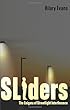
Hilary Evans. Sliders: The Enigma of Streetlight Interference. Anomalist Books, 2010. - Reviewed by Peter Rogerson

This interesting but ulimately frustrating book presents the results of Hilary Evans's years of investigation into 'streetlight interference'; the experience of streetlights going off (or sometimes on) when walking near them. He presents the experiences and comments of 215 correspondents, the upshot of which tends to be that there is no one consistent pattern to SLI. Some people experience it when they are sad, others when they are elated, some have to be under the street light, others metres away, with some people it only happens when they don't concentrate or think about the light, others when they do, usually only one light goes off, but sometimes more than one does.

Sceptics have proposed a number of possible mundane explanations for this, none of which really seem altogether plausible. However by the same token, at least if some of the experts quoted by Hilary Evans are to be believed, even if these people were emitting some kind of force, some of the effects described would be impossible.

Hilary also examines a number of other anomalous personal experiences related to electricity and beyond, such as claims to make other kinds of electrical equipment malfunction, poltergeist effects, luminous saints, Balls of Light and ball lightning, even physical mediumship.

Extraordinary claims need extraordinary evidence as the saying goes, but as with many other 'paranormal' claims, what is lacking is not so much "extraordinary" evidence. as any evidence, as opposed to assertion, at all.

This SLI effect should be one of the easiest "paranormal" claims to test; no need for laboratories, expensive apparatus, exotic mathematical skills. Just find any old street with working street lamps, assemble half a dozen people who claim to have experienced SLI, half a dozen who don't. Look at the street lamps for an hour say, then get people to walk past. To randomise just give everyone a number and don't let the invigilators know who is a SLIer and who isn't. Simples!

But of course, it hasn't been done. Hilary says that both the late Arthur Ellison and Dr Richard Wiseman attempted experiments but got nowhere because no-one could be found who could produce SLI at will. It's not clear whether that means the experiments were tried but nothing happened, or that no-one claiming to have experienced SLI was willing to come forward and join the experiment.

We might look for actual evidence somewhere else. There are large areas of Britain where every nearly every square yard is covered by CCTV, so you might think there ought to be CCTV images of this effect. Has anyone ever looked for one, is there a case of a CCTV operator even claiming to have observed the effect? Then there are the video cameras, mobile phone cameras and the like, all of which have recorded many kinds of rare and dramatic events; but again, as far as we know, none. At the weakest you might hope for some detail which would be very suggestive of a real effect, if people from various parts of the world, with no contact with each other, all reported that the SLI was, now I come to think of it, accompanied by an intense itch in their left thumb. But as we see, there is no such pattern.

So the SLI effect really is typical of a large class of anomalous and paranormal experiences, in that it appears to defy all conceivable physics, cannot be publicly demonstrated or captured on any recording apparatus, and for which no coherent pattern can be found. Though Hilary Evans basically argues that this large number of people cannot be lying or mistaken, or having some kind of subjective experience, Magonia readers will know that he takes, quite rightly, a much more sceptical line about the claims by equal numbers of people that they have been abducted through solid walls by grey aliens.

Logic suggests that if something is impossible and it can neither be recorded nor publicly demonstrated then it isn't happening in the external space of physics and geography at all, but in some kind of inner perceptual space. In the phenomenon of SLI, this might mean that in these cases electricity still flows to the lamp, it still emits photons which hit the SLIers retina, from time to time it stops producing the internal experience of seeing a light, a kind of negative hallucination

This would perhaps place it in a similar character to the phenomena described by Mary Rose Barrington, whereby objects seem to disappear only to reappear later in the same place, or in plain view. We have all had the experience of loosing things, searching high and low then finding them when not looking. Rather than assume they had been removed by boggarts and returned it is simpler to assume that they were there all along, but just fell out of perceptual space.

Regarding many anomalous personal experiences as happening in an internal perceptual space has the interesting result that many of the massive anomalous features - the physical impossibility, the inability to duplicate at will, the strange personal connection - now become just what one would predict.

Whatever the actual physical status behind the experiences, the stories told about them clearly exist as social and cultural realities. As such the SLI and many of the other paranormal stories fall into the class of trickster stories, whose import is that the universe is in some way tricky and unpredictable. In the past the trickster was represented by one of the wild animals which were an intimate part of peoples lives, but now that mechanical objects have largely replaced wild animals in our environment, it is only natural that the trickster should be envisioned as a misbehaving street light or computer, rather than a spider or coyote. The meaning, that nothing is really known, stable, safe and tame, remains the same.

28.7.10

CLOUD ATLAS

Richard Hamblyn. Extraordinary Clouds: Skies of the Unexpected from the Beautiful to the Bizarre. David and Charles for the Met. Office, 2009

If you are of a certain age, like Magonia's editors, you might recall Aimé Michel and the great Cloud Cigars. Michel and others argued passionately that these could not have been natural cloud formations.

In this beautifully illustrated little book however, there are several examples of very ufological looking clouds, most particularly, but not entirely limited to, the lenticular clouds. No doubt it was clouds of this type which in past times led to beliefs about phantom ships in the air.

If natural clouds have led to tales of UFOs and phantom ships, then some of the new clouds produced by aircraft contrails have led to rumours of secret plots to seed the skies with chemical and biological agents

This is a book to remind people of just how weird the skies can become, through the artistry of both wild nature and human artifice, suggesting that art is as much in the perception as in the construction. Recommended for all sky watchers.

27.7.10

VAMPIRES

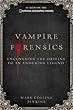
Mark Collins Jenkins. Vampire Forensics: Uncovering the Origins of an Enduring Legend. National Geographic, 2010

M. J. Trow. A Brief History of Vampires. Constable and Robinson, 2010

Vampires are the in thing, especially if these books are to be believed, among teenage girls; pop stars with fangs as it were. Jenkins and Trow both track the vampire down through his/her manifestations in popular culture, each manifestation showing the changing times, and attitudes to and perceptions of the forbidden. The vampire can be the suave aristocrat in the Stoker tradition, or the much more viscerally corpse-like character of the original folklore, as in Max Schreck's Orloc.

The vampire has consistently gone up in the world, from the decaying, hagging peasant of the traditional folklore, through the demonic aristocrat, moulded on Byron, created by Polidori, and sustained since by the anonymous "Varney the Vampire" (possibly written by a Mr Rymer [sic. Ed.]), and the archetypal Stoker's Dracula, to the modern antihero, and persecuted outsider. The character once described by Montague Summers as "so terrible ... so dreaded and abhored ... neither ghost nor demon ... but partak[ing] the dark natures ... and mysterious natures of both ... Foul are his ravages", so becomes a symbol of empowerment to teenagers.

The Jenkins book is perhaps the one that should have been entitled 'A Brief History of Vampires' as, fortunately for the reader's stomach, the forensic bits about how bodies decay and the accounts of foul old graveyards occupy only a relatively short portion. Much of the rest is spent tracking down the myths of the vampires and other blood sucking revenants deep into the past, and across many cultures. He also explores the role of diseases such as rabies, porphyria, palegia, TB, cholera and plague in constructing this image. The vampire becomes a symbol of death itself.

While Trow gives more detail on some of the more recent cultural manifestations of the Vampire than Jenkins, you can tell his heart really isn't in it. It is obvious that the vampire stuff has been added, at publishers request, to what his book really is: a biography of the original Dracula, Vlad Tepes the Impaler. Trow places his life in the context of the times, which certainly gives lie to the phrase 'the good old days'. Not a story, I suspect, to enthral teenage vampire fans.

Today in the west the vampire is largely confined to cinema, and it is unlikely that many psychical researchers will be called upon to play the role of Van Helsing, [at least outside Highgate - Ed.] but in other cultures the superstition still remains; and lest we be smug the vampires' high-tech replacement, the alien abductor, still haunts many dreams. And there are many parts of the world where, metaphorically speaking, the dead still haunt the living, still demand blood sacrifice from them. It will take more than a stake and garlic to stay those raging ghosts.

26.7.10

STALKING THE TRICKSTERS

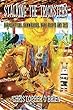
Christopher O'Brien. Stalking the Tricksters: Shapeshifters, Skinwalkers, Dark Adepts and 2012. Adventures Unlimited, 2009.

Just before reading this book, I was out walking in one of the tiny patches of wilderness left in my suburb, thinking of the story of the urban fox attacking two children as reported HERE. I was wondering about using it as a Northern Echoes piece, noting that this was a classic example of how the wilderness is, literally in this case, biting back, and it reminds us that nothing is really truly known, nothing is really tame and nowhere is really safe.

So I get home and open this book, to find in the preface by David Perkins a story of his encounters with an urban fox with a taste for quiche lorraine! That's synchronicity, that's the trickster for you.

What exactly is the trickster? Well the answer seems to be ill defined. In many traditional societies the trickster is the uncultured culture hero, a sort of overgrown baby, full of uncontrolled animal passions, but who almost by accident generates culture in his stumbling around. More generally they are seen as liminal beings which break through and down the structures of the world. More generally they are the reason why things fall apart: personifications of entropy. In the human world the trickster is represented by the clown, the satirist, and by the creative charlatan. Gurdjieff or Crowley would be good examples, as would contactees like Adamski. The human trickster is an edgy artist

George Hansen used the term to describe a variety of liminal experiences/phenomena, which challenge the structures of the dominant world view, in his book The Trickster and the Paranormal reviewed by David Perkins in Magonia HERE.
Christopher O'Brien, who had written three excellent books on the truly weird events in the San Luis Valley summarises the various cultural manifestations of the trickster figure, and its relation to the a number of anomalous personal experiences, several of which clearly fall into the spaces between the recognised Fortean disciplines, which is where one might expect creative chaos to reside. Ghosts, American leprechauns and much else beside.

Where I would part company with O'Brien, perhaps, is in his tendency to skate towards what one might call paranormal euhemism, in talking of the tricksters as though they were additional spooky 'things' out there. Better to see them as metaphors for the irreducible wildness and trickiness of everything.

In the final chapter O'Brien examines the trickiness at the heart of his political leaders, especially when trying to commune with their inner child at Bohemian Grove. Before we Brits laugh at this, we should note that according to rumour at least one well-known British political leader (who for the obvious legal reasons will be nameless, partyless and of uncertain gender) found an even stranger way of communicating with the inner child. -- Reviewed by Peter Rogerson

24.7.10

THE DEVIL RIDES ON ... AND ON ... AND ON

In the early 1990s Magonia magazine published a number of articles by Roger Sandell and others, which examined the stories of 'Satanic Abuse' that were current at that time. The writers could see that these allegations, which in many cases were splitting families and sending innocent people to jail, were similar in nature to many of the reported experiences which we were discussing in Magonia, such as alien abductions, false memories, hypnotoc regression and guided recall.

It was very clear that many of the people involved in these cases such as police, social workers, lawyers and magistrates, were totally unaware of the broader history and social background to such allegations. You may wish to read some of the articles:

Victims of Memory
Still Seeking Satan
From Evidence of Abuse to Abuse of Evidence
Satanism Update

Although many of the cases, and the whole idea of 'Satanic Ritual Abuse' appeared to have dropped from the headlines, there was a powerful subculture promoting the concept amongst some social work professionals and law enforcement agencies. Basil Humphreys reported on a conference for social workers at Warwick University in 1997. Here the concept had been toned down to 'ritual' or 'multi-generational' abuse. You can read it here: It Never RAINS but it Pours. Private Eye magazine revealed that ten years later the same ideas were being promoted to social workers: Satanic Panic

One of the later cases, which never seemed to have been fully reported in the national media, took place in Pembrokeshire, and involved a number of families in a small community. In his latest blog entry, Mike Dash reviews the background of the 'Satanic Abuse' panic, and follows the frightening course of the Pembrokshire case, from an account by the journalist Byron Rogers.

I urge you to read it here: When Satan Came to Pembroke and remember that accusations like this are still being made. -- JR

22.7.10

MIRAGES AND MIRRORS

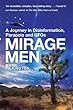
Mark Pilkington. The Mirage Men. Constable, 2010 -- Reviewed by John Rimmer

It's hard to imagine how difficult it must be writing about a topic when you're quite sure that most of the people you talk to, and a great deal of the documents you read on the subject, are deliberately lying to you, or at least attempting to direct you away from what they consider the truth. It is a measure of Mark Pilkington's skill as a researcher and journalist that he is not only aware of this, but is able to navigate a way through a landscape with such misleading maps.

Mirage Men pretty much tells us that a lot of what we know about UFOs is wrong, but that a great deal of what we suspected was right. From the very earliest days, Arnold and after, the various military and intelligence arms of the US Government seem to have been using the UFO story to promote, hide, or divert attention from their activities.

It's possible that governmental interference in the UFO myth started even before Arnold. Magonia has already discussed Bernard Newman and his remarkable fictional book The Flying Saucer, published in 1948, which put forward the idea of a faked interplanetary invasion as a way of uniting the nations of the world. Writing in Magonia (1) Philip Taylor notes: "Newman’s inspiration was a speech by Sir Anthony Eden, who in 1947 said: 'It seems to be an unfortunate fact that the nations of the world were only really united when they were facing a common menace. What we really needed was an attack from Mars'". Whether this comment by a very senior politician was acted upon, even to a preliminary extent, is worth consideration. How much reality was there to 'Operation Far Stranger'?

US military interest in UFOs started in earnest with the Maury Island case in Washington State, which happened at a time when US intelligence agencies, through 'Operation Venona' had uncovered Soviet 'moles' in top-secret atomic research facilities. These agencies may have subsequently become interested in Maury Island, alerted by Arnold's talk of atomic powered aircraft. It's certain that Army Air Force Intelligence, as well as the FBI, showed an interest in what was happening in this corner of the USA.

Maury Island witness Fred Crisman, with his involvement with the OSS and his subsequent peripheral role in a spin-off from the Kennedy assassination investigation (as well as his extended feud with the librarian of his local public library) was a character who may have had his fingers in any number of pies.

Although Roswell is seen by many ufologists as central to the 'government cover-up' narrative, its real position seems to have been far more peripheral, and here the book may overestimate the significance of the famous press release which announced that a 'flying disc' had been recovered. Mark wonders if this may have been a useful device to deflect interest away from what 'really' happened - he makes the suggestion of a 'human guinea-pig' test as proposed by Nick Redfern. The other more mundane possibility is that the press officer was trying to earn credit for suggesting that the USAAF now had the flying saucer mystery under control. Remember, at this time few people would have formed any clear idea as to what was or was not behind the reports of flying discs that were beginning to filter into the press. Certainly the idea that they might be extraterrestrial craft was not widespread.

A great deal of the book involves Mark's, and his associate John Lundberg's attendance at the 2006 Laughlin Nevada International UFO Convention, where he meets the (in)famous Richard Doty, and some of the other inmates of the 'aviary' of UFO characters who were flying around in the 1990s. At this point I find it difficult to review this book, as the plot gets so complicated, and one is hampered by the distinct possibility that you might not be able to believe a single word that passes Doty's lips - even when he's telling the truth!. We are certainly in the middle of a maze of distorting mirrors.

Doty first came to ufological prominence as an AFOSI operative at the Kirtland Air Force base, where he was involved with the complex Bennewitz affair, which has been written about at length elsewhere. (2) Some accounts of Doty's activities, mostly those given by Doty himself, suggest that he was central to whatever counter-intelligence operations were being deployed against ufologists. However, reading between the lines of Mark's account of his guided visit around Kirtland, it would seem that his access to this 'secret' base was limited to areas that would be opened to any visitor.

One of the silliest stories which have arisen from the America ufological/military milieu in the last decade has been 'Serpo'. This began in 2005 when a series of anonymous documents were circulated on the Internet, by someone calling themselves, rather unimaginatively, 'Anonymous'. Basically these claimed that the entities in the saucers that crashed at Roswell and Aztec had been in contact with their utopian home planet of Serpo and arranged for a saucer to land at the Holloman AFB. They had then arranged a sort of cultural exchange, with twelve military personnel being sent to Serpo in 1965, returning to Earth in 1978 (apart from two who allegedly chose to remain on Serpo).

It is likely that the origins of the Serpo story go back further than 2005, quite apart from being a rip-off of the closing scene of Close Encounters of the Third Kind. The meeting at Holloman AFB is probably based on a scenario in Robert Emmeneger's UFOs, Past, Present and Future, which is presented as either a real meeting or a government psychological experiment, and they might even date back to a rumour after the Socorro case in 1964, spread by the Lorenzens, that a Socorro saucer had landed on a runway at the Holloman base. (Thanks to Peter Rogerson for pointing out these connections.)

The UFO story in America has certainly been manipulated by military and intelligence sources, both as part of Cold War deception and inter-agency rivalry. This manipulation has involved actions which by any normal consideration would be regarded as criminal. Yet, probably because of the manifestly nonsensical nature of many of the stories, there has been little inclination for anyone to take the matter seriously outside of the narrow coterie of people directly involved, and the UFO 'community'.

It is true to say that an awful lot has also happened in American ufology, and elsewhere, during the period discussed here which is not connected in the slightest with military and intelligence matters, and this book does not attempt to delve too deeply into them, except where they are relevant to the particular topic being discussed. I was particularly amused by Mark's description of the activities and personalities of the Norfolk UFO Society, in the 1990s, when Mark was a member and sometime chairman. With its description of characters such as George, who received psychic messages through his television, it took me back to the days of the Merseyside UFO Group and Manchester's DIGAP in the late '60s and early 1970's. Plus ca change..., etc.

This book gives what is virtually an alternate history of the modern UFO phenomenon, and one which will turn on its head many of our current assumptions about how the American government (and probably others) interacted with it. But when you read it - and you really should - I suspect that Mark Pilkington would be the first to remind you that almost everyone in it is either lying or trying to divert your attention in one way or another. Caveat emptor! -- John Rimmer

1. The Mystic and the Spy

13.7.10

NO COMMENT

From MUFON UFO Journal, July 2010.

12.7.10

SCIENTIFIC ERRORS AND OMISSIONS

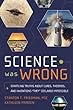
Stanton T. Friedman and Kathleen Marden. Science Was Wrong: Startling Truths About Cures, Theories, and Inventions 'They' Declared Impossible. New Page Books, NJ, 2010.

The main theme of this book is concerned with how scientific and technological progress has been retarded by authoritative persons who have declared innovations and inventions be either wrong or of no practical use. The authors deal with the emergence of a number of new technologies, most of which, with the benefit of hindsight, one would have thought would have been immediately adopted. Some of the other subjects considered, though, are highly controversial, such as global warming, paraspsychology and UFOs.

We are shown how most of the "experts" were wrong about the possibilities of first aviation and then space travel, and other technological developments. We are also told how progress in medicine was hampered by some doctors who just could not grasp the importance of such basic hygienic procedures as hand washing.

There is a chapter on the Eugenics Movement in America, inspired by Charles Davenport, of Harvard University, who was "the driving force behind American social Darwinism". The basic idea was that humanity could be improved by selective breeding, like cattle or horses, but of course it only encouraged social divisiveness and racism, and opposition to it grew after initial enthusiasm wore off. However, these ideas took root in Nazi Germany in the 1930s, with disastrous results.

Many of the procedures and technologies discussed are no longer controversial, but most readers will probably be interested in the more contentious ones. Friedman is sceptical about global warming caused by increasing carbon dioxide. I think he is right, though, to point out that the much-ridiculed claims that nuclear fusion can take place at room temperatures are, and should be, taken seriously by some scientists, so that the truth of the matter can be determined to the general satisfaction of physicists.

The chapter on psychic phenomena where serious research these days is largely confined to laboratory experiments and statistical analyses, makes it plain that sceptics and believers are constantly accusing one another of cheating, by altering experimental protocols and statistical methods without justification. The authors favour the genuineness of psychic phenomena, as one would expect.

Friedman and Marden have previously collaborated on a book on the Betty and Barney Hill case, so it is no surprise that there is a chapter on alien abductions. This attacks the work of psychologists who attribute such reports to the effects of sleep paralysis. It is reasonable, of course, to criticise such work as being over-simplified, and to suggest improvements, but their dismissive attitude is hardly scientific. I was also a little surprised to see that they take seriously the work of Derrel Sims and Roger Leir on alleged alien implants, considering that they have never presented any evidence that there is anything exotic about any of these.

In a chapter on UFOs, Friedman launches his familiar attacks on the 'debunkers', though he devotes too much space to those those who know little about the subject and have never carried out serious investigations, and whose opinions are thus hardly worth commenting on. Of course, we are told, as usual, that the reason why we don't have definitive proof of UFO reality is government secrecy. And, yes, he once again fails to address the obvious question, which is: How can governments keep secret, for over 60 years, something over which they have no control? -- John Harney

7.7.10

VOTE EARLY AND VOTE OFTEN

 In his latest blog posting, http://kevinrandle.blogspot.com/2010/07/alien-autopsy-poll.html Kevin Randle is outraged that 15% of those of his readers who responded to a poll consider that there is at least some element of truth behind the 'Alien Autopy' film, with 39 of them (7%) thinking it is all perfectly true.

This despite the fact that virtually everyone connected with it, from production to publication, admits that it's a fraud.

Now, to be honest, although I understand Randle's annoyance when he says "I am stunned that so many still believe in this autopsy nonsense", I feel he answers his own questions when he continues "but then, there is no convincing some, regardless of the facts." Indeed, and to many on this side of the fence the same applies to believers in the ETH as much as the AA.
When I read the poll results, I was actually surprised that the 'believer' response was as low as it was, I wouldn't have been surprised if it was in the twenty or thirty percent range. So, as a little bit of fun, I'm putting a poll up on this blog, to see if it replicates Randles' survey. I am well aware that most Magonians will vote 'Yes - it's real' just to wind everyone up, but I will make a probably hopeless request for you to try and be serious!

I'll keep it up until the beginning of August, and we'll see what we'll see, and probably not a lot more.

MAGONIA RECOMMENDS