31.8.10

THE SCOTTISH CONNECTION

  • Malcolm Robinson. UFO Case Files of Scotland: Amazing Real Life Alien Encounters. Healings of Atlantis, 2009.


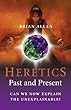
  • Brian Allan. Heretics Past and Present: Can We Now Explain the Unexplainable? O Books. 2010


  • The Scottish UFO group Strange Phenomena Investigators was rather controversial back in the 1990s, with its promotion of hypnotic regression to investigate alleged UFO abductions, and its rather, how shall we put it, unorthodox, methods of investigation.

    Of the two books produced by former members, Malcolm Robinson's is not without interest, and is fairly transparent as to various issues. Perhaps its main problem is that it was compiled in about 2003 from much earlier material with minimal editing. Thus we get several appeals for a Freedom of Information act, years after one was passed and the voluminous but inconclusive ufo files released, though as this material does not support ufologists beliefs there are still calls for the "real" material to be released.

    Several of the classic Scottish cases are discussed, such as Bonnybridge, the A70 abduction, Robert Taylor etc. Most interesting of the cases presented here is the Fife incident which takes up just under a third of the book. This represents an excellent example of a collection of protean anomalous experiences which can be interpreted in a number of ways according to the beliefs of the experient, the investigators and the general cultural background. There is a summary here
    http://www.ufoevidence.org/cases/case52.htm but it probably understates the general weirdness. The witnesses here, I suspect, decided not to be turned into classic abductees and refused further contact with ufologists.

    There are some amusing asides: the Bonnybridge UFO conference taken over by a religious cult promoting the claims of The Nine, whose tree hugging New Age approach did not go down at all with the locals, who complained "what's this to do with UFOs over Bonnybridge?" and booed the speakers off the stage. Then there is Nick Pope's belief that people were being abducted by UFOs in "order to civilise human society".

    Whether you agree with Robinson or not, his book at least contains some meat, the same cannot be said for SPIer Brian Allan's Heretics, which has nothing whatever new to say. He is a devotee it would appear of chaos magic (a misunderstanding of chaos theory which suggests you can direct small effects to a desired outcome, whereas chaos theory says exactly the opposite, small effects can produced unpredictable results), but there is more chaos than magic in his rambling account.

    It starts of with potted biographies of various figures in the occult field, (Aleister Crowley, Dennis Wheatley, Col John Alexander, Austin Osman Spare, Kenneth Grant, Anton LeVay. Charles Manson, Bobby Beusoliel and Kenneth Anger). It then does the same for the authors H. P. Lovecraft and Robert E. Howard, rather suggesting that these fantasy writers were psychically aware of the mysterious and ominous entities. Nothing original but making some sort of sense.

    There is then descent into the usual, half understood science, backyard theology, rambling pseudoscience, etc., typical of the literature of this type from generations ago, which will be familiar to former habituées of BUFORA's Kensington Central Library lectures from the 1970s. -- Reviewed by Peter Rogerson

    MYSTERY CARNIVORES

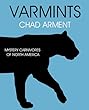
    Chad Arment. Varmints: Mystery Carnivores of North America. Coachwhip Publications, 2010.
     
    This book by cryptozoologist Chad Arment, follows the pattern of his earlier books The Historical Bigfoot and Boss Snakes, in presenting full transcriptions of original newspaper accounts up to 1963, and thereafter presenting summaries for copyright reasons. He is careful to point out that this material in and of itself cannot provide the sort of evidence that the scientific community could accept to establish new species, and is very alert to the role of misperception, misidentification and the like. He also notes the role of releases of exotic pets, laws in the United States being somewhat laxer there than here in Britain.

    What is need to establish the reality of one of these crypto creatures is not, Arment argues, some new special level of 'extraordinary evidence' but just the same sort of old fashioned scientific evidence need to describe a new species of field mouse, i.e. a body. (For the tender hearted one might suggest that a specimen captured, photographed from several angles, measured, weighed, microchipped, tissue sampled and then released might just do.)

    The stories here are clearly best thought of as folklore, and the real dividing line being between 'believed-in' folklore, and 'droll lore', such as the wampus, one set of whose legs was shorter than the other so it could more easily move on steep hill slopes. Of course newspapers may superimpose droll lore over believed-in folklore, especially when they set out to patronise the poor or the black.

    A number of these accounts come in waves, like many other Fortean phenomena, and it is an open question whether this is due to the presence of a novel real animal, to newspaper publicity or to some other cause of social panic. As to whether any of these reports are generated by some undescribed species, the jury has to be out. Personally I would argue that if these accounts were confined to the vast continental land mass of North America, with its many varied habitats and ecozones then there might be a reasonable chance, but when one encounters substantially identical reports in equal, if not greater profusion from Great Britain, then the chances are very slim indeed. -- Reviewed by Peter Rogerson

    29.8.10

    SALEM - THEN AND NOW

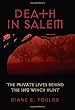
    Diane E. Foulds. Death in Salem: The Private Lives Behind the 1692 Witch Hunt. Globe Pequot Press, 2010

    This book by a descendent of one of the accused in the Salem witchcraft trials, differs from the numerous other books on the outbreak in that it concentrates of the personalities involved. These are presented in a series of short biographies, arranged alphabetically, in separate sequences for accusers, victims, clergy, judges, political and social elite.

    In the absence of dramatic new primary sources material, such as re-found court records or lost diaries, I am not sure whether this adds much to our existing knowledge of the outbreak, and the alphabetical as opposed to chronological listing of the accusers and their victims obscures more than it illuminates.

    However this concentration on the individuals involved does draw out the role of the strained times, the frontier wars in which both sides resorted to ethnic cleansing, the sense of ever present danger and general insecurity, the general fragility of the colonial society (how many of the older figures were married time and again as early death claimed one partner after another), and the strains of living under what can best be described as a decaying totalitarian theocracy superimposed on a classic small scale society, with its own tensions.

    Salem and its European counterparts offer a stark challenge to some of the contemporary idealisations of wild nature and traditional small scale societies. For these settlers nature was not some warm huggy green paradise, but a howling wilderness, pregnant with war, death and disease, and the ideal village community is seething with quarrels, resentments and jealousies.

    To compare this pre-modern world with existing 'third world' really fails to grasp how different it was. Today, even in the most poverty stricken or war torn realms, there are oases of modernity, and an outside world capable of providing some kind of assistance. In the 17th century everyone is in it together, there are no modern doctors, hospitals, transport, or communications anywhere.

    Above all this was a society in which everything that happened was attributed at least indirectly to personal agencies. When the bad wolf days came and misfortune struck you, someone was always to blame. Either you were to blame and God was punishing you for your numerous sins, or your neighbour was to blame because he or she was a witch in alliance with the literal Arch-enemy, the Great Satan himself.
    This was a society in which the existence of witches was regarded as certain a fact, as the existence of paedophiles, drug dealers and terrorists is to us. Just as today disaffected members of society, the poor and the marginal, can be tempted to become drug dealers or members of radical groups to gain a measure of wealth and/or respect, in those days such people were almost certainly open to the temptation to fantasise about being a witch and to carry out the actions their society told them witches carried out. And the general society genuinely feared witches in the same way we fear our secular demon figures.

    23.8.10

    WEEPING STATUES

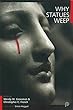
    Wendy Grossman and Christopher French (editors). Why Statues Weep: The Best of 'Skeptic'. Philosophy Press, 2010.

    It’s always difficult to review an anthology, as the quality of contributions can vary greatly and the reviewer’s interest in different topics can vary. I think the only way you can judge a compilation such as this by how well it reflects the overall contents of the magazine.

    The title refers to an outbreak of claims that statues of the Virgin Mary in Ireland and elsewhere, were weeping either tears or blood. This happened shortly before Skeptic magazine began life as The British and Irish Skeptic. It was first published in Dublin by Wendy Grossman, as an offshoot of the American CSICOP’s Skeptical Enquirer. However it soon developed its own character. I think that the Skeptic takes a rather less dogmatic view than the American magazine sometimes seems to.

    The book's chapters are divided into sections with titles such as ’There Must be Something in It’ and ‘Favourite Popular Myths’ looking at some of the most common beliefs such as the Martian canals and face, the Mary Celeste, and Nostradamus. I think it’s reasonable comment that some of these topics have been debunked so thoroughly already that there is little need to reprise the arguments here, but I would say that by including these pieces the editors are aiming to present an overview of the magazine through two and a half decades.

    One section optimistically headed ‘Whatever Happened To…’ looks at topics which the editors seem to think have dropped from general debate. I think not. Crop circles, Rendlesham and alien implants are still very much with us. Having said that, they are still well worth re-reading. Perhaps this section would have been better labelled ‘Still With Us…?’

    The sceptical movement in the US and Britain has its origins in campaigns against outright fraud, and beliefs which, however sincerely held, could be dangerous and damaging. John Diamond’s denunciation of alternative medicine, written shortly before his death from throat cancer, is a powerful polemic (although not written in a polemical style). Mark Pendergrast, himself a victim of false memory claims, writes concisely and objectively about the manner in which these claims are allowed to grow.

    A wide variety of topics are covered in other sections, including hoaxes (including the visions at Knock), abductions (a rather weak chapter, I think), perpetual motion, and an informative explanation of the sometimes very counter-intuitive workings of chance and randomness. It’s encouraging to see a few Magonians represented in its pages: Kevin McClure, David Clarke and Martin Kottmeyer discuss, respectively, the Millennium, Rendlesham, and the curious way in which UFOs have changes speed over the years.

    Of course, this book is not going to change anybody’s mind, nor is it intended to, but for a good overall view of the issues that concern sceptical thinkers this is a very useful anthology. -- Reviewed by John Rimmer

    16.8.10

    LISTEN TO THE RAINBOW

    Jamie Ward. The Frog Who Croaked Blue: Synesthesia and the Mixing of the Senses. Routledge, 2009 - Reviewed by Peter Rogerson

    In this fascinating book, psychologist Jamie Ward takes us on a tour of synesthesia, the confusion of senses which allows some people to see sounds, experience numbers and letters as having colours, hear lights and taste thunder. There are several areas in which this should be of interest to Magonians.

    There is the sense of having experiences for which there is no existing vocabulary. Some synesthetes describes their synesthetic colours or other visual experiences as occurring in places like the back of their heads, or in the pit of their stomachs, and it is clear that they have great difficulty in describing these experiences using existing language, which of course has been developed by non synesthetes! Some of these experiences look very confusing to the rest of us, for example someone who always sees the letter "a" in green, can seen that at the same time as seeing the letter in say red print.

    Synesthesia challenges our common sense realistic view of perception, the idea that things are just as we subjectively see, hear, taste feel them. If some people can "see" music or "hear" colours, what does that mean about what the real world is "really" like.

    Synesthesia might explain some "paranormal" experiences, the example that Ward gives is the experience that some people have of seeing auras around people, but one might speculate further and wonder if there are for example people to whom, trace odours might produce visual or auditory experiences.

    A particularly interesting example that Ward discusses, are those people, can feel what they see, if they, for example, see someone slapped across the face, will actually feel the slap on their own faces. In some ways such experiences might be relating to the actions of mirror neurones, and I wonder if they might give us insights into cases of "mass hysteria", such as that discussed by Bob Rickard in the current Fortean Times (no. 266, September 2010).

    12.8.10

    SCIENCE & SUPERSTITION

    Gregory L. Reece. Weird Science and Bizarre Beliefs. I. B. Tauris, 2009

    Robert L. Park. Superstition: Belief in an Age of Science. Princeton UP, 2010

    Macello Gleiser. A Tear at the Edge of Creation: A Radical New Vision for Life in an Imperfect Universe. Free Press, 2010.

    The liminal zone between reality and fantasy is a strange haunted place, as a boy back in 1977 Gregory Reece had an experience - or dream or fantasy - in which he and a friend saw a great bird circling in the holiday summer sky. As the boyhood world in which dream and reality intermingled faded into the adult world of daylight reason and common sense, he labelled this experience a fantasy. It had fallen off the liminal tightrope into the world of labels.

    But it would appear that this experience has helped stimulate Reece into an adult interest in the world of fringe beliefs; the Fortean realm of the damned and excluded. Already the author of studies of the religious aspects of Elvis worship and ufology, he now turns his attention to some other Fortean concerns, the realms of Bigfoot, Atlantis and lost civilisations, the hollow earth and the dero, of time travel and mysterious sources of energy.

    In this book he is intermingling his adventures in these realms, going on a Bigfoot hunt in Texas, exploring spooky caves in Arkansas or attending a conference on alternate energies in Utah, with potted histories, which avoid the traps of belief and debunking. Instead he aims to celebrate the diversity of belief, looking for the psychological forces which drive people into obsessive interest.

    Looking through these diverse themes, there seem to be more connections than you might think. Bigfoot believers see Bigfoot as the symbol of the perfect wilderness, untarnished by the stain of a corrupt and fallen civilisation; as believers in the hollow earth, Atlantis and other utopian realms dream of the perfect habitat, untainted by the corruptions, ravages and decay of wild nature. Its appropriate that these utopian realms are placed in unmapped places: inside the earth, in hidden valleys, under the ocean, on a hidden planet behind the moon, or in invisible astral realms, all safe from the attentions of profane geographers and astronomers. These places, like the Bigfoot's wilderness, are lands of lost content, like the mysterious ancient civilisations, echoes perhaps of childhood Edens.

    Perhaps we can also see in some cryptozoological claims themes and echoes not far removed from the belief in life after death; the idea that nothing is totally, irredeemably lost, gone for ever beyond recall. Similarly the secrets of the lost past are thought to be recoverable. As can seen here, these means of recovery are not those of conventional science or scholarship; they are, Reece, argues closer to those of religion; personal experience, testimony and revelation.

    Even those claims which at first glimpse seem to lie in the realms, however unorthodox, of science and engineering, such as those surrounding Nikola Tesla or various free-energy devices, turn on examination often to rely on personal revelation. The Tesla of the these neo-Teslaites, is not the real life engineer, but an occult messianic figure who controls the secrets of the universe which will redeem the world.

    There are, however, other more secular appeals to these unorthodox beliefs, for Reece notes that though they often make claims to special esoteric knowledge, they are in reality radically democratic. They proclaim that in order to understand the secrets of the universe one does not need to have specialist knowledge requiring years of academic education, (or for than matter years of occult training!) but one can find them in paperback books, pulp comics and legions of websites. Joe Sixpack really can know more than the Professor.

    Reece argues that a confident science, which he fully supports, should not feel afraid of these alternative visions, for they are part of the vital plurality, inheritors of the traditions of multiple voices, through which the printing press revolutionised the world at the time of the Renaissance.

    For those of secure and certain faith, whether the traditional faiths of texts, creeds and quotations, or the more recent faiths of the great equation, such plurality is seen as a danger, as superstition or heresy.

    Physicist Robert Park is one man of secure and certain faith, in his case that of scientific rationalism, and like the Catholic fathers before him, he sees the pre-existing folk religion as a pathetic superstition, destined to wither away before the One True Faith. Now in describing scientific rationalism as faith I do not mean to disparage it as a false or foolish faith, it is one which to a degree I share, yet faith it remains. It is faith insofar as goes beyond arguing that scientific method based on naturalism is the best tried and tested method of exploring, and producing fruitful models of, the empirical world, to the vision that it represents the sole road towards a hypothetical absolute metempircal 'truth', and a road to redemption. Here science, or rather scientism, takes on a distinctly religious tone.

    Park may have good reason for this faith, for it was modern scientific medicine which saved his life, when he was crushed by a falling tree a few years ago, when all that the two Catholic priests who found him, and whom he later befriended, could do was administer the Last Rights. It is this friendship which triggered this book, one man of one faith arguing with two of another.

    Many of his points are well made, such as his critique of 'alternate medicine', whose practitioners range from the well meaning, but probably self deluded; to con-artists battening on the desperate and despairing, and of whom there are no words in any language obscene enough to describe; or the poorly conducted experiments on the effects of prayer etc., some of which seem to have involved some very strange characters indeed.

    However, as with many 'skeptical' works, what emerges here is less the genuinely sceptical and ironical tone that one sees in Reece's book, but much more the angry impatience of the person of faith who cannot understanding how anyone could be damned stupid enough not to share their convictions.

    No doubt that this because, due to the vicious culture wars there, many scientists in the United States saw that there deepest personal values were under attack, particularly under the Presidency of George W Bush. In a sense they see themselves in much the same position as Christian fundamentalists and likewise draw into the laager. This sense of threat seems to have been exacerbated by the role of the John Templeton Foundation.

    This was set up by Sir John Templeton, who was not, as you might think from the moniker some unworldly Oxbridge academic, or eccentric home counties baronet, but an American tax-dodging billionaire, who decamped to the Bahamas back in 1968 when it was a British colony, and thus got British citizenship by the backdoor. He was awarded a knighthood in 1987 "for services to philanthropy", though whether this was awarded by Lyden Pindling the notoriously corrupt Prime Minister of the Bahamas at the time, or Margaret Thatcher is unclear. It is clear that Park and his colleagues believe that Templeton used his fortune to buy his way into the scientific community and twist science for his own purposes.

    It is therefore perhaps not surprising that there has been a backlash, but there are dangers in not only arguing that every other world view except science is superstition, but that any empirical claim which appears to contradict the current contents of science, or whose devotees have implausible explanations for its working, must of necessity and without further detailed examination be dismissed.

    There is however another potential irony, as physicist and astronomer Marcello Gleiser argues. For he takes the view that some of the deepest beliefs of scientists, that the universe is rational and orderly, that there will be a theory of everything which will generated the one equation that will bind them all, and which can be printed on a tee shirt, the conflation of "truth " and beauty, the idea of perfect symmetry, are all hangovers, superstitions if you like from the age of faith, products of a monotheistic culture. Gleiser in a haunting and personal book, argues that far from being the "way things had to be", the universe, life and everything are the products of 'accidental' broken symmetries. The universe is in some sense wilder and freerer than we imagine.

    11.8.10

    MAGONIA 20, AUGUST 1985

    Magonia 20 (August 1985) unlike some of the previous issues of the magazine had no overall theme and the articles were a bit of a mixed bag.

    H. Michael Simmons article Once Upon a Time in the West examined the reports of the 1897 airship in America's Mid West, with particular reference to how the stories were handled by the local newspapers in the region. Although some writers have suggested that the airship panic was helped on its way by William Randolph Hurst to promote an 'invasion panic', Simmons points out that individual Hurst papers' responses seemed to be determined by opposing the viewpoints of their local rivals. In San Francisco the Examiner discounted the stories, whilst in New York Hurst's Journal gave sensational coverage.

    Most of the article looks at the infamous Aurora 'crash', concluding, as others have, that it was a newspaper hoax, but also giving the social background to the reported events, and how the 'crash' has been exploited by ufologists for reasons of their own.

    Nigel Watson's 'Dream of Nuts and Bolts' took a look at eccentric inventors who had claimed to have been able to reproduce the technology of the flying saucers to build their own craft. Most famous of these and, amazingly, still around and active, was John Searl with his 'levity' disc - probably not the best name if you want your invention to be taken seriously. I was fascinated to see that he has a professional-looking website and spoke at a UFO event in Leeds a few days ago. There is a delightful picture on his website of one of his levity discs flying over an idyllic English village green. Unfortunately for the more literally minded this is not a photograph, but a delicate pencil sketch by an artist who just happened to be on the spot, drawing the view. Far more attractive than those banal fuzzy photographs!

    'Children of Another God' was Peter Rogerson's analysis of a theme that seemed to be current in the 1980s: children as leaders of a New Age. Although this is probably most widely known as the theme of John Wyndham's The Midwich Cuckoos, it can be traced back to legends of changelings.

    Peter traces the idea through a variety of contemporary UFO stories such as that of Cynthia Appleton in the 1950s, who after visits from angelic-like spacemen gave birth to a boy who was destined to be a 'great leader'. Despite the efforts of Andy Roberts, who tried to follow up on the story for the book Flying Saucerers, nothing could be traced of Cynthia or her son since 1973.

    Peter notes: "The idea of a race of divine children as harbingers of the transformation of mankind crops up in a number of obscure quarters. For example, the famous SPR 'Cross Correspondents' ... produced scripts relating to the 'Children of the Spirit'...

    In one 'revealed' description of the creation of these children we read: "All sorts of glass retorts, tubes, wheels ... Some of the receptacles were full of clear liquid full of shining bubbles ... it ended as far as I am concerned in a most beautiful radiant seraph's head in a large test tube."

    Peter suggests this might be regarded as a precognition of 'test-tube' babies, which were a subject of massive speculation at the time, but it seems now much more a precursor of the 'hatcheries' and 'hybrid nurseries' which abductees claimed to have seen on board flying saucers.

    Peter Hough's article, 'A Haunted Man' is a short account of a man whose like seemed to be persecuted by a parade of odd and mysterious experiences, many of which seemed to echo the case of 'Miss Z' which Peter and I reported on in 1975, and seem related to hypnopompic and hypnogogic imagery and aware sleep paralysis. Perhaps the most interesting aspect of these strange phenomena is just how common they seem to be!

    9.8.10

    MAGONIANS IN THE PUB

    'Magonians in the Pub' is a regular monthly get-together for readers of the old Magonia magazine and those new readers who have come to us through our web presence.

    We meet (usually, except on New Year's Day!) on the first Sunday of each month at The Railway pub in Putney, London SW15. It's all very informal, there's no need to book in advance, just turn up at the pub from about 7.30 in the evening onwards, and look for the table with the strange books and magazines - and possibly strange people as well!. We'll probably be in the dining area at the back, right-hand side of the pub.

    It's just an informal gathering for conversation, gossip, news, views, exchanging books and magazines, and a few drinks and a bite to eat in friendly company. The Railway is a Wetherspoons pub, recently renovated, the prices are reasonable and food is available all evening.

    The pub is directly opposite Putney Station on the main lines from Waterloo to Reading and Windsor, and a few minutes walk from East Putney on the District Line, Wimbledon Branch. Lots of buses stop virtually at the door - check the London Transport website HERE, just type 'Putney High Street' into the search box. See the map on the left.

    Our next meeting will be on Sunday 5th February 2012 so see you there!

    2.8.10

    MAGONIA READERS SENSIBLE, SHOCK HORROR

    Well, there you are. A massive 47 people responded to our little poll, and by a majority of 46 to 1 decided that the 'Alien Autopsy' film was a total hoax, thus proving that Magonia readers are, as always, amongst the sharpest knives in the box! One person thought there might be some element of reality to it.

    As I pointed out earlier, American researcher Kevin Randles was getting a bit upset that some 15% of the respondents to a similar poll on his website replied that they thought there was some element of truth in the film. I have to point out that there were over 540 responses to Kevin's poll.

    Kevin raged, "Are 78 of you crazy?" Well, I would never denounce the solitary dissenting voice in the Magonia poll in such strong terms, in fact I'm almost a little disappointed that more of you didn't show an element of defiance in the face of overwhelming evidence!

    However, like much that we thought had been discredited in the UFO world, it seems that the Alien Autopsy might be coming round again. Those of you who keep up with the cutting edge of American ufology via the UFO UpDates list, will be aware that some things called 'monotremes' have been exciting a bit of interest.

    Now my Oxford English Dictionary defines 'monotreme' as: "member of lowest order of mammals with one vent for urinary, genital and digestive organs". Those of us in the higher orders of mammals - which includes, I think, most ufologists - may find this a rather unsavory state of affairs and ask what's all this got to do with UFOs?

    If you've read Peter Rogerson's review of a posthumously published book by the late Mac Tonnies - The Cryptoterrestrials - you'll see that the idea of a separately evolved, intelligent, technologically developed life-form sharing the Earth with us seems to be the the théorie du jour amongst a small element of US ufology. Their proposition is that UFOs are real 'structured craft' (no room for psychosocial ideas here) but that as faster-than-light travel is impossible this rules out the ETH, so these craft can only come from Earth. However their characteristics are beyond any form of human technology, so there must be someone else here. (Of course, if you say 'some thing' rather than 'someone' you have a proposition very close to Jerome Clark's position on the subject!)

    Part of the 'evidence' used to support this theory is our old friend the Alien Autopsy alien. Monotreme proponent Ed Gehrman proclaims:
    "My thesis is that the [autopsy] creature is an evolved monotreme and somewhat resembles humans because of convergent evolution, which is an evolutionary process where organisms not closely related begin to acquire similar characteristics, a result of similar responses to similar environmental conditions"
    Now 'convergent evolution' is an established scientific fact, but if we accept it for human-like creatures we have to ask where have these guys been hiding all these years? None of the proponents seem very sure about this, but the best guesses seems to be somewhere in Antarctica, under the north polar ice-cap, or deep in the oceans.

    So the proposition is that a parallel form of intelligent life has evolved on Earth, which has developed advanced technology beyond anything humans are capable of, which is based on a primitive mammalian life-form which has combined anus/genitalia, which has managed to hide itself away during its entire evolution so that no trace has ever been found of it in the fossil or archaeological record, and the evidence for all this is a dodgy bit of film being hawked around by people who have admitted it is a fake.

    I wonder why scientists still don't take ufology seriously?

    1.8.10

    AMERICAN CONSPIRACIES

    Jesse Ventura, with Dick Russell. American Conspiracies: Lies, Lies and More Dirty Lies that the Government Tells Us. Constable, 2010.

    Jesse Venture, former navy SEAL and pro-wrestler. was once the only third-party governor in the United States, elected in Minnesota on the ticket of the libertarian faction of Ross Perot's Reform Party. He then stood as a "financial conservative and social liberal", but the years out of office have clearly radicalised him, and he now could fairly be described as a Left Populist in the tradition of Michael Moore. This book, co-authored with Kennedy assassination conspiracy theorist Dick Russell, lies in that tradition, as does Ventura's TV conspiracy show.

    The conspiracies featured here go back to the assassination of Abraham Lincoln., Some will be more or less familiar to the British audience such as the assassinations of the Kennedy brothers and Martin Luther King, the 9/11 conspiracy theories, and the notorious rigged 2000 election. (Imagine how the world would have reacted had Robert Mugabe been defeated by the popular vote in a presidential election, but had clung one because we won in couple more constituencies with very very dodgy wafer thin majorities). Others will be barely known, such as the attempted military coup against FDR in 1934, or the claims that the Republicans secretly did a deal with the Iranians in 1980 to delay the release of the hostages in exchange for arms; government drug dealing; the Peoples Temple as a CIA mind control operation; the Watergate affair as a CIA pre-emptive coup against Nixon to prevent him getting his hands on the smoking gun that would prove that the CIA was behind John Kennedy's assassination; or the claims that the 2004 election was rigged.

    This is the atmosphere, in which for example the stories told in Mark Pilkington's book, reviewed below by John Rimmer, emerge, one of mounting mistrust of the political elites and the democratic process, where it is assumed that the 'other side' are not simply misguided or selfish, but are utter monsters capable of anything. This Manichian view of politics promoted by both sides in the Cold War, has now to a degree turned inward. The right in the United States has its own set of conspiracy theories (Obama is Muslim, socialist, was born in Kenya etc.), and in some cases, the same ones as the left.

    This atmosphere of total paranoia is sustained by the fact that there is a significant amount of truth in many of the conspiracy theories. There really was a conspiracy to overthrow or to 'neutralise' FDR in 1934; the 2000 election was rigged (so was the election of 1960 which was probably actually won by Nixon - of course in that case the Chicago Mafia inadvertently saved the world, imagine Tricky Dicky in charge), and a lot of other stuff looks very suspect. Others, such as the massive 9/11 conspiracies would have involved just too many people, but even here the precedent of the notorious aborted Operation Northwood (a 1960s plan to run terrorist operations in the US and blame them on Castro) adds fuel to the fire.

    You might think that all of this shows that our American cousins have a uniquely conspiratorial frame of mind, it wouldn't happen here would it? Yes it would, but apart from the Diana conspiracy stories, the absence of the first amendment and the penal libel laws means such conspiracy theories tend to stay underground.


    MAGONIA RECOMMENDS