31.10.10

ALVIN LAWSON (1929 - 2010)

I was saddened to learn of the recent death of Alvin Lawson, at the age of 80. He was best known in ufological circles for his promotion of the 'Birth Trauma' hypothesis for UFO abductions. Lawson was a professor of English at California State University, Long Beach. His interest in UFOs began in the 1940s with the early UFO waves, and in the 1970s he started the UFO Report Center of Orange County. He worked with William McCall, a doctor, in hypnotic regression of claimed abductees. As a result of this work they became increasingly sceptical of the accounts they uncovered.

At California State he was able to combine his professional and outside interests by studying the language and structure of UFO reports, and in 1977 began to test whether imaginary abduction stories bore any comparison to the 'real' accounts that he had encountered. He asked students who had never reported abduction experiences to imagine such an experience under hypnosis, and concluded that their narratives were substantially the same as those of self-reported abductees. This led Lawson and McCall to conclude that the 'real' abduction experience was an entirely psychological construct. His research was first announced to the UFO world at a Center for UFO Studies conference in 1976.

Understandably this created a great deal of controversy in the UFO world, and Lawson and McCall's research was challenged on a number of levels - particularly the small size and untypical nature of the control group, and the degree to which abduction imagery was already prevalent in the general culture (as well, of course, as suggestions that the 'imaginary' accounts were in fact genuine and the subjects had repressed their conscious memories). In Magonia 6 (1981) we published an article by Willy Smith pointing out flaws in his theories.

However the controversy increased with Lawson's development of the idea. If both sets of imagery were similar, he then asked what could be their common origin? He arrived at the answer that the abduction imagery arose from the most universal human experience, that of being born. His theories were heavily dependent of the work of Stanislav Grof, a psychiatrist who used birth trauma theory in his therapy. That there was a strong resemblance between the 'Grey' abducting alien and a human foetus was not a new idea, and may be traced back to the film 2001, and earlier, but Lawson's ideas produced a ufological storm when first announced.

In 1981 Magonia devoted a special issue to presenting Lawson's 'BTH', the first time in a British publication. (The on-line article has links to some critical responses)

In 1982 I had the great pleasure of meeting Alvin Lawson and his wife Barbara when they briefly visited London in July of that year, on their way to a UFO conference in Austria. By coincidence Lawson's collaborator Dr McCall was also in town. My wife and I joined them for a meal at their Kensington hotel, where we planned a public meeting for Lawson and McCall to be able to put their ideas before a British UFO audience.

Because of the short notice, the location of the meeting hall (at an out-of-season sports' club in Tufnall Park, North London), and a rail strike, not as many people were able to attend as we would have wished. One enthusiastic individual did manage to make his way from Manchester with a large video player and forty-hours-worth of videotapes of hypnotic regressions he and his colleagues had conducted. Unfortunately (?) for some inexplicable reason the power supply to this equipment failed to work and we were unable to view this evidence. I would prefer to put this failure down to some paranormal electrical interference phenomenon rather than deliberate sabotage, which was claimed by some attendees!

I have also been informed by Nigel Watson (who, by a Fortean coincidence rang me just a few minutes before I began to write this piece) that at this event I had been subjected to hypnosis by Dr McCall to see if I could come up with an imaginary abduction experience, but to no effect. The fact that I have no memory of this particular incident suggests that the hypnosis must have worked to some extent!

Lawson gave a robust exposition and defence of his ideas, but not many of his audience, which covered a pretty wide range of ufological opinion, were wholly convinced. However I think people were pleased by his willingness to confront critics head-on.

After the initial interest in the topic the Birth Trauma Hypothesis seems to have faded away in ufological discourse, relegated to a sort of vague "perhaps there's something in it" status. I do not think that it is the whole, or even a substantial part, of the explanation for the abduction experience, but I still feel unable to reject it entirely as an explanation for some of the imagery involved. -- John Rimmer.

29.10.10

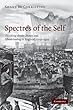
SPECTRES OF THE SELF

Shane McCorristine. Spectres of the Self: Thinking About Ghosts and Ghost-Seeing in England, 1750-1920. Cambridge University Press, 2010. - Reviewed by Peter Rogerson.
Spectres of the Self traces the development of ideas surrounding hallucination from the 18th and 19th century rationalist critique of secular paranormal experience (such authors such as Manchester physician John Ferriar always being careful to explain that they were not trespassing in any way into the realm of religion and theology), to the challenge mounted by the Society for Psychical Research.

McCorristine shows how the Protestant rejection of the ideas of purgatory and communion of the living and dead made ghost experiences, already problematical in the 16th and 17th centuries, even more so; and paved the way for physiological explanations of hallucination. Discussions surrounding hallucination centred around the notion of the 'waking dream' as a source of experience. In a sense ghosts were already exiled from the centre of the community, where they did things like reveal buried treasure or demand justice for their murder, to the liminal zone between waking and sleeping. It these liminal spectral figures which were to haunt the Victorian imagination and become the focus for the classic Society for Psychical Research ghost.

The popular notion of ghosts as spirits of the dead walking were challenged by sceptical writers like the illustrator George Cruickshank, who raised the question of why or how ghosts wore clothes, a debate that was to continue to rage, but which impelled even those psychical researchers favourable towards the idea of survival of bodily death to share the rationalist view of ghosts as hallucinations. They were, however to introduce the notion of telepathic or veridical hallucinations.

McCorristine treats the development of these ideas through the production of the book Phantasms of the Living, mainly written by Edmund Gurney, and the debates which raged (and still rage) around it. McCorristine looks at this work as indicating the general death anxiety of the age, an anxiety perhaps most manifest in those who had relatives scattered around the world, particularly in the less wholesome spots in the British Empire. One can actually gain more insight from Phantasms than is often realised, it is an excellent source of anecdotes which hint at the repressions of the age (the lost lovers or would-be lovers exiled to colonial sink-holes who return to their beloved in dreams and spectral encounters for example).

I think that McCorristine could have made more of this material, by examining individual stories to see what they reveal about the Victorian psyche and its repressed, haunted other side.

In a sense the SPR itself, like the ghosts and phantasms it studied, is in an ambiguous haunted twilight zone between the world of scientific rationalism and the world of spiritualism, and, as is often the case, was unable to really gain the trust of either side. Rationalists regarded it as the 'Spookical Society' and laughed at it, while Spiritualists regarded it as a bunch of materialist debunkers. With the death of Gurney and the ascendancy of Myers, spiritualistic and religious side began to predominate. McCorristine briefly tracks the beginning of its decline, although much of its future lies outside his time period. Today it is not hard to think of the SPR itself as an essentially ghostly organisation, a piece of history which will not lie down, and which spectrally dreams of its mortal days at the centre of European intellectual life.

Though this book is not without its faults, chiefly its descent from time to time into nearly incomprehensible jargon and the obligatory and not altogether relevant citations of Derrida, Marx and other social science/cultural studies luminaries, this is a book which should be of interest to all students of the history of psychical research.

18.10.10

FORWARD TO THE PAST

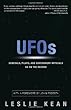
Leslie Kean. UFOs: Generals, Pilots and Government Officials Go On the Record. Harmony Books, 2010.

The reader who turns to this book looking for dramatic revelations about crashed flying saucers in the Pentagon pantry and the like is going to be disappointed, for it is largely a rhetorically sober account of a number of UFO cases, most of which will be well known to the UFO community. However, that is clearly not the 'community' to which this book is addressed. It is however addressed to the sort of people who are impressed by uniforms and titles.

The cases presented here include the 1989/90 black triangle wave over Belgium, narrated by Major General Wilfried de Brouwer (Retd), the 2007 story about a "gigantic UFOs over the English Channel" as told by witness Ray Bowyer; the 1976 Tehran case by witness General Parviz Jafrai (Retd), the 2006 O'Hare airport case, several South American pilot encounters, Nick Pope on the "real X files" along with James Pennistone and Charles Halt on the "extraordinary incident at Rendlesham Forest" etc.., Even our old friend Trindade turns up.

Much of the book is also devoted to various official investigations in France and South America, which lean towards exotic interpretations of UFO experiences, and the author calls for some new, presumably expensive, official investigation in the United States.

When I first looked at this book I imagined it was the sort of thing I might have thought was a good UFO book if I had read it forty years ago. On second thoughts, however, it would have struck me as very old fashioned even then, with only the merest whisper of close encounters, let alone occupant reports or the general weirdness that was apparent even then. Rather we are back fifty or more years, to the early days of NICAP and its assemblages of cases, rhetoric, and the great and good of the military-political complex. Change names and dates and this book could easily have been written in 1960.

This is not a scientific book, there are no in depth detailed, critical examinations of any of the cases, and it is significant that though the detailed multi-authored study of Ray Bowyer's case is mentioned by him and footnoted, it is not subject to any actual discussion. Needless to say the various critical accounts of some of the other cases, not least Rendlesham, are not referred to at all.

While the first hand accounts are not without interest, they are clearly not contemporaneous accounts, but seem to be recounted in the manner of well-honed and polished after-dinner speeches

Basically this book is a lawyers brief, and its various contributors are clearly engaged in presenting the case for exotic UFOs, i.e. alien spaceships. To be sure, that word tends to be avoided, and there is even a little disclaimer as on page 266 saying there should be an "ending [to] the automatic equating of UFO with extraterrestrial spacecraft" but this really cannot be taken at face value, Indeed, throughout the book there are references to "craft", "vehicles", "solid unknown objects" and "there exists in our skies ... a solid physical phenomenon that appears to be under intelligent control and is capable of speeds, manoeuvrability and luminosity beyond current known technology", etc. etc.. Note that the language is always in terms of craft, vehicles and technology.

Of course traditionalist American ufologists have learned a good rhetorical trick from the intelligent design community, who no longer talk of God and Bible, but of "an intelligent designer" (we never said God did we?) Thus ufologists tend to come up with "structured craft of unknown origin" (we never said alien did we?)

The possibly that otherwise puzzling UFO reports might be generated by a variety of poorly understood atmospheric phenomena is barely mentioned. Of course the role of psychology, the problems of perception, memory and narration and such are rarely mentioned. When clues exist they are overlooked. Thus at one point it is suggested that UFOs behave differently with military pilots than with civilian ones, engaging in more dogfights. The obvious possibility, that this rather reflects how the two groups are trained to respond to ambiguous lights in the night sky, is not even raised.

Of course, if you actually look at the individual reports, even taking them all at face value, there is little reason to assume that they are generated by the same sort of thing (what connects black triangles seen over Belgium, with the luminosities seen by Ray Bowyer for example) They are only linked together by the ufologists claims that they represent the activities of extramundane intelligences. -- Peter Rogerson

17.10.10

MAGONIA INTERNATIONAL

Some people might have noticed the little panel down the side of this page showing the flags of all those countries whose more enlightened citizens have visited the Magonia Blog since February 2010. Just a bit of fun, as they say. But I'm delighted to notice that we've now notched up our one hundredth country.
Congratulations to the British Virgin Islands!

13.10.10

UFOs: WHAT THE HELL'S GOING ON?

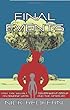
Nick Redfern. Final Events and the Secret Government Group on Demonic UFOs and the Afterlife. Anomalist Books, 2010.

Nick Redfern meets the whistle blowers yet again. This time they are from the self styled 'Collins Elite' who, since the 1940s, have been combating the nasty old demons behind the UFOs unleashed by the magical workings of Jack Parsons, the rocket scientist and disciple of Aleister Crowley.

In other words the same old Nick Redfern whistle blower stuff, but this time given a Christian fundamentalist twist. The cynic might suggest that this is just Redfern looking for sales in the vast and, by him, hitherto untapped Christian fundamentalist market, but I couldn't possibly comment.

Various alleged members of this group, alongside other Christian fundamentalists, such as the Rev Ray Boeche, regale Redfern with a variety of demonological dramas, which basically consist in believing just about every tale told by a ufologist to be literally true and to be the deceptions of demons. Its pretty much a no-lose situation from them, as tales of nasty abducting aliens are clearly demons, but tales of nice touchy-feely aliens, who preach world peace etc. are also demons in disguise. One reason they know this is that said aliens preach New Age ideas and say nastier things about Christianity than other religions. This is not because, as nasty cynical Magonians might think, that contactees have made these stories up, and are often rebelling against their own strict Christian upbringing, but because they are being deceived by demons.

Ironically much Christian fundamentalism and the New Age, derive from rival 1930s Nazi lovers, Gerald L K Smith and William Dudley Pelley respectively.

That there is some small group unofficial group within US defence department employees with these demonological views is by no means implausible, though its origins are unlikely to go back much before the 1970s at the earliest, rather than the 1940s as claimed here. There are some very strange people in the hinterland of the US Republican Party., and no doubt some have crept into the recesses of the Defense Department, especially during the Bush Jnr. administration. Their concerns and language all point to post-Cold War paranoias, or maybe the anti-communism and racism of the 'old Christian right' has just been airbrushed out.

Christian (and also some Muslim) fundamentalists have been proclaiming that UFOs come from hell for some time, see David Clarke's article on the subject in Fortean Times:


It would seem that for these people that 'UFOs' envisaged as magical machines make perfect metaphors for modernity. The demons of Christianity are essentially personifications of the amoral forces of wild nature, creatures of the wilderness, For many of the fundamentalists the whole world outside their own narrow little laager is part of that demonic wilderness. Modernity and technology become assimilated to wild nature.

Alas one does not have to invoke ultraterrestrial boggarts to find radical evil. The various religious fundamentalists are making quite a good job of it themselves. Indeed in their strange demented world view there is an almost complete reversal of ordinary human moral values. Anyone preaching joy, love, tolerance, peace and fellowship is bound to be denounced as an demonic impostor, while they in effect affirm "ignorance, bigotry, fear, intolerance, hatred and loathing be thou my good"

Indeed at least one of Redfern's informants seems to see their sinister potential, and claims the Collins Elite is being taken over by a group who intent to stage a fake Second Coming of Christ or some such, in order to impose a Christian version of the Taliban on the US, backed by legion of 'Christian warriors'. Portions of the mainstream media have indeed pointed to Christian fundamentalist infiltration of the military, though there is nothing new in this. -- Peter Rogerson

11.10.10

ET TALK

Fernando J. Ballesteros. ET Talk: How Will We Communicate with Intelligent Life on Other Worlds? Springer, 2010.
After looking at the prospects for life in the solar system, and examining the various strategies used to search for extraterrestrial signals, and their success or lack of same (a number of isolated anomalies such as the famous 'Wow' signal but no actual sustained signal) Ballesteros goes into the meat of the book, how to communicate.

This involves looking at the development of language and looking at various non human 'languages' here on earth, and a deeper discussion of the very nature of language, and how it might be encoded.

Of the communication strategies, Ballesteros considers music, as portrayed in Close Encounters of the Third Kind but is forced to dismiss it as being too terrestrial. Instead a plumps for mathematics, and a number of mathematically based artificial languages are looked at. Looking at some of these, one suspects that aliens would have to be very intelligent indeed to be able to decipher them.

Like most writers in these fields, I suspect that Ballesteros underestimates just how alien real aliens would be, and just how alien their 'languages' could be also. Aliens who communicate with a mixture of auditory, visual and olfactory signals for example, or who have working vocabularies of a trillion words. Much of what they might communicate may revolve around aspects of physics and mathematics which are quite beyond us (what would Aristotle have made of the equations of quantum mechanics for example), or aspects of their own lives which would seem obvious and even puerile to them, but which would mean nothing to us (what would Shakespeare have made of Facebook?).

Indeed, as I have argued before, there is no reason to believe that Hertzian radio is common place as seems to be assumed. Marconi's radio telegraphy won the interest of the British government because it was seen as an excellent way of communicating with the ships that sailed from one part of the Empire to another, and not as a means of public broadcasting. Places looking for overland communication were looking at alternative strategies, such as broadcasting through the telephone network, or ground induction wireless telephony, were actually ahead of Marconi's system based on the telegraph's Morse code. -- Reviewed by Peter Rogerson

9.10.10

THE ORIGINAL FLYING SAUCER?

I normally put information about new and forthcoming books over in the Book News listing, but there is one recent item to which I would like give a somewhat wider promotion. My thanks to Mark Pilkington and his Mirage Men blog for alerting me to this.

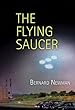
In Magonia 61, November 1997, we published a piece by Philip Taylor, The Mystic and the Spy, which examined two of the earliest British UFO books, Bernard Newman's 1948 novel The Flying Saucer, and Gerald Heard's 1950 book The Riddle of the Flying Saucers. Newman's book was probably the first book ever to have the phrase 'flying saucer' in its title.

Heard was a mystic and an outsider, who later became something of a New Age pioneer, experimenting with LSD and mescalin with Aldous Huxley in 1950s California. Newman, on the other hand was very much an insider, with contacts deep inside government and the intelligence services, if he was not actually an intelligence officer himself, which seems quite possible. This makes the premise behind his novel all the more significant: that a group of scientists alarmed about the possibility of nuclear war, stage a series of fake UFO 'crashes' which result in a 'united earth' ready to face an extraterrestrial invasion.

Taylor summarises: "Newman’s book, now nearly 50 years old, presents familiar themes to us today: a saucer crash in New Mexico, an alien autopsy (albeit a particularly messy one). In the background, an ultra-secret military disinformation campaign designed to create a New World Order hidden from the general population. In 1948 the New Order that Newman envisaged was that of brotherhood and peace to all men and is plotted by pipe-smoking, back-room boffins, fresh from their successes in the War."

Today's readers will recognise strong hints of these themes in Mark Pilkington's own book, Mirage Men. Although it may be far-fetched to suggest that Newman had a direct input into American and British government policy, it is clear that he was tapping-in to the mood of the era amongst quite a lot of idealistically-minded people, many of whom he would have known personally.

Newman's book has now been re-issued by the American company, Westholme Publishing, who seem to specialise in military history amongst other topics, as well as having an interesting 'rediscovered fiction' list which includes Newman's book.

The publishers say: The first book to use the term 'flying saucer' in its title, this novel appeared in the wake of the Roswell incident and other UFO sightings, at a time when people feared both the threat from outer space and humanity’s tendency toward self-destruction. With a playful take on weighty matters, The Flying Saucer is a satisfying combination of science fiction and thriller, witty satire and political commentary.

I think this is well worth a place on any ufologist's bookshelf, and you can buy a copy using the link below. I presume everybody recognises the photograph used for the jacket cover? (Incidently Mark's book has now been published as one of these newfangled kindle thingies, and I've also put a link below.)

7.10.10

THE CIRCLE LINE

Merlin Coverley. Psychogeography. Pocket Essentials, 2010.

Louis Armstrong is reputed to have said to a questioner "If you have to ask what jazz is, you'll never know!" After reading this book, that's how I feel about psychogeography. Anything which combines Surrealism, Rambeau, Baudelaire, Robinson Crusoe, Will Self, Situationism and a collection of 1940s and 1950s French political theorists is going to be difficult to define.

Coverley traces the origins of the concept to Blake and Defoe, who, in Jerusalem and Journal of the Plague Year respectively, tied the topographical and built structure of the city to the spiritual situation of its inhabitants in Blake's case, and to their physical condition for Defoe. It is significant that in both cases the city is London, which has been the focus of much psychogeographical thought and action, at least in the later twentieth century.

This book traces a link between writers such as J-K Huysmans whose psychogeographical exploration of London never took him beyond the confines of his Parisian apartment, and Iain Sinclair who has literaly circumnavigated London as a pedestrian along the route of the anti-pedestrian archetype, the M25 orbital motorway.

In the case of the Situationists, psychogeography became a political tool, and the structure of the city - in their case Paris - became a representation of the social structure; its boulevards and grand-places becoming a solid and structural representation of political and social control which was ultimately challenged in the events of 1968.

In London writers began looking at the city in a manner closer to Blake, seeing what Coverley calls 'the Visionary City'; with a less overtly political eye, although still aware of the way that politics have impacted on the fabric of the city. Coverley suggests they have developed a sort of neo-psychogeography. Iain Sinclair seems to be the writer most identified with this contemporary form, his books such as London Orbital and Lights Out for the Territory chronicling his long journeys through the liminal regions of both the outer suburbs and the inner city. These seem to be the places where, in the words of the great Ian Nairn - who I think was a psychogeographer manqué - "It is always four o'clock in late November".

An other writer who has been associated with a psychogeographical viewpoint, although he might vigorously deny it, is Peter Ackroyd, and with him perhaps we come to an overlap with the subjects that concern us at Magonia, for now we move into the world of ley-lines, ancient symbols hidden in the geography of the city, the persistent echoes of past and place which underly the modern streets and buildings, shadows of John Dee and the miasmas of lost rivers.

Although only 150-odd pages long, this is a complex book, the names and -isms may be confusing to anyone who is not already knowlegable about the subject, so I am not quite sure how useful it might be as an introduction for the general reader. Perhaps the best introduction is in the preface to the introduction, where Robert McFarlane advises readers to immerse themselves in the subject by drawing a circle at random on a map of London and then, as closely as possible, walking around the circle on the ground. He advises: "... be alert for metaphors, watch for visual rhymes, coincidences, analogies, family resemblances, the changing moods of the street ..."

Of course, if that circle was drawn on a map of Lisbon, Leeds, Liverpool or your own city, so much the better. -- John Rimmer.

4.10.10

ANALYTICAL AND SCIENTIFIC?

The Mutual UFO Network (MUFON) is the largest open-membership UFO organisation in the USA, and probably the world. According to the 'mission statement' printed in every issue of its monthly Journal "MUFON's mission is the analytical and scientific investigation of the UFO phenomenon for the benefit of humanity".

Now to my mind the important words here are 'analytical' and 'scientific'. So let's take a look at some of the scientific analysis that appears in this publication. George Filer contributes a column to each issue of MUFON UFO Journal called 'Filer's Files'. This is a straightforward listing of 'raw' reports from a variety of sources, and comes with a health warning: "unless otherwise noted, these cases have not officially been investigated". Fair enough, we know where we stand.

Curiously, for a few months earlier this year these reports were appended with notes by MUFON's photographic expert Marc D'Antonio, giving his initial analysis of the report. Unfortunately for many people some of these analyses concluded with such comments as "misinterpretation of data", "lens flare", "more data required", "computer generated hoax", "hoax - sensationalist video" and "insect/birds".

The fact that he also concluded "very intriguing" for several cases did not seem to assuage the anger of some MUFON members, one of whom wrote:

"Hi, Larry [Rimbert, journal editor]. I like the job you have been doing on the journal, however why trash George Filer and his Filer's Files? What purpose did that have? [This is printed in bold in the original] George Filer in an icon in the UFO community and he puts a lot of effort into his Filer's files .. Every Filer file article that you added in the Journal was trashed by Marc D'Antonio

After a good deal more in this vein, with numerous "****'s" euphemised by the editor, the writer concludes: "Do you guys work for MUFON or some secret debunkers society [again, bold in original] who's [sic] only purpose is to make MUFON look a bunch of idiots

The editor seemed only to be concerned about the use of expletives in the letter, but D'Antonio is allowed a lengthy and measured rebuttal, defending his analyses. But guess what, the feature was dropped from subsequent issues. Whether this was an editorial decision, or D'Antonio decided not to continue, is not explained.

Maybe this little episode seems to shake one's trust in MUFON's mission to be 'analytical', so how about the 'scientific'

Well, talking of George Filer, we learn more about him in the current (September) issue of the Journal, where Janice Currie, the new editor, writes about how he became interested in UFOs.

After WWII Filer was stationed with the USAF in England, at the Air Refueling Squadron at Sculthorpe, in Lincolnshire. One day whilst flying over the North Sea they received a message from 'London control' that a UFO was hovering at 1000 ft. between Oxford and Stonehenge. Now by my estimate the distance between Oxford and Stonehenge is about 50 miles (80 km.) which seems a very vague location, and would a radar station actually give the location of a target by reference to Stonehenge?

According to Filer this was "the largest radar return [he] had ever encountered, and so sharp and solid that he was sure the object was metal". I'll leave it to others more familiar with radar than me to evaluate this sentence. Eventually the target became visible as a long series of dim lights "like the lights on a cruise ship". As Filer and his companions on other planes approached the object it rocketed skywards: "It must have been doing 4000 miles per hour - or maybe 40,000 miles per hour - it just disappeared..."

No date or time is given for this amazing report but, and it never seems to have been mentioned by anyone else in the decades since. It seems the only person Filer and his colleagues ever discussed this episode with was the Duke of Edinburgh, who was apparently visiting the base shortly after the incident and had asked to meet anyone who had intercepted a UFO, citing his uncle, Lord Mountbatten's UFO sightings. Actually Lord Mountbatten never claimed to have seen a UFO, but became interested in the topic after a worker on his estate had told him about his own UFO sightings.

We know that the Duke did have an interest in UFOs, but it seems to me unlikely that he would have been wandering around a USAF base asking aircrew about their sightings. Perhaps some UFO moles in the National Archives could see if there is any record of the Duke visiting Sculthorpe in ... well, when? Again, no date is given for this incident of massive ufological importance!

After leaving England, Filer was stationed at the Langley AFB where he learned from fellow officers that satellites had detected a mile-wide alien base on the far side of the moon, and lunar orbiters had found "detailed artificial structures, including huge tall thin towers, spherical buildings, and what looked like radar dishes". Somehow this has also has remained a secret until now!

Now comes an incident we do have a date for: January 18, 1978. This is the famous Fort Dix alien case which is a morass of rumour and anonymity. We are asked to believe that a UFO hovered over the Fort Dix base and apparently dropped overboard a "four foot, grayish-brown [creature] with a huge head, long arms and a slender body" in front of a panicked Military Policeman who fired five rounds from a .45 pistol into it, and also fired at the UFO which was hovering above. Apparently another eleven UFOs were in attendance as well.

The injured alien escaped by climbing over a fence, but collapsed and died on a runway. A 'recovery team' arrived in double-quick time and spirited the body off to - where else? - Wright-Patterson AFB, along with the witnesses and the unfortunate Military Policeman. All were of course sworn to secrecy and shipped off to other bases: "Anyone who knew about the case was transferred or retired", according to Filer, althought this has not stopped the MP from coming forward later with no ill effects apart from apparently finding it difficult to find work in the private sector - a problem which many have had over the years without being involved in any way with dead space aliens.

Filer was an intelligence officer at McGuire AFB, which ajoins Fort Dix, so was not a witness to the alleged events, but on arriving for duty became aware that there had been some sort of disturbance overnight. He claims that he was asked to brief staff at the post that "we captured an alien", but at the last minute the briefing was cancelled. It is quite possible, of course, that the briefing was cancelled because they realised that they had not in fact "captured an alien".

So much of this story is in the form of anonymous and pseudonymous accounts, and the vital 'shot alien' account comes from one source, the pseudonymous "Sgt. Jones', that it's hard to know what to make of it. There may well have been some sort of security alert at the base, which generated all sorts of crazy stories.

But crazy stories seem to be meat and drink to the supposedly 'scientific' and 'analytic' MUFON. Look at some of the articles in recent issues of their journal. In the June 2010 number thanks to Robert Wood, we are shown a series of 'secret documents' from an anonymous source, about the famous 'Battle of Los Angeles' in 1942 when anti-aircraft guns fired at unidentified targets over the city, just a few weeks after Pearl Harbor. This is generally regarded as a probably justified over-reaction to anomalous radar returns. But according to these 'documents' this incident involved extraterrestrial craft.

The first document presented is perfectly genuine and is simply a report of the incident, in the form that we know it, sent to President Roosevelt. But other documents report the 'capturing' of two craft, instructions on 'reverse engineering' projects and the setting up of a 'Non-Terrestrial Science and Technology Committee'.

One of the arguments used to support the genuiness of these documemts is that "The original envelope they arrived in clearly went through the mail". Obviously, no hoaxer could have been able to arrange that! We are also told that a file number which appears on the genuine document also appears on an 'Interplanetary Phenomenon Unit' memo, as if hoaxers wouldn't think of simply copying it onto their fraudulent document.

The style of language is reminiscent of Roosevelt and objective syntax evaluation [?] is expected to disclose a high probabilty that he is the author of the memos that bear his name..." We are not told who is doing the 'objective syntax evaluation', so presumably we just have to take their word for it

Other items in recent issue of MUFON Journal include one by Jacquelin Smith, who is apparently an instructor at the 'International Metaphysical University' where she teaches 'Communicationg with Extraterrestrials.' This is done by telepathy, and we are assured that "Telepathic communication is becoming much easier between humans and ETs."

Jaquelin is in touch with an entity called Quabar who often tells her "Lighten up ... Remember to laugh, be joyful, and play. It's what we are all about". Good advice, but do we really need ET to tell us?

Not that everything in this particular issue of the Journal (April 2010) is without value. A contribution by Kathleen Marden draws attention to the serious dangers of the indiscriminate use of hypnosis in investigation contact and abduction cases, and the problems of 'supressed memories'; and much of the magazine contents generally consist of straightforward reports and news items. There is elsewhere also a sensible article on the so-called 'orbs' photographic phenomena.

But these hover between such pieces as '2012 End Times Prophecy' (March 2010) by John Ventre, which includes Biblical prophecies from the Book of Revelation, claims that people will hear voices of angels, that super-intelligent 'Indigo' and 'Star' children have been born, Tibetan monks have used remote viewing for thousands of years, and extraterrestrials are watching and will intervene, we will become "more in tune with spirituality and the mind body soul reincarnation connection to God", but in the meantime we're all doomed.

Just in case you were wondering, Mr Ventre is the 'analytical' and 'scientific' MUFOB's State Director for West Virginia. It looked like the Journal editor might have had a foretaste of the reaction to this article when he commented in an introductory note, "If you feel inclined to write a letter, I will respond, but I must ask that you keep it clean, not use vulgarity or degrading remarks. I will not respond, nor read that type of email".

I don't know what we can learn from this, except that all open-membership UFO organisations eventually descend to the lowest common denominator. MUFON UFO Journal did go through a rational phase, a good few years ago now, when Dennis Stacy was editor but he committed the unforgivable sin of allowing some sceptical views into the magazine. His position was made untenable and he was elbowed out of his position.

So if we are looking for real "analytical and scientific investigation of the UFO phenomenon" - whether for the benefit of mankind or not - we'll have to look elsewhere. Anybody got any ideas? -- John Rimmer

MAGONIA RECOMMENDS