30.11.10

SECRETS, SHRINES AND SAUCERS

Joel Levy. The Secret Societies Bible. Godsfield Books, 2010
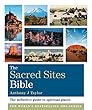
Anthony J. Taylor. The Sacred Sites Bible. Godsfield Books, 2010.
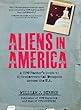
William J. Birnes. Aliens in America. Adams Media, 2010.

The first two titles, although weighing in at 400 pages each, are compact but comprehensive guidebooks to their topics. Secret Societies divides its subject into two sections; firstly religious, mystical and occult, and then rather pointedly, political and criminal. Both sections are arranged roughly chronologically, from the Templars to Opus Dei and from the Assassins to the triads and the mafia. The individual entries on such topics as Freemasonry, the Rosicrucians, the occult societies of the nineteenth and twentieth centuries, are brief, but give a good description of the societies, the people who formed them, their aims, and links to other groups. The entries are written very straightforwardly and the writer is clearly attempting, and achieves, an objective point of view. A useful guide to a complex subject.

Sacred Sites presents brief descriptions and histories of several hundred sites revered by a great number of religions and traditions, from ancient Pagan to American New Age. The sites covered landforms such as Uluru and Glastonbury, pilgrim destinations, retreats and places associated with saints, sages and other religious figures; and churches and places of worship from Neasden to Samoa, where, I learn from this book, Baha'i is now the most widely practiced religion. With just a page for each site the descriptions are inevitable limited but are enough to give basic information on the location. My only complaint about coverage is that the English pilgrimage site of Walsingham is not included. The descriptions are, again, straightforward and objective. Both books are lavishly illustrated.

Unfortunately, I cannot be so enthusiastic about William Birnes tourist guide to aliens in America. Birnes is the publisher of the American UFO Magazine, a publication not noted for its critical approach to the topic. Nor is this book. It takes twenty famous American UFO cases, ranging in date from Maury Island to Stephenville, and presents the most credulous account of each incident; sceptical views are dismissed in a few sentences. Each chapter concludes with a page listing some local hotels and restaurants, presumably to justify its description as a "hunter's guide to extraterrestrial hotspots across the USA". Looking at the locations involved I think anyone following this as a travel guide would be in for a pretty dull vacation! -- John Rimmer

29.11.10

MYSTERIES OF THE AMAZON

Readers of the Magonia blog will have noted the small panels that appear at the bottom of nearly every book review, allowing readers to click directly on to the Amazon website and order the book we have been discussing - usually at an advantageous rate. Whenever anyone does use this facility, your Editor receives a few pence commission for each book ordered.

I'm glad to say that readers do, from time to time, buy books this way, and I am grateful. (May I mention that having got onto the Amazon website through these links, you are perfectly free to go on to other sections of Amazon and order all your Christmas presents as well - many a mickle, as our Scottish friends say, makes a muckle.)

Now one of the interesting bits of information which I receive from Amazon, is not only what books have been bought, but also what books people have linked to but not bought. This in itself is quite interesting as it gives me some idea of the range of interests of Magonians (I had better point out at this moment that I only receive details of the books, I have no idea who is buying or linking to them).

Now here is where there is a bit of a mystery. There is one book which has been linked to far, far, more that any other. In fact over the last year it has been clicked on over a thousand times, although only four copies have actually been bought (thank you, whoever you are). This is the Extraterrestrial Answer Book: UFOs, Alien Abductions, and the Coming ET Presence, by one Jim Moroney, the Chairman of a Canadian UFO Group.

It's puzzling that one book should have so many more hits than any other, but even more puzzling is the fact that it is a book that has never appeared on the Magonia blog, book news or archive, and so has never had a convenient link to it! Can anyone explain what's going on?

Anyway, if you do want to check it (or even buy it), here's the link...

28.11.10

BACK TO THE FUTURE WITH NOSTRADAMUS

Peter Lemesurier. Nostradamus, Bibliomancer. New Page Books, 2010.

A glance on the Internet reveals that Peter Lemesurier has written many books in the paranormal field, with titles such as The Healing of the Gods, Gods of the Dawn, Message of the Pyramids and The Great Pyramid Decoded. So when I received this book for review I assumed, reflecting my own prejudices, that it would be another fairly uncritical rehash of the 'prophecies', explaining how they predicted spectacular events, which somehow always seem to have just happened.

How wrong I was, and I now wonder if my assumptions about the titles of Mr Lemesurier's other books may be similarly flawed. This is the best sceptical book about Nostradamus I have read. Because it is written by someone who seems to fully understand both the historical Nostradamus and the modern myth, it reveals the man and critiques the myth far more effectively than more obviously 'skeptical' titles such as James Randi's seriously flawed and very superficial Mask of Nostradamus. This was reviewed in Magonia 47 by Roger Sandell, who concludes his notice: "It is a pity therefore that [Randi's] book has done the sceptical cause little service". [Link here]

Lemesurier's book is not intended to promote any cause. It starts by exploding many of the myths that have grown up around Nostradamus's life: his family were not physicians; he was not a doctor; he was not educated at Montpellier University; he was not an astrologer (at least not a competent one); nor did he cure the plague at Aix-en-Provence. Lemesurier takes us step-by-step through Nostradamus's recorded history, uncovering a life just as strange as the accepted myth, but revealing the historical figure to be far more of a chancer and opportunist than an idealistic prophet.

Nostradamus himself denied that he was a prophet, so what was behind his books of enigmatic verses? Well it appears that in many cases the answer is printing errors. I was not aware that at the time of the original publication of the The Centuries it was the custom for the author of a book, or his amanuensis, to actually read out the manuscript to the printer, who would hand-set the type to this dictation, thus allowing all sorts of errors to creep in. In one case the meaning of a quatrain seems to have been changed totally by the compositor hearing the word dehors as d'or, and other examples are quoted.

Lemesurier looks in some detail at specific quatrians which have been claimed as prophecies of events such as 9/11, the Second World War, the Great Fire of London, the death of Princess Diana, and the French Revolution, explaining, by reference to the original texts, how these actually relate to events in Nostradamus's own lifetime or earlier.

Another issue which Lemesurier explores is whether the verses are actually intended as prophecies from Nostradamus's own hand. The claim that they are prophecies is dependent on the assumption that the title of the work, Les Propheties de M. Michel Nostradamus means 'The Prophecies of Michael Nostradamus'. There is at least an element of ambiguity here, as it could equally mean 'The Prophecies by Michael Nostradamus'. In other words a collection of prophecies from different sources, compiled by him.

To a considerable extent this seems to be the case, because many of the quatrains are in fact reworkings of prophecies by figures such as Plutarch, Virgil, Livy and other Classical writers. Lemesurier suggests that Nostradamus's 'bibliomantic' technique was largely based on the principle of 'what goes around comes around'; that past events would be repeated in the future, and that any previous prophecy would eventually come true again. In a way, Lemesurier suggests, Nostradamus did not actually believe in the future.

The major part of this book (pages 90 to 274) are given over to a verse-by-verse analysis of The Centuries pointing out difficulties with translations, the possible misprints and mishearings, the use of words and changes in meaning, and importantly idenfiying the original source of the prophecy which Nostradamus has recycled. This is a detailed and scholarly analysis, and the reader is helped immeasurably by the CD accompanying this volume, which presents facsimiles of the original printed sources including the 1555 edition, a 1568 edition, a 1668 Dutch edition, and other original texts.

This is a fascinating and refreshing new look at what has become a well-worn topic. -- John Rimmer

26.11.10

BEASTS OF THE EARTH - MAYBE

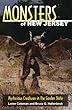
Loren Coleman and Bruce G Hallenbeck. Monsters of New Jersey. Stackpole Books, 2010.
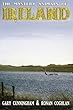
Gary Cunningham and Ronan Coghlan. The Mystery Animals of Ireland CFZ Press, 2010.
Glen Vaudrey. Mysteries Animals of the British Isles: The Western Isles. CFZ Press, 2009.

Studies of cryptozoological animals often concentrate on a few alleged examples, often from remote, little explored parts of the world, where it might be reasonably assumed that animals unknown to science exist. However as this crop of local studies shows such creatures are also reported from the backyard of the urban world.

New Jersey is often seen as a sort of backyard-cum-holiday resort for New Yorkers, yet it has almost as many cryptids as the Pacific North West. There are hairy humanoids with luminous red eyes, sea serpents, lake monsters, little lizard men, to say nothing of giant wooden birds. Above all it has the Jersey Devil, now established as the state's mascot. There is a sizeable chapter and a long appendix on the Devil, which nowadays seems to refer to anything vaguely eerie half seen or imagined in the twilight. Back at the beginning of the 20th century there was a huge wave of sightings. As typical descriptions ran something like "it was about 3 feet and a half tall, with a head like a collie dog and a face like a horse, it had a long neck, wings about two feet long, and its back legs were like those of a crane, and it had horses hooves...." it seems unlikely that it will be exhibited in the New Jersey State Zoo anytime soon.

New Jersey is however part of a huge continental land mass, and its just possible to imagine that strange beasts have migrated there across the continent, Ireland and the Western Isles are, well, islands, and ones which have been inhabited by humans for a very long time, not the sort of places surely that true paws and pelts animals can hide.

As Cunningham and Coghlan show, Ireland does have a tradition of mystery animals, in the form of lake monsters, a good number of examples being related in their book. Many of these are taken from the files of the late Lionel Leslie (brother of the ghost story writer Sir Shane Leslie and uncle of the UFO writer Desmond Leslie). Now many of these lakes are not exactly vast like Loch Ness, and some are little more than large ponds, which makes the idea of large unknown animals native to them rather unlikely. The authors suggest therefore that these are migratory creatures, come out of the sea to drink fresh water and are related to primitive proto-whales.

There are other mystery animals reported from Ireland, including the obligatory wild cats and big cats, along with possible giant otters and dwarf wolves, The latter, said to have inhabited the island of Achill, but as they do not appear in any contemporaneous source, one must suspect they inhabit the imagination of one of Karl Shuker's (who first recorded them) correspondents.

Other creatures belong more solidly in the realm of folklore; examples being werewolves, mermaids, the hairy gruagach etc. Much of the Mystery Animals of the Western Isles is taken up with like folkloric creatures, though even there the occasional lake monster and less occasional sea serpent crop up. Some of these folkloric creatures seem to hover at the edges of history, such as the mermaid allegedly found on a beach in Benbecula in the 1830s, or the phantom dogs reported by A. A. Macgregor. Others, such as the Hebrides werewolf came from the imagination of writers, in this case the notorious Elliot O'Donnell, and other writers such as Trevor Whittaker were to add their own glosses to the tale.

Looking through these and similar books, it seems that almost any patch of ground can have its mystery animals, so it is not surprising that authors who do not want to think that many of these animals live only in the human imagination turn to paranormal theories.

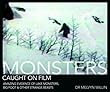
Melvyn Willin. Monsters Caught on Film: Amazing Evidence of Lake Monsters, Bigfoot and other Strange Beasts. David and Charles, 2010.

If cryptids are real paws and pelts animals then we ought to have good evidence for their existence. If not the actual remains, then good photographs. This book produces a wide range of photographs of a variety of beasts. Some are doubtless genuine, mostly those of rare but catalogued and recognised animals such as giant sturgeons, Cornish sharks, jellyfish, the giant peccary and the solenadon etc. These provide good clear pictures.

The images of cryptids fall into two categories: those that give some detail but are suspected fakes, and those which are very indistinct. The former include the famous "surgeons" photograph of the Loch Ness Monster and the well known Patterson Bigfoot film. There quite a lot of other, less well known, photographs here, but most are indistinct, have a dubious to non-existant provenance, or just smell of the fake. Sometimes all three. One picture of a big cat might actually be a pig, others may be just domestic pussies where scale is lacking.

In addition to cryptids there are also photographs of alleged aliens, such as the Ikley 'green man'. The witnesses' ex-wife says it was a model made out of chicken wire. Another photograph shows what purports to be a tiny alien walking behind a mounted policeman in a park in Chile, a child caught in a trick of perspective or a small model? To cap all there is an alleged photograph of Gef the talking mongoose from the Isle of Man. Whatever was photographed it wasn't a mongoose, talking or otherwise.

Willin himself seems less than convinced by most of these photographs. There significance must be surely as cultural icons rather than evidence for anything. -- Peter Rogerson

22.11.10

SURVEYING PARANORMAL AMERICA

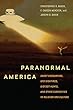
Christopher D. Bader, F. Carson Mencken and Joseph O. Baker. Paranormal America: Ghost Encounters, UFO Sightings, Bigfoot Hunts and Other Curiosities in Religion and Culture. New York University Press, 2010. - Reviewed by Peter Rogerson.

Its not quite apparent from the title, but this is a study based around some of the questions asked in two surveys of religious attitudes and beliefs, conducted for the Baylor University Religion Survey Project by the Gallup organisation in 2005 and 2007: (http://www.isreligion.org/programs-research/surveys-of-religion/)

These were questions which asked about belief in a variety of topics (with % of believers men/women in brackets); Atlantis and other ancient advanced civilisations (42/45) - a false positive I suspect, as "advanced civilisations" is not clearly defined; telekinesis (28/31); fortune telling, etc. (8/18); astrology (10/20); mediums (14/27); ghosts (32/45); extraterrestrial UFOs (29/23) and Bigfoot and other monsters (18/20).

A clear majority of Americans responded positively to at least one of the questions There are detailed examinations and correlations with income, education, religiosity, religious conservatism etc.. These results clearly show that the perception of believers as kooks and strange outsiders is not sustainable. There was however a strong inverse correlation between belief in the paranormal and religious and conservatism, far more people who believed God was "a cosmic force" held multiple paranormal beliefs than those who believe that the Bible is the inerrant word of God. In American political terms, Democrats and Independents are likely to hold more paranormal beliefs than Republicans. People who cohabit are more likely to have multiple paranormal beliefs than those who are married and so on. The religiously conservative on the other hand are more likely to believe in personal devil or that they have received messages from God

The authors examine these reposes through a number of sociological lenses, in particular studies of deviance, and suggest that those who are less embedded in social structures, and have less to lose, are more likely to admit paranormal beliefs, as are those one might call "the adventurous" or "the experimenters".

Baylor University is a conservative Baptist university, through that does not seem to have massively biased this study, though it is worth bearing in mind, and certainly influenced the spin the university itself put on the results (see link above).

Translated to Britain, we might suspect that the figures for paranormal beliefs here would be higher, as there is a much smaller population of religious conservatives, and in some respects Britain as a more urban society is rather less conformist. Politically I would expect that (on 2010 voting) belief in the paranormal would run downwards across Green, LibDem, Labour, Conservative, and UKIP (I would hesitate to guess where the BNP would fit in!).

This book is not all dry statistics and social analysis, there are accounts of the authors' visits to a number of groups and activities, such as ghost hunters, UFO abductees (including one who remembers an abduction in a past life), Bigfoot hunters and Pentecostal Christians.

They draw a line between the paranormal generalist and the specialist, the latter represented by a conservative Christian Republican bank manager member of the National Rifle Association, who is adamant that Bigfoot is a paws-and-pelt animal with no connection "with all that paranormal nonsense", while the former is represented by an archetypal old lady in trailer park, who is not only a UFO abductee/contactee, but has had multiple paranormal experiences and was a pal of Jesus in one of her past lives. These do seem to represent extremes and come close to caricature. The authors did not have any paranormal experiences on these expeditions, though Bader admits that he and his wife once lived in a "haunted house" where she and a lodger had some odd experiences.

A more sombre interview was with Paul Ingram, a father who 'confessed' to Satanically abusing his daughters, because his daughters claimed that he had, after being influenced by a religious charismatic. Believing his daughters would never tell a lie, and under pressure from his pastor, Ingram 'confessed' to 'crimes' he had never committed.

Which leads into perhaps the vignette which sticks most in my mind; the replies of Obama and McCain to a church groups question as to whether they believed in evil. Obama's is thoughtful and considered, we can see evil anywhere, whether in the cruelty in Dafur or gang violence or child abuse at home, we can confront it, but if we believe we can eradicate evil from the world, we are going to end up doing a load of evil ourselves; McCain's is a simple demagogic rant in which he announces he will smash Bin Laden from the face of the earth, evil is exclusively related to a 'terrible other' the American demon of the moment.

This is an interesting study which is likely to be referred to by sociologists for some considerable time to come, and no doubt put to various, sometimes mutually contradictory, uses.

20.11.10

EVERYTHING YOU ALWAYS WANTED TO KNOW ABOUT VAMPIRES

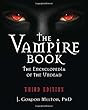
J. Gordon Melton. The Vampire Book: The Encyclopedia of the Undead. Visible Ink Press, 2010. -- Reviewed by John Rimmer.

Gordon Melton is probably best know to Magonia readers as the author of numerous books and papers on religious cults, particularly in the USA, and has written specifically on 'UFO Religions' such as the Raelians. An encyclopedia of vampires may seem a little out of his field, but it is clear from this book that vampire fandom has a great deal in common with the cultic milieu, and a number of mystical and quasi-religious groups have used vampire mythology as part of their rituals, even to the development of cults claiming to represent 'real' vampires.

In his introduction Melton notes the resurgence of interest in vampires and vampirology over the last twenty years, and this is given full coverage in this updated edition of the 1999 original. The genre of vampire fiction, almost dead by the late 1970s and the decline of the Hammer Horror versions of Dracula, was given new blood (pardon me) through the novels of Anne Rice and later the success of TV series such as Buffy the Vampire Killer, as well as being given a boost by the centenary in 1997 of the publication of Bram Stoker' Dracula. From then on vampires never looked back, although maybe their victims should have do so more often!

Perhaps the most interesting aspect of the revival of interest in vampires has been its markedly feminine, even feminist, nature - Melton notes the arrival of the lesbian vampire. The attractive, sexy vampire now features in various collections of romantic novels, such as the Nocturn series from the British publishers Mills and Boone, always previously associated with stories involving handsome doctors, exotic sheiks and regular he-man types.

The growth of interest in vampires has taken the subject far from its literary, folkloric and mythological roots, and all the developments are well covered in this encyclopedia. The modern TV and graphic novel incarnations of the vampire feature alongside biographies and bibliographies of contemporary vampire authors, sexuality and the vampire - including 'Bite Me in the Coffin, Not in the Closet' described as a "fan organisation for gay and lesbian people who have an interest in vampires and vampirism", it "did not survive for many years", according to Melton - and a massive amount of information on cinema vampires, actors and screenwriters. Even Duckula gets a mention.

There are a series of entries for vampires legends from various countries, from France to Burma, Japan and even South America. The entry for the United Kingdom deals mostly with this country's vampiric literary heritage, in the absence of any significant British folklore on the topic. I would like to have seen Spring Heel Jack get at least a mention, as he shares many characteristics of the vampire stereotype, but I am glad to see that my near-namesake and homophone (look it up) James Rymer gets his due as the author of probably the most successful vampire story until Bram Stoker came along.

At 909 pages this is a massive reference work, and it is good to see that there is a comprehensive index as well as the individual alphabetical entries - an absolute essential, but one which some encyclopedia compilers do not feel is necessary.

18.11.10

NAZI UFOs - THE FACTS!

A brilliant 'Downfall' parody. Many thanks to Ian Ridpath for the link:


Anyone got any ideas who did it?

UPDATE: Turns out it's this chap. Absolutely superb (although as Mark Pilkington has pointed out, the bloke playing Nick Pope should have shaved his moustache off!)

14.11.10

TRACKING THE BOY JONES

Jan Bondeson. Queen Victoria's Stalker: The Strange Story of the Boy Jones. Amberley, 2010.

Jan Bondeson will be best known to Magonia readers as the author of a number of books on historical and fortean curiosities, with such titles as Freaks: The Pig Faced Lady of Manchester Square, The London Monster, The Two-Headed Boy and Buried Alive: The Terrifying History of Our Most Primal Fear. Another of his books, The Great Pretenders is reviewd HERE.

In this book he examines one particular individual and his bizarre behaviour. 'The Boy Jones' - Edward Jones - gained notoriety in the 1840s by making a series of intrusions into Buckingham Palace. At the time this was not as difficult as you might think, the Palace being run on a ramshackle system stretching back hundreds of years which seemed to have ensured that no-one was particularly responsible for anything.

The first time 'The Boy Jones', as he was almost inevitably referred to by the press, was discovered he was hiding behind a pillar, covered in soot and grease. After a Keystone Cops-style chase around the Palace corridors he was collared and hauled off by the police and charged with theft of a number of small items and a sword. His subsequent trial was something of a farce, which made the Palace officials look stupid, and he was acquitted.
The thirteen-year-old 'Boy Jones' appeared to be a classic misfit, incapable of holding down a job, and the sort of youth who nowadays would probably be given an ASBO (for non-British readers, an 'Anti-Social Behaviour Order' is intended to forbid offenders from visiting certain areas or undertaking certain activities. One recent ASBO forbade its recipient from making too much noise whilst having sex!).

The Boy's experience of being held in custody at the notorious Tothill Fields prison before his trial did not seem to have any effect, and he was soon back wandering around the Palace and was discovered under a sofa in the Queen's sitting room. A second public trial was out of the question. Quite apart from a repetition of the shambles of the first trial, there were fears that The Boy may have seen Her Majesty in a state of dishabille, or overheard some intimate whispering between her and Prince Albert, which The Boy would be only too keen to repeat in a public court-room. Instead he was tried in private before a committee of the Privy Council, a procedure which had not been used since Tudor times and was usually reserved for noblemen plotting against the monarch.

Prison works, some say, but not in the case of The Boy. After a third intrusion into Buckingham Palace, the Court and political establishment were at their wits' end to know how to control this nightmare, and attempted increasingly desperate measures, which veered from the sinister to the comic. At one point The Boy became probably the last person ever to be shanghaied into the Royal Navy!

Bondeson was able to track down The Boy Jones' ultimate fate, and pick the facts from a maze of myth, legend and rumour. He brings the story up to date with accounts of some more recent Palace intruders, and looks at what may be the motivation behind such acts. Did The Boy, like some of his contemporaries, entertain erotic fantasies about the young Victoria? She was presented in the papers at the time as being a stunning beauty and received the sort of adulation which compared to that around Diana, Princess of Wales. Remember, although we now tend to think of her a portly, unsmiling widow, she was barely 18 when she acceded to the throne.

Bondeson's books are characterised by their depth of detailed historical research, and their fascinating and entertaining style, and this one does not disappoint. Well worth reading by anyone at all interested in the strange workings of the human mind! -- John Rimmer


12.11.10

UFO FOLK AND UFOLKLORE

Thomas E Bullard. The Myth and Mystery of UFOs. University Press of Kansas, 2010. -- Reviewed by Peter Rogerson

In this important contribution to the UFO literature, Thomas Eddie Bullard looks at the development of the folk beliefs surrounding UFOs, how these reflect many long-standing traditions, and how they influence perceptions of anomalous experiences. Bullard notes that we do not have direct access to any UFO phenomenon (or phenomena) but, echoing the points I made in Truth Tales and Catalogues, he argues in greater detail how there is a trail from event, to how that event is experienced, remembered, understood, communicated to others, how audiences interpret that communication, how they then pass there interpretations on to a wider public, so that the event becomes established in popular lore,

The popular lore surrounding UFO reports - in particular the ever present ETH - not only alters perceptions and interpretations, turning for example anomalous lights and vague 'things' into machines, but also helps set up resistance to such reports from the cultural mainstream.

In the core of the book Bullard examines the growth of the UFO lore through several stages from the early reports of lights in the sky, though the rise of stories of close encounters and occupants, the growth of the abduction narratives, the tales of crashed flying saucers, the incorporation of conspiracy theories of various degrees of complexity, and on to the modern period "uforia without the UFOs". It has to be said that this timeline is rather US orientated, for example tales of landed flying saucers and meetings with occupants are out in Europe and South America at least 10 years before they become established in the USA.

Almost from the start the nascent UFO community began to construct a past for the UFO phenomena, ranging from the immediate past of ghost rockets and foo fighters, to the remote past of classical, Biblical and other ancient sources. These sources themselves can show us, Bullard, argues how culture can interpret observations (e.g. aurora perceived as armies fighting in the sky). He looks at the great airship flaps, perhaps rather superficially given the amount of work he once put into studying them. One feature he could have pointed out was how already these narratives were using folkloric imagery, and were invoking ambivalences about the rise of modern technology. The airships are already what the flying saucers will become, images of the transcendent machine.

Of particular interest is Bullard's account of how the rise of scientific and popular cultural images of extraterrestrial life mirrored earlier accounts of otherworldly voyages and encounters with others in semi-human shape. Though the imagined inhabitants of strange and foreign lands are seen as grotesque caricatures of the human (faces on their chests, one giant leg etc.) they are seen as humanoid and thus within the human community.

The rise of modern ideas about extraterrestrials centres around Martians, and Percival Lovell's visions of the dying Mars, which led to H. G. Wells's vision of the Martian invaders. The idea of Martians carries on into the modern UFO era with speculation about Martians being concerned about the explosions of atomic bombs. Long after Mars itself has been disenchanted, Lovell's vision of a dying world persists in the abductees visions of blasted and dying wasteland worlds.

Polarities fix our images of otherworlds, heaven and hell, paradise and wilderness, Utopian and despot, gods and devils, lovely peace loving Venusians and nasty warlike Martians (obviously the inhabitants of these planets should take after their respective classical namesake). Bullard draws out these themes of one the one hand salvation, and on the other invasion, again tracking beyond ufology into wider culture.

As we approach the abduction narratives and tales of hybrid children, Bullard is able to bring in multiple themes, the early American colonial tales of abduction by Native Americans, tales of fairy abduction and changelings, the parallels with the Satanic abuse stories, traditional witchcraft stories. Bullard concedes that the modern abduction narratives echo modern human concerns about being swept up into an impersonal modern world. The drab grey dusty personality-less greys are us, or what we fear we could become.

The fears of the abduction narratives are also of us in another way. The government, even if hiding the truth about the UFOs, was once seen as doing it for our own good, to prevent panic. Now much of this folklore portrays the government as being part of or party to some vast conspiracy with forces of cosmic evil. These tales of conspiracy involving mysterious secret governments have dark echoes. So too do the tales of the hybrids, the idea that the other is secretly walking our streets, THEY, who are both us and not us, are taking are women, are burrowing in the depths of many previous nativist fears.

One thing that Bullard does not quite grasp is that once the hybrids are no longer seen as wan fairy children safely tucked up in their vats in their otherworldly fairyland, but as adults walking the streets, and the image of the hybrid is fused with classical right-wing conspiracy mythology, the abduction myth has crashed through the safety barrier into the realm of what some writers have called antisemitism without the Jews. These dark paranoias seem to be at the heart of the new TV series "The Event", which portrays 'aliens' who look just like humans but are somehow subtly different and are entering our world for some unknown but presumably nefarious purpose.

Reading this book, we can see how much cultural accretion has accumulated around the image of the UFO, indeed many of us would argue that it has essentially constructed it. Bullard argues for some core phenomenon behind this accretion, and gives examples of a number of puzzling-looking reports, while conceding that many of these taken at face value make little sense.

The problem is that without the cultural structure of the ETH or its more esoteric cousins there is little reason to require the existence of a unitary UFO phenomenon. That, of course, does not automatically imply that all UFO reports are ultimately generated by well-catalogued and understood environmental or psychological/neurological processes, indeed such a view would imply that we know everything there is to know about ourselves and our environment. It does however suggest that really puzzling UFO reports might be generated by lots of different things.

Nor can we see an impermeable boundary to the UFO experience which sets it apart from other anomalous personal experiences. We would agree with Bullard than people do indeed have all manner of such experiences, only those portions of which that can be more or less shoehorned into some socially constructed category - with their own body of students - being regularly reported.

We can see how protean anomalous experiences can be so slotted by looking at the story of Kary Mullis and his luminous raccoon and enchanted farm, which Bullard devotes some space to. Of course such a story could equally be presented as one of a haunted farm, or due to the activities of fairies or witches.

Despite these slight differences there is much more in this book with which I agree, and I heartily recommend it to all Magonians.

10.11.10

PYTHAGORAS: MORE THAN JUST THE SQUARE ON THE HYPOTENUSE

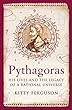
Kitty Ferguson. Pythagoras: His Lives and the Legacy of a Rational Universe. Icon Books, 2010 -- Reviewed by John Harney

To most people, Pythagoras is probably known only for his theorem about right-angled triangles, but Kitty Ferguson shows us that his name has been involved in many other contexts throughout the 2,500 years since his lifetime. This is despite the fact that he and his devotees were very secretive about their work and that, so far as is known, he left no writings at all. The earliest written evidence about him consists of six short fragments of text from about a century after his death, referring to earlier writings.

Pythagoras was born on the Aegean island of Samos, which he left in about 530 B.C. and went to live in Croton, on the southern coast of Italy, where he gained a reputation as a teacher and religious leader. He also became involved in politics and made enemies, so that, after about 30 years in Croton, he fled to another coastal city, Metapontum, where he died.

The work of Pythagoras and his followers was important for their discovery of the importance of numbers, their "recognition that numbers are a pathway from human ignorance to an understanding of the deepest mysteries of a universe that on some profound level makes perfect sense and is all of a piece". This discovery was made in music. As Ferguson notes: "It is well established, as so few things are about Pythagoras, that the first natural law ever formulated mathematically was the relationship between musical pitch and the length of a vibrating harp string, and that it was formulated by the earliest Pythagoreans."

This discovery also inspired Pythagoreans to look for other examples of mathematical relationships, and the author discusses how the application of these ideas to astronomy gave rise to the notion of the "music of the spheres", which in turn inspired astronomers such as Joannes Kepler, whose investigations of an apparent lack of harmony in the movements of the planets eventually led him to the realisation that their orbits were not circular, but elliptical.

Pythagoreans already knew that constructing a triangle with sides in the ratio 3-4-5 would produce a right angle, and that 5 squared was equal to 3 squared plus 4 squared. However, most right-angled triangles, the simplest example being a square with a diagonal drawn across it, produced the problem of incommensurability, because if the sides of the square are 1 unit, then the diagonal must be the square root of 2 units, which is an irrational number, having an infinite number of digits after the decimal point. This might seem trivial to some people, but academics today are still working on the logical and philosophical problems posed by the concept of infinity, for example, the discovery by Georg Cantor, in the 19th century, that one infinite collection can be bigger than another.

Bertrand Russell regarded Pythagoras as having been the most influential man in the sphere of thought. He wrote: "Pythagoras was intellectually one of the most important men that ever lived, both when he was wise and when he was unwise." Russell considered him "unwise" because of what he saw as his mystical tendencies, which led Plato to develop his idea of Forms, giving rise to the idea of intellect as superior to direct observation of the world.

Kitty Ferguson's account of the pervasive influence of Pythagorean thought on the development of science, philosophy, religion and culture through 25 centuries is impressive and should appeal to anyone interested in history, particularly the history of science.

8.11.10

BLACK BOOKS

Owen Davies. Grimoires: A History of Magic Books. Oxford, 2010

Davies's review of the grimoire is a fascinating book, and although scholarly, it is written in an accessible and often amusing manner. It traces this form of literature back to the classical period, where the Roman Empire collected and melded the magical traditions of the Egyptian and and Hebrew worlds. The very existence of a book as a physical object made it something special and mystical in a world where few could read. The Greek, Roman, Arabic or Hebrew letters on a page seemed to be mysterious symbols which only the initiated could interpret. The very written word itself was a source of power. Some magic amulets described in these books consisted simply of arrangements of written characters with no actual meaning in the words they formed.

With the earliest grimoires the ink and paper or parchment of the book itself would be an important part of its magical powers: the parchment should be prepared in a particular way, sometimes it would be from a virgin, or even unborn, animal to preserve the purity of the spells written on it. Sometimes the ink would be mixed with herbs, minerals or even blood to give it extra force.

These books were attributed to Hermes, Moses, Simon Magus and other figures from the past. At first grimoires, precious and hand written, were circulated by travelling scholars and clerics, and stories arose of great collections of books and schools of occult magic in places such as Salamaca.

The introduction of the printing press eventually led to the production of a more populist form of grimoire, often taking the name of a Biblical or Classical figure but having little connection with that person's actual life and work. The 'Sixth and Seventh Books of Moses' is a title that has survived from the tenth century to the present, although the contents have changed over the years. These grimoires became instruction books so that anybody could have the powers to change the world which previously had only been available to priests and prophets.

With their charms for attracting lovers, increasing sexual prowess, finding hidden treasure, curing illnesses, and ensuring prosperity, many of them seem to be the early equivalent of the spam messages that fill up email inboxes! The development of printing and its role in spreading grimoires and other 'subversive' literature was recognised by the church and civil authorities, one Catholic clergyman warning: "we must root out printing, or printing will root out us", a fear which is again reflected in attitudes to the Internet.

This lead to what Davies describes as 'The War Against Magic', in the period of the witchcraft trials. It was believed at the time that the sort of conjuring that the popular grimoires prescribed was actually worse than witchcraft. A person cursed by a witch was a victim and did not lose their immortal soul, but someone following the instructions given by the 'cunning folk' who used grimoires were dealing directly with the devil and risked damnation.

The prosecution of their publishers and users did not stop the spread of grimoires to the New World with the increasing numbers of colonists. Interestingly, the subsequent spread to the West Indies and West Africa came from America, rather than via the colonial powers in these areas, A great range of magic books were sold by mail order from publishers in the USA. (Chicago was home to a number of African-America occult organisations and publishing houses) One of these was founded by William Lauron Delaurence, who has been described as "part con-artist, part genuine idealist and pioneer of racial equality".

Delaurence's books circulated widely and were viewed with great suspicion by the European authorities in Africa and the West Indies, and later by some of the independent governments in the region, to the extent that the Jamaican Customs service still announces that "all publications of Delaurence Scott and Company of Chicago ... relating to magic, divination, occultism or supernatural arts" are banned from importation."

The story of divination continues to the present day, through the cheaply produced 'pulp' grimoires of the 'thirties and 'forties, which circulated in working class and immigrant communities across America, and through such fictional grimoires as H. P. Lovecraft's Necronomicon, and creations like Anton LaVay's 'Satanic Bible'. One area which was completely new to me was the continued prosecution of grimoires and books of divination in post-war Germany, where a number of prosecutions of publishers by anti-occult campaigners seems to prefigure the growth of skeptic groups such as CSICOP (CSI) in later decades. -- John Rimmer

2.11.10

THE APPRENTICE, INTCAT AND WITCHCRAFT

[After a year's absence we have just received this communication from our correspondent in the far North - beyond the Brigantian frontier. We hope future contributions will not be so delayed]

Its now just about 40 years since I first joined the MUFOB mob as the apprentice. Time certainly flies. Apprentices to MUFOB were rather luckier than those on the TV programme of that name, no selling tat on Bury market under the orders of a time warped tycoon. The job at first consisted of writing letters to the editor insulting various members of BUFORA, particularly those with fake degrees issued from former Methodist chapels in North London. Later on there were the articles with pretentious titles and lots of references, and the book reviews. Occasionally you might be called into head office to help staple the stencil duplicated (look it up on Wikipedia) copies of the magazine.

Editorial meetings were held in various pubs in Liverpool and Manchester, and there was always some strange correspondence or exchange magazine to amuse us. Of course to my teenage self there was the sense of awe of being in the presence of people who had actually met J. Allen Hynek!

I presume I did something right, because unlike my two predecessors (whom we don't talk about) I am still around after all these years. Your editor was up my way the other week and we revisited some old haunts, and toured the Metro. John might be the only visitor to Manchester to actually make a tourist visit to Eccles. He also visited my house. He is recovering well and will be out of the decontamination unit shortly.
One of my contributions to the old MUFOB and Magonia was the notorious INTCAT, a continuation of Vallee's famous Passport to Magonia catalogue which is currently on about half a dozen websites. INTCAT took the number up from 923 to something over 5,000, ranging from the banal to the ultra-weird. This took about 10 years to compile and used to appear in the magazine until readers complained that it was 'old ufology'. For years nothing was done with it, but I am now trying to transcribe the 'occupant' cases from it, as there still seems to some interest in these. Of course, they are just stories, which may or may not be based on some sort of real "experience" of some type. I am sure however that not one of them represents a real nuts and bolts spaceship with flesh and blood (or alien equivalent) crew. Eventually they might appear on the website.On a more serious note, those who cannot understand why skeptics (and even sceptics) can get so het up about some of the producers of repackaged superstition, should perhaps read the story on witchcraft accusations against women in Ghana in this months Action Aid magazine -

Even today women are being forced into special villages (i.e. private enterprise concentration camps) on "sacred land" because their neighbours, and sometimes families, have accused them of witchcraft. Same old Salem stuff; killing the cattle, causing women to miscarry, pressing people in their sleep and appearing in apparitional form. Those accused fit into some of the categories found in European witchcraft accusations, and given that Ghana has been in constant contact with Europe for at least 600 years, influences from the days of the great witchcraft persecutions in Europe cannot be completely ruled out.

MAGONIA RECOMMENDS