30.12.10

GETTING GALILEO STRAIGHT

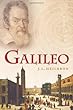
John L. Heilbron. Galileo. Oxford University Press, 2010.

Most of us are familiar with the popular writings in astronomy and cosmology which contain absurdly over-simplified and inaccurate accounts of Galileo's problems with the Inquisition, who allegedly refused to look through his telescope and declared his scientific theorising to be heretical.

Well, it wasn't so simple. As the author of this work remarks:"Galileo's biographers tend to rush their gladiator into an imaginary arena filled with pig-headed philosophers and fire-spitting priests." In this biography he attempts to place Galileo Galilei (1564-1642) in the Florentine culture of his time and to explore the complexities of his dealings with the senior clergy of the church of which he was a member, being a person that modern journalists would no doubt describe as a 'devout Catholic'.

Galileo had a wide range of interests: music, art, writing, philosophy, mathematics. However, he did not become a very well-known and controversial figure until he began to make his famous telescopic observations. He obtained his first telescope in 1609 and began by observing the moon. Whikle he was doing this he noticed that the Milky Way consisted of stars too faint to be resolved by the unaided eye and not a 'complex terrestrial exhalation', as Aristotle would have it".

Initially, acceptance of the validity of Galileo's observations was delayed by a number of factors, including a shortage of good telescopes, the difficulty of adjusting them to suit the observer's eyesight, and the problem of mounting them so that they would be both movable and fixable.

Observers in possession of good telescopes and good eyesight eventually had to assent to the reality of Galileo's observations, so they were not the source of his troubles. The problem was that his pioneeering astronomical observations went to his head. As Heilbron remarks: "To the surprise of his colleagues and against their advice, he attacked philosophers, theologians, and mathematicians, taunted the Jesuits, jousted with everyone who contested the priority of his opinions."

This made him many enemies, including Mafeo Barberini, his friend and adviser for many years. In 1623 he became Pope Urban VIII and in 1632 he was involved in the famous trial of Galileo.

There was nothing simple about this affair. Many people were involved in the arguments which led up to it over the years. Basically, Galileo had been instructed as to how to present his arguments on cosmology. A special panel was set up to review his publication and it concluded, among other things, that he had argued cosmology absolutely and not hypothetically.

This, apparently, was one of Galileo's main weaknesses. Once he had developed an idea he insisted that he had found the truth, and he was unwilling to accept corrections from other experts.He was thus eventually proved wrong about a number of his theories. For example, he accepted the Copernican model of the solar system which had the planets following circular orbits, and refused to consider Kepler's ellipses, which eventually proved to correspond with reality.

As a result of the deliberations of the panel, Galileo was ordered to abjure ex vehementi before the Congregation of the Holy Office and thereafter be imprisoned at the Inquistion's pleasure. The abjuration was required to clear the culprit from "vehement suspicion of heresy". But, as Heilbron remarks: "There was the sticky question, however, what heresy Galileo may have held that had raised vehement suspicion in inquisitorial minds."

Galileo read out the statement of abjuration prepared for him, but he did not end by muttering eppur si muove ("and still it moves"), as this apparently first appeared in a portrait representing the scene, perhaps by Murillo, made around 1650.

The controversy that led to Galileo ending up under permanent house arrest might seem to be based on the rejection by him and others of Ptolemy's earth-centred universe, in favour of the sun-centred Copernican system. However, the author notes that the censors "were not concerned with astronomical systems but with biblical interpretation."

This book provides readers with perhaps more detail than most of them will be able to absorb, and the author's witty comments on the people and events he describes might not be to everyone's taste. However, it is recommended to anyone seriously interested in the history of science and religion. -- John Harney. [See also The Galileo Fallacy, by John Harney]

23.12.10

INVESTIGATOR'S CASEBOOKS

Chris A Rutkowski. The Big Book of UFOs. Dundurn Press, 2010.

Stan Gordon. Really Mysterious Pennsylvania: UFOs, Bigfoot and Other Weird Encounters, Casebook One, edited by John David Kudrick. Bulldog Design, 2010.


Clearly marketed as an introductory account, rather than a book for the seasoned ufologist, Rutkowski's book does that task admirably. It is mainly a chronological account with representative reports from the various decades, including old favourites and the less well known, interspersed with first-hand eyewitness accounts. There are also sections on abductions, crop circles and cattle mutilations, the latter two being treated with the appropriate scepticism.

Unlike many other writers in this field, Rutkowski is very willing to discuss the numerous complexities associated with many of these cases, and to present the multiple sides, rather than indulging in breathless promotion of the ETH or knee-jerk debunking.

One thing which discerning readers will detect from the various cases is the absence of anything like a unitary UFO phenomena, rather the term UFO has become a sort of cover term for lots of different experiences, and the probability that even the most puzzling cases are generated by many different things.

Stan Gordon's little book gives accounts of some old-fashioned UFO reports, of the sort which were common in the days before the crashed saucer and abduction manias, along with accounts of Bigfoot, mystery cats and other general weirdness.

As with many of these accounts it is difficult to know what to make of them. While some of the reports are no doubt caused by misidentifications and misperceptions of various kinds, others, if reported accurately, would seem be very difficult to explain, and that goes for classical explanations in terms of ET craft or paws-and-pelts animals, as well as more mundane explanations. This is particularly true of stories which seem to link Bigfoot with strange lights in the sky. It seems even in the suburbs of cities there is a sort of enchanted landscape in which anything can happen. -- Peter Rogerson

20.12.10

TWENTY FIVE YEARS AGO: MAGONIA 21, DECEMBER 1985

The main article in this issue is Michael Goss' examination of the legend of the preserved pterodactyl. The classic literary example of this is Conan Doyle's The Lost World, where Professor Challenger returns from his expedition to the deepest jungles of South America with a living specimen, presenting the creature with its "putrid and insidious odour" to an amazed audience of zoologists at London's Queen's Hall. Unfortunately someone left a window open and the creature escaped!

However in 1856, sixty years before Doyle's fiction was published, an allegedly factual real-life pterodactyl crawled its way out of the ground as workmen were digging a railway tunnel in northern France. Mike follows this story from an item buried in the pages of the Illustrated London News to the status of a Fortean classic. He also demonstrates how the story was clearly labeled as a hoax from the start! This is an example of where 'literary criticism', and a love of Greek and Latin puns, can quite genuinely explain an allegedly anomalous event.

John Harney raised a storm from some of our readers with his account of 'The Galileo Fallacy', in which he dared suggest that Galileo was not quite the heroic martyr, and Pope Paul V not quite the evil tyrant that they have been portrayed as in some accounts. He was vigorously challenged in the following issue. John is currently reviewing a new biography of Galileo for this blog; it will be interesting to see his views, and if they have changed

As we approach the thirtieth anniversary of the Rendlesham events, it's worthwhile to re-read Steuart Campbell's interpretation of what happened. Although largely agreeing with Ian Ridpath's 'lighthouse' explanation, he gives it a twist by suggesting two other light sources that may have been involved: the Shipwash and Outer Gibbard lightships, which were much further out into the North Sea. The main target of his criticism was the team of Butler, Street and Randles and their book Sky Crash, and he is pretty dismissive of the testimony of Colonel Halt and other base personnel: "Even Halt appears to have embroidered his account to Butler and street ... If, as has been alleged, drug abuse is extensive amongst USAF personnel, it is not surprising they had difficulty in separating fact from fiction..."

Deep in the suburban fringes of south Lancashire Peter Hough came across a 'Man in Black' case that sounds more like something from the mothman-haunted backroads of West Virginia. Following a dramatic UFO sighting which gets reported in the local paper, our witness receives strange phone calls from a man pretending to be the Director of the Jodrell Bank radio telescope. Following up the story, Hough and his co-investigator Jenny Randles came up against a Keelesque story of empty houses, mysterious non-visitors and the curious incident of the warm toast and the dog that didn't bark!

One small detail in the account sets a lot of bells ringing. The witness's husband was present at the first interview Hough conducted: "... although he played no part in the proceedings, having a somewhat disapproving attitude. Mrs Hollins's strong personality had obviously overridden any objections he may have had to my presence". The strange case of the silent husband seems to be a pattern we have encountered before in the UFO and Fortean world, from Manhattan to North Wales.

As an aside, the Book Reviews in this issue includes John Harney's brief notice on Andy Collins's Brentford Griffin, a splendid first-hand account of the investigation of a baffling incident in the history of West London. I note that on publication it was priced at £1.25. Today (20 December 2010) a copy is being offered on eBay at £95 ("or best offer"), and at £80 on Amazon. How fortunate for those of us who had the foresight to lay aside a few copies at the time!

15.12.10

SWINGING BOTH WAYS

Antony Latham, The Naked Emperor: Darwinism Exposed, Janus Publishing, London, 2005.
Stephen Horne & Richard Robertson, Faith is Not Enough: A Rationalist Perspective on Religion and Other Irrational Beliefs, Janus Publishing, London, 2010.


The Janus Publishing Company of Gloucester Place, near Baker Street (not to be confused with Janus of Old Compton Street, Soho, who specialise in magazines full of photographs of young women being caned) is named after the Roman God who has two faces looking in opposite directions. This is appropriate, given the antipathetic nature of these two books that they have sent to Magonia for review. If you learn that Prometheus are issuing a book about Roswell, then you will know even before you open it that it is not going to say that an extraterrestrial spacecraft crashed there in 1947.
No such expectations can be made of Janus Publishing. As you will have gathered from the subtitles, the one is an attack on Darwinism from a Christian point of view, the other an attack on every kind of religion. There are, though certain similarities between the two: both books contain a number of misprints ('Dali Lama’), and layout errors. The Naked Emperor has a short bibliography but no index; Faith is Not Enough has an (inadequate) index but no bibliography.

Latham is a doctor, who says that he became a Christian whilst working in a hospital in a remote part of Kenya. He currently practises in the Outer Hebrides. To criticise Darwinism, in the twenty-first century, is easier than it might seem at first sight because the Darwinists do not agree among themselves (indeed, there have been whole books about their disputes, with titles like The Darwin Wars), as Latham shows by quotation. Stephen Jay Gould held that the pathway leading to humans was filled with unlikely chances, beginning with the arising of the first notochord, and that if humans were to die out they would never occur again.

This contrasts with the view of Simon Conway Morris: “Gould maintained that if you re-run the tape of life again from Cambrian times you would see a totally different set of organisms and certainly not man. Man, to Gould, is a fluke. Man, to Conway Morris, is virtually an inevitability. Conway Morris imagines meeting his first group of aliens and finding them remarkably similar to ourselves.” This disagreement is convenient for both sides in the “Is intelligent alien life common or rare?” debate: whichever view you take, you can quote one or the other of these experts as being representative of the current scientific consensus on the subject.

There have, in any case, been several attacks on the theory of evolution in recent decades, such as Michael Denton, Darwinism: A Theory in Crisis, and Michael Behe, Darwin’s Black Box. Latham not only quotes these works, but has even borrowed some of their illustrations. In fact, he does not have much new to say.

Stephen Horne and Richard Robertson are science teachers, and we are told that Horne is “now teaching in southern Europe”, with Robertson “somewhere in the Middle East” – it seems that their exact whereabouts are confidential. Their work is a clarion call for a crusade against religion, which they repeatedly compare to Nazism. At the outset, they give it as their contention that: “…to acknowledge death as the complete ending of life enables us to value life much more highly and to consider quality of life as being of the utmost importance. If we reject concepts of heaven and hell then life now, on earth, is our one chance to be and to leave a legacy of some sort.”

Unfortunately, though this is a logical expectation, the history of the twentieth century does not support it. Countries that have been officially atheist, such as Stalin’s Russia, and Cambodia under the Khmer Rouge, have been those that have had the least respect for the sanctity of human life, huge numbers of people having been executed without trial, and often on the most trivial of pretexts. At one point the authors do admit this, but say that the fault was that these states were communist, rather than that they were atheist.

Their targets include the Taliban, faith schools, the Pope, theology, the Qur’an, Tony Blair (for converting to Catholicism), astrology (which in fact is also attacked by most religions), American presidential candidates who express religious beliefs, political correctness, TV evangelists, religious groups who oppose condoms and cloning, Saudi Arabia, and the Archbishop of Canterbury. They include a chapter on what they call ‘Unintelligent Design’, based upon the now familiar argument that the human body is badly designed. I would be more convinced of this if those who say so were to demonstrate it by producing an improved model.

Though this is all about the superiority of rationalism, they do admit that it is difficult to act rationally all of the time (“Falling in love is hardly a rational response to the opposite sex”), and their own book exemplifies this, so that it is also hard to resist nit-picking over some of the details. Firstly, there is a lack of continuity and consistency. They give a list of techniques used by propagandists such as Goebbels and Billy Graham “to reduce critical thinking”, of which the first is: “Repeat your ‘message’ many times, in as many ways as possible”; and the ninth “Repetition is essential”: they have evidently caught this habit themselves.

Speaking of abortion, of which they are of course in favour, they cite an American author named Chris Floyd as saying that “whether abortion is legal or not appears to make no difference to the number of abortions performed”. Yet elsewhere they mention the sudden unexpected drop in the America crime rate in the 1990s, which an economist, Stephen D. Levitt, explained as being a consequence of the legalisation of abortion on demand in 1973, as it is unwanted children who are most likely to become delinquent. This may well be true, but it cannot be reconciled with the previous assertion.

They quote a critic of evolution, Harun (or Arun – one or the other name must be a misprint) Yahya, as saying that the chances of a protein of 500 left-handed amino acids being formed, if the amino acids were merely arranged at random, is one in 10950 (I make it 10800, but this hardly matters as either way it is more than astronomical). Horne and Robertson point out that this is still not so improbable as a particular human coming into existence. At your conception, they say, there were 1011 possible outcomes, of which only one actually occurred. But that is not the end, because both of your parents only came into being by a similar lottery of the eggs and sperm of your grandparents. These two also each had a one in 1011 probability, so that multiplying out gives a one in 1033 chance. The same with your great-grandparents, and so on, so that through six generations the odds are one in 101397, far less than the probability of a protein.

The trouble is that the analogy is false. Nearly all of the possible outcomes of the genetic lotteries that gave rise to yourself would have in any case produced a viable human. But it is agreed that the vast majority of amino acid chains would not be functional proteins. I would hesitate to attend the science classes of men incapable of spotting this fallacy. A further imbecility is the way that they calculate the odds of a person’s existence. A woman has about 2000 eggs, and a man 50million sperm, so that multiplication gives one hundred billion, that is 1011, possible outcomes. But since each egg and each sperm contains exactly the same genetic information, their number is irrelevant. The real lottery is the combination of the chromosomes, which could occur in 246 (about 1014) different ways, which is actually more improbable than their own figure.

To sum up, the arguments of both books strike me as worn, or perhaps I should say futile. People have been arguing for the same points of view for more than a century, yet others continue to believe in evolution or religion, or both (it would be interesting to meet someone who believed in neither). In any case, what you choose to believe will not affect the truth of the matter. -- Gareth J. Medway

11.12.10

AN IRISH GENTLEMAN

Robert O'Byrne. Desmond Leslie; The Biography of an Irish Gentleman. The Lilliput Press, Dublin. 2010.

You will probably know Desmond Leslie best for three things: he co-wrote Flying Saucers Have Landed with George Adamski; he once punched Bernard Levin on the nose, live on prime-time TV; and he used to own the Irish stately home where Paul McCartney entered his ill-fated marriage to Heather Mills. These are, however, only the tiniest fragments from the life of a remarkable man.

Born in 1921 to a family which included an uncle who walked home after the First World War all the way from India, another uncle who wrote a novel about a man who invented a silent lavatory, and a much earlier ancestor know as the 'Fighting Bishop of Clogher' who at the age of sixty-seven married an eighteen-year-old girl and managed to father eight children before he died just a few weeks short of his hundredth birthday.

Not to mention having a godfather who simultaneously held the post of Privy Chamberlain to two Popes whilst conducting ceremonies at his ancestral home with Aleister Crowley and at the same time keeping a trained parrot which would climb up inside his trouser-leg and pop its head out of his fly.

Desmond Leslie was born into the Anglo-Irish aristocracy, a sometimes rather eccentric section of society that also produced Brinsley le Poer Trench, and in the emotional and sometimes physical absence of his parents was largely brought up by his nanny, 'Nanny Weston', in the rambling house and grounds that was Castle Leslie and the Glaslough estate. His schooldays seemed to have been full of all sorts of upper-class japes such a turning up for a bicycle expedition across the Yorkshire moors in a steam traction engine.

After making the discouraging discovery that in order to attend Trinity College, Dublin he would have to take an examination to show evidence of academic attainment, he decided to adopt what presumably he saw as the easier option, and joined the RAF. Here he seemed to carry on the tradition of japery, at one point being caught out whilst sky-writing a four-letter obscenity, and on another occasion being charged with "handling His Majesty's aircraft in a manner prejudicial to good order" when he knocked a pub-sign off with the wing of his Spitfire after flying under a bridge which was only a foot wider than the plane's wings.

Presumably being a cousin of Winston Churchill meant that the punishments were not too severe! Also he does seem to have been a genuinely brave flyer despite, by his own admission, destroying more RAF aircraft than German ones.

After the war Leslie moved to London, his elder brother having taken over the Irish estate. In the face of some family opposition in 1945 he married his first wife Agnes Bernell, the daughter of a Hungarian theatre impresario and herself a budding actress. It was in fact one of Agnes's performances that Leslie was defending when he punched Bernard Levin in front of a few million people on the BBC's iconic late-night satirical show That Was The Week That Was in 1963. He may have been prompted by a guilty conscience because it is likely that his installation of an inadequate sound system for the theatre may have been one of the reasons why the critics gave it such poor notices!

In London he began a career as a writer and journalist. He published several novels which had strong autobiographical elements, and wrote articles - many about Irish country houses - for the lively post-war magazine market.

Although receiving a small inheritance following the death of his mother, the Leslies were frequently short of money, and according to his wife, Desmond decided that one way of making a significant amount was to write a 'potboiler'. He started collecting cuttings about flying saucers, and began studying historical records, assembling a collection of material which he believed proved that, amongst other things, Venusians first visited earth in 18,617,841 BC. This was "calculated from ancient Brahmin tables", and that the Brahmins were "exceedingly accurate people".

This however was not Leslie's only venture into the esoteric at the time, as he also joined the 'White Eagle Lodge', a group founded in the 1930s by the Spiritualist Grace Cook, channeling a Native American spirit guide called White Eagle. After he returned to Castle Leslie later in life he established a temple for the Lodge at his home, and this seemed to give him a great measure of spiritual comfort. It is clear that Leslie's interest in UFOs was very much from an esoteric and occult angle, and the idea of 'space brothers' fitted in well with his own philosophy.

This biography does not make it clear who initiated the link between Leslie and George Adamski, which culminated in the publication of Flying Saucers Have Landed in 1953. [See 'comments' from cda below] Three-quarters of the volume was Leslie's historical survey, just 50 pages covered Adamski's account of his extraterrestrial meeting.

The mixed reaction to the book, indeed the downright hostility, suited Leslie's combative spirit, and he vigorously defended his theories in writing and on radio. He was perhaps the first person, in 1953, to claim that the Air Ministry had a special department to investigate UFO reports.

After a successful promotion tour in America, Leslie became the first point of call for any journalists looking for a controversial opinion on the subject, and appeared in a BBC TV debate with Patrick Moore. Curiously, despite having such divergent opinions, the two became good friends and co-operated on a number of ventures in later years.

Leslie's writing extended to film, TV and radio, including a synopsis for a never-produced six-part TV series called The Venusian. It would seem that the concept was too close to The Day the World Stood Still to interest backers. However he wrote a number of other film scripts which were produced.

He carried on with writing novels - including the semi-sciencefictional The Amazing Mr Lutterworth, and also began experimenting with what would now be described as electronic music. He used tape-recording of random sounds which he processed by speeding up, slowing down, playing backwards, etc., to produce what he called musique concrete.

A room in his flat was eventually converted into a sophisticated recording studio. He sold the resulting sounds as music and sound effects for films and TV, some of it being used in the early Dr Who episodes. In 1960 he produced an LP entitled Music of the Future, which was re-issued as a CD by a specialist label a few years ago,

Following the death of his eldest brother, Leslie abandoned his career in London, and returned to manage the Irish estate. By this time his marriage was in crisis; fidelity, he admitted himself, never being a particularly strong suit for him. At one point he shared Castle Leslie with his wife and his mistress Helen Strong, whom he later married.

A great deal of the rest of his live was spent trying to cope with the problems of running a country estate at just about the worst period for such a venture, watching as the 'family silver' (and paintings and furniture) was sold off bit by bit, but also helping to maintain the eccentric - 'very eccentric' he would maintain - lifestyle of the Irish country house.

Attempting to open the estate as a craft and tourist centre was not helped by it being on the border between Northern Ireland and the Republic at the height of the Troubles. At one point he was obliged to take a group of British soldiers who had accidentally crossed the border as prisoners of war. They signed the visitors' book and 'escaped'.

Much of the latter part of his life reads like a rather absorbing upper-class soap opera, with disputes over inheritance, dealing with the offspring from three relationships, and trying to preserve Castle Howard, to which was so emotionally committed, as well as continuing to write.

He died in 2001 in the south of France, quite literally surrounded by his family.

This is a fascinating book, which not only presents the amazing life story of an eccentric, exciting and multi-talented character, but also gives an insight into the vanished world from which such characters were able to emerge. Highly recommended. -- John Rimmer

10.12.10

ALL IN THE MIND?

Antonio Damasio. Self Comes to Mind: Constructing the Conscious Brain. William Heineman, 2010.

Oliver Sacks. In the Mind's Eye. Picador, 2010
Damasio's book is an important and impressive study of the rise of consciousness, and while much of it is of a more technical nature than I am competent to comment on, I want to draw attention to the main theme, consciousness as a product of the brain's interaction with the body. If I understand it rightly, Damasio argues that the beginnings of consciousness arise out of the brain's monitoring of the body. Heat and cold, light and pain, and pleasure, hunger, desire and satiation are the first contents of protoconsciouness. Thus consciousness could never arise except through biological evolution and its totally rooted in the embodied brain.

Consciousness is generally assumed to be the product of the cerebral cortex, but Damasio argues, based on part on his study of people born with hydranencephaly, in which the cortex was destroyed before birth, that at least primitive forms of consciousness exist within the brain stem. This protoconsciouness is therefore very old.

We can see that this view of biologically routed consciousness is very different from that proposed by many in the fields of the paranormal, in which it is often radically excised from the natural world, and related not to biological 'wetware', but to vaguely defined 'fields' etc.

If Damasio is right then not only is the notion of 'survival of bodily death' meaningless, but all attempts to construct conscious computers or download human consciousness into them are doomed to failure.

Oliver Sacks, who has compiled previous accounts of unusual neurological conditions, such as The Man Who Mistook His Wife for a Hat and An Anthropologist on Mars here presents further case studies. In this anthology there is a particular emphasis on the various pathologies of sight, including Sacks' own experiences with melanoma of the eye.

The case studies range across a number of experiences such as word blindness, in which people can simply stop being able to make out letters, to prosopagnia, the inability to recognise faces, and at the other level, the persistence of powerful visual imagery in the blind. These experiences all indicate how much our visual and other sensory worlds are built up by the brain.

Studies like these at least suggest that perceptual anomalies may lie behind many of the anomalous experiences which are recounted in the Fortean and parapsychological literature. -- Reviewed by Peter Rogerson.

6.12.10

ONCE UPON A TIME IN THE SKIES

John Hanson and Dawn Holloway. Haunted Skies: The Encyclopaedia of British UFOs: Volume 1, 1940-1959. CFZ Press, 2010

After the age of the UFOs comes to age of the UFO historians, following on from Clarke and Roberts's The Flying Saucerers comes the first volume of this projected set of histories. Haunted Skies is clearly written from a different and a much more 'believing' viewpoint than Flying Saucerers, one more concerned to produced evidence for 'real UFOs'.

Haunted Skies is arranged year by year, with accounts drawn from contemporaneous sources admixed with later investigations and reinvestigations, and the accounts presented cover everything from lights in the sky, though aircraft encounters, to landing and occupant reports, and through to some pretty wild contactee stories. Some of these accounts will be familiar to long time ufologists, others will be quite new. They also put faces to some long half-forgotten names.

There are of course problems with experiences recounted decades after the alleged event - the possibility of memory distortion, compression, contamination etc. This is particularly acute in the case of 'additional witnesses' who come to light through public appeals, as some may be connecting quite disparate events together. Memory contamination may be a particular problem, and some of these additional witnesses may be simply bandwagon jumpers.

One interesting feature of some of these old stories are the witnesses who describe objects which basically are replicas of George Adamski's fake photographs/art work, or encounters with his blonde long haired Venusians. Adamski's tales were all the rage at the time, and it may well be that people faced with ambiguous or incompressible stimuli, replace them with popular images (just as in more recent years people have tended to report giant illuminated objects straight out of Close Encounters), or whether there is a great deal of contamination and suggestion from 'investigators' is a moot point.

One of those whose experiences was clearly influenced by Adamski was the mysterious Cynthia Appleton, whose tale of meeting an alien in the front room, and giving birth to a spiritual son of the space people reaches pretty close to the ultimate weirdness level. This book gives some further background, not just into the Appleton's but the people who became involved with her, including ufologists, spiritualists and a faith-healing vicar.

We might know more about the Appleton affair if we knew more about one of the people who 'investigated' her, the rather more than semi-mysterious John aka Jim Dale. Dale was presented by Jenny Randles as 'Dr John Dale' a psychologist at Manchester University, however I knew of Dale by repute back in the late 1960s when I was a member of the Manchester UFO group DIGAP, and actually have some books formerly in his possession. Back in those days he was known as Jim Dale, and was known as a chiropodist, faith-healer and contactee. He parted company from DIGAP for some obscure reason, and one got the impression he was considered far too far-out for them, (and that was very far out indeed). Some of his interests as revealed in his annotated copy of Space Craft from Beyond Three Dimensions seem to gell with the sort of pseudo-technical stuff that Cynthia came up with. Was she being fed this information?

All in all a fascinating tour of a long forgotten period of British ufology, though some portions need to approached with care. -- Peter Rogerson

2.12.10

UNRULY SPIRITS

M. Brady Brower. Unruly Spirits: The Science of Psychic Phenomena in Modern France. University of Illinois Press, 2010.

The word 'modern' in the subtitle is perhaps a little confusing, for this book gives an account of the development of psychology and psychical research in France from c.1848 to c.1930. In it, Brower shows that psychical research did not develop as an isolated anomaly, but as an integral part of the general development of a secular science of psychology. In its early days 'psychical research', though not yet formulated as such, was interested in phenomena such as table-turning and hypnotism, and twin notions of new forms of mechanical activity and concepts of the human personality. It was also one of the tolerated activities in the repressive first decade of Louis Napoleon's Second Empire.

Brower argues that a more scientific approach developed in the early years of the Third Republic, and argues about psychic phenomena became entwined in general debates in the nascent field of psychology between those who looked towards a wholly neurological approach and those who looked towards a more idealistic and introspectionist account.

In bodies such as the General Psychological Institute, 'scientific' psychologists and a lay membership coexisted in an uneasy relationship. The leading figure was Pierre Janet, whose career in psychology had been launched by a study in telepathic induction of hypnosis, but who by the turn of the century was clearly drifting into more academically respectable areas, which was to lead him into the founding of an academic, invitation only, peer-reviewed inner circle, The wider group moved into directions of social psychology, and the uses of psychological insights for the control of the masses by an administrative elite.

Psychical research received a boost with the forming of a psychical research study group within the Society, to which a number of prominent people became involved. Much of their activities were centred around the controversial physical medium Eusapia Palladino. Many will be surprised to learn that among those who were involved in this study were Pierre and Marie Curie (who were never able to resolve whether Palladino's performances were genuine or not). It is difficult to imagine today's leading physicists grubbing round in a darkened room with an erotically-charged middle aged peasant woman who was alleged to produce marvels, but as Brower points out this was a time of the discovery of all sorts of mysterious rays such as X-rays, radioactivity, radio waves etc., and who knew what was just round the corner.

Brower argues that this period marked an abandonment of interests in the human personality and its unconsciousness fringes, in place of a study of forces and energies, the prerogative of the physicist rather than the psychologist.

When the human sciences reclaimed French psychical research it was by the physiologist Charles Richet and his promotion of ectoplasm, much associated with the notorious Marthe Beraud alias Eva Carriere. Her story is clearly one of the strangest going, and seems to exist in an atmosphere of cloying, possibly quasi-incestuous sexuality, and it is not hard to entertain the suspicion that Marthe/Eva was the sort of pretty young girl who found it easy to twist pompous and rather silly old men around her little finger.

Brower takes the story through the First World War, to the founding of the International Metaphysics Institute, and the more complete merging of spiritism and quasi-scientific psychical research in the grief-sodden aftermath of that war.

Brower argues that the popularity of this psychical research led to its influencing the ideas of Freudian psychology as they entered France, including influences on the surrealist André Breton.

For the English reader there is much of interest here, in the similarities and contrasts between English and French psychical research, and it is interesting to note that while much of French psychical research was more self consciously 'scientific' than that of the SPR, it ended up endorsing even stranger phenomena. It is perhaps ironic that an enterprise that started out, as Brower shows, as an attempt to preserve an idealistic or spiritualist view of the transcendence and unity of the human mind, ended up with the gross materiality of ectoplasm emerging from bodily orifices! -- Peter Rogerson.

MAGONIA RECOMMENDS