23.2.11

LIFE AND SOUL

Nicholas Humphrey. Soul Dust: The Magic of Consciousness. Quercus, 2011. -- Reviewed by Peter Rogerson

One the great mysteries of neuroscience is the so called hard problem of consciousness, just how can patterns of electrical and chemical activity in a brain generate actual experience. It is one which has led a good number of workers in this field to hold up their hands in surrender and argue it is a question which can never be answered.

Nicholas Humphrey, a theoretical psychologist at Cambridge, will have none of this and suggests how consciousness might develop. He does this through analogies with visual illusions such as the impossible triangle. (Examples here: LINK)

Consciousness then has to be seen as a kind of illusion, which appears mysterious from certain viewpoints, though he suggests this may be a mathematical rather than a physical illusion. He goes on to argue that consciousness is probably associated with certain neurological circuits or activity, which could even be detected by a sufficiently advanced alien (or perhaps better automaton) which had never experienced consciousness.

I am not sure that this kind of specificity can be true, because surely there would occasionally be people who have damage in such a circuit, who would otherwise be seemingly alert but have no conscious experiences, not something that has ever been encountered outside of horror films.

Humphrey goes on to argue that consciousness arose, perhaps in reptilian ancestors of birds and mammals, as a sort of added extra, giving a sense of a desire to live and experience the world, which aided survival. This strikes me as a little precious really. It seems more logical to assume that consciousness developed because the ability to experience the world, to feel pain and pleasure, warmth and cold, gives the added incentive to avoid danger and seek out food and mates. Perhaps my non-scientific gut instinct is to suggest that it is difficult to think that anything that goes scurrying around and has some sort of nervous system doesn't have at least some form of proto-proto-consciousness.

In the later sections of the book Humphrey deals with fully human consciousness, and suggests to understand its full ramifications one needs to turn to poets, artists and mystics rather than scientists. One of the features of truly human consciousness which Humphrey thinks other animals do not possess, is awareness of the permanence of death and knowledge and fear of their own mortality. This Humphrey suggests is the driving force for the belief in life after death.

He argues that this belief was bolstered by the experience of dreams, to which one may add the sorts of anomalous personal experiences which are used as evidence for the afterlife, or at least a transcendental but still quasi-physical 'spirit'. I am not so sure that many people spend so much time agonising about mortality as do poets and intellectuals however. Furthermore despite the alleged pressure to believe in an afterlife, many of those envisaged are not particularly attractive, except for a handful of the elite. Most people given the choice would chose a wet weekend in Margate rather than one in Hades or Sheol. I suspect much of the fear of death has less been a fear of annihilation (which cannot be experienced) but fear of various less than pleasant afterlives, with the Christian-Islamic hell being definitely at the bottom of the list.

21.2.11

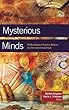
MYSTERIOUS MINDS

Stanley Krippner and Harris L. Friedman. Mysterious Minds: The Neurobiology of Psychics, Mediums and Other Extraordinary People. Praeger/ABC CLIO, 2010.

Neurobiology and the ability of modern technology to investigate the living human brain provide exciting new possibilities and it is no surprise that parapsychologists are now attempting to apply them to their own field, with mixed results.

While many of the papers in this book are of an technical nature they should be of interest to anyone with a serious involvement in parapsychology and portions should be accessible to the general reader. The editors provide an introduction and postscript.

In his foreword Allan Conde points out that mainstream psychological research not only is deficient in replication of results like parapsychology, but unlike the latter may actively discourage publication of replications, especially those which come to negative conclusions. While he concludes that science should treat parapsychology more liberally an alternative conclusion might be that we should treat the reports of findings in the whole field of psychology more critically.

It is perhaps unfortunate that the first actual article in the collection 'Quantum Theory, Neurobiology and Parapsychology' by William Roll and Bryan Williams is the only one which descends into pseudoscience when trying to argue that quantum effects can kick vases around rooms and move the furniture. They have simply misapplied quantum processes applicable to sub-atomic particles to macroscopic objects.

Caroline Watt and Harvey Irwin examine the laboratory evidence for psi and basically come to the conclusion that while it cannot be said to have been demonstrated in a way which could satisfy the scientific community it certainly cannot be ruled out and there is suggestive evidence. Adrian Parker comes to roughly the same conclusion about psychokinesis, but notes the absence of good quality documentation of alleged macro-PK. He seems intrigued by the ideas of Roger Penrose and Stuart Hameroff on the role of quantum processes in microtubules in the brain, however it should be noted that very few neuroscientists share their views.

The reader might be brought down to earth by the sceptical paper by James Alcock, which is substantially the same as in the other Krippner-Friedman collection I reviewed a week or so back.

Following these general papers, there are more specific reports on neurobiological studies on a variety of people and conditions, ranging from studies of the neurobiology of two Spiritist healers in Brazil, looking for possible PK in patients with frontal lobe brain damage, the neurobiology of mind altering drugs such as DMT and the possibility that the brain can spontaneously produce similar substances, to the study of neurobiology in anomalous personal experiences.

Though most of the contributers take moderate positions, one can still see that many are still motivated by the desire to liberate mind from the brain and to oppose physicalist monism. It may well be that only those with strong motivations from personal experience or prior religious or philosophical beliefs can be enthused enough to enter such a marginalised and "damned" topic. -- Reviewed by Peter Rogerson

19.2.11

TO INFINITY AND BEYOND!

Brian Greene. The Hidden Reality: Parallel Universes and the Deep Laws of the Cosmos. Allen Lane, 2011. -- Reviewed by Peter Rogerson.

Brian Greene is Professor of Mathematics and Physics at Columbia University and one of the leading workers on string theory, which he outlined to a general audience is his two earlier books; The Fabric of the Cosmos and The Elegant Universe. In this book he looks at the various types of possible 'alternate universes' and multiverses which are implied by some interpretations at least of modern physics.

The first and perhaps the easiest to understand is what he calls the quilted multiverse, though it might be easier to think of it as the megaverse. The megaverse is simply our own universe in its fullest possible extent, far beyond our observation horizon. He shows that if this megaverse is infinite or at least inconceivably large, then the laws of physics suggest that there will be large numbers (an infinity if the universe is actually mathematically infinite) of worlds identical to our own, containing people identical to us, as well as worlds only slightly different. There is even an identical local universe somewhere far beyond a googolplex light years away. If the universe is really truly infinite, then anything that can happen, however unlikely, will happen an infinite number of times (i.e. worlds in which David Cameron spontaneous changes into a chimpanzee for example, because there is an infinitesimally tiny chance of this happening, so in a truly infinite universe there will be an infinite number of worlds in which a David Cameron changes into a chimpanzee). Greene admits somewhat further on in the book that dealing with the paradoxical nature of infinity is a problem.

According the cosmological theory known as eternal inflation, this megaverse is indeed infinite for those living inside it, though not so from the outside, Not only that it is only one of a huge, perhaps infinite number of 'pocket universes' is a wider reality, separated by regions of something called the inflaton field. It is unclear whether normal concepts of space and distance apply in this realm of the 'spaces between the worlds'. Different pocket universes may have different physical constants and only in some will life be possible.

These infinite pocket universes are according to the most recent version of string theory, M-theory (where M stands for membrane), are themselves just three dimensional 'islands' in a 10 dimensional hyper space known as the bulk. There are possibly many such membranes in the bulk, another set of parallel worlds. M-theory also has led to the notion of a cyclic universe, in which membranes close to one another in this higher dimensional space crash into one another in mutually assured destruction out of which new universes arise like the phoenix from the ashes.

Greene then looks at another more technical set of parallel universes which emerge from the fact that it is not possible to specify which set of equations correspond with our universe. There are a large number of these equations, 1 followed by 500 zeros, though this is clearly tiny compared with the realms of googolplex light years. Nethertheless it is perhaps a relief that this set of "landscape" universes can be considered as a subset of the set of the pocket universes in the eternal inflation.

He then moves on to perhaps a more familiar type of parallel universe, the ones arising out of the many worlds interpretation of quantum mechanics. Greene explains this hypothesis in more technical detail and more clearly than others have done, and assesses some of its strengths and weaknesses. In some way this type of parallel universe seems more intimate. Whereas things happening googolplexes of light years away, or across untraversable inflation fields of boiling quantum foam, or multidimensional hyperspacial bulk accessible only to gravity are remote theoreticals, the many worlds interpretation hints at things happening to me. As an example imagine a quantum event at 50/50 probability can either open a door on the left or the right. If the left door opens you find a billion pound treasure, if the one on the right opens you find a sore, hungry, human eating-tiger. What interests you is which one am 'I' who is now contemplating my fate, going to get. At least some interpretations of this theory seem to contain deeply solipsistic inferences.

Even more solipsistic are two more possibilities that some physicists are seriously entertaining, one is that our experienced world is some sort of hologram projected from a two dimensional 'remote boundary', though what 'remote' and 'boundary' might mean in this case is unclear. Somehow I suspect to make sense of this we would have to think of this two dimensional boundary as being omnipresent everywhere rather than in some remote quasi geographical location.

Rather more easy to understand is the idea that our world is some vast simulation in an alien computer. Forteans, paranormalists and some more with-it theists might love that one, but looking at the tragedy of human history, I doubt we would find the simulators very congenial company. This might because, though Greene omits this, the same logic which suggests we might be simulations suggests that the simulators are simulations and so on through infinite regress.

Perhaps of all the current theories of physics this one reflects the times. In past ages people have seen the universe as everything from a lump of potter's clay to a living organism. In more recent times it was seen as a giant clockwork, and now in the information age as a giant computer. No doubt in future times other analogies will present themselves (to the genetic code among others perhaps).

If holograms and computer simulations aren't abstract enough for you, Greene takes us to what last step of abstraction, the reduction of the world to mathematics, and thence to the (pen?)ultimate set of alternated universes, those that realise every possible mathematical structure and equation. I think that Greene is rather sceptical of this Platonic approach to mathematics. He also gives us a brief glimpse of perhaps the final, ultimate set of parallel universes, one in which the domains of mathematics are but a small fraction.

Greene admits that much of this is speculative, but suggests ways in which future discoveries and research might confirm or disconfirm some of the theories on which they are based.

Clearly this is not an easy book, though Greene relegates the maths to the notes at the end, and some background knowledge of physics and modern scientific speculation is probably needed to grasp it, but well worth the effort. Greene shows how even the wildest-seeming of these speculations are grounded in actual science and mathematics rather than idle speculation, though recognising there are physicists who see the whole thing as a total cop-out, prematurely closing off the search for the answer as to why things have to be they are in only universe there is.

Though one might suspect that in decades or centuries or millennia to come the exact theories outlined here will go the way of the luminiferous ether or phligiston, something of the grandeur remains. Whatever the details they hint at of a reality stranger than we can imagine. True or not, they present a vision, however blurry, of a Total Whole beyond all possible imagining. It is perhaps not surprising that it is easier to contemplate this in terms of arrangements of particles, and mathematical equations, than as a vision of infinity upon infinity of the agony and ecstasy of life.

17.2.11

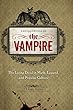
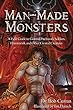
TWO CLASSIC MONSTERS

S. T. Joshi (editor). Encyclopedia of the Vampire; The Living Dead in Myth, Legend and Popular Culture. Greenwood, 2011.

Bob Curran. Man-Made Monsters: A Field Guide to Golems, Patchwork Soldiers, Homunculi and Other Created Creatures. New Page 2010.

Well, you wait ages for one gigantic encyclopedia about vampires, and then two turn up! Following on from J. Gordon Melton's 900 page tome (LINK) we get a mere 450 pages in this volume, and the total weight is 1.1 kg. as against Melton's 1.5 kg. However in terms of content it is hard to decide which is the weightier.

Whereas Melton's book consisted of a huge range of short articles written by Melton himself, the present volume comprises fewer, but some quite detailed pieces, written by a number of authors, including the editor. The emphasis seems to be much more on the contemporary, literary vampire rather than the historic and folkloric background, and a number of the contributors are writers in the field themselves.

Both volumes cover the contemporary resurgence in vampires on film and TV, with perhaps Joshi's book concentrating more on the individual writers and directors, but also gives good coverage to the Victorian vampire in books and on stage, and the development of the literary vampire between the era of Bram Stoker and the 1970s film revivals. Perhaps Joshi gives less coverage to the contemporary vampire 'lifestyle', and the more cultist elements of vampirology.

Joshi also gives good coverage to British and European authors, and I am glad to see that a former librarian colleague of mine, J. Ramsey Campbell, gets a substantial entry in his own right. In all, this is an authoritative and substantial overview of an increasingly complex topic, but I would welcome a more narrative account of the contemporary vampire cult as a sociological phenomenon.

Somehow, over the years, vampires and Frankenstein's monster have become mixed in the popular imagination, not helped by films which manage to combine both figures in the same plot! In fact the link is so close that Frankenstein receives an entry in both Joshi's and Melton's encyclopedias.

Mary Shelley's original monster was inspired to a great extent by the story, recounted in Bob Curran's book, of Giovanni Aldini, who conducted 'resurrection' experiments before the Royal College of Surgeons in London on a corpse which he acquired by very shady means; a story as horrifying as any fiction.

Curran's book does not dwell on Frankenstein's monster and his literary offspring however, but rather examines the many legends worldwide of attempts to create living creatures from inanimate material. He looks at the background to creations like the famous Golem of Prague, and finds how it developed from a long tradition of Jewish and Rabbinical lore, with great emphasis on the power of the written word.

Golem-like creatures also turn up in the folklore of parts of Britain, where animated scarecrow figures, called mummets or hodmdods are given life by local wise men or women using rituals which involved 'breathing' life into a clay figures. Like Rabbi Loew's golem, these were often created to serve some useful purpose, but soon grew beyond the control of their makers and had to be destroyed.

One thing drives all these stories and legends of artificial life which Curran describes, from the bronze warriors of the ancients, through the alchemists homunculi, to the electrically-resurrected corpse of the Frankenstein monster right up to contemporary panics about genetically modified crops - 'Frankenstein Food', as the Daily Mail labelled them. This is the fear of 'wise men' - scientists, priest, doctors, shaman - 'playing God' and demonstrates society's ambivalent attitude to scientific progress, at once fascinated and fearful. -- Reviewed by John Rimmer

13.2.11

MAKING MYTHS: SPRING HEEL JACK, RENDLESHAM AND THE ABDUCTIONISTS

Mike Dash’s talk on Spring Heel Jack to the Barnes and Mortlake History Society on 5th February last, raised yet again a topic which is of importance to all students of anomalies: the role of the media in shaping our perception of such phenomena.

Of course now we are used to the Internet, television and daily tabloid media and the way they spread and manipulate rumour, but we are perhaps less informed about the historical role of the media in reporting anomalies in the past.

Barnes Common, in south-west London and very close to the site where Mike gave his talk, was one of the first locations where Spring Heel Jack was reported, in September 1837, but this was a very different apparition from the leaping, glowing-eyed, fire breathing demon that we know today. The Barnes creature was described as being in the shape of a large white bull which had attacked a number of women. Later visitations in South and South West London came in the form of figures in metal armour, bears and, approaching the later form, “a devil with iron claws”.

Mike has spent an enormous amount of time scouring newspapers for these early accounts, and has documented the way the descriptions begin to coalesce into a ‘standard’ SHJ figure. The earliest account of this is probably in the attack on Jane Alsop at Old Ford, then a small village east of London, in February 1838.

Eventually the reports began to die off, but the legend of Spring Heel Jack continued. He became a figure in the ‘penny-dreadful’ comic-books of the era, first as a villain, but soon morphing into an early Superhero. Many of the early reports seem to have been copied from local paper to paper, with perhaps only locations and names changed. This can be put down to the activities of the ‘penny-a-line’ men, hack journalists who sent reports off to as many papers as possible with little regard to their authenticity. The bread-and-butter work of many of these characters was writing reports of Parliamentary debates, and Mike has noted that SHJ stories blossomed whenever Parliament was in recess!

Eventually it became hard to distinguish fact from fiction, with the monstrous phantom appearing throughout the rest of the nineteenth century in places as far apart as Lincoln, Aldershot and Liverpool.

He also appears to have migrated to Canada (where in Newfoundland he appeared as Spring Heel Jackson), Australia and New Zealand, perhaps under the influence of exported British penny-dreadfuls. In the USA Mike has found a number of similar reports of leaping horrors, but they were not collected under one category. He has also discovered proto-SHJs as far back as the seventeenth century, and more recent appearances in post-Revolutionary Petrograd, post-WWII Prague, and lawless Somalia in the 1980s.

It doesn’t take too much of a leap to see in the growth of this story a parallel to the development of the UFO and abduction narratives. Early reports are varied and often seem unrelated to each other, but as a name is given to the phenomenon, the story develops and spreads, aided by pot-boiler paperbacks, tabloid sensationalism and nowadays the Internet, a standard narrative emerges. Eventually historical UFOs and proto-abductions turn up in the archives.

Later this year Mike will be publishing a book bringing together his own research and that of a number of colleagues, which will collate their findings and present much of the original documentation. This is going to be essential reading for all Forteans and Magonians, and we will bring you further news about it as and when we hear more.


Well, my little poll on Rendlesham finished very neatly, with fifty respondents and the result split 50/50. I suppose the 25 who thought that Rendlesham was an important case still worth investigation might themselves be split between those who thought it was worth study to provide evidence for the ETH and those sceptics who felt the case needed further study because the ‘lighthouse’ (and other) explanation was inadequate.

But as you might guess, I’m with the “can’t be bothered” camp. The latest circus-like shenanigans with a few old ex-military types spinning ever more ludicrous yarns (we now seem to have time-travellers involved) to try and keep themselves in the fading spotlight seem to be no more than an admission that the case is now not only beyond any need for further investigation, but is almost beyond parody.
Those of you who are keeping up to speed with the American scene will know that the whole abduction industry is just about on the point of collapse. Carol Rainey, former wife and collaborator of Budd Hopkins has launched a devastating, well-argued attack on his and David Jacobs’ research techniques, based on her own personal experiences working alongside Hopkins. You can read it here as plain text on the UFO UpDates site: LINK
It is also available in a PDF format from Paratopia magazine here: LINK

Naturally, when this went out the American UFO ‘community’ (with one or two honourable exceptions) closed ranks around Hopkins and Jacobs and did everything other than deal with the issues raised in Rainey’s document.

Jerry ‘I love Budd Hopkins’ Clark immediately countered with the insinuation, apparently based on his own marital experience, that Rainey, after her divorce from Hopkins, was taking the role of a woman spurned and her claims should be taken with a pinch of salt. Rainey’s suggestion that Clark’s own opinion on Hopkins might be coloured by his ‘best buddy’ relationship was angrily dismissed!

Most of the current debate on these revelations, as revealed on UFO UpDates, seems to be floundering on technicalities about the status of David Jacob’s research in regard to his Temple University post, and ignores the substantive charges made by Rainey. Other responses are mostly along the lines of “I met Budd Hopkins once, and I thought he was a really nice guy”. I suppose I could counter that I met Budd Hopkins once and thought he was a bit of a pompous ass, but neither response really gets us anywhere, does it?

Of course this will come as nothing new to those of you who have read the comments, by Carol Rainey and others, following Peter Rogerson’s review of Hopkins’ biography, Art, Life and UFOs, which you can read here: http://pelicanist.blogspot.com/2009/09/budd-hopkins-artists-life.html

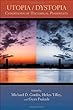
MAPPING UTOPIA

Michael D Gordin, Helen Tilley and Gyan Prakash (editors). Utopia/Dystopia: Conditions of Historical Possibility. Princeton University Press, 2010 -- Reviewed by Peter Rogerson

Utopia, the good place which is no place at all, and dystopia, the utopia gone wrong, still haunt our imagination, despite their official exorcism from modern culture. These essays cover a range of utopian imaginings, often in the form of petty utopias, ranging from urban design to preserving archives.

Many of the topics discussed here lie outside the areas of interest of Magonia, but some have more relevance. The one closest to our concerns is the study of the Cattle Destroying Cult among the Xhosa of South African in the 1850s studied by Jennifer Wenzel in 'Literacy and Futurity: Millennial Dreaming on the Nineteenth-Century Southern African Frontier'. The centre of this cult was a teenage girl who, on the basis of a visionary encounter, ordered the people to destroy their cattle and crops so that the ancestors would come back to replenish their stocks and sweep the white colonialists from the land. This is clearly an extreme example of the movements led by teenage girls who manage to rise from the bottom of the pile to be become figures of authority. It is also, surely a prefiguring of the most extreme of the modern totalitarian movements such as Pol Pot's Cambodia, with their total destruction of the urban infrastructure and population.

Igal Halfin's study of the confessions made by the victims of Stalin's purges, shows how their own continued total belief in and devotion to what had become the Communist religion made them willing to make false confessions not only for the 'good of the Party', but because their conviction that the party could do no wrong made them doubt their own memories. If the party they loved and which was the centre of their lives said they were traitors, then deep down they must be so, though they had no conscious knowledge of this. Magonia readers will note the similarity to the story of Paul Ingram who pleaded guilty to fantastic charges of child abuse because a pastor in his church told him he must be guilty, because the Holy Spirit had told the pastor so. Thus we see that the Soviet Secret Police in effect claimed discernment of spirits and a kind of telepathy which allowed them access to their victims' most secret source: "we know you better than you know yourself".

Also of interest to some of our readers is David Pinder's study of the utopia of the street which includes the role of the surrealists and the psychogeographers.

While the other essays are outside our main frame of reference, they are not without their general interest. Timothy Mitchell's 'Hydrocarbon Utopia' is of particular relevance with the present situation in the Middle East, while John Kridge's study of the promotion of the peaceful atom shows another face of modernity as utopia, while Luise White's study of white-run Rhodesia shows a 'utopia' as a retreat from modernity into a imagined imperial past.

For Marci Shore the 'utopia' is the cosmopolitan world of the Pre-First World War Vienna and Prague, before the nightmare of the Nazis and the Stalinists. Not all societies have nostalgic dreams however, for the Dalits (Untouchables) tradition and the past are horrors of the rubbish tip ghetto, and liberation is seen as coming through modernity and the transformation of society (though there are disputes as to whether this will come through some form of Socialism or through free enterprise Capitalism).

Missing of course is the vision of the grand utopia, the totally transformed world. A 'real' utopia would, I suspect, have to be very different from those of fiction or attempts to make fiction fact. Utopia as the absolute habitat is always doomed because the wilderness and entropy will always win. Planned utopias run according to an ideology or plan are by definition exclusionary and thus doomed to conflict. The true utopia in which everyone would be at home, and which would guarantee peace, freedom, bread, justice and true human dignity to all is beyond detailed imagination, as all imaginations are conditioned by the present of the imagining. All one can say of it, is that it would be a world more different from ours than ours is from that of an Iron Age Hill Fort.

11.2.11

DEEP CONSPIRACY

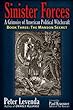
Peter Levenda. Sinister Forces: a Grimoire of American Political Witchcraft Book Three, The Manson Secret. TrineDay, 2011

This is a paperback reissue of a book first published in 2006, and it certainly is a tour de force. After all what else can one say about a work which includes and somehow links together Charles Manson, Marilyn Monroe, Arthur Young (the mystically inclined inventor of the Bell Helicopter), Whitley Streiber and Wolfgang Pauli, as well as the connections between shamanism and serial killers, Nazi occultism and the heart of the Republican Party, the Nine and Magonia knows what else besides. In many ways this is a deeply paranoid book in the true sense of the term, with a vision of other world where everything is interconnected and pregnant with barely graspable meaning.

There are some main themes: the connections between the intelligence services and what might be broadly seen as the occult and the idea of some conspiracy, Satanic or otherwise, behind serial killers such as Charles Manson and David Berkowitz. The motive of the intelligence services seems to be to get to the 'secret' of Manson's control over his followers, and use it to control society. If so this must be an incredible waste of time and money, as there is no great secret to Manson's power, that of the isolating and abusive patriarch of his surrogate family. Various radical groups also use techniques of initiation which can be found in any anthropology textbook.

A central theme, it would appear, of much Levenda's work is a revival of the 'occult Nazism' myth that was introduced by Dawn of Magic in the early 1960s, and has been comprehensively demolished by Nicholas Goodrick-Clarke. While occult notions certainly influenced Himmler, there is little evidence that they had much influence on Hitler himself. This myth is no doubt an attractive one because it acts as the 'alibi of a civilisation', presenting Nazism as something wholly alien to western civilisation. Alas this was not really the case; the core of Nazi crimes, exterminatory imperialism and even exterminatory apocalyptisism were not alien to western thought. What was different about Hitler was that he turned his exterminatory imperialism onto fellow Europeans, rather than 'savages' or 'natives' in remote climes. The drawing rooms of Europe and North America had for some 50 or so years before the actual Holocaust been dreaming of genocides on a scale which would have dwarfed Hitler's: the extermination of the entire Chinese and Japanese people for example.

It seems curious that a work, which at one level, aims at a history of evil in the United States only mentions slavery in a single passing reference, and not a word about the genocide of the First Americans, and indeed many of the latter would accuse Levenda and his ilk of continuing cultural genocide in seeking to rob them their achievements and heritage and hand them to alleged pre-Columbian European and North African immigrants.

Levenda comes up with all sorts of connections and links between people, the links between Hollywood and organised crime are perhaps not all that surprising, given the role of sex and drugs in the Hollywood milieu; but some others are distinctly odd, the fact that Lee Harvey and Marina Oswald were lodging with the estranged wife of the stepson of the mystic helicopter inventor Arthur M. Young for example. -- Peter Rogerson

9.2.11

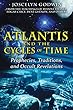
ATLANTIS AND THE CYCLES OF TIME

Joscelyn Godwin. Atlantis and the Cycles of Time. Inner Traditions, 2010. -- Reviewed by John Rimmer

With its Harry Potter-like title and cover showing celestial spheres and sunken classical columns I at first thought this was yet another book on the secrets of lost civilizations and the revelation that we're probably all doomed - either to extinction or a boring-sounding Utopia - some time in the near future.

But not at all. This book proves to be a scholarly and detailed account of the way that the Atlantis myth has provided an important and formative influence on the whole of Western occult thought.

The Atlantis story starts with the account given in Plato's Dialogues, of the destruction of a land "beyond the Pillars of Hercules". Godwin first looks at those writers who have attempted to identify this with a particular geographical location in a specific historical era. His first chapter looks at such exegeses, but in his preface warns us that he considers "the least interesting interesting books are the ones that toe this line, that Plato's Atlantis was really somewhere quite normal and recent ..."

That said he presents a fascinating range of 'Rationalist' (his word) interpretations from texts dating back to the seventeenth century which place a physical, geographical Atlantis anywhere from Sweden to the Arctic, and from the Sahara Desert to Bolivia, as well as writers who have identified existing Mediterranean islands - Cyprus, Sicily, Malta and Crete - as the last remnant of the lost territory. Unsurprisingly this 'remnant' Atlantis often seems to be the writer's own birthplace!

Perhaps the most interesting of these literalistic theories are those which locate Atlantis as having been 'everywhere'; it being the memory of a world-wide culture which was destroyed by some cataclysm, either physical or social. Here we meet writers such as Graham Hancock and Robert Bauval with radically revisionist views of the distant past and their controversial dating of the pyramids of Giza and the Sphinx.

The inhabitants of these legendary realms ranged from creatures which seem to be animated Gladstone bags living at almost solar temperatures, to angelic supermen. A common theme in many of these accounts is that the end of Atlantis was the result of a gigantic geophysical calamity. These cataclysms often followed on from the decline of a Utopian Atlantean civilisation, either through internal strife or the population's descent into strange and unnatural depravities. Unfortunately because of the era in which most of these works were written, we get very few details of these!

In many of these accounts Atlantis does not correspond to any commonly accepted historical or geographical reality, and seems to be used as a medium for expressing the writers' own views on the evolution of mankind and the development of civilization. A great deal of this is based around Mme. Blavatsky and the early Theosophists, where her book Secret Doctrine involves a complex series of 'Root Races'. She tells us that the fourth of these 'races' - a gigantic super-human species - was largely destroyed when Atlantis was flooded in a cataclysmic flood following the shift in the Earth's axis.

At first, the 'root races', as described by the Theosophists and later groups like the Steinerites and the Rosicrucians, had little to do with races in the modern sense. Even when terms like 'black' or 'aryan' are used these seem to have been rather vague philosophical labels rather than description of particular human groupings in the way they are used in general speech. Many of the 'races' described are scarcely human.

Of course this was not always the case and Godwin looks at the dark legacy of Germanic Atlanteanology. Jorg Lanz-Liebenfels, seen as one of the philosophical fathers of Nazism, saw Atlantis as the homeland of a tall, blonde, 'Aryan' race which gradually became degraded by breeding with semi-human creatures - 'sodomite hobgoblins' - until only a small group of Aryans retained their purity. These included, not surprisingly, a select group of Germans, and also, rather more surprisingly "Jews, those of true Israeli descent". These ideas - with one obvious exception - were later developed by Alfred Rosenberg in his Myth of the Twentieth Century, and into Himmer's Ahnenerbe racial purity organisation.

In contrast to this the British Atlateanologists were a much gentler crowd, although just as sure that their own land was the true heritage of the 'nice' Atlanteans. One successor to Blavatsky was the English occultist Dion Fortune who in her book The Esoteric Orders and Their Work presented a history of the world based on great cataclysms that swept Atlantis and caused the spread of its people across the world. The history of the British Atlaneanists soon moves into areas that Magonia readers will be very familiar with - Glastonbury, terrestrial zodiacs, Avalon, John Michell, Brinsley le Poer Trench and Desmond Leslie. Trench's Atlantis as outlines in his book Men Among Mankind, was inhabited by a technologically advanced race in contact with other planets, which was destroyed in a conflict which involved weapons even more powerful that nuclear bombs. Luckily one part survived as the 'Fortunate Isles' - Britain.

Godwin is clearly very familiar with the UFO contactee movement and traces how it developed from pre-WWII occult groups based around the Atlantis myth, through figures like William Dudley Pelley, George Adamski and George Hunt Williamson. In the 1940s and 1950s Atlantis was transplanted from its traditional earthly location to outer space and the imagery of Atlanteans and Space Brothers became interchangeable. It was thus easy for Adamski to move from the Royal Order of Tibet to Orthon.

The book concludes with two chapters examining the chronologies of various Atlantean beliefs, and the significance of various cycles of years which leave me baffled and in the latter case seems to be moving into numerology.

This is a long and complex book, and certainly not an easy read. The narrative is not helped by the welter of unpronounceable names that the Atlanteans bequeathed us: 'Djwal-Khul', 'Rmoahal', 'Tllavatli', and 'ring-ga-se nud si-i-kelze', (which displays a series of diacritical marks which my computer has no hope of reproducing). However, it repays the effort of reading and reveals a fascinating story of the way in which the Atlantis myth has permeated almost every strand of mystical thinking in the West from the occultists of revolutionary France to the New Agers of Modern California. It has a substantial bibliography and is fully annotated.

And in all the Atlantises here, the one which I find particulalry appealing is that described by the Rosicrucian William Phelon as a socialist, theocratic, vegetarian Utopia. All pretty dreary, but saved from total damnation by having an extensive network of tramways, powered of course by "a secret force that only the magi understood" - an Atlantis fit for Anoraks!

BIGFOOT AND BIGGER

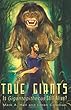
  • Mark A. Hall and Loren Coleman. True Giants: Is Gigantopithecus Still Alive? Anomalist Books, 2010.
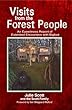
  • Julie Scott and the Scott Family. Visits From the Forest People: An Eyewitness Account of Extended Encounters with Bigfoot. Pine Winds Press, 2010.
  • Robert W Morgan. Bigfoot Observer's Field Manual: A Practical and Easy to Follow Step by Step Guide to Your Own Face to Face Encounter with a Legend. Pine Winds, Press, 2008
  • Robert W Morgan. Soul Snatchers: A Quest for True Human Beings. Pine Winds Press, 2008
This collection of Bigfoot and related cryptids books covers a wide field. Hall and Coleman try to accumulate evidence for giant hominids even bigger than Bigfoot, and clearly want to present them as paws-and-pelts animals, related to gigantopithecus. Had they contented themselves with modern 'eyewitness' accounts, then whether one agreed with their conclusions or not, we could at least at have seen it as an exercise in folklore which may at times refer to real uncatalogued animals.

However they do not do this, perhaps because there is not enough material to fill a book, even as it is they have to include quite an amount of padding. Instead they include lots of folklore about giants, which they somehow try to twist into 'evidence' for the continued existence of gigantopitchecus.

Folklore and mythology of giants is indeed global, which pretty much proves it does not represent any real animal. Rather it functions on many levels, as an explanation of landscape features, as a means of distinguishing what makes us truly human beings, as metaphors for the titanic forces of wild nature and so on. Like many creatures of the human imagination the giants inhabit the liminal zone between the human habitat and the world of wild animals. Belief in giants was no doubt stimulated by the discovery of the fossilised remains of large prehistoric animals.

Furthermore these giants of folklore are always regarded as giant human beings, albeit often presented as overgrown babies, all instinct and appetite, contrasted with the ordered, rational world of adults. What they are most definitely not are giant bamboo eating apes, and the authors' attempts to reduce them to such as status represents euhemism on speed and acid combined. When he have the 'Big Grey of Ben MacDhui' presented as a paws-and-pelts cryptid you know some sort of boundary is being reached, when he have giganto learning human ways and taking up smithing, we are way way beyond it.

What can one make of this, is it meant as some sort of satire on cryptozoology, an April Fool joke or what.

Pine Winds Press seems to specialise in books on Bigfoot, and we have already reviewed one of their offerings in a joint review HERE. Their latest offering is, like, Sali Sheppard-Wolford's an account of one family's interactions (real or imagined) with Bigfoot. As the Scott's are anti-evolutionary Christian fundamentalists, gigantopithecus doesn't feature very much at all. Their Bigfoots are portrayed as being in liminal zones between human and animal and animal and spirit, and partake as much as guardian spirits of the forest as any paws-and-pelts animal.

What struck me about this account was how similar it is to tales of haunted houses. A family move into a new house and neighbourhood, but something is indefinably wrong (The Scotts do not like the environment, the surrounding people etc.), and all sorts of strange noises and bumps in the night are interpreted as being due to the activities of 'the other', in this case Bigfoot. The family makes a game of communicating with 'the other' (compare with the Fox girls and 'Mr Splitfoot'). Their Bigfoots have something of the poltergeist about them, as when the family move they start encountering Bigfoots around their new home.

Filmmaker and author Robert W. Morgan's Soul Snatchers, is a personal account of quests for the 'forest people' back in the period 1972/3, and his involvement with members of various native American communities, including an alleged grandson of the famous Apache leader Cochise who adopts Morgan as a son. There is much on the local folklore, and even encounters with mysterious lights in the sky. However I had the nagging suspicion that much of the conversation, allegedly put down 30 or more years later, was manufactured, and the characters often become little more than mouthpieces for the author's own religious and philosophical opinions.

Robert W Morgan's Bigfoot Observer's Field Manual does just what the subtitle says, and should be of interest to cryptozoologists in or planning expeditions in North America. Whether Morgan will ever have Louis Theroux or Jon Ronson in tow is another matter, but a nice thought.

6.2.11

EXTRAORDINARY CLAIMS

Jonathan C Smith. Pseudoscience and Extraordinary Claims of the Paranormal: A Critical Thinker's Toolkit. Wiley-Blackwell, 2010. -- Reviewed by Peter Rogerson

Clearly aimed at a college or university undergraduate audience, psychologist Jonathan Smith examines various claims of the paranormal and suggests programmes of skeptical thinking. Smith suggests that critical thinkers should assess the value of their sources of information, whether the claims are logically consistent, and if there non paranormal alternative explanations. These steps are elaborated on throughout the book, which includes sections on evaluating evidence, in particular the role of statistics and their pitfalls, looking out for errors in perception and memory, checking for trickery, the role of hallucinations and other neurological and sensory phenomena, and the placebo effect.

There are critical looks at astrology, spiritualism, parapsychology, alternative medicine, spiritual healing and creationism using these criteria and they are all found wanting.

While many of Smith's points are valid and make excellent advice, this book shares many of the flaws of the skeptical movement. For example he does not heed his own advice on selecting primary sources and critically appraising sources, thus in the sections on spiritualism and parapsychology he rarely quotes from primary sources, Internet sites are readily used if they support his point of view, the writings of James Randi on subjects far removed from his own speciality, and there is a general tendency to rely on a limited number of skeptical sources, never themselves subject to critical analysis.

There is also the classic scatter-gun approach, lumping all sorts of claims together and frequent use of ridicule and non-sequitors of the "if you believe in ghosts/UFOs etc., you must also believe in pixies and werewolves" variety. He also clearly misunderstands the idea of reductio ad absurdum, which is a tool used by mathematicians and philosophers to argue that the contrary of a certain proposition is logically self-contradictory, therefore the proposition must be true, (REF.).

He takes it as meaning that you can defeat an argument by casting it in such a way that it sounds silly. For example (p45) he quotes a piece from the Parapsychological Association:

Psi may be involved in Murphy's Law: "If anything can go wrong, it will." That is, modern machines based upon sensitive electronic circuits, such as copiers and computers, may at times directly interact with human intention, and as a result, inexplicably fail at inopportune times. Of course, the converse may also be true. That is, the possibility exists to repair, or to control sensitive machines solely by mental means. Such technologies would significantly benefit handicapped persons. (REF.)

He recasts it as "Copier isn't working ? Maybe its haunted by a ghost. Better call a ghost buster. If we find a ghost, perhaps we could use it to propel wheelchairs"

Now I don't hold any candle to the original, which at best represents an incredible degree of hope over experience, but note how others might use Smith's line of argument. For an example a creationist might recast "Darwin argues that human beings and the African apes shared a common ancestry" as "Darwin says your great great grandmother was a chimpanzee", and Isaac Newton's continental critics, such as Descartes, complained that his theory of gravity involved an 'occult' action at a distance, so perhaps they could have argued "Newton says that the apple is being pulled down to the earth by invisible demons, and they are also trying drag down the moon, but a team of angels are pushing it round so fast that it never actually falls."

Whatever the faults of paranormal beliefs, trying to blame them for the holocaust (p29) is absurd and more than a little sick. Maybe I am the wrong generation, but the silliness of the 'Flying Spaghetti Monster' adds little to the book's arguments. All of this is really sad, because, as I have said, there is plenty of good material and arguments in this book. It seems that skeptics share with paranormal advocates the tendency to self-destruct.

2.2.11

HOW OLD IS THE UNIVERSE?

David A. Weintraub. How Old is the Universe? Princeton University Press, 2011

There is a consensus among astronomers that the answer to the question posed by the title of this book is about 13.7 billion years. Professor Weintraub tells us how this figure was arrived at, beginning with Aristotle, who dealt with the problem by asserting that the universe had always existed and would always continue to exist.

It was not until the 18th century that natural philosophers started to make the first scientific attempts to estimate the age of the Earth, instead of relying on interpretations of the Old Testament. However, real progress had to await the discovery of radioactivity towards the end of the 19th century.

For example, the study of the properties of radioactive elements in rocks can be used to determine the time which has elapsed since they solidified. In the case of the decay of potassium 40 to argon 40, the argon will escape into the atmosphere until the rock solidifies, when it will become trapped as it is formed. From this time the ratio of argon 40 to potassium 40 increases from zero, so that the ratio when the rock is examined will be a measure of the time since solidification, as the half-life (the time taken for half of the atoms of a particular radioactive substance to decay) of potassium 40 is known.

The oldest rocks found on Earth are about 4.4 billion years old, and the oldest known meteorites in the solar system are 4.56 billion years old, so the universe must be much older.

Weintraub describes the various methods which have been developed to calculate the ages of the stars and thus to find which are the oldest. The universe must obviously be older than these.

The discussion of the expansion of the universe will probably be of great interest to many readers. Edwin Hubble's project to measure galactic distances, which he began in 1929, eventually led to Hubble's law which says that there is a linear relationship between the red shift velocity of a galaxy and the distance to the galaxy.

There were two possible interpretations of this; the obvious one that the universe began with an explosion and the galaxies are flying through space, and the theory that the galaxies are fixed in space, held together by gravitational attraction, and that it is space itself which is expanding.

The second interpretation is accepted because the first would have the distant galaxies travelling faster than light, and nothing can travel through space faster than light. However, this restriction does not apply to the rate of expansion of space itself.

This book is straight science without the - often amateurish - theological or philosophical speculations which are often to be found in popular writings on cosmology. It should be of particular interest to anyone who is thinking of embarking on a serious study of physics or astronomy. -- Reviewed by John Harney

MAGONIA RECOMMENDS