30.5.11

GRASSROOTS UFOS

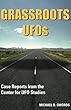
Michael D. Swords. Grassroots UFOs: Case Reports from the Centre for UFO Studies, (compiled from original interviews by John P Timmerman). Anomalist Books, 2011.

Between 1980 and 1992 John P. Timmerman of the Centre for UFO Studies held UFO-related displays at several locations in the United States and Canada, at which he was approached by numerous people who related their own 'UFO experiences', many of which Timmerman taped.

This book, originally published by the Fund for UFO Research in 2005, and effectively unobtainable outside the US, is based on 1,179 of these reports, which Timmerman and his helpers transcribed. From these Swords has constructed catalogue-like summaries, but which in a number of cases retain some of the original words of the speakers.

This is raw, unmediated ufology, and what strikes me is how unlike the sanitised product this often is. Sure there are some classical cases of domed disks and the like, but also lots of other things; anomalous lights, beings materialising in bedrooms, great black triangles, and stuff which is so weird that you could not possibly compartmentalise it at all. It is clear that the idea of "seeing a UFO" is used by people to characterise a huge variety of phenomena and experiences. These include things like an encounter with a Christ-like being at a Christmas dance then going outside to see a Christmas star in a field, a globe of light leading a smaller one as it were a child and going to see a school game, a man possessed by a ball of light, and a lady who sees a red light somehow coming out of herself and filling the room, or something invisible crossing the sky as if the whole sky is moving and so on.

Clearly none of this material was ever investigated, and common sense tells us that if it was, many of the stories would have turned out to generated by misperceptions or misidentifications. There are a good number of cases that look like hypnogogic hallucinations or ISP. Still others have all the absurd quality of dreams. One wonders sometimes if people relate events which happened in their past, which were actually dreams, to family members, these family members can then start 'remembering' that they also experienced it.

What Timmerman has assembled is not some set of scientific or quasiscientific documents, and it would be a fools errand for someone to try and treat them as such, but a great, and very important, collection of late 20th century North American folklore, and as such the original tapes and transcripts need to be preserved in a university folklore department, or failing that, the AFU archives in Sweden. They are almost certainly telling us more things about ourselves than about imaginary aliens, one of which is very obvious: how the quasiscientific/technical vocabulary of ufology has replaced traditional narratives as a means of describing anomalous phenomena and experiences. Much of what is reported here would in past times be interpreted in terms of religious experience, folk spiritualism, fairy lore or witchcraft. Only a minority really have a technological feel to them, many more are haunting stories which tell of the mysterious otherness of wild nature. -- Reviewed by Peter Rogerson

27.5.11

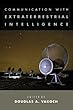
TALKING TO THE ALIENS

Douglas A. Vakoch (ed.). Communicating with Extraterrestrial Intelligence, State University of New York Press, 2011

The idea of communicating with extraterrestrial intelligences through radio, optic or other processes continues to fascinate both sections of the scientific community and the general public, despite 50 years of failure to detect an unambiguous extraterrestrial signal. This is evident from the collection of papers published here which "arose from" the April 2010 astrobiology science conference organised by NASA.

Centred on three broad themes: latest advances in SETI; should we transmit; and if we received a message could we actually understand it. Many of the papers are of a technical nature aimed mainly at the professionals, but others do include broader themes. The essentially religious nature of the SETI for many people is still apparent in some of the papers, both in the direct sense that the gods who rule the sky will give us boons in answer to our petitions, and in the more subtle sense that somehow knowledge of other intelligences will lead to some sort of spiritual transformation in humankind, making us turn swords into ploughshares and become very nice to each other.

One has to be doubtful about all of this, it is equally likely that the publication of a signal, which may take generations to decipher would inspire all sorts of new religious cults, or violent disputes about whether to reply or not. It is clear that several scientists, most recently Stephen Hawking, have expressed considerable reservations as to transmitting, and one can point out that in the course of at least 50,000 years in which humans have had some form of sea travel there has been little diminution in our capacity for war and general violence, and there is little reason to assume that millennia of space travel will make us – or others - any wiser.

Of course, even if we did receive "the message" there is the difficulty that we may not actually ever make any sense of it. Several of the writers in the third section question whether the general assumption that "they" will share our perception of the universe, science or even mathematics is really true. Real aliens, unlike those encountered in Star Trek and the like will not be just North Atlantics with slightly different shape, but truly, perhaps unimaginably alien. Of course, if aliens are, as is likely, going to be very alien indeed, then the chances that they will be engaged in the sort of projects that we can imagine at this time are very remote indeed. -- Reviewed by Peter Rogerson

25.5.11

TWENTY FIVE YEARS AGO: MAGONIA 22, MAY 1986

The May 1986 Magonia was a bit of a mixture with no overarching theme like some previous issues. Lead article was Michael Goss's description of 'phantom-hitchhiker' stories on public transport (including rickshaws!); although as Mike readily admitted in the case of public transport we are probably dealing with phantom fare-dodgers rather than true hitchhikers

Thus we find bus routes in Taiwan which cancelled their late night journeys because drivers are frightened by a ghostly passenger who disappears before the bus reaches its destination; similarly a bus driver in County Durham, who kindly lets a young woman in distress travel without paying her fare, is rewarded by her sudden disappearance from his vehicle. An elderly lady in grey performs the same trick on a bus driver on the road near Dover. But not all the phantoms are penny-pinchers, however, and Mike notes a ghostly bus passenger in Singapore who pays her fare before mysteriously disappearing.

Ian Ridpath and Hilary Evans offer suggested solutions for puzzling events. Ian Ridpath presents a fairly straightforward explanation of a close-encounter case from near Valencia, Spain, identifying our old friend Venus as the culprit, assisted by the car in which the observers were travelling rushing along twisty country roads, and probably suffering from some sort of electrical fault.

Hilary Evans's case is far more intriguing. In 1945 a priest in the French village of Reneve, near Dijon, was out picking mushrooms when a small man, only 15 - 17 cm. tall rushed past him while he was down on his hands and knees. It was not until 1975 that he spoke about this event to the French UFO group GEPA, who received his account sympathetically.

The priest thought at first he had seen some sort of 'unevolved human', but later decided that it may have been extraterrestrial. The case was taken up by a ufological-parapsychology group in Dijon, who performed an excellent piece of historical research, and found out that the Little Man of Reneve was actually a ... well you'll just have to read the full article HERE. 

Roger Sandell took a look at Old Moore's Almanac: "The last of the astrological chap-books that flourished in huge numbers in Stuart and Tudor times continues to appear each year..." - as indeed it still does. Roger noted that the current, 1986 edition seemed to have had a number of apparently successful predictions, particularly in political and financial matters. Amongst those predictions not confirmed at the time of writing, was that the second favourite would will the Derby in June. Did it? We'll have to wait for Magonia 23 to find out!

Hilary Evans had another piece in this issue, introducing BOLIDE - the Ball Of Light International Data Exchange - aiming to collect and collate reports of BOLs, including such phenomena as 'earthlight', ball-lighting, St. Elmos Fire, and a great range of 'spooklights'. Although BOLIDE seemed to be around for some years later, I'm not sure that anything very conclusive was discovered as a result of it.

Roger Sandell also has a second bite of the cherry, with his feature-review of Nicholas Goodrick-Clarke's The Occult Roots of Nazism, and Ellic Howe's Astrology and the Third Reich. He concluded that both books gave a good account of the mystical racist and nationalist movements in Germany in the early twentieth century but did not demonstrate any real connection between the Nazism as a political movement and the ideas promoted by those cults, although a number of individuals were involved in both. (For a detailed analysis of the Nazi/UFO connection see Kevin McClure's articles HERE.)

And talking of Kevin McClure, he pops up with the first part of a feature looking at the range of small UFO, occult, paranormal and radical magazines that thrived in the 1980s - between the development of cheap offset-litho printing and the growth of the Internet. They are now an almost vanished world.

24.5.11

BEASTS AND RUMOURS OF BEASTS

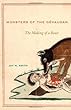
Jay M. Smith. Monsters of the Gevaudan: The Making of a Beast. Harvard University Press, 2011

It is the aftermath of a world war and a strange rumour is abroad that preternatural forces are at work in the land. This is not, however the USA after the 'Second World War' and we are not dealing with flying saucers. This is France in the aftermath of its defeat in the true First World War, the Seven Years War of 1756-1763, and the rumour is a much more concrete and deadly one.

From July 1764 until October 1765 France was gripped by stories of depredations by a "terrible beast" in the Gevaudan region of the Massif Central in which many people, mainly women and children were slaughtered. In reality these attacks were probably the result of the actions of a number of wolves, but in the popular imagination they became the world of a single ur-beast, a kind of universal predator of preternatural power and cunning, perhaps, some hinted darkly, of a loup-garou a werewolf, a beast in at least part time human shape. Or as the local bishop kindly suggested, a punishment for the sins of the people, particularly immodest young women. The beast becomes a symbol of the voracious devouring power of wild nature red in tooth and claw.

History professor Jay Smith tells this story in detail for the first time in the English language, using numerous contemporaneous sources and places it firmly in the context of the times. Much of it seems surprisingly modern: competition between the nascent media searching for sensation, the lure of the exotic (many accounts suggested that the animal was a hyena somehow imported from Africa), local nobles and notables looking to recover the honour lost in the disastrous war, struggles between the centre and periphery, the beginnings of the cult of celebrity as a young boy and a housewife become national heroes for fighting off the beast.

The story portrayed here is one which exists on edge of tragedy and farce. There is the utter horror of the beasts attacks, which involved several cases in which women and children were decapitated, and the farce of the various attempts by military leaders and "great hunters" to track down the beast, which always got away. The means of tracking it down became bizarre, including leaving the bodies of the victims out or even children (allegedly protected by soldiers) as live bait. This, and the arrogant attitude of incomers did little to inspire confidence the locals' confidence, and as the beast remained at large the various hunters, including the one who was attributed with finally killing it, exaggerated its size, strength, powers and general otherness.

In the penultimate chapter Smith examines how the beast has come down through writers and folklorists to the modern day, where various sensational theories about the beast have proposed including a trained hyena or a trained wolf-dog hybrid under the control of a psychopath, or perhaps a human killer or some sort of prehistoric survival. Anything but the reality of a pack of wolves. Among those opposing that latter idea are not just cryptozoologists but environmentalists seeking to return the wolf to France, and wish to portray it as basically a nice big doggy which wouldn't harm anyone, let alone eat little children for breakfast.

The wolves are actually coming on their own, across the Italian Alps, so it can only be a matter of time before stories start appearing in the Daily Mail and Daily Express that they are padding through the Chunnel into Britain, no doubt under the control of Romanian gypsies or asylum seekers.

This book is an excellent example of how minute and detailed history can tell a human story as dramatic as any novel.

20.5.11

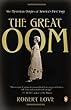
THE GREAT OOM

Robert Love. The Great Oom: The Mysterious origins of America’s First Yogi. Penguin Books, 2011. -- Reviewed by John Rimmer

A while ago I read a piece in the papers about a vicar who turned a yoga exercise group out of his church hall because he said it was un-Christian. At the time I mentally filed this along with the “political correctness gone mad” type of story.

This book puts the vicar’s action into a historical context, and a remarkable context it is too. While we may now may think of yoga as just a rather worthy form of exercise, which I tend to associate with things like cold showers, shopping at farmers’ markets and reading the Guardian, this is far from the full story.

‘The Great Oom’ was born Perry Arnold Baker in the small town of Leon, Iowa, in 1876. The only child by his mother’s first marriage, he took his step-father’s surname, Bernard, when she remarried. This second marriage produced five more children. This seems to have produced a sense of isolation for the young Perry, who escaped his crowded home life by, in his own words, “reading eighteen hours a day”

His interest in the occult and the East developed when he moved to Lincoln, Iowa, to work in the construction trade. Here he met a young Syrian scholar, Syvais Hamati, who became his spiritual guide for many years to come. Under his tutelage he learned Sanskrit and began practicing hatha yoga, and studying Eastern philosophy and religions.

With Hamati he moved around the country, eventually settling in San Francisco. Here ‘Perry’ became ‘Pierre’ and he began demonstrating his yogic exercises to an astonished press: demonstrations such as piercing his cheeks and sewing his lip to his nose. At this time a number of Indian gurus and Hindu monks were visiting the US spreading a form of Westernised Hinduism, which saw feats such as Bernard was demonstrating as dangerous and unnecessary for true yoga.

Bernard, however continued with his promotion of hatha yoga, with its ‘dangerous’ physical exercises. The group he set up in San Francisco was soon attracting attacks being some form of sex-cult, and at times it seems Bernard did not go too far out of his way to change this opinion.

By this time he had gathered a group of acolytes, and the stories about his meetings were attracting the attention of the local authorities, and soon they moved to Seattle, then, via Chicago, to New York. Setting up in premises in Manhattan he continued his work with hatha yoga, and expanding his physical and mental exercises. Again, however, the authorities became interested in his work, especially as some of the newer members of his group were scions of New York’s social aristocracy.

Like some later cult leaders, he was accused of kidnapping and hypnotising wealthy followers - particularly wealthy female followers. He was prosecuted and spent some time on remand in the notorious Tombs prison. However none of the charges stuck and he was able to continue his work. It was at this time that the New York tabloids dubbed him ‘The Great Oom’.

He eventually moved the centre of his operations to the small town of Nyack in the Hudson Valley, where to the consternation of the locals he took over a large estate and established what he called the Clarkstown Country Club (CCC). This developed over the years into a spiritual retreat, study centre and library for those with a serious interest in Eastern philosophy, and a cross between the Betty Ford Clinic and The Priory, for detoxing wealthy socialites and celebrities.

Amongst the people who passed through were characters as varied as Gloria Swanson, Peter Seeger, the Vanderbilts, Leopold Stokowski, who organised concerts at the Club, and Noel Coward.

Gradually from being a dangerous sex-magician, Bernard transformed to a business-man, social entrepreneur, country squire, sports promoter, boxing trainer and aviation pioneer. However, he never quite managed to throw off the slight aura of danger and mystery that kept on producing enemies.

His CCC estate grew and grew, becoming a major local employer. Its visitors and residents, as well as studying Sanskrit, eastern philosophy, religion and physical culture, also performed in fantastic circuses (along with four performing elephants, one of which rode a tricycle), put on plays, concerts and elaborate balls, and took part is a range of sports - Bernard was the first person to promote floodlit baseball.

The CCC also became home to a greyhound track (a bit of a white elephant, this), one of the first commercial airports in the USA, and a menagerie of exotic animals. But throughout all this Bernard promoted yoga exercise as part of a healthy way of life, and as more and more stars, celebrities and politicians became drawn into his circle, the more the practice became accepted as healthy mind and body exercise rather than as a sinister cult.

The depression in the 1930s began Bernard and the CCC’s downward spiral; much of the club properties were sold off or rented out, and many of Bernard’s influential clients and guest began to drift away. At the end his club, property, and his books were dispersed, although his widow continued with a small New York studio and drew in a new generation of celebrity clients. Ultimately Bernard’s legacy was the public acceptance of yoga as a mainstream practice.

This book gives a fascinating account of a complex life, and the background to the strange development of hatha yoga from sinister sex-cult to popular suburban subculture.

19.5.11

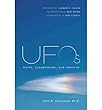
WHY THE PENTAGON PANTRY IS EMPTY

John B Alexander. UFOs: Myths, Conspiracies and Realities. Thomas Dunne Books/St Martin's Press, 2011

John Alexander is someone with a background in the wilder and weirder aspects of the US military, including those parts studied by the likes of Jim Schnabel and Jon Ronson, and in post military life was associated with the semi mysterious National Institute for Discovery Science.

This is a book with some good - and not so good - bits in it. The good bits are those in which the author is clearly relating things he knows a lot about; the internal bureaucracy and politics of the US military. Here he manages to effectively demolish the many conspiracy theories swirling around the UFO subject in the USA and to pretty much demonstrate that there is no big secret. If there was, can you really imagine that no politician would have revealed it to clinch an election? The example Alexander gives is McCain in 2008, when such a revelation, he argues, would have swung the election to the more experienced man.

Of course, if you factor in the great secret would also have to be kept by all the world's leaders for generations, including all those who hate the guts of the USA (and each other) then it is patently absurd.

Not only is there no saucer in the Pentagon pantry he also argues that in effect there is no absolute metaphysical entity called the United States Government, merely lots of separate agencies, which he suggests spent much of their time and energy trying to filch funds off each other. Shortage of money is constant refrain here.

The reality is that while any number of military personnel or politicians may have a personal interest in the subject and can tell a spooky UFO story at a cocktail party, there is no official interest. Perhaps a good parallel would be with ghost stories. There is no doubt any number of military, political, scientific or business figures could tell you a good ghost story if they were sufficiently lubricated, and that various military and government buildings (no doubt post 9/11 including the Pentagon itself) have some pretty spooky stories attached to them, but no one would serious suggest a top level US government enquiry into haunted houses.

Alexander shows how various agencies pass the buck on the subject, and how NASA managed to avoid having the topic dumped on it by President Carter. In the end on both sides of the Atlantic ufologists made such a nuisance of themselves with Freedom of Information Requests that agencies just took the attitude “do not send us anymore UFO reports, and if you do we will file them straight into the wastepaper basket”.

Alexander also examines Roswell - coming down on the side of the Mogul Balloon – as well as the tales told by Phillip Corso.

The less good bits of the book are where he deals with actual UFO cases. Here his knowledge seems rather superficial, and his view of investigation is to believe everything you are told, especially by someone in a uniform. Those looking for amazing revelations will be disappointed, for his list of good cases contains mainly the usual suspects. As this list his headed by our old friend Rendlesham, where he uncritically believes the ever escalating tales told by Mr Penniston. The Rendlesham story is one of those which looks the more exiting the further away from it you are and the less you know about the background.

Other cases he covers include the famous Cash-Landrum and Coyne helicopter cases, and then there are the Phoenix Lights and Gulf Breeze. By the time Alexander suggests that there is some great mystery behind crop circles credibility is disappearing.

It does not improve with his endorsement of the infamous Skinwalker Ranch, not withstanding the fact that when he was there himself he didn't witness anything out of the ordinary and that no actual film of anything unusual happening exists. Whether this was a ‘simple’ hoax or some sort of psycho-social experiment seems a moot point.

This does not mean he supports the ETH - he acknowledges that there are just too many weird things going on (or reported as going on) for such a simple explanation to work. And that UFO reports are just one of a huge number of anomalous personal experiences, not all of which are easy to classify. However that does not impel him towards a psycho-social outlook, but towards a paranormal one involving "precognitive sentient phenomena" which not only controls the events but is already, precognitively, aware of how the observers or researchers will react.

This sounds rather like the gnomes that were thought to control the rainbow and move it away from you before you could reach the pot of gold. Scientists have a technical term for this sort of speculation: "not even wrong". Needless to say invoking tricky boggarts to explain anomalous experiences violates the number one rule of the game of science, operational scientific naturalism, which basically states that whatever your personal religious or theological beliefs you do not invoke supernatural causes or beings or ‘arbitrary wills’ when doing science.

Of course there are deeply ingrained ways human beings interpret the world, part of which include the tendency to ascribe quasi-anthropomorphic behaviours and thoughts to the natural realm, which though largely moribund among adults in our - at least superficially - scientific society, still come to the fore when people are confronted by anomalous experiences, especially those which fail to produce any actual hard evidence.

It is not surprising then that no government or official agency is really going to get involved with investigating sets of experiences and/or phenomena which will cost a great deal in time and expense and which they know in advance don't have a cat in hell's chance of coming to a resolution.

16.5.11

THE BOOK OF THE DEAD

Donald S. Lopez, Jr., The Tibetan Book of the Dead: A Biography, Princeton University Press. 2011.

The four-hundredth anniversary of the King James Bible has given rise to a large number of articles, along with radio and television programmes, about its origins and influence. Now Princeton University Press has begun to issue a series of 'Lives of Great Religious Books', beginning with 'The Tibetan Book of the Dead', which, in the Evans-Wentz edition, was one of the 'bibles' of the hippie movement, and has sold more than a million copies.

The Bardo Tõdõl, to give its original title, is a terma, that is, a work supposedly written in Tibetan in the eighth century by an Indian tantric master named Padmasambhava, and then, when the original Buddhism of Tibet collapsed amongst the political turmoil of the following century, hidden in rocks, or at the bottom of lakes, or inside pillars of ancient temples; and then relocated by psychic means in the eleventh century, and used to found what, on this basis, was termed the 'Ancient' sect of Buddhism. This legend is dubious, of course: modern scholars have questioned whether Padmasambhava even existed; and suggested that if he did, he may have been an expert on irrigation rather than religion.

Lopez considers that the Evans-Wentz edition should be considered as essentially an American rather than a Tibetan work. He traces the American Spiritualist movement back to Joseph Smith; who in the 1820s claimed to have been guided by an angel to dig up some inscribed gold plates, which proved to have been buried more than a thousand years earlier by a general of the Nephites, an Israelite tribe who had preceded Columbus to the New World by two millennia. These he translated into English with the aid of a pair of crystal spectacles, and published as The Book of Mormon - the story is curiously similar to that of the terma of Padmasambhava. Smith was followed by the Fox sisters, and then Madame Blavatsky with her Theosophical Society.

Walter Yelling Wentz - it was only as an adult that he adopted in addition his mother's maiden name of Evans - was born in Trenton, New Jersey, in 1878, and later moved to southern California with his family, where he would receive a diploma from the Raja-Yoga School and Theosophical University at Point Loma. He later obtained an M.A. in English from Stanford University, travelled to Europe, and was awarded a Bachelor of Science in Anthropology at Oxford. Having spent most of the First World War in Egypt, he travelled to India, where he became "a great collector of texts in languages he never learned to read".

In Darjeeling he purchased some Tibetan block prints, and had them translated by Kazi Dawa Samdup, an English teacher at a boy's boarding school in Gangtok, the capital of the small Himalayan kingdom of Sikkim, who worked on them every morning before lessons for two months. These provided Evans-Wentz with the material for three books, The Tibetan Book of the Dead (1927, the title an imitation of the Egyptian Book of the Dead published in England by Wallis Budge). Tibetan Yoga and Secret Doctrines (1935), and The Tibetan Book of the Great Liberation (1954). One point that was not made clear in the first of these was that it was only a small portion of a large corpus of similar works, and did not include the part most commonly used in Tibet.

The word bar-do means 'between two [lives]'. and refers to the Buddhist belief in reincarnation, which may occur in any one of six realms, "as gods, demigods, humans, animals, ghosts, or hell beings." The Bardo Tõdõl consists of a set of instructions to the newly departed soul, given by reciting them over the dead body, and intended to give it the best possible rebirth. Or so it appears, but it seems that two of the sections included in Evans-Wentz Tibetan Book of the Dead were really intended as meditation manuals for the living.

By the time of the third edition (1955), the text itself occupied rather less than one third of the whole, the remainder being taken up with prefaces, introductions and footnotes. These included an eighteen page 'Psychological Commentary' by Carl Jung, and an `Introductory Foreword' by Lama Anagarika Govinda, who was not, as has sometimes been thought, a Tibetan, but a German originally named Ernst Lothar Hoffman, though unlike all of the other contributors to the book he had actually visited Tibet, if only for three months (and had never learned Tibetan).

Summing up, Lopez remarks that it is widely believed that "The present is a degenerate age, unable to solve the problems that afflict it; the solution lies in the past," and hence it ancient scriptures. However. "Evans-Wentz colonized a Tibetan text. turning it into a tome of his American version of Theosophy." On the other hand: "But the fabrication of lineage in what, from the perspective of historical scholarship, Tibetans had done for centuries." -- Reviewed by Gareth J. Medway.

15.5.11

LIFE ON MARS?

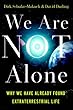
Dirk Schulze-Makuch and David Darling, We Are Not Alone: Why We Have Already Found Extraterrestrial Life. Oneworld, 2011

The title is somewhat misleading, as we have not (yet) found extraterrestrial life but only some, hotly disputed, evidence suggestive of the existence of microorganisms on the planet Mars. The search for life on Mars began in August 1960 when NASA authorised the Jet Propulsion Laboratory in Pasadena, California to work on a plan to land a capsule equipped with instruments and experiments for detecting signs of life in the soil of the planet.

In March 1959, NASA had handed "the princely sum of $4,485" to microbiologist Wolf Vishniac, to develop "a prototype instrument for the remote detection of microorganisms on other planets".

One problem was that not only were many biologists convinced that life must be unique to planet Earth, but others could not agree what forms extraterrestrial life might take. Would it be similar to Earth life, totally different, or somewhere in between?

Another problem was that it was possible to fail to detect microorganisms by making false assumptions about them. For example, some biologists interested in Mars explored the Dry Valleys of Antarctica, because conditions there were more like those on Mars than anywhere else on Earth, being very cold and very dry. One biologist, Norman Horowitz, used standard techniques to search for microbial life in the soil there, but drew a blank. However, Wolf Vishniac said that Horowitz had used a broth that was too rich in nutrients to cultivate the organisms and this had killed them off. Vishniac used a weaker brew, more suited to organisms used to a nutrient-starved environment and was successful in detecting life.

As is well known, the experiments carried out on Mars to detect life produced results which were inconclusive. Were they caused by the chemical properties of the soil, or by biological processes?

Another fierce controversy about possible Martian life erupted in 1996 when researchers at the Johnson Space Center announced that they had discovered fossilised microscopic organisms in a meteorite from Mars, referred to as ALH 84001, found in Antarctica. From the description of the controversy, it seems that both sides had sound technical and scientific justifications for their opinions, and there is still no agreed, definite answer to the question of Martian life.

The rest of the book discusses the possibility of life on other planets and satellites in the solar system, and the development of techniques for the possible detection of life on planets orbiting other stars.

This work is a good introduction to astrobiology. -- Reviewed by John Harney

13.5.11

MAN, MYTH AND SCIENCE

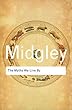
Mary Midgley. The Myths we Live By. Routledge Classics, 2011

This is a reprint, with a new introduction by the author, of a book first published in 2004, collecting together pieces written between 1992 and 2002. The unifying theme among the various articles is the role of myth in science. Midgley argues that myths old and new lie behind many ‘scientific’ claims and speculations. Of particular interest is her analysis of various scientistic visions which she sees as reinventing ancient dualism in new clothes, and projecting dramatic visions of transcending the human condition. The old non material soul is replaced with the new ‘software’ and so on, which like the old soul is assumed to somehow be able to survive and run better, more rationally and efficiently without the nasty old body holding it down.

She also critiques other dreams of transcending the human condition such as by genetic engineering, proponents of which also make fantastic and almost apocalyptic claims.

She sees also in much scientific, particularly astronomical, literature a survival of the ancient dichotomy between the ‘pure’, ‘sacred’ heavens and the ‘defiled’ and ‘profane’ earth and its grubby creatures. Abstract reasoning and the rarefied world of physics still has the continuing patina of the Platonic realm of pure archetypes and the crystalline spheres.

Mary Midgley also explores our relationship with wild nature, and suggests that the central fear of the wilderness is the wildness within, therefore much of the emotional power of the desire to ‘conquer nature’ is the need to master this interior wildness.

While she seems very aware of the mythic and religious baggage behind much of the science she disapproves of, she is perhaps a little less aware that similar motivations appeal to much of the environmental movement, where the notions that all the problems in the world are caused in effect by human sin, and there is a strong element of Puritanism and asceticism in the movement. It also has to be said that for most people on the earth Gaia is rather less benevolent than she appears to be to members of the dinner party classes in north western European countries with relatively benign climates and a notable absence of volcanoes, hurricanes, tsunamis and destructive tornadoes. -- Reviewed by Peter Rogerson.

11.5.11

KINDLING NIGEL WATSON

I usually put details of new and forthcoming books over on our Book News blog, but this comes from fellow Magonian Nigel Watson who informs us that his book Alien Deception has just been Kindled, which apparently means that it's been published on one of these electronic gadgets, rather than ceremonially burned outside Canby City Hall by the UFO UpDates Collective. He writes:

"After being briefly published as a paperback messed around by or ignored by publishers The Alien Deception is now available for a mere £4.21 as an ebook on Kindle. It covers the history of the alien abduction phenomenon using the Betty and Barney Hill case as a stepping stone and the Magonian frame of reference as the guiding light. To US readers this means Lit. Crit. armchair ufology, to the rest of us it attempts to provide a finely tuned sociopsychological perspective on this 50-year-old enigma."

Here's the publisher's blurb: Since the 1960s thousands of people throughout the world have reported being abducted by aliens. They report being taken in broad daylight or at night. Some say they were simply looked at by seemingly alien beings, while others say they were horribly examined.

At times, after such encounters, the abductee has little conscious recollection of these events, and usually through nightmares, flashbacks and hypnosis they eventually learn more. Some abductees even believe they have been used as part of a breeding project to create hybrid alien/humans. Almost all are truly bewildered by their experiences.

Ultimately, alien abductions make us consider fundamental questions about our place in the universe and our future evolution as a species. Are abductions real events that have momentous consequences for the whole of humanity or are they the product of rumour, psychosis, hoaxes, media hype and sensationalism? Is there a grand Alien Deception manipulating our minds and our governments or are we deceiving ourselves?

Nigel Watson's groundbreaking exploration of alien abductions takes a comprehensive look at the reports by the earliest abductees (such as Betty and Barney Hill), right up to the latest encounters. Watson considers the possible historical, paranormal, extraterrestrial, psychological and media influences that might help explain the origin of these reports.

If you'd like to buy a copy of the Kindle version, click on this link:


There still seem to be a couple of the old-fashioned paper versions for sale as well, but looking at the prices asked these seem to be for very serious collectors indeed!:

7.5.11

BUDD HOPKINS AND THE MYSTERIOUS SYMBOLS

The clip by Carol Rainey on Budd Hopkins alleged secret UFO symbols raises a number of interesting points. One is the reaction of the American UFO Updates message board which was not only to ban Ms Rainey from its board, but also to ban any further comment on the issue of the alien scripts, though that did not seem to apply to Hopkins associate and abductee John Velez. As we in Magonia do not believe in censorship I will indeed discuss the clip on the alien script.

If readers look at the clip they will see both the large S symbol promoted by Hopkins and another wider set of symbols. These are not the only set of alien language going Look at the discussion HERE.

As you will see, attempts at constructing an alien language stretch back to John Dee's Enochian. Probably the earliest example of alleged extraterrestrial language was Helene Smith's "Martian" an example of which can be seen HERE, with a long discussion in the book From Indian to the Planet Mars, see HERE. 

In the UFO field there was a set of writing produced by a contactee in Sao Paulo in 1959, which you can see an example HERE. This was discussed by Gordon Creighton in FSR Vol 13, 3 (May-June 1967) pp7-8. Creighton, an expert linguist, wrote "on the basis of my own study and knowledge of language ... I find it hard to believe that this curious jumble of marks is a sophisticated script used by intelligent beings possessed of an advanced science" and noted of all the "alien scripts" he had seen only two were even vaguely convincing as real languages.

Unless one proposes to believe that Helen Smith was an abductee or that these scripts were the products of the jinn as Creighton did, one can assume that alien writing rather more sophisticated than Hopkins' sample can be spontaneously produced.

As Carol Rainey's clip shows, the main symbol produced by abductees was the capital S in some orientation or other. This symbol has quite a long ufological history, one going way back before Budd Hopkins. Probably its earliest appearance may be in one of the very first abduction reports, apparently from before the publication of the Betty and Barney Hill story. The story comes in the form of a letter dated 12 February 1965 sent to Dr Frank Salisbury and reproduced on pp 145-148 of his The Utah Ufo
Display: A Biologist's Report (Devin-Adair 1974), and the symbol is an S-shaped crowned serpent on the left hand shirt pocket of "the first man they called the master".

The story itself is about exactly halfway between an abduction and contactee tale. The writer was a largely illiterate youth and his tale is very confused, but seems to run something like this. He was just about to go to bed one night in June 1962 at his home in Estes Park, Colorado, when from his bedroom balcony his attention was drawn by a flash and he saw a blue globe land on a mountain top about 1 km away. He felt paralysed. It presumably then approached "against all the laws of motion" and appeared in front of him.

A musical voice invited him to enter this "blue glassy bubble" and he felt as if his body belonged to someone else. It took him to a giant black object with many levels above and below his position. He saw a marking on the wall three lines surmounted by an upwards arrow. A door appeared out of the wall and there also appeared "a very beautiful girl [with] [b]lond hair, blue eyes, about 5ft 4 inches tall with copper coloured hair. She pointed to a large room with men in black uniforms. One man said he was 7 ft. 4 in. tall and his companions are "my Brothers of far galaxies. They were Saurians, anxious to converse with him. Their clothes were black with silver disks on their shoulders. There is no clear ending, they conversed by giving him pictures in his head and examples of an alien language which he enclosed in the letter but which Salisbury does not reproduce.

The serpent motif appeared in another rather more publicised abduction story of the period, the Herbert Schrimer story, this time as a winged serpent on the uniforms.

This suggests we are dealing with cultural reifications of some sort of actual experience, and symbols such as crowned and winged serpents seem to appear in many cultures. perhaps these are also reifications of images seen in altered states of consciousness. In the original story we are probably dealing with a young man who sees a bright star in the distance and enters an ASC with elements of isolated sleep paralysis, hypnogogic imagery and eventual move into a dream like state. If abductees are coming up with this motif it may be because it and similar ones are generic to certain altered states.

These simple geometric forms may well be entoptic images formed from the physiology of the eye itself. Examples can be found on these websites:


Entoptic images can be experienced in a variety of ASC's including hypnogogic states, and can then be remodelled by the brain into more familiar images. Images 5 on the second image site can easily be unconsciously turned into an S, a serpent on whatever.

This imagery may occur in the original hypnogogic and other ASCs out of which many abduction reports have been forged, but if you look at the set-up in which Budd Hopkins conducted his hypnotic regressions, with the subject lying down on her back on a couch, covered by a nice warm blanket, you will see that these are exactly conditions in which hypnogogic imagery, micro-sleep, micro-REM, and ISP might develop.

Such imagery and its elaboration may well account for many of these alien scripts, and perhaps not just alien scripts, perhaps the very first primitive beginnings of all alphabets were based on imagery seen by priests, shamans, etc in ASCs.
On more general points, it seems clear that in some quarters it is thought inappropriate to criticise Budd Hopkins work when he is seriously ill. Given that in the real world there are likely only to be two future situations, one in which Hopkins is seriously ill and one in which he is no longer with us (not even the most fervent aductionist actually suggests that the Greys might abduct and heal him as a overwhelming display of their benevolence and power, which gives a clue as to how little they really think these events are taking place in quotidian reality), it is not clear when now would be an appropriate time. After his death critics will be attacked for waiting till he cannot answer back etc. It is also perhaps significant that some of those now waving, as it were, the bloody shirt, were also most fervent in denouncing any critics of Hopkins when he was in rude health and at the height on his powers, when words like Torquemada were being hurled around.

It's also worth noting that only two groups of people are really in the know about what has been going on in the abduction movement, as with many other non-mainstream religious or political movements, are disciples and defectors. Both of whom have their own agendas.

4.5.11

PARANORMALITY

Richard Wiseman. Paranormality: Why We See What Isn't There, Macmillan, London, 2011

Professor Wiseman was a professional magician before he began to study psychology and became interested in the investigation of what many believe to be paranormal phenomena. Thus, unlike some psychologists, he is unlikely to be deceived by even the cleverest and most skilful of fake mediums, fortune tellers or spoon benders.

As you might expect from a writer with his background, this book is an interesting mixture of the exposure of magic tricks being passed off as the exercise of genuinely mysterious psychic talents and supernatural powers, and the psychology of perception.

While many apparent psychic phenomena are just magic tricks, delusions or misperceptions, others require more painstaking investigation. Wiseman's account of his efforts to find explanations for Hampton Court Palace's reputation as one of the most haunted buildings in Britain is interesting, but somewhat inconclusive.

His work at the Palace began after a palace official phoned him in January 2001, inviting him to investigate a recent surge in ghostly phenomena. Wiseman obtained a floor plan of the corridor where most of the phenomena were reported (and generally attributed to the ghost of Catherine Howard, one of the wives of Henry VIII, who was beheaded after Henry got to know of her affair with a courtier, Thomas Culpepper).

Wiseman asked a palace warder who had catalogued a century of reports of unusual phenomena to place crosses on the plan to mark where these experiences were consistently reported. Groups of visitors were handed copies of the plan (without the crosses) and asked to mark the locations of any unusual experiences. The results tended to agree with the catalogued reports.

However, although heat sensors and a heat imager were deployed in the corridor, they did not apparently provide any relevant clues, and Wiseman goes on to discuss possible physical causes of ghostly experiences, including admittedly implausible ones such as the 'Stone Tape Theory', the notion that the fabric of buildings can somehow record past events and play them back, and Persinger's theory that weak magnetic fields can cause brains to malfunction and produce strange sensations. (This theory was very popular some years ago when many people, including some some well-known scientists who should have known better, reported impressive experiences when wearing Persinger's special magnetic helmet.)

Most of the more familiar paranormal topics are discussed in this book, but many readers might feel that some of the explanations are incomplete, and even a bit glib. Modern psychical research does not depend on the investigation of anecdotal evidence, but on the statistical study of carefully controlled experiments, known as meta-analysis, which the author is familiar with but does not mention in this work.

A useful feature is the inclusion of instructions for experiments which readers can perform themselves. It is a useful introduction to the subject apart from one glaring fault -- the absence of an index. -- Reviewed by John Harney

2.5.11

THE POLITICS OF THE VAMPIRE

Sara Libby Robinson. Blood Will Tell: Vampires as Political Metaphors Before World War I. Academic Studies Press, 2011.

Sara Libby Robinson here shows how the image of the vampire emerged into Western Europe in the 18th century and how during the period around 1870 to 1914 the image of the vampire was used by a variety of political and social groups to stigmatise their enemies, and how that image acted as a symbol to express a variety of social fears and moral panics.

She argues that there are deep connections between the image of the vampire as presented in West European literature and symbolism with the notorious anti-Jewish blood libel (the idea that Jews used the blood of gentiles in Passover ceremonies), and wider antisemitic images of Judaism as a dead religion which wouldn't lie down. Some of these themes, she argues, were later taken up by anti-Catholic writers, who also presented Catholicism as a dead religion of antique superstition.

She traces the uses of the vampire image by various social and political forces to both stigmatise their enemies and to express a variety of social fears and moral panics. Left and right both used the image, thus among those associated with the vampire image were such diverse groups as anarchists and capitalists, Anglo-Irish landlords and Irish Nationalists and east European, often Jewish, immigrants and sexually aggressive "new women". Fears of foreign immigration became associated with pseudo-Darwinian ideas of racial degeneration and the role of blood. The 'infectious' nature of vampirism, and the idea that vampires can contaminate the blood with their bite naturally fits in here. Vampires were also associated with bad heredity.

At the end of the book Sarah Libby Robinson notes that in recent years the legend vampire has reverted to its peasant beginnings, in which vampires were social outcasts among the general local community and the breakers of various taboos. They are now presented as addicts or street criminals.

The one social group not mentioned in her study which was associated with vampirism was the aristocracy, which is curious as the majority of the vampires presented in the western literary tradition were aristocrats. Radical opinion in the 19th century saw the aristocracy and rentiers as vampires living off the work of the 'productive classes' which included both workers and manufacturers. The theme of the vicious aristocrat oppressing, murdering and eating the surrounding peasantry was a common one in folklore, reinforced with tales of the alleged depredations of Elizabeth Barthory and Gilles de Rais.

These anti-aristocratic blood legends do have some points in similarity with the anti-Jewish blood libel. These may relate to more general notions of the fearful cannibalistic, baby eating 'others' which can be applied to numerous groups. These more general notions appear alongside the blood libel in the various theories about Jack the Ripper, in which Jack is either presented as a Jew (even a ritual slaughterer) or a degenerate aristocrat (such as the Duke of Clarence) or at the very least a 'toff'. Folklore in colonial Africa presented Europeans as blood suckers, while Europeans saw Africans as 'savage cannibals'. Even today elements of this more general blood legend persist in for example the press coverage of Madeline McCann, which revolved around the idea of swarthy foreigners kidnapping beautiful Aryan children to improve their blood stock, to the ubiquitous greys who are said to abduct humans to improve their failing genetic line.

Robinson admits that she has little continuing interest in vampires and found Dracula in particular hard to read, and it is clear from this book that her real interest is in the history of antisemitic imagery and debates around immigration, and it has to be said that her account more than once moves away from the topic at hand, and perhaps to seeing antisemitic imagery where non was intended. Dracula after all was a Hungarian aristocrat and not a Russian Jew. In some ways the image of the vampire was the exact opposite of the 'rootless cosmopolitan Jew' of much antisemitic imagery of the period, a scapegoat for the alleged sins of modernity. Vampires are anything but modern, they are dead things from history which will not lie down and predate on the living, part of a wider set of images which link history with the wilderness.

Indeed Dracula, for example, with his obsession with blood and soil, race and honour points to a quite different direction. He is an archaic force from the wilderness of history which the secular modern world of daylight reason and common sense has neither the means of comprehending nor combating. He simply adopts the manner of the modern world of legality in order to subvert and dominate it to restore his ancient despotism. He reminds me of nothing so much as the Nazis, whom Churchill described as seeking to return the world to a new dark age made all the more terrible by the fruits of perverted science.

MAGONIA RECOMMENDS