31.7.11

REMEMBERING HILARY

Hilary Evans 1929 - 2011
I can’t remember exactly when I first met Hilary Evans, I imagine it was at a BUFORA event. I do know that it was sometime in the late 1970s that I received a cheque from him for a subscription to what was then MUFOB magazine. I was intrigued that it was a company cheque from something called ‘Saturday Ventures’ which gave the impression of someone working hard through the week, who on Saturdays would have all sorts of intriguing and exciting projects to occupy themselves. Which was actually pretty close to the truth.

I soon found out that Hilary was a writer, so working in a library at the time (pre-Amazon, etc.) I looked in the bibliographies to see what books I could find. There was a remarkable range: The Party That Lasted a Hundred Days, about the Victorian social ‘season’ as well as other books on Victorian social history; Beyond the Gaslight, a book about science in fiction, co-written with his brother; books on picture research and using illustrations in print; The Man Who Drew the Drunkard’s Daughter, a biography of the artist and satirist George Cruikshank; and a book called The Oldest Profession, whose subject is fairly obvious. He was also author, I discovered of two novels: The Land of Lost Control, about an expatriate community in the Levant, drawing on some of his experiences in the Palestine Police in the 1940s, and A World Fit for Grimsby, a satire on the ‘Shakespeare industry’. In a way, I was disappointed to find out that he was not actually the author of several books on ribbon weaving and decoration and making Christmas gifts; this was a quite different - and female - Hilary Evans!

Hilary was key to the establishment of ASSAP in 1981, and the person behind the series of ‘Evidence For…’ books. As commissioning editor, he asked me to write the title on ‘alien abductions’ and was a great help and mentor to a first-time author. Ufology was only one part of his interests, and he was also active for many years in the Society for Psychic Research, encouraging them to broaden their interests to cover a wider range of contemporary phenomena. The idea of an SPR study day on UFOs would have been unthinkable before Hilary - in conjunction with Manfred Cassirer - organised one.

And that is the reason why Hilary is so important in the fields that we look at here in Magonia and elsewhere: his outlook was broad and rounded, he could see the links between nineteenth century materialisations in the séance-room and the ambiguous ‘physical evidence’ of twenty-first century UFO encounters. The two books which I think are most essential to understanding Hilary’s views on the interlinking of paranormal and psychic phenomena are Visions, Apparitions, Alien Visitors (1984) and Gods, Spirits Cosmic Guardians (1987). The very titles give you an idea of the breadth and inclusiveness of his thinking.

In these books he developed the idea of the ufological, psychic or paranormal experience being the manifestation of an internal psychodrama of the percipient, this manifestation being in part a result of the percipients’ own psychological condition, and the sociological background which underlies the individual’s own understanding of what they see is happening to them. He made it clear that what we were studying was the percipient’s experience and memory - totally real to the person involved - and that the human being was central to the phenomenon. We might use all the technical instruments we could get our hands on to record physical effects, but this was worthless if we did not understand the individual, their background and their story.

In the early 1980s a number of British ufologists were stumbling towards some sort of theory to encompass these ideas, and Hilary helped us to coalesce our thoughts into what became known as the ‘psycho-social’ hypothesis. One of the main ways in which Hilary helped us towards this understanding was by organizing a series of four annual Anglo-French conferences held on alternate sides of the channel, from 1981 to 1984. It was on the inaugural meeting in Boulogne that I first heard - from, I think Thierry Pinvidic - the actual phrase ‘psychosocial hypothesis’. At this time, thanks to writers and researchers such as Thierry Pinvidic, Bertrand Méheust, and Claude Maugé, French ufology offered a more progressive viewpoint than the British or American varieties. It was in a great deal due to Hilary’s connections with French ufologists, and his familiarity with the French literature, that he was able to alert British ufologists to the progress that was being made across the Channel.

Anyone who was doing any serious work in the fields of ufology, psychical research, or any strange and controversial phenomena would find Hilary a generous contributor of material and ideas. He also had a skill for introducing people with quite different viewpoints to each other and somehow ensuring a constructive conversation followed. I recall a very pleasant afternoon over a glass or two of rosé in the delightfully unkempt garden of his house, in in convivial and I think fairly constructive conversation with Tim Good, a ufologist with whom I disagree on almost everything. And of course he contributed numerous articles, letters and reviews to Magonia, each one adding something to the broader picture.

On a number of occasions Hilary afforded me the privilege of exploring the files of the picture library which he had established with his wife Mary. I say ’exploring’ - barely scratching the surface would be a better description. Even thirty years ago, before it moved to its present premises in a converted school it contained over a million illustrations, at that stage largely representing the social life of the nineteenth century. I was generously allowed to use some of these illustrations for Magonia magazine and for projects in my day job as a librarian.

Over the years, as the Mary Evans Picture Library developed it acquired a series of photo collections of national and international importance, including the Harry Price Collection, documenting séances and paranormal activities. But just as much a treasure trove as the library was Hilary and Mary’s house, a large Victorian villa in Lewisham, south-east London, which bore a blue plaque as a former residence of the Victorian self-help advocate, Samuel Smiles. All four floors were filled with books, and any bit of wall that was not covered with bookshelves would be adorned with fascinating items of framed Victoriana. Hilary’s office was a delightful eyrie tucked away in the gables of the roof, filled with galley proofs, typescripts of work in progress, and of course more and more books.


Hilary introduced me to people and ideas that have had a profound influence on how I think, not just about questions of the ‘paranormal’ or ‘ufology’, but about life in general. He is one of the few people who have actually changed the way I think about the world. It’s a dreadful old cliché, but it is true of Hilary Evans to describe him as ‘a scholar and a gentleman’. But now he is gone, and there is no-one with both the depth of knowledge and the width of experience in the fields that we study.

However, something of him will always live on, in the Mary Evans Picture Library of course, and in the huge collection of books and other material that Clas Svahn and UFO Sweden have saved for their wonderful archive in Stockholm. Clas has written a moving tribute to Hilary, which you should read:

Over the last ten years Clas and his colleagues in Sweden have been collecting, storing and cataloguing Hilary’s huge library, and, as his health declined and it became difficult for him to read or write, arranging for the bulk of his collection to be moved for safekeeping at the AFU archive. At their visit last year they arranged for over five tons of books, magazines and other material to be moved to what is now a specially dedicated ‘Hilary Evans Room’ at their headquarters. His lifetime’s collection is now safe, and available to researchers, so that even after his death Hilary offers help and inspiration to us.

We all at Magonia consider ourselves very fortunate to have known and to have learned so much from him and to have enjoyed his support, encouragement and friendship -- John Rimmer

27.7.11

CLEANING UP THE OIL SLICK

Chris Edwards. Spiritual Snake Oil: Fads and Fallacies in Pop Culture. See Sharp Press, 2011.

In many ways this book follows on from Stephen Law's Believing Bullshit, which I reviewed a couple of weeks ago, only Edwards takes on specific targets. These are the New Age writers Robert Pirsig, author of Zen and the Art of Motor Cycle Maintenance; James Redfield, the author of the Celesetine Prophecy; Rhoda Byrnes, author of The Secret and Depack Chopra (in particular his book Afterlife), a couple of Christian apologists, Francis Collins and Dinesh D'Souza; and two representatives of what might call scientistic religion Ray Kurzweil and Simon Young.

Perhaps the unifying theme behind all these apparently disparate writers is a kind of total egotism, and from the New Age 'philosophers' an extremely unpleasant 'blame the victim' ideology which perhaps reaches its nadir in the vomit-inducing The Secret which is little more than a gospel of the crudest kind of money obsessed, to hell with the poor, go ahead capitalism. On the other hand, as Edwards argues, the argument by Francis Collins that his daughter's rape was part of God's plan to teach him forgiveness, may outdo even Byrnes on the egotism stakes.

Edwards will have none of this, and is very good at disposing of many of the arguments of New Agers and various religious apologists. Like Law he takes on the notion of an interventionist God and shows its numerous contradictions. Of course many Christians (and I suspect Jews and Muslims also) have given up on the idea of an all powerful God and relegated him/her/it to the role of an agonised spectator.

Clearly Edwards sees science as the path to salvation, however he is alert to the dangers of scientistic religion, the sort of stuff such as Kurzweil's 'Singularity' or Young's 'Transhumanism', both of which represent fairly radical interpretations of what Mary Midgley called escalator evolutionism, the notion that there is a purpose and direction to evolution which will lead to some transhuman condition. Kurzweil and Young simply extrapolate from current trends in computing and biological sciences to suggest exponential developments in a few years time. They forget, though Edwards reminds them, that forty years ago people were predicting infinite velocities on the basis of then current developments. In fact air travel has barely progressed in those forty years, perhaps even regressed with the scrapping of Concorde, and the era of human space flight may well be coming to an end.

Edwards takes a strong atheist line, which seems to be a product of the US culture wars, but the critic might well argue that this kind of atheism is just another faith, and that like those with strong and secure theistic faiths, those with strong and secure atheistic faiths fail to grasp how anyone could possibly not share their world view. Like many religious writers, Edwards tends to the glib answer, and to be shy of complexity and doubt. For example he disposes of Near Death Experiences as just ordinary dreams, but that is one thing even the most sceptical researchers are sure they are not; the complex question as to whether mathematics is discovered or invented, which has been a puzzle to mathematicians and philosophers for ages, is disposed of (mathematics is just a language) and his comments on the Schrondinger's Cat thought experiment suggest he doesn't understand quantum physics anymore than the people he criticises. -- Peter Rogerson

25.7.11

PARANORMAL CASEBOOKS

Lee Prosser. UFOs in Missouri: True Tales of Extraterrestrials and Related Phenomena. Schiffer Books, 2011.

Actual unidentified flying objects in Missouri really only take up a few pages of this book, and generally are disposed of in a couple of lines. Most of it is padding about the author's own personal experiences and theories, interviews with various people who have had unusual experiences or have ideas on the same. Much of this is the same old ufological fringe folklore - you know, the grays, the reptilians, the secret bases, the portals etc., along with some local ghost stories. Mr Prosser lays claim to a number of strange experiences, such as meeting a pretty extraterrestrial woman in a shop. This and "how to contact the space people through telepathy" are reminiscent of the contactee movements of the 1950s, and we have been hearing that the great revelation is round the corner for just as long.

That ufological craziness knows no bounds is exemplified by the guy who rings Prosser up with some wild tale about how Adolf Hitler was killed in 1944 - then changes his mind to 1935 - and replaced by a succession of aliens.

Malcolm Robinson. Paranormal Case Files of Great Britain, Volume One. Healings of Atlantis. 2011.

Strange Phenomena Investigations' Malcolm Robinson here presents his investigations into hauntings and the like. As is usual in these accounts, some of the stories related are very puzzling if they occurred as recounted here. Others are suggestive of sleep paralysis, hypnogogic hallucinations, and one case, a woman with titanus who heard 'beautiful music' may be an example of aural Charles Bonnet Syndrome. In a significant minority of the cases however, the reports are strongly suggestive of the presence of more serious neurological and/or psychological disorders.

The problem with Robinson's methods of investigation, and why there are those in the SPR who would probably use this book as a manual of how not to conduct investigations, is that he is not so much an opened minded psychical researcher as a true believing spiritualist, who always conducts his investigations with 'psychics' and 'mediums' in tow. These people invariably spout on about the various spirits in the house etc, and more mundane alternative explanations are often sidelined.

Janet Bord. The 100 Greatest Photographs of the Paranormal from the Fortean Picture Library. Jazz Publishing/Paranormal Magazine, 2010.

Photographs, some classic, some not reproduced before, including those of ghosts, materialisations, religious figures, monsters, UFOs and the like. I have to say that none of them strike me as very convincing, though different categories will presumably have different explanations. Many of the ghost photographs are likely to be explainable in terms of double exposure, the subject moving during the exposure and people accidentally intruding into the scene. Though those taking the photographs often swear out that they didn't see anyone entering the shot, numerous studies have been conducted on 'change blindness' which suggest that people concentrating on one part of the scene ignore changes and intrusions in other areas.

With the photographs of Nessie, Bigfoot, UFOs showing structured objects, and seance room materialisations, fakery is by far the most plausible explanation. The book is padded out with snippets from Paranormal Magazine and readers letters. The latter contain some very unusual anomalous experiences, but as always in such cases there has to be a suspicion that stories are 'sexed up' rather to make a good publishable tale. -- Reviewed by Peter Rogerson

23.7.11

STUDYING SALEM

Richard Godbeer. The Salem Witch Hunt: A Brief History With Documents. Palgrave Macmillan, 2011 (The Bedford Series in History and Culture).

This book is part of a series aimed at introducing (American) undergradute history students to working with primary documents and learning to interpret them as professional historians do. It should also serve a similar purpose for those using witchcraft as a study in UK A level history or religious studies, and be useful to others wishing to obtain a first hand perception of such outbreaks.

After a short introduction the book provides transcriptions, with modernised spelling and notes on obsolete language, of ninety-five, mainly short documents. These cover the rise, spread, decline and aftermath of the epidemic, including a selection of the allegations made against six of the accused, which provide a variety of the 'spectral evidence'.
Much of this material will look very unfamiliar to many of today's students, and suggests how foreign a country the past can be. It would be useful for anyone conducting a course using this material to look at some modern parallels such as the satanic abuse and alien abduction panics. The role of subjective experiences such as isolated sleep paralysis in the generation of the panic could also be mentioned. -- Peter Rogerson

21.7.11

STILL A DANGEROUS BUSINESS

It's been a while since I last commented on American ufology, and its most public face, the MUFON organisation, and after I posted those notes it did seem that MUFON's monthly magazine was showing a more rational and critical attitude, in keeping with its stated aims of "analytical and scientific investigation of the UFO phenomenon" and published several quite interesting pieces.

However any pretence of scientific objectivity seems to be jettisoned with the July 2011 number. Six and a half pages are given over to a feature called 'Big Questions in Ufology'. This is a summary of a discussion involving a number of well-known figures in American ufology, including Richard Dolan, Linda Moulton-Howe, Travis Walton and Kathleen Marden.

Now I must say from the start that this discussion took place at the Ozark UFO Conference in April, and not at an official MUFON conference, so the organisation is a least one step removed from it. Obviously, though, they thought it important enough to give over a large portion of their magazine to reporting the discussion, and several of the speakers have regular starring roles at official MUFON conferences.

However, rather than simply demonstrating the lack of objectivity in MUFON's publication, I think this particular article demonstrates tendencies in the wider US ufological 'community' which seem to be moving it farther and father from rationality. The theme of these 'Big Questions' is 'disclosure', which now seems to be an obsession with American ufologists. Recently Kevin Randle - one of the few sensible pro-ETH ufologists - ran a poll on his web-page asking his readers when they though 'disclosure' might come. Interestingly, in the first version of this poll he did not give as an option that there might not actually be anything to disclose. In fairness to Kevin, after some readers pointed this out, and Magonia ran an alternative poll giving this option, he did re-run the vote, with interesting results.

However, no such possibility is admitted in the Ozarks. From the start the contributors announce not only is there definitely something to disclose, but only the USA is in a position to disclose it. Linda Moulton Howe begins by telling us about a naval intelligence "guy" Scott Jones (Apparently 'Falcon' in the infamous 'Aviary') who was dispatched to China in the mid-1970s by Senator Claiborne Pell to "learn what China had in photographs, 16mm film or any kind of documentation about UFOs"

Scott Jones and Claiborne Pell have a lot of very interesting connections in the UFO, occult and 'human potential' fields as well as some interesting political links, as a quick trawl through Google will reveal, and Jones was an aide to Pell when the latter was chairman of the Senate Foreign Relations Committee, so it is not implausible that he was sent to China, and may have approached Chinese officials on a personal level about UFOs and related matters.

However, what happens next beggars belief, but Ms Moulton Howe obviously expects us to believe it. Scott reported that he was shown "everything that all of us would like to see - photographs of alien beings and of spacecraft - the whole nine yards". Naturally he asked why this information was not being revealed to the world: "there was a long pause before the handler bowed and said, 'we are waiting for the United States to act.'"

In the mid-1970s the USA and China were in a process of rapprochement, and were soon to establish diplomatic relations, but can anyone seriously imagine that even if they had such information, Chinese officials would show these to a fairly low-rating American diplomatic functionary? And even believing that impossibility before breakfast, can anyone believe that having got this world shaking evidence of contact they would wait patiently (even without the polite bow) for the USA to make the first move?

The Big Questions and their answers don't get any better after this. Ryan Jones, who was speaking at the conference on 'Hostile non-corporeal entities' - or 'boggarts' as they used to be called - offered the suggestion, from Michael Salla, that the real reason for President Nixon's groundbreaking China visit was to tell the Chinese that the US knew they had crashed discs and were reverse-engineering their technology: "You can ask for anything you want economically so long as you don't use the reverse-engineered technology until fossil fuels run out then we will all switch over together." For once I can agree with Richard Dolan: "I'm familiar with that theory about Nixon, and I personally don't subscribe to it"

In some of his reviews and Northern Echoes pieces Peter Rogerson has expressed unease at the way in which stories of alien-human hybrids and aliens posing as humans seem to be entering the US ufological mainstream, and some of the comments further along in this report only emphasise these concerns. One question the panel was asked was "The aliens that look just like us or make themselves look just like us - how integrated do you think they are in our society? ... Do you think they are involved in our businesses, or politics for good bad or indifferent...?

Well, we know all about people who look just like us but are "involved in our business, our politics" don't we? Maybe if we found out who they are we could make them wear some sort of identifying badge or arm-band couldn't we? But how can we find out who they are? The panellists had some ideas.

Moulton Howe reports that in 1983 she was shown a document about extraterrestrials manipulating DNA in primates to create homo sapiens, shown it by - who else? - Richard Doty. According to Richard Dolan the aliens might appear, as they did to a Pennsylvania teenage in the 1960s as "beautiful, a man and a woman. Blonde, perfectly built, wearing clothing that was vastly better than anyone's. Their suits were of very fine blue fabric". Beautiful, perfectly built, exquisite clothes - that lets the Magonia team off the hook! This couple appeared in a church, and when the witness spotted them she intercepted the telepathic message "She knows we're here", whereupon the couple did a runner, to meet up with a 7-foot-tall MIB and disappear into the woods.

Ryan Jones ("aerospace engineer with experience on the space shuttle") tells similar tales of people meeting strange people. A contact - "a person who is completely sane" - showed Jones a picture of a young woman who, according to his informant, "looked completely human but she didn't have the right emotional reactions to the things that they were talking about". Apparently she spoke to Jones's informant for "about two hours" on UFOs and ETs. The incident caused this person some distress so he went to a 'counsellor' (of what type or with what qualifications we remain in ignorance) who looked at the photograph and said "She's your daughter".

Jones's interpretation is that this woman was an alien who was trying to learn human emotional responses. My interpretation is that this woman might possibly have been autistic or suffering from Asperger's syndrome, and that any suggestion that people whom others may find odd or even slightly disturbing may be aliens is very worrying indeed.

We are told an absurd tale by Kathleen Marden (Stanton Freedman's collaborator on Captured, the Betty and Barney Hill UFO Experience) about a woman, who was previously unable to conceive, who became pregnant after asking the ETs to help her. She was taken on board one of their craft and show a sort of library of foetuses in jars. A Grey indicated one and said "this one looks about right". A few days later she found out she was pregnant. The child subsequently born, we are told, "looked pretty normal, but had some physical characteristics that were different from the physical characteristics of his family". Hmmm. Well, there may be other explanations.

Richard Dolan's response to this gives more cause for concern. He's heard stories about women having their fetuses taken from them, and he's worried that they may end up being similarly 'adopted'. He then come up with this outrageous suggestion:

"If someone is adopted, and his or her mother or father worked in a military situation at the time the person should really think very long ... I think there's a type of collaboration happening among human and non-human groups. I don't know who is behind this, but there are women who become pregnant, they lose the baby. And I know of at least one case at least explicitly in which the baby was raised as an adopted child elsewhere and has all the same characteristics. These children have gifts. How do I put this? They are monitored their whole lives."

Can no-one in MUFON, and the wider US UFO community see how outrageous and dangerous this is? Much of this line of thought started with David Jacobs' The Threat, and was greatly expanded in Budd Hopkins' later books. Those writers, and the contributors to this conference discussion, seem to be building up a modern Malleus Malificorum, a witchfinder's manual. So far the atmosphere of fear and hostility they are creating is confined to a fairly small element of society, most of whom, when it comes down to it, probably don't really believe it anyway. But if this were to start becoming more mainstream, there are certainly large numbers of vulnerable people who could be targeted for their perceived 'differences' from us 100% humans. The disabled and 'different' are subjected to enough hostility and harassment already without being accused of being an alien fifth column.

Although, as I said at the beginning, the conference at which these claims were made was not organised by MUFON, it is the largest UFO organisation in America, and the appearance of this article at such length in its Journal will be seen by many as an endorsement. Yes, I know there's the old "views expressed do not necessarily reflect the official position, blah, blah, blah" small print boilerplate, but the magazine must take some responsibility for what it publishes. Also two of the Ozark participants - Richard Dolan and Linda Moulton Howe - are to appear at the MUFON Symposium later this month which is devoted to contact and 'disclosure'. Ms Howe's contribution is 'Time Travel and UFO Cases'. Perhaps Dolan and Howe could think a little more deeply about what they have been saying, then team up with Jim Sparks, who is speaking on 'Time Travel is a Fact', pop back a few months, and be a little more considered in the contribution to the Ozark conference.

And perhaps MUFON could be a little more 'scientific and analytic' in future - but don't hold your breath!  -- John Rimmer

18.7.11

AMERICAN CONSPIRACIES

Martha F Lee. Conspiracy Rising: Conspiracy Thinking in American Public Life. Praeger, 2011.

Paul Schrag and Xavier Haze. The Suppressed History of America: The Murder of Meriwether Lewis and the Mysteries Discoveries of the Lewis and Clark Expedition. Bear and Company, 2011

Martha Lee, who teaches political science and religion and conflict at the University of Windsor and Assumption University, in Ontario, traces the history of conspiracy theories and their rise in the United States in this short but scholarly book.

She situates the start of these theories in the turbulent times of the French Revolution when traditional élites found their world falling away beneath them and began searching for reasons. One set of targets were secret societies, real or imaginary.

What Lee calls the Big Three of the these were, or became, The Knights Templar, the Freemasons and the Illuminati, and she gives good background on all three. The Illuminati, in particular, became a major symbol of radical social change, and, even though they were suppressed by the reactionary government of Bavaria without much trouble, fearful stories about them were imported into the newly formed United States. Fears about the Illuminati were stirred up by the Federalists to blacken the character of Thomas Jefferson and his party the Democrat-Republicans.

Lee sees a major mutation in conspiracy theories, the leap from ideas about what one might call limited conspiracies with specific aims, to superconspiracies which are envisaged as controlling everything, in the writings of Nesta Webster nee Bevan (1876-1960), who added a considerable dollop of anti-Semitism to the mix. Webster was a writer who had written histories of the French Revolution and had become a staunch supported of the Monarchist cause. She reacted against the social changes of the 1920s by attributing them to the machinations of this grand conspiracy. Lee reproduces some of Webster's flow charts and one can see how they foreshadow some of the wilder visions of the Gemstone file and the Anton Wilson's Illuminatus trilogy. They clearly have reached the central conspiratorial vision in which nothing happens by chance and everything is linked together.

Though Webster was indeed influential in the development of conspiracy theories, she was not, as Lee suggests, the originator of the grand conspiracy theory, that accolade may well go the to the notorious Anti-Semitic forgery the Protocols of the Elders of Zion, which were introduced into the United States by the car manufacturer Henry Ford, in his newspaper the Dearborn Independent. Of course one might argue that such beliefs are much older than this, the Early Modern fear of the great witchcraft conspiracy has many features in common with modern conspiracy theorising. What Webster perhaps did was provide a language for those who wanted to promote conspiracy theories without appearing to be overtly and dramatically antisemitic.

Under conditions of social tension, conspiracy theorising using this new, cleaned up language, was promulgated by the likes of Robert Welch and his John Birch Society. In a rather cruder form they were also taken up by rabid segregationists in the South, and it was they who introduced the idea of foreign (in their rhetoric Congolese) soldiers under the control of the United Nations imposing a new social order in the US.

What distinguishes many of the contemporary conspiracy theories from their predecessors is that they portrait the home government, rather than foreign enemies, as the conspiring power. Lee connects this to the fall of communism, which provided a readily available symbol of the alien other, and the post Watergate cynicism.

Lee sees the rise of conspiracy theories leading to the twin, though superficially diametrically opposed, dangers of apathy and extremism, one fed by the sense that there is no point in taking part in politics because 'they' control everything, the second by the belief that one's political opponents are not just wrong or misguided, but are the incarnate forces of cosmic evil who must be opposed by all means, including violence.

Lee argues that those who propose conspiracy theories are rarely the semiliterate marginal figures that are often portrayed in the media, but those who sense their wealth, power or status is under threat.

Some of the paradoxes of conspiracy theories and theorists are not gone into, for example it is very strange to see quasi-libertarian opponents of big government and the 'Ivy League élite' quoting English High Tories such as Nesta Webster, or supporters of Catholic monarchy in mainland Europe. Though these earlier writers, and modern US ones, both attack the 'Illuminati', the Illuminati of their imagination has undergone a significant shift, from being a shadowy conspiracy aimed at overthrowing the ruling elites, to a shadowy conspiracy by the ruling elites.

The death of the pioneer American explorer Meriwether Lewis, not out in the field, but later, when governor of the Louisiana Territory appears to be a genuine historical mystery and possibly the origin of a corpus of sick jokes: shot in the back of the head and stabbed umpteen times, suicide is suspected! Whatever the political intrigues that he may have been involved in at the time, they do not seem to have any connection with the "suppressed history of America".

Despite the title, this book does not say anything about the "mysterious discoveries" of the Lewis and Clark expedition. Rather it appears to be two separate small books: the first a short account of the Lewis and Clark expedition and the fate of Meriwether Lewis; the second a general mélange of alleged archaeological anomalies and 'alternative history' of varying degrees of plausibility. Certainly for someone on this side of the Atlantic the passions that can be evoked by debates about pre-Columbian Old and New World contacts seem excessive, so I assume his a lot to do with the ethnic pride of various groups who want their old world ancestors to be first. As the North Asians got there first, at least in terms of substantial settlement, it all seems pretty pointless.

There are also accounts of more anomalous artefacts including giant bones, but most of these reports relate to alleged discoveries that are very old and very lost, and to the writings of the likes of Graham Hancock. Of course the usual claims about suppression are made.

The authors' own approach is reasonably calm, but the same cannot be said about the ranting introduction by an individual who has written books such Atlantis, Alien Visitation and Genetic Manipulation and The Irish Origin of Civilisation, who refers to the 'Irish Arya' and quotes the long discredited works of Le Plongeon. As they say, with friends like these... -- Reviewed by Peter Rogerson
  

15.7.11

THE MILL AND THE GHOST

Michael J Hallowell and Darren W. Ritson. The Haunting of Willington Mill: The Truth About England's Most Enigmatic Ghost Story. The History Press, 2011.

This is an account of a fascinating early nineteenth century ghost story, one which gives us an excellent insight into what ghost stories looked like in the days before the Society for Psychical Research. It is also provides a warning as to the pitfalls which can occur to those new to historical research.

One problem which plagues the authors is to exactly when the events at the mill started, and as to whether there were prior traditions. These are not exactly resolved in this book.

The basic background is that a mill owning partnership built a mill and attendant house at Willington Quay in Northumberland in about 1800, in about 1806 one of the partners Joseph Unthank moved into the house, which was taken over at some time by his son George. In about 1830, a newly married partner, Joseph Proctor and his young wife moved in, allowing George Unthank to move out to leafier spots. From this we can probably assume that the young man was to be in charge of the day to day running of the mill, allowing the older to effectively retire. Proctor and Unthank were cousins and Quakers.

For a time it seems all was well, but around October 1834 the nursemaid started to hear strange noises such as "a dull heavy tread on the boarded floor of the unoccupied room above (the nursery) ..pacing backwards and forwards, and on coming to the window, giving the floor such a shake as to cause the window of the nursery to rattle violently in its frame". She seems to have been increasingly disturbed by this, and about a couple of weeks before Christmas reported it to her mistress. This timetable is clear because Procter began a 'diary' on the 28 January 1835, noting that the events were reported 6 weeks before and had been going on for two weeks before that. These dates are confirmed by the fact that the eldest boy, Joseph Jnr. is recorded in the 1841 census as being SEVEN years old, i.e. born between July 1833 and June 1834.

Despite this, the authors try to argue that the events most have occurred before 1830 when the Unthanks were in the mill. Their evidence for this statement is solely that Procter says the nursemaid "told her mistress" and not "my wife Elizabeth", which they find odd. I think this is an example of forgetting how foreign a country the past was. This sort of formal language would actually have been quite usual when talking about servants. The authors indeed seen to be obsessed by the idea that the Unthanks must have experienced the phenomena and were lying when they assured the Procters otherwise. However the Procters themselves had been in the house for some four years before the noises came to their attention. It is of course possible that both families had experienced strange noises from time to time and thought nothing of them, until the nursemaid put supernatural ideas into their heads.

The original sounds, heard at about the same time each night and going on for about 10 minutes each time, which are misinterpreted as "footsteps", but are actually a sound going something like 'thump, thump, thump...thump, BANG!' IS the sound of some sort of machinery in either the mill or the nearby mine.

Once the idea of ghostly sounds was raised people start to experience all sorts of strange experiences, which Procter kept a sort of diary or memorandum of these. It would appear that these were originally kept in loose sheets, later written up, and this fair copy later transcribed and possibly edited by Joseph's son Edmund. It appears that it is this transcript which is in the possession of the SPR and used by the authors. They point out the many difficulties with this, and the possibility of someone else adding and editing.

These events start simply as odd noises heard about the place, but then there is a story of a "respectable neighbour" seeing a white female figure in the window of what was becoming thought of as the haunted room, of the children seeing "an object which could not be real" going into the room, of the foreman's wife seeing the female figure and so on. Soon all sorts of apparitions were being seen around the place, including a grey, eyeless woman, a luminous man, a priest, something like a monkey and other strange creatures, disembodied heads etc.

Some of these incidents which involve feelings of pressure in bed and sensations of the bed moving up and down read like sleep paralysis experiences, others are rather more difficult to explain. It is tempting to think that at least some of the sounds were real environmental sounds being misheard and misinterpreted, on the other hand some of these sounds such as "phantom footsteps" and "the swishing of silk skirts" are reported in many different cases, and in connection with sleep paralysis episodes, which suggests a common, probably internal origin. A strong possibility are that these are actually internal body noises which are normally censored out of conscious experience, the "footsteps" being the sound of the heartbeat and the "swishing" the sound of the blood going through the body. Equally some of these sounds may be hallucinatory as suggested by psychical researchers such as Edmund Gurney and George Tyrrell.

In many ways this melange of experiences shows how far removed from the SPR "perfect apparitions" these things are, and how they are much closer to the ghosts of folklore. Indeed how close is shown by a story told by Thomas Davidson, the fiancee of one of the maids (Mary Young), of when going to meet her, he had met with a phantom cat, which turned into something "as large as a sheep, and quite luminous". This is of course our old friend the boggart.

This sort of stuff seems to have been going on for some time and news got around the community. This led to perhaps the most famous of all the events of the haunting, the vigil by Dr Edward Drury and the chemist Thomas Hudson in July 1840. Anyone reading the popular accounts of this vigil would tend to think of them as two worthy middle aged pillars of the community, but the realisation from this book that Hudson was writing about the event nearly 50 years later in 1887 points otherwise. In fact in 1840 Hudson was twenty and Drury just a year or two older.

These were lads on a lark, and perhaps that is why Procter decided to return home and not let their only supervision be by an aged servant. Drury seems to have been miffed that Hudson turned up and barely spoke to him as they sat in dark vigil. They heard all sorts of odd sounds then things quietened down, It appears that Hudson fell asleep, then Drury saw coming from the room "the figure of a female attired in greyish garments, with head inclined downwards, and one hand pressed upon the chest as if in pain, and ... the right hand, extended towards the floor, with the index finger pointing downwards" moving towards Hudson. Drury leaps up, tries to grab the figure and falls onto Hudson, in a kind of faint. He seems then to have been in a semiconscious state of extreme terror, almost throwing himself out of the window at one point and shaking all over.

There is a possible clue on what has gone on in Hudson's memoires, Drury had told him that "he was strongly endeavouring to touch my foot with his, but though our feet were only inches apart, he had not the power to do so". This is strongly suggestive of sleep paralysis and its attendant terrifying hallucinations, while the extreme arousal and overwhelming terror suggest another sleep phenomenon, night terrors.

Whatever its origin, this ghost with one hand on the bosom and the other pointing, is very much a stage melodrama ghost, with more than a hint of the 'gothick'. It is a product of the imagination of the time.

This story ended up in a local pamphlet (who was the author and how did he get hold of the letters quoted in it?), which is then quoted in a book of local folklore, then incorporated in a travel book by William Howitt, and thence into Catherine Crowe's Night Side of Nature. These seem to be the source of much of the later literature.

Eventually the changing times were to see to the ghosts, the Procters moved away, partly to get away from the ghosts, but also for "social reasons". The authors are somewhat puzzled by this and try to make something out of it. However this was just part of a major social change. In the early 19th century the owners of mills and factories tended to live on top of the works, cheek by jowl with their work-people. By mid century they are moving on away from the noise, smell and pollution of the industrial areas out to the leafy suburbs, aided in no small part by the rise of the railways. These social changes also probably account for the dropping of the Quaker 'thee' and 'thou' in Procter's later correspondence, as they grew wealthier and moved into higher social circles these old fashioned idioms were being dropped.

There was a later factory on the site which had its own ghost, a worker Catherine Devoir, said to have been killed in an industrial accident in about 1902 (however the surname given is not recorded in the 1901 census for Northumberland, and no one with the name like it died in Northumberland between 1890 and 1910. It would appear that this is just another legend.

It is unclear whether there was any prior tradition of unusual experiences on this spot, and it seems that much of the authors' speculations on this point are based on a series of misunderstandings and the conflation of a number of different rumours and tales.

One of these goes (from Howitt) "We have lately heard that Mr Procter has discovered an old book which make it appear that the very same hauntings took place on the very same spot at least two hundred years ago"

Edmund Procter reports that his father had left a memorandum which read "An infirm old woman, the mother in law of R. Oxton, the builder of the premises, lived and died in the house, and after her death the haunting was attributed ...." -- this is unfinished and crossed out. The authors make something of a mystery of this, but a reasonable explanation might be that having started to make this statement, Procter decided to check his facts and found them to be incorrect. There is no indication as to when Mr Oxton lived or if these two stories are connected. It a subsequent letter Procter admits he was mistaken and the earlier haunting referred to mysterious ringing of bells in a house some distance away.

A second story which seems to conflated with this has a rather different origin. In Ingham's The Haunted Homes and Family Legends of Great Britain, Vol 1, 1884, there is a chapter on the Willington story which ends with the statement "Mr Proctor states that a strange lady, strange to the district, being thrown into a clairvoyant state, and asked to go to the mill, ... described the priest and the grey lady, the two apparitions which haunted it. She also added that the priest had refused to allow the female ghost to confess a deadly crime committed at that spot many years ago, and that this was the troubling cause of the poor woman's apparition".

It may be from this story that the idea of a wicked woman who was a witch who had sold her soul to Satan had arisen, and if Ingham's account is correct the story began in the fantasies of a psychic, Whether this strange lady is the same as the clairvoyant 'Jane' described in chapter 21 of The Haunting is again unclear.

These stories meld into the tale of the Willington witch, whom the authors have practising Wicca (a religion invented in the second quarter of the twentieth century) and living in a cottage.

Do these stories have any origin before the publicity attached to the mill? Procter seems to think there was some vague talk of haunting before the Unthanks moved in, but no written source.

If there is a source for the 'old book' referred to by Procter it might be in an old magazine. Robert Davidson, the son of Thomas, published a series of articles in the local paper, and in a bound copy of these in Newcastle Central Library there is a list of references, including one to Rev Anthony Hails a local Methodist minister and to the Umanian Magazine of 1782. This latter reference sends the authors on a series of wild goose chases, but the connection with Hails shows it is a transcription error on someone's part for the Arminian Magazine, the house journal of the Methodist movement (Link HERE - not Armenian!, the title refers to Wesley's theological views).

The Arminian Magazine and Wesley were noted for their partiality to stories of ghosts, witches, signs and wonders (for which Wesley earned the contempt of Hogarth). If Hails was the author of a piece in the 1782 edition, he would have been a boy of about 16 at the time. The authors might like to know that microfilm copies of this journal are held at Newcastle University Library.

Such stories really exist to provide 'rational' explanations for unusual experiences and a sense of closure. The same goes for the various historical romances produced by various mediums and psychics.

After this passage of time it is impossible to get any clear idea about what might have caused various phenomena. At the minimum we would have to have detailed floor plans and elevations of the Mill House and wider complex, know exactly what processes were going on there, the sorts of activities in the neighbourhood, the relations between the Procters and the wider community, relationships within the family etc. We in our electric light age find it almost impossible to imagine what conditions were like in dark, rambling houses, lit only by candle or the even dimmer and more primitive rush lights.

Though I don't agree with a number of their methods and conclusions, the authors should be congratulated for bringing this fascinating story to the attention of a new audience. -- Reviewed by Peter Rogerson

12.7.11

CLEARING UP THE BOVINE EXCREMENT

Stephen Law. Believing Bullshit: How to Not Get Sucked into an Intellectual Black Hole. Prometheus, 2011.

Stephen Law is a philosopher at Heythrop College, University of London, an institution which began life as a Jesuit training college in the 17th century, and provost of the Centre for Inquiry UK which is the sort of grown up version of Centre for Scientific Inquiry, taking on the big boys of organised religion rather than bigfoot and fairground fakers. With such a background it is not surprising that many of Law's examples of bullshit and black hole thinking in this book come from the realm of theology.

Many of his examples of black hole thinking can be applied to many of the fields that Magonia is interested in. Law detects eight such types of thinking (with my examples)
Playing the mystery card - Arguments like "there are more things in heaven and earth than in your philosophy", and you can't know for certain that X is not true.
  • But it fits - In other worlds you can martial "evidence" to suit any kind of argument so long as you dodge around enough.
  • Argument from anecdote - How can all these people be wrong, there are mountains of testimony.
  • Pseudo-profundity - Impressive sounding words which mean very little.
  • Nuclear options and relativism- You can't prove anything is true, and what is true for me might not be true for you.
  • Switching between meanings and between literal and metaphorical uses of words.
  • Appeals to personal experience - I know I was abducted by two headed aliens from Blurpo and you can never convince me otherwise.
  • Appeals to emotion - Every time you deny the existence of alien abductions / satanic child abuse / poltergeist rampages you are compounding the suffering of the victims.
  • Control of the mind - Through isolation, control, uncertainty, repetition and emotional control, think of all those survivors groups. 
He provides what he sees as antidotes to such sloppy thinking.

As mentioned above much of this book is related to matters theological and a critique of the idea of a benign interventionist deity (and also the idea of a malevolent interventionist deity.) Of course in this area Law is pushing to a great extent the Prometheus party line, though personally I find his arguments very cogent.

Though this particular example is not used by Law, the most convincing argument against such a deity is what is arguably the most catastrophic single event in modern history, the early death from cancer of Kaiser Frederick of Germany, who had he lived, stood a more than reasonable chance of turning Germany into a rather dull Scandinavian-style constitutional monarchy, and a world without the First World War, the Russian Revolution, the rise of Hitler, the Second World War, the Holocaust, the Gulags and all else which followed from them, the direct and indirect consequences of which were a death toll at a conservative estimate, rivalling the entire current population of the United States and Canada. -- Reviewed by Peter Rogerson.

10.7.11

THE EAST IS RED

Andrei Znamenski. Red Shambhala: Magic, Prophecy and Geopolitics in the Heart of Asia. Quest Books/Theosophical Publishing House, 2011.

This is a book which overturns many common perceptions about the world and politics, it is a revelation of a topsy-turvey world in which Tibetan Buddhist jihadists meet mystical Communists and Russo-American mystics in the pursuit of the dream of a perfect society peopled by new model human beings.

The picture of Tibetan Buddhism presented here is a very different one from the one currently presented in the west, it is a much more aggressive, violent and millenarian creed. Znamenski shows that the myth of Shambhala arose at around the time of the first millennium of the common era, as Tibetan Buddhism was under growing pressure from the spread of Islam. Under these conditions the myth arose of a powerful nation far to the north, whose people lived in a utopian realm, and whose armies would come to liberate the Buddhist lands from the foreigner, amid much putting to the fire and the sword.

Znamenski examines how these ideas played out in Mongolia after the collapse of the Chinese and Russian empires and the rise of the Bolshevik regime in Russia. Here we meet the mad White Russian proto-Nazi Baron Ungern-Sternberg who bemused the Mongols with his tirades against the Jews (when it was the Chinese they wanted to hate), the wild adventurer Ja-Lama and his free lance totalitarian utopia, and a wide range of Mongols and Russians.

The former included at least some of the founders of the Mongolian Peoples Revolutionary Party (the local version of the Communist Party) who saw the Bolshevik revolution as fulfilment of the Shambhala prophecy, while the latter included such characters as the mystical pseudo-scientist Alexander Barchenko and his protector the secret police chief Gleb Bokii, who imagined that the secrets of Shambhala could be used to humanise communism and speed the coming utopia. There was to be no utopia, only the terror states created by Stalin and his Mongolian puppet Choibalsan in which nearly all the participants in this drama were murdered after the usual ludicrous show trials.

Others dreamed more free lance dreams of Shambhala, most notably the Russo-American artist Nicolai Roerich, who imagined that he almost single-handily created a great Asian Buddhist state and posed as a sort of reincarnated lama. Though not mentioned in this book, it was on one of these expeditions that Roerich encountered a strange silver grey oval object in the sky, which he interpreted as a message from Shambhala and writers such as Aime Michel hailed as an early appearance of a flying saucer, while the more sceptical suggested it was one of the body eating vultures encountered in those parts. A more apt sign from Shambhala one could not imagine.

This book vividly demonstrates the power of the irrational in politics, and the subterranean forces which can operate below the surface rationality of the world. It makes one wonder who may still be playing some version of the great game with dreams and visions. Nor can we assume that the vision of the Shambhala jihad is forever now safely spiritualised. Who knows what some post-Dalai Lama Tibetan resistance movement might evoke in their liberation struggle against China. -- Reviewed by Peter Rogerson.

8.7.11

ME TARZAN, YOU ABDUCTEE!

It's good to hear from David Sivier, a long-time Magonia reader and contributor who has provided many fine articles for the print version of the magazine. You can find them here:

http://magonia.haaan.com/category/author/david-sivier/

He writes: Thanks for carrying on with the Magonia blog and its fascinating reviews of books on Magonia and Fortean topics. I'm sorry the print magazine has folded, but I can certainly understand your reasons for doing so. Although this email isn't about books to review, it is about a topic that has been discussed frequently in the pages of Magonia: the origins of the abduction myth in SF films and literature. I was recently reading Brian Aldiss and David Wingrove's book, Trillion Year Spree: The History of Science Fiction (London: Victor Gollancz 1986).

In the chapter on 19th century pulp SF and Edgar Rice Burroughs, Aldiss notes the recurrent motif in Burroughs' books of women being abducted and threatened with sexual violation by the villains, which he sees as fantastic versions of the indigenous terrestrial races then being encountered and conquered by the expanding Europeans. He suggests that these fears find expression in the pulp Westerns of the time with stories of White women being abducted by Native Americans. Through Edgar Rice Burroughs (ERB) and writers like him, this motif and its fears were transferred from the American Indian and other non-western, terrestrial races, to the alien inhabitants of planets, such as Burroughs' own fictional Barsoom. The passage is worth quoting:

"One further general point before leaving Burroughs. ERB's stories are much like Westerns, and the Chicago in which he was born still retained elements of a frontier town. The vanishing redskin was not far away in space or time. Burroughs often wrote about him, directly or indirectly; his writings are a welter of racial fantasy - even Tar-Zan means White Skin the language of the apes.

"Burroughs fits very neatly into Leslie Fiedler's synthesis of the myths which give a special character to art and life in America. Fiedler's synthesis culminates in The Return of the Vanishing American. The one passage in that volume which deigns to mention Burroughs is so apropos to the hordes of odd-coloured and shaped creatures which were about to descend on twentieth-century man via science fiction that it deserves quotation.

"Fielder, putting his case against the American male, shows how the image of white girl tied naked to a stake while redskins dance howling round her appeals to both our xenophobia and a sense of horror. Often such images were used as crude magazine illustrations.
"And, indeed, this primordial image has continued to haunt pulp fiction ever since (often adorning the covers of magazines devoted to it); for it panders to that basic White male desire at once to relish and deplore, vicariously share and publicly condemn, the rape of White female innocence. To be sure, as the generations go by, the colour of her violators has changed, though that of the violated woman has remained the same: from the Red of the Indians with whom it all began, to the Yellow of such malign Chinese as Dr Fu Manchu, the Black of those Africans who stalk so lubriciously through the pages of Edgar Rice Burroughs's Tarzan books, or the Purple or Green Martians who represent the crudest fanasy level of science fiction."
"This theory does not hold water - or rather, holds more water than Fiedler thinks, for Sax Rohmer, the creator of Dr Fu Manchu, was an Englishman, and we have noted that two most likely source of Burroughs's Mars lie in Gulliver of Mars and She, both written by Englishmen. Americans are not alone in obsessional fears about sex and colour. Indeed such fears are also observed in deepest Africa. Suffice to to say that Pocahontas and Ayesha really started something. With those mother-figures, the guilts of their respective doomed continents merge. Burroughs let the spectral Red/ Black/ Yellow/ Green men into SF, and they have been on the warpath ever since - all the way to the stars on 'zitidars.'"(Trillion Year Spree, pp. 165-6).
The footnote to the passage from Fielder is also relevant to the origins of the abduction myth and also those of the Star and Indigo children, who are in the mythology aliens reincarnated amongst us. Fiedler notes the way his heroes have mysterious births, and links this to Burroughs' own rejection of his European heritage. The note reads:

"Leslie A. Fiedler, The Return of the Vanishing American. The Chapter on 'The Basic Myths, III: Two Mother of Us All'. To be guided entirely by Fiedler's theories would probably cause one to see the alienation surrounding the births of ERB's characters as explicable in terms of the latter's rejection of his European (or European cultural) ancestry. "What a lovely American dream - to be born as fatherless Indian boy from a husbandless Indian mother, to have no father at all, except for the Forest itself: all fear of miscegenation washed away in the same cleaning metaphor that washes away or European ancestry", says Fiedler". (Trillion Year Spree, p. 457).

I think the ancient fears and beliefs that form the basis of the abduction myth are far more ancient, going back to Plato's belief that souls ultimately come from the stars, as well as myths in which gods and demans appear to have sex with human women, Nevertheless, Fiedler, and Aldiss and Wingrove have presented a strong case for the transformation of racial fears about the abduction and rape of White women by Indians into the SF stores of rape by aliens. Aldiss and Wingrove don't discuss the abduction myth, but it seems clear that this too has been partly shaped by that form of SF which started with Burroughs. -- David Sivier

(Magonians with very long memories may remember my comments on 'white slavery' being a formative element in the abduction mythology, in my book The Evidence for Alien Abductions (Thorson, 1984)


P.S. Oh, the sheer horror of seeing my priceless volume on sale for 1p. on Amazon! If you're going to buy a copy, get the one that's on offer at £36!

7.7.11

HAPPY BIRTHDAY, DOCTOR DEE!

The 13th July is the 484th birthday of the great Elizabethan scholar, mathematician, alchemist, magician, astrologer, spy, navigator and occultist, Dr John Dee. To celebrate this, the John Dee of Mortlake Society is holding a commemorative 'Dee Tea' in conjunction with a similar event at the Ashmolean Museum in Oxford.

The Mortlake Dee Tea will be held at St Mary the Virgin Church, where Dee is buried, and the proceeds from the event will go towards the placing of a plaque commemorating Dee in the church. As far as we know this will be the only public memorial anywhere in the world to one of the greatest men of his era.

The Dee Teas start at 3.00 pm and carry on to 5.00 pm. At two minutes past four, the moment of his birth according to his own casting of his horoscope, we will be singing 'Happy Birthday"! There will be a small exhibition on the life of John Dee in the church.

The events at Mortlake will cost £3.00, and for this you will get a cup of tea, two cakes (one of them may be decorated with the monas hieroglyphica!), a copy of the newly-published Ashmolean postcard reproducing the portrait of Dee which hangs in the museum, and a map guiding you to some of the places in Mortlake with special John Dee connections.

The event at the Ashmolean will be a full-on cream tea, and this will cost £6.50. You need to book for this, so if you'd like to attend, please email to: rosemary.warner@yahoo.co.uk. Both venues will feature a specially decorated John Dee Birthday Cake.

I shall be attending the Mortlake event, it would be great to meet some Magonians there.

St Mary's Church is on Mortlake High Street, close to the terminus of the 209 bus, and the 419 stops right outside. Both buses start at Hammersmith Underground station, on the District and Piccadilly lines. Mortlake station, on the line from Waterloo to Richmond is about six/seven minutes walk away. There is free parking in marked bays in local side-streets during the afternoon.

6.7.11

UFOS AND ALIENS: A MIXED BUNCH

Michael Pye and Kirsten Dalley (editors), UFOs and Aliens: Is there anybody out there? New Page Books, 2011

This is a collection of original essays by writers proclaimed by the publisher's blurb to be "the world's leading experts on modern ufology".

Two of the essays are by Stanton T. Friedman, who - leading expert or not - needs no introduction.

The first one is devoted to his insistence that evidence confirming the reality of alien spacecraft can be kept secret indefinitely. It is a curious mix of the uncontroversial - such as a discussion of methods of classifying official documents so that they are seen only by those who need to know about them - and the incredible. Examples of the incredible include "Operation Majestic 12", regarded, even by many fervent UFO believers, as a hoax, and Frank Feschino's book Shoot Them Down, which is largely concerned with an alleged order to military pilots to shoot down UFOs "if they don't land when instructed to do so", resulting in the losses of many aircraft. This book has been dismissed as science fiction by a number of not-very-sceptical ufologists.

The most important point discussed in this essay is that although the UFOs cannot be controlled by the military, the information obtained about them, using classified detection and measurement systems, can be kept secret. "Sightings by members of the public rarely, if ever, provide any scientific or engineering data."

Like most other writers on this aspect of ufology, Friedman concentrates on what happens, or is believed to happen, to UFO information in the USA, apparently forgetting that the systems he describes may be less available and less tightly organised in certain other countries. How, for instance, would the US authorities maintain secrecy about ET spacecraft if one crashed in some impoverished nation, whose rulers quickly decided that it would be a good idea to generate much-needed revenue by putting it on display as a tourist attraction?

The whole idea is absurd, but Friedman's other essay which deals with the feasibility of interstellar space travel, is rather more sensible, as he discusses the sceptics' assertion: "You can't get here from there".

He makes it clear that it is not as difficult as it seems (especially if you are not in a hurry). "The Pioneer and Voyager spacecraft are now outside the solar system and have used the gravitational fields of Jupiter and other planets for this purpose." For more rapid interstellar flight, Friedman considers that future developments in nuclear fission and nuclear fusion systems could make this possible.

Nick Redfern's contribution is good value, as usual. He discusses the alleged crash of a UFO and recovery of an alien body near Kingman, Arizona, on 21 May 1953.

The story began in 1971 when Arthur Stansel told two UFO investigators of his part in the recovery operation. However, when interviewed again by Raymond Fowler in 1973, essential details of his story had changed. When Fowler queried these, Stansel explained that he had been "under the influence of four martinis when he was interviewed back in 1971".

Redfern's research into the ramifications of the Kingman affair uncovered more and more absurdities, including the notorious contactee Truman Bethurum. The book is probably worth buying for this essay alone.

Nick Pope writes about the 'Real X Files', official files and UFO investigations carried out by the Ministry of Defence. He notes that " . . . authors such as Timothy Good and Georgina Bruni used the Freedom of Information Act to obtain a few high-profile documents . . ." Yes, but what does he say about the work of such ufologists as Dr David Clarke, Andy Roberts, Joe McGonagle and Martin Shough, in obtaining official files and solving important cases, such as Rendlesham and Cosford? There is no mention of them, and the important cases remain unsolved, so far as Pope is concerned. This is in accordance with his now well-known Orwellian approach to ufology, whose history is constantly rewritten into a form to keep the believers happy. -- Reviewed by John Harney.

3.7.11

MAN-BEASTS AND MONSTERS

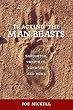
Joe Nickell. Tracking the Man-Beasts: Sasquatch, Vampires, Zombies and More. Prometheus, 2011
Bart M. Nunnelly. The Inhumanoids: Real Encounters With Beings That Can't Exist. CFZ Press, 2011

Human beings have always been fascinated by stories about those beings which seem to exist in the liminal zone between human and animal. These two books cover a wide range of such creatures from very different perspectives.

Joe Nickell is the investigator for the Committee for Scientific Enquiry, which used to be known as CSICOP, and as a former fairground barker has a determinedly down to earth approach to such matters. However unlike many sceptics Nickell does not just draw armchair conclusions, but goes out into the field to investigate. Needless to say he does not encounter any of the strange events, so much of his research ends in anticlimax.

He has no hesitation in labelling the famous Patterson sasquatch film as a hoax, giving good reason for doing so. He also has explanations for three well-known entity stories: the Flatwoods Monster, the Hopkinsville goblins, and Mothman. He suggests that all were basically misperceptions of owls. In the case of Flatwoods that was also the conclusion of author Buzz Brandt in an article in Magonia 80 http://magonia.haaan.com/2009/flatwoods/

Though in general I tend to agree with Nickell's conclusions, there are some problems with this book. One is that it tries to cover too much in too short a space, ranging from the Cardiff Giant, through hairy hominids, vampires, feral children, dwarfs, extraterrestrials, etc, that many are covered in little more than a couple of pages. Perhaps that is also the reason for a number of factual errors, and the general impression that this is a collection of articles and fillers rather thrown together. A not unfair appraisal might be "sensible but superficial".

Bart Nunnerley comes from a very different place, and his book is packed with tales and memorates of the most extraordinary creatures, few if any of which stand much chance of being flesh and blood animals. Not only do they seem to exist in the liminal zone between human and animal, but also between real and unreal, matter and spirit. It certainly makes the point that the sorts of experiences discussed by ufologists, cryptozoologists and psychical researchers are just the tip of the iceberg. It must be said that there is a rather promiscuous use of sources, with personally researched material side by side with stuff from authors like John Keel and Brad Steiger, perhaps not best known for their critical faculties.

Nunnerley is a fundamentalist Christian and concludes that all these creatures are really nasty old demons in disguise, aiming to trap us into believing in things like extraterrestrial life and human evolution, of both of which he disapproves. In this he disagrees with other Christian fundamentalist cryptozoologists who go looking for dinosaurs because God wouldn't let them go extinct. In contrast to Nickell’s, this book can perhaps be evaluated as "detailed but daft". -- Reviewed by Peter Rogerson.

MAGONIA RECOMMENDS