28.8.11

FRINGE BENEFITS

Steven Volk. Fringe-ology: How I Tried to Explain Away the Unexplainable and Couldn't. HarperOne, 2011.

This is a really good book on the paranormal, because Steven Volk, a mainstream journalist, takes the sensible and rarely used line on these topics, which is that he just doesn't know what it all represents and seeks to get beyond the usual believer/skeptic yah-boo stuff. He sees many of their arguments being conducted at the primitive emotional level of the amygdala, that's the part of the brain which deals with raw emotion such as the flight or fight response. This is perhaps a sophisticated way of suggesting that too many people on all sides in these fields think with their guts rather than their heads.

Volk was drawn into this area by his own childhood experiences of being in a 'haunted house', or at the least one plagued by very strange bangs in the night, which seemed to go on until a priest blessed the house, after which they stopped, or at least until another family moved in. He struggles to grasp at memories of this and quizzes his relatives, perhaps in the process drawing closer.

In the book he starts with the world of the Near Death Experience and the role of Elizabeth Kubler-Ross, who began collecting these stories back in the 1970s. He acknowledges that she was a very complicated character, insightful, genuinely compassionate and collected some very odd stories which people had been reluctant to talk about, yet she was "prone to exaggeration", told some very strange tales herself, and ended up as the dupe of a couple of very shady "mediums".

From this he enters the world of academic parapsychology where he encounters many of the complications and claims and counter claims, but also finds many of the actual working parapsychologists are pretty feet on the ground people who disclaim making grand metaphysical claims. It is perhaps a pity that they tend not to be the ones who write the popular books on the subject. He looks at a whole range of topics such as the famous military remote viewing experiments, as well as some of the other disputed claims

He then interviews Dr Stuart Hameroff an anaesthetist who has collaborated with Roger Penrose in presenting a theory of consciousness based on quantum effects in the microtubials in the brain. This is a controversial idea to say the least, even without Hameroff's extension of theory to argue for the possibility of some kind of perhaps transient survival of consciousness after death. To be honest I cannot see how the evocation of quantum processes makes the 'hard problem of consciousness' any easier. In it is surely no more or less easy or difficult to imagine how consciousness could emerge from quantum processes than from the actions of neurones.

There is an amusing account of Hameroff addressing a conference in which Richard Dawkins was in the audience, Dawkins's blood pressure clearly rising to the point where he was in danger of having a stroke.

Dawkins is, I suspect, a fairly good example of what can happen to otherwise sane and sensible people when they get religion. Don't confuse religion with theism, Dawkins' atheism is just as much a religion as any other, with its claims of unique truth, salvic power, sense of spiritual superiority, evangelical zeal, even the sense of end times upon us. Like other religions it constructs its own surrogate tribe of the saved: 'Brights' (the children of light and reason) against the fallen others (The 'Dims'  presumably the children of darkness, mired in the mud of theism and superstition).

There is then a detour into the world of ufology, where Volk notes that the disputes are even more rancorous, and the strange story of the Stephensville UFO, which includes a character who has a close encounter and later claims harassment by military overflights. My sceptical thought is that perhaps helicopters and planes were always flying over this individual's land but he didn't pay them any attention until after his strange experience (whatever the cause of that was).

Volk then goes to meet Edgar Mitchell, the ex-astronaut and his Institute of Noetic Science, I rather suspect that had Volk mentioned Mitchell's name to some members of the Parapsychological Association he would have encountered another example of tribalism. In some ways the experiences of the astronaut and the subsequent problems have similarities with those of the veterans discussed later in the book; they have ventured out in one case, torn out in the other, from the bounds of the given world and returned burdened with incommunicable knowledge which sets them apart from the rest of us. Of course there are profound differences in that the knowledge of the astronauts is of itself a positive experience, that of the veterans often an extremely negative one.

The final sections of this book deal with a number of therapies and studies which lie on the edges of the paranormal, such as Andrew Newberg's studies which seem to show the positive effects of prayer and meditation (it is unclear if it matters what you pray to or meditate on) Another is Allan Botkin's 'Induced After Death Communications' in which, apparently, certain eye movements can induce visions of the diseased who communicate with the experient, a technique developed for Vietnam veterans. Botkin refuses to speculate on the ontological significance of these visions, but from the example given I rather suspect that the 'dead' have a tendency to say what the experient wants to hear, or the therapist thinks they ought to here. The third example is Stephen La Berge's studies of lucid dreaming, which I suspect really does give some clues as to what goes on in a wide range of paranormal experiences.

Volk is to be congratulated on trying to cross the tribal frontiers and point out the many doubts and complexities that those of certain faith on either side tend to overlook. Yet I am not sure he finally succeeds, because the endorsements on the publishers blurb all come from tribal elders of the paranormalist community, including one or two mention of those whose names are likely to stir the amygdala of a number of academic parapsychologists almost as much as 'skeptics'. Crossing boundaries is perhaps not something that publicity departments are particularly good at. -- Reviewed by Peter Rogerson

24.8.11

THE PSYCHOPATH TEST

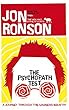
Jon Ronson. The Psychopath Test: A Journey Through the Madness Industry. Picador, 2011.

Journalist Jon Ronson was asked by a neurologist to investigate a truly weird book she had received. While he was able to solve that problem fairly quickly, the search led him into the world of psychiatry, and the anti-psychiatry movement now largely dominated by Scientologists. He gets involved with the campaign for the release of a Broadmoor patient, who claimed he had faked madness to get out of a prison sentence, and from this he meets psychologist Bob Hare who has devised a test for psychopaths, and tracks down various strange attempts to cure the 'incurable' psychopaths. The Hare criterion include massive egotism, lack of empathy and conscience, unshockability, poor impulse control, superficial charm and charisma etc.

Hare and some of his colleagues have clearly come to the conclusion that by no means all psychopaths are in jail, in fact some are running businesses and governments, and while criminal psychopaths can ruin several lives, these can ruin thousands. Obviously the libel laws mean that few of them can be named, though few could doubt that the late Robert Maxwell was among their number! The example given by Ronson is an American corporate axe-man and professional sacker, the person firms appoint if they want to thrown masses of their staff out of work.

Of course there is a problem about seeing psychopaths around every corner, and for them being responsible for much of the world's suffering, which is that it is just another version of the old myth that all the world's heartache, suffering and misery is the fault of the terrible others, and if only we could cleanse the world of Them all would be peace and joy.

The journey to the edges of madness takes Ronson to the outer limits of conspiracy theorising, those who claim that the 7/7 London Underground bombings were somehow faked, even going so far as to claim that one survivor who set up a blog and support group was a government stooge, or would be if she actually existed. When she turned up at one of their meetings, she was denounced as being crazy herself for shouting at them. A leading figure in this movement is or was David Shayler the former MI5 whistleblower. Shayler has since discovered he is the Messiah so further comment seems superfluous.

The final section of the book looks at the controversial diagnosis of young children with bipolar disorder, even though mainstream psychiatric opinion is that this does not develop before adolescence. This is perhaps yet another example as to how more and more behaviours and behavioural problems are given medical or medical sounding diagnoses, and all but a very narrow range are assumed to have some sort of syndrome, problem or disorder. -- Peter Rogerson.

22.8.11

RELIGIOUS SECRETS AND SECRET RELIGIONS

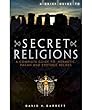
David V. Barrett. Secret Religions; A Complete Guide to Hermetic, Pagan and Esoteric Beliefs. Robinson, 2011.

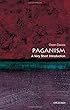
Owen Davies, Paganism: A Very Short Introduction. Oxford, 2011.

Hans-Peter Hasenfratz. Barbarian Rites: The Spiritual World of the Vikings and Germanic Tribes. Inner Traditions, 2011.

David Barrett is the author of a number of books on the byways of religion including the massive New Believers, which covered a huge range of religious and philosophical traditions, with a large section of Christianity and the 'Religions of the Book'.

This book is largely concerned with non-Christian traditions, It is divided into three sections. The first deals with 'New Age' groups, including movements such as Anthroposophy, Findhorn, I AM, and, of particular interest to Magonia, two UFO-related cults the Aetherius Society - to which he gives a more sympathetic analysis than most ufologists do - and the Raelians; as well as other, largely twentieth century movements.

The second section, 'Hermetic, Occult and High Magic' deals with some of the older groups with nineteenth century origins, such as the Rosicrucians, OTO, the Golden Dawn, etc., and their various offshoots. Part three examines neo-Paganism, Wicca, Druidry and the Northern Traditions.

In his descriptions of all of these groups Barratt maintains the objectivity he has demonstrated in his earlier books on religions and cults. This does not however mean that he takes the claims of all these groups at face-value, and he is careful to point out that many of the groups have developed a 'founding myth', often based around one particular individual. Barrett examines the validity of these, whilst at the same time noting that even a totally spurious founding text can lead to a religious or philosophical system that develops its own validity.

Many of the groups have split from earlier groups, often with a great deal of acrimony. This is perhaps particularly the case in the hugely complex network of Hermetic and Theosophical orders, which have subsequently then developed their own founding myths to distinguish themselves from their predecessors.

The beliefs described cover a huge range of thought, from the intellectual complexity of the nineteenth-century occult orders, to the contemporary eco-awareness of modern Pagan groups. There is an intricate network of individuals and ideas and texts which crop up through the development of these 'secret religions', and often these are surrounded by controversy. However Barrett's objective and sympathetic approach helps us find a way through the maze, and he is determined to challenge the sensational and alarmist claims that have been made in the media about many of these groups (his summary of the Satanic Ritual Abuse scare is brief but to the point).

The book is well referenced, with an excellent bibliography (with, I am pleased to note, a couple of mentions of Magonia) and provides a valuable oversight of a range of beliefs which will be quite new to many readers.

Although its title might suggest a considerable overlap with Barrett's book, Paganism, A Very Short Introduction only covers the modern Pagan revival in the last two chapters, most of the book being a study of the way in which Christianity interacted with the polytheistic religions it encountered as it spread around the world.

The spread of Christianity across Europe was largely as a result of dynastic ambition and political expediency as much as genuine religious conversion. A convenient marriage resulted in a conversion firstly of a ruling monarch, then of the whole nation. The problem that Davies finds with tracing this spread, and the nature of the pagan beliefs which were replaced, is the lack of any historical record other than those of the successful missionaries and conquerors.

In other parts of the world, particularly the Middle and Far East, there is more evidence of the ambiguous nature of many of the interactions between missionaries and the indigenous peoples. In China the Jesuits in particular took a sympathetic view of Chinese religions, seeing Confucianism as being based on a monotheistic ideal, and quite different to the 'primitive' cultures that fellow Jesuits had found in India and South America. Other Catholic missionaries were not so sympathetic in their judgements.

It was at the time of the Renaissance that Davies notes beginning of a change in the West's view of 'paganism', with the revival of interest in the Classical world and the pre-Christian philosophers and scholars. This interest broadened during the Enlightenment, when religion started to itself become the object of historical study, and scholars sought links between various beliefs and sought the origin of religion in mankind's past.

In the British isles this developed into study of the early Celtic beliefs and the development of modern Druidism in the early nineteenth-century, along with the search for 'pagan survivals' by anthropologists like James Frazer, and the growing folklore movement.

The final chapter of Davies's book deals with modern Paganism, and touches on some of the political implications that have been thrown up in recent years, with some nationalist and racist groups, particularly in Eastern Europe, incorporating an almost entirely spurious paganism into their political ideology. This is also touched on briefly in Hans-Peter Hasenfratz's book, comparing Nazi organisations such as the SS and SA which purportedly modelled themselves on Germanic pre-Christian cultic groupings such as the mannerbund, described here as "a territorial coalescence of sexually mature male youths who were able to bear arms into their own cult and specific social functions". Anyone inquiring into the 'underlying causes' of the recent rioting in parts of London and other British cities might well take note of this section.

In this book the Vikings and Germanic tribes do come across as a pretty nasty and bloodthirsty crowd, but who also seemed to have the remarkable ability to settle down into a quiet pastoral life in a generation or so. Of course, as we have noted above, these cultures left little or no written records, and it does tend to be the victors who write the history, and tell us what they think we should know about their enemies. -- John Rimmer.

19.8.11

ALL OUR YESTERDAYS

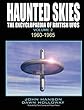
John Hanson and Dawn Holloway. Haunted Skies: The Encyclopedia of British UFOs, Volume 2, 1960-1965. CFZ Press, 2011.

This second volume of what promises to be a giant compilation of British UFO stories takes us up to the period of the start of the Warminster 'Thing' and contains many tales to stir the nostalgic memories of ageing ufologists. Here we see an account of the Charlton crater and similar ground markings, with a brief mention of our former science editor, Alan Sharp's explanation of Charlton in terms of lightning. A full account can be found HERE 

Other brief mentions point to Magonia's dim and distant past. Among other interesting pieces are accounts of the Liverpool leprechauns (see HERE) for details, along with similar stories from Belfast and Durham. Also included is the long buried accurate version of the story of the Saltwood apparition, sans headless, bat winged monstrosity!

Many other classic tales from the period are covered, and the authors have managed to get access to the files of the former Isle of Wight UFO society which for many years produced a duplicated newsletter called UFOlog that featured nothing but raw, unedited UFO stories. Hopefully all of these files will find their way into the huge AFU archives, in the absence of any similar archive being created in the UK, and be saved for posterity.

They have also re-interviewed several of the people involved in these old stories, but this does raise some problems as it is obvious that several have remodelled their stories to fit changing ufological fashions.

The book also provides a fairly candid picture of the state of British ufology at the period, still largely dominated by devotees of George Adamski and various forms of occultism. Some like Arthur Constance thought UFOs were "God's own angels" and others such as Gavin Gibbons believed in the nice space people, but thought they (and presumably the space people) were being got at by evil spirits, while still others such the Rev Eric Ingelsby thought everything was due to evil spirits.

The photos and reproductions of newspaper clippings are fascinating and add to the nostalgia. -- Peter Rogerson.

17.8.11

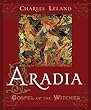
GOSPEL OF THE WITCHES

Charles Godfrey Leland. Aradia or the Gospel of the Witches, The Witches’ Almanac, 2010 (first 1899).

Charles Leland (1824-1903), a Philadelphian who founded the Gipsy Lore Society, was particularly interested in witchcraft, using the word in its broadest sense, that is, to include fortune-tellers and the like. In the 1880s he moved to Italy, a country with: “Great numbers of streghe, fortune-tellers or witches, who divine by cards, perform strange ceremonies in which spirits are supposed to be invoked, make and sell amulets, and, in fact, comport themselves generally as their reputed kind are wont to do . . .”

One unexpected fact about these people was – still is, I have been told – that despite nearly two thousand years of Christianity, they are inclined to call upon the Gods of the ancient Romans, Jupiter, Venus, and so on, in their spell-casting. Leland produced a weighty tome, Etruscan-Roman Remains in Popular Tradition, 1893, in which he claimed an even more remarkable find: that in Tuscany some women knew the names of the Etruscan deities, something very few scholars did. For example, a charm to make vines grow invoked ‘Faflon’. The Etruscan wine God (equivalent to Bacchus or Dionysus) was called Fufluns.

Those acquainted with such matters were reluctant to discuss them with outsiders, so he relied heavily upon a woman whom he called Maddalena, real name Margherita Taluti. We may suppose that he paid her for her information, though he did not say so. She was also the principle source for his Legends of Florence. One of the stories in this, he observed, had previously been published in the sixteenth century, but in the old version a witch and her daughter ended up being executed. In the 1890s retelling they got away with their nefarious doings, indicating that the source must have been witches themselves, just as in Gipsy tales the thief always escapes.

The last thing that she presented him with, at the beginning of 1897, was a manuscript in her own handwriting of Aradia: The Gospel of the Witches. It was a medley of legend and practical spells, the unifying message being that, if you want good fortune, then ignore the teachings of the church, and instead invoke Diana, the Goddess of the Moon, this being known as la vecchia religione, ‘the old religion’. A typical invocation runs as follows:

Lovely Goddess of the bow!
Lovely Goddess of the arrows!
Of all hounds and of all hunting
Thou who wakest in starry heaven
When the sun is sunk in slumber

Thou with the moon upon thy forehead,
Who the chase by night preferrest
Unto hunting in the daylight,
With thy nymphs unto the music
Of the horn – thyself the huntress,
And most powerful: I pray thee
Think, although but for an instant,
Upon us who pray unto thee!

Now, it is a fact that witchcraft was never associated with devil worship before the fifteenth century, but, on the contrary, with the Goddess Diana, indeed one mediaeval word for witch was dianatica, so this text is what one would expect of an old witchcraft survival. The Gospel begins by relating that Diana coupled with her brother Lucifer “the god of the Sun and of the Moon, the god of Light” (an act she later regretted), and bore a daughter, Aradia. Eventually, Diana sent Aradia down into this world to teach witchcraft to oppressed people.

This is clearly a take-off of the Christian legend of the Incarnation. Yet it did not come from nowhere: some writers in mediaeval France stated that the Queen of the witches was Diana or Herodias (or Herodiade) and Aradia is evidently the same as the latter; in Romania Irodiade is the Queen of the fairies, and she is evidently the same figure, since fairies and witches are often interchangeable in folklore. Now Italian, French and Romanian are all Romance languages, i.e. direct descendants of Latin. This suggests that the name goes back to Roman times, though chancing not to occur in any surviving classical text. (What would clinch this argument would the discovery of a form of the name in Spanish or Portuguese. Unfortunately, I have never been able to do so.)

One section, ‘The House of the Wind’, about a girl whose prayers to Diana were answered, was written out by Maddalena from a man who lived in Volterra. It was composed in a long winded style compared to the rest of the book, so Leland edited it down from twenty pages to four. This does show that there was more than one author, but it remains likely that most of it is in the wording of Maddalena herself, and no doubt incorporated her own ideas.

The book received a single lukewarm review in Folk-Lore, and a more substantial and enthusiastic one in the Revue de l’histoire des réligions, but otherwise was totally ignored for decades. Yet somebody must have read it, because the 1940s saw the gradual emergence of a modern English form of witchcraft which has come to be known as Wicca. In the earliest surviving manuscript texts of its rituals, the secret Goddess name was written in code – it was Aradia! Moreover, a passage known as ‘The Charge of the Goddess’ contained some passages copied from the first and second chapters of Aradia, even preserving a couple of the iambic pentameters of Leland’s translation, thus eliminating the possibility (which one or two people have tried to suggest) that Wicca represents an independent survival of traditions about Aradia. Some Wiccans have apparently borrowed the Italian la vecchia religione, though in England ‘the old religion’ was formerly used by Catholics to mean the Catholic Church.

The revival of an interest in witchcraft, by academics as well as would-be witches, led to a lengthy criticism of Aradia by a Canadian professor, Elliot Rose, in his book A Razor for a Goat. Rose concluded that it was ‘certain’ that the book comprised ‘art products’ not ‘folk products’, and that they were ‘bad art’ at that. This, however, was based upon subjective impressions. When he got down to concrete arguments, they were rather peculiar. He argued that Aradia displayed “throughout a set of ideas borrowed at second hand from Albigensians”, meaning apparently that they were the same things of which the Cathars and Waldensians were falsely accused. In fact the one idea that appears throughout is that the worship of Diana brings good fortune, which was certainly not a belief of the Albigensians, not even allegedly. Aradia says that witches’ gatherings should be held at the full moon, which was never suggested to be the practice of any group of heretics.

Rose also asserted that: “The passage relating to the division of the goddess herself into Light and Darkness is plain popular Manichaeism”. The actual lines to which he was referring were: “Diana was the first created before all creation; in her were all things; out of herself, the first darkness, she divided herself; into darkness and light she was divided.” The implication is that light and dark are two aspects of the same thing; this is the very antithesis of Manichaeism, popular or otherwise, the basis of which is that light and darkness are in perpetual warfare. Perhaps the real significance of this passage is that it is obviously a parody of the opening verses of Genesis.

Once Aradia’s influence on Wicca had become apparent, the book was belatedly in demand. In the early 1960s Charles Cardell, whose ‘Dumblecott Magick Productions’ peddled such products as ‘Moon Beauty Balm’, as a sideline reprinted Aradia along with a few other witchcraft texts. But these seem to have been in very small editions, and Robert Mathieson, in his new introduction, admits that: “This reprint is now even more rare than the first edition. I have never seen it, nor do I know of any person or library that owns a copy.”

Yet from 1968 other reprints started to appear, several of which are noted by Mathieson, along with translations into German, Finnish, and Italian (that is back into the original language, only a few actual passages from which were given by Leland). I do not think his list is complete: so far as I can remember, there was an edition in about 1989 by Keith Morgan of Penmaenmawr, North Wales, who was then publishing a series of Wiccan books that were ruined by their poor quality: his Aradia was clumsily retyped, then badly printed in an ugly font. A year or two later his ex-girlfriend Caryl Thompson, who had moved to Essex, responded with an expensive hardback edition of her own, though her introduction did not add much new.

To this edition are appended some thirty pages of ‘Modern Perspectives’ from such individuals as Lori Bruno, “a Hereditary High Priestess and Elder of the Sicilian Strega line of the Craft of the Wise”, Patricia Della-Piana “a strega and a spiritual poet”, and Jimahl di Fiosa, “a respected Elder of the Alexandrian tradition of Witchcraft.” Michael Howard (“an English writer, editor, publisher and historical researcher”) expresses concern about Aradia’s use of the name Lucifer, since although the passages referring to him are brief, and treat him in the ancient tradition as God of Light, he has long since been taken as a form of the devil, which Wiccans are keen to disassociate themselves from, pointing out that their religion is not Satanism but a form of nature worship. What these kind of remarks show is that whether the contents of Aradia are ‘art products’ or ‘folk products’, in any case they are still regarded as important by people in the twenty-first century. -- Gareth J. Medway.

16.8.11

MAGONIA 23, JULY 1986

Although dated July 1986, Magonia number 23 was, according to the notebook I recorded such things in, actually posted out to subscribers in August. Such were the delights and delays of publishing a small magazine!

I notice a sad coincidence so soon after the death of Hilary Evans, that 25 years ago we were recording the death of J. Allen Hynek. In their very different ways these two people were central to the way 'ufology' subsequently developed.

The main article in this issue was Peter Rogerson's mammoth 'Taken to the Limits', in some ways the definitive Magonia article. Impossible to summarise (read it HERE) it examined the cultural power of the UFO myth, and how UFOs insinuated themselves into the gaps in society: between wilderness and habitat, and supernatural and natural; always liminal, on the borders of existence, observation and belief. As an example Peter argues that the classic abduction scenario of the car on the lonely road represents an intrusion of 'habitat' - the car representing the daylight world of machines and factories - into the 'wildeness' - the empty countryside, forest or mountain.

Other intrusion of habitat into wilderness are more subtle: the the trailer parks on the edges of American cities, the council estates pushed away onto the fringes of British cities - both classic locations for UFO sightings and poltergeists. Peter's article is complex, and provoked some derision from more nuts-and-bolts readers, but reading it again from today's perspective it's possible to see just how prescient he was in some of his analysis.

Peter Rogerson's regular 'Northern Echoes' column developed some of the ideas from his previous piece, and looked at one particular topic that might structure part of the psychological element to the 'psychosocial' hypothesis, the phenomenon of 'fantasy proneness'. This condition, according to a study by Theodore X. Barker and Sheryl C. Wilson, affects about 4% of the population who:

"... although otherwise perfectly normal, fantasise much of the time. They experience these fantasies "as real as real" and exhibit syndromes such as an ability to hallucinate voluntarily, and profound hypnogogic imagery, as well as presenting superb hypnotic fantasy related performances and vivid memories of life experiences..."

I think this was the first time the idea of 'fantasy proneness' was introduced into mainstream UFO discussion, and obviously has a great deal of relevance to the growth of the abduction story. It also led to the development of the concept of "virtual experience", a number of instances of which we reported in later issues of Magonia.

The second major piece in this issues was an article by Christopher Allan and Steuart Campbell, [not yet online] which finally exposed Patrick Moore as being 'Cedric Allingham', the author of the first British 'contactee' book. It is an excellent piece of detective work, which created quite a lot of media coverage, making it possibly the only time Magonia featured simultaneously in the New Scientist and the tabloid Star! To this day Moore denies the identification.

The 'Second Look' feature contained Robert Morrell's criticism of John Harney's evaluation of Galileo, and Harney's response.

And finally .. you're probably all wondering did Magonia's racing tip for the Epsom Derby from issue number 22 bear fruit? Yes it did, second favourite Shahrastani came in first at a useful 11/2. Unfortunately no-one at Magonia put any money on it. Talk about not having the courage of your convictions!

14.8.11

HILARY EVANS, MIKE DASH AND THE THREE MINUTE MILE

I can't let Northern Echoes go by without seconding John Rimmer's thoughts on Hilary Evans, such a sad loss. I can't say that I knew him personally, we met on perhaps three or four occasions (a visit with John to the MEPL back in 1979, a couple of conferences in the 1980s and I think one of the UnConventions) but I can testify to his willingness to help, sending me free of charge a photocopy of a rare booklet in his possession when I was doing my revisionist history of abductions back in the early 1990s. One of Hilary's main contributions was in international relations, and if anyone wanted to memorialise him, perhaps a book series in his name giving English language translations of foreign titles on the UFO, paranormal and Fortean fields would be a suitable project. There is lots of good stuff out there not available to us monoglot anglophones.

A recent comment on the blog asks me if I consider myself a Fortean. As explained, I avoid labels, especially those which suggest that you should think in particular ways. However I would be happy to thought of as Fortean in the open-minded but critical tradition that Hilary was part of. Another excellent Fortean is Dr Mike Dash whose blog formerly on the Charles Fort Institute website is now being featured in a blog set up by the prestigious Smithsonian Institute. Here Mike will be merging his Fortean and historical blog on the Smithsonian's new blogsite 'Past Imperfect': (Link HERE). This is all about various aspects of what one might call "hidden history". Mike's first two contributions include a deconstruction of a strange time slip story and an account of the last of the Cornish packmen. His two co-contributers Kate Abbot and Gilbert King also provide pieces with more than a whiff of Forteanism. Highly recommended.


A phrase which keeps cropping up and which causes a lot of controversy is "extraordinary claims require extraordinary evidence" as there is no agreement as to what the extraordinary means in either case. One interesting way of thinking about this is to try and quantify it. I suggest as a marker the time taken to run a mile, expressed in seconds. A good club athlete can easily run the mile in 5 minutes, 300 seconds, so 300 can be set to represent everyday reality. Just over 4 minutes at 250 seconds represents rarer but well established events; 225 seconds represent very rare events, the current world record of 223.13 seconds set by Hicham El Guerroy in 1999 represents the margins of the currently possible, well documented events but perhaps so rare they will never be detected again.

We now have some sort of reverse ladder of anomaly, so readers should think about what sort of evidence they would require for 220 seconds which would be theoretically possible but not yet detected. Perhaps the endorsement of the appropriate sporting authorities. What about 210, 200, 180 seconds - the three minute mile, representing something which would really challenge how we view the world but might not totally overthrown everything we know. Such a claim might need multiple independent timings, several independent films, a large audience etc. What about 150, 120, 100, 60, 30, 10 seconds? Is there a point at which no amount of evidence could convince you, because the claim is so extraordinary that almost any other explanation - massive conspiracy, mass hypnosis or whatever - is a lesser claim. (To clarify I am not talking about what might be possible in some remote cyborgian future but a claim made now in the run up to the London Olympics).

A scale like this also allows us to start thinking about what scale various anomalies might lie on. For myself, offhand I would put uncatalogued natural phenomena for some UFO reports and orang pendek both around 220, Bigfoot perhaps 200, telepathy about 180, precognition and microPK about 170, some UFOs being ET craft about 170, macroPK about 150, life after death/reincarnation about 140, alien abductions about 100 and message writing and mince pie eating poltergeists down at about 60 (rather below humans turning into bears!).

Everyone can have a go at this and disagree to their hearts content about where in the scale where various things lie, but "extraordinary claims require extraordinary evidence" means basically the evidence that would be needed to validate the claim that someone has run the mile in three minutes.

12.8.11

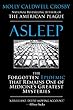
THE FORGOTTEN EPIDEMIC

Molly Caldwell Crosby. Asleep: The Forgotten Epidemic that Remains One of History's Greatest Mysteries. Berkeley Books, 2011.

If you were to ask citizens of the United States what was the very worst thing that had happened in their country since the Civil War, I would suspect that at least 90% would say 9/11. Sadly they wouldn't even be close; like the rest of the world their country was torn by two terrible epidemics which swept the world in the wake of the Great War of 1914-18. The first of these, the super-killer, the Great Influenza pandemic, was a global disaster on a scale which beggars the imagination. Conservative estimates put the death toll at 20 million, other estimates suggested double that figure, the latest estimate is a staggering 100 million. It is thought 300,000 people died in New York alone in just one year 1919.

The influenza came and went, you lived or you died, the next pandemic was much smaller in numbers, perhaps a million victims world-wide, but it left a trail of devastation which would outlast the century. It is this disease 'encephalitis lethargica', alias Von Economos's Disease, alias 'the sleepy sickness' which is the subject of this book.

The popular name 'sleepy sickness' gave a good clue as to one of the main features of the disease: long periods of unrousable sleep, or something like sleep, which went on and on. For others the disease had the opposite effect, for it produced long periods of sleeplessness and delirium. There was a fever, limbs became immobile, strange things happened. The symptoms were strange and varied.

Crosby tells the story of this disease through the lives of the doctors who treated it and its victims, setting them against the contact of their times. She concentrates on New York, telling their story against the story of the city, but also looks at its global spread. In the case histories she shows what a dark disease this was. For adults those who survived had a good chance (for which, of course, read bad chance) of developing a virulent form of Parkinson's Disease, gradually becoming more and more immobile, frozen into living statues. It was people like these which became the subject of Olive Sacks' book and the subsequent film, Awakenings. When Sacks 'discovered' his patients in the 1960s, they and the disease had been forgotten for a generation.

Even worse was its effects on children; though physically less damaged they were changed, altered, they might become uncontrollable, wild, feral, or just different or fey. They might do terrible things to themselves, like 'Rosie' described here, who tore out her own eyes. Others could go into uncontrollable rages or wild seizures.

Those with the disease may linger on, the very last known survivor dying in England in 2002, after more than 70 years locked in on himself. There is still no consensus as to its cause, some say it was a complication of the influenza, others that it came from something as simple as a strep throat, perhaps it was an auto-immune disease.

Even if you were one of the lucky ones who thought they had recovered from the disease, it could get you years or even decades later. This is what happened to someone I knew, whom I will call Fred as it is nothing like his name. Fred was a teenager in the period 1926/7, starting on his first job, selling vacuum cleaners from door to door. One day it was very wet and he caught a chill, which developed into a fever then the sleepy sickness. Fred would fall asleep at meal times, but would also have periods of great restlessness and something that was perhaps sleep walking. He would say all sorts of outrageous things, such as that every girl he saw was his girl friend.

Just when his despairing parents had almost given up hope and were preparing to institutionalise him, he recovered. He went on to live a normal and active life, serving in the army during the Second World War, crossing Europe in the wake of the D-Day advance, got married had a family, built his own television set, was one of the first people we knew to have a car, one of the first to drive around Europe. Then in the mid 1960s Fred began to develop shortness of breath. What was first thought to bronchitis was the beginnings of the post-sleepy sickness Parkinson's Disease, which had laid dormant for 40 years.

The great epidemics occurred at a time when there was little of today's media, no Internet, no television, and for much of this period radio was still a crystal set hobby. The films were silent, and newspapers often dense with small type. Crosby suggests these things are not dead, occasional cases of sleepy sickness are still reported. If there was to be another double whammy set of pandemics in our age of 24 hour news and screaming headlines, it may well lead to social collapse.

Crosby suggests that it may be dim memories of outbreaks of sleepy sickness that led to the tale of the Sleeping Beauty, or Hawthorn's story of Rip Van Winkle. Perhaps also it helped inspire tales of people being taken by the fairies and brought back, somehow changed. The wild, feral nature of some of the childhood victims may well have inspired notions of changelings or those touched by the fairies. Crosby's own grandmother seems to have been one so changed by the disease - capable of carrying on a normal life, but strange and fay.

I can't help thinking that J. M. Barrie's play Mary Rose, published in 1920, is somehow inspired by early reports of this epidemic, or perhaps it is almost a presentiment of it. Probably also inspired by the folklore surrounding the disappearance of the keepers of the Eilean Mor lighthouse in 1900, as well as traditional fairy lore, the play tells of a young girl who disappears from a Hebredian island, only to come back weeks later, with no memory of what has happened, but somehow changed. She returns as a young mother, only to disappear again, returning unchanged decades later. I remember our primary school teacher reading this tale just at the time that Court of Mystery was introducing me to the Fortean world, and how this story seemed to fit in. -- Peter Rogerson.

10.8.11

TWO OCCULT RE-ISSUES

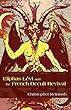
Christopher McIntosh. Eliphas Lévi and the French Occult Revival, State University of New York Press, Albany, New York, 2011 (1st 1972).
    William Walker Atkinson. Swami Panchadasi’s Clairvoyance and Occult Powers, ed. Clint Marsh, Weiser, San Francisco, California, 2011 (1st 1916).
Eliphas Lévi was the principal figure in the French occult revival, and moreover, in England, the Golden Dawn was partly based upon his teachings, and Aleister Crowley (who believed himself to be Lévi’s reincarnation) modelled his Magick in Theory and Practice upon Lévi’s Dogme et rituel de la haute magie. Crowley and the Golden Dawn, in turn, provided the foundation for later esoteric movements such as modern witchcraft and Druidry. Yet McIntosh’s book is the only serious study in English, so its reappearance is welcome.

McIntosh traces the start of the occult revival to the eighteenth century, when there was a proliferation of Masonic orders, such as the Egyptian rite of Cagliostro. Then there was Eteilla, who originated the practice of fortune-telling with Tarot cards, Mesmer with his Animal Magnetism, and Eugène Vintras, the foreman of a cardboard box factory who began to have visions, and took to doing battle with the forces of evil. In 1855, whilst living in exile in London, he travelled in the spirit to the basement of a house backing on to a cemetery in a little town near Paris, where a group of black magicians renounced their baptisms, and were preparing to sacrifice a naked twenty-year-old girl, when they were thwarted by the invisible stranger in their midst.

As a young man Alphonse-Louis Constant (to give his original name) studied for the priesthood. According to McIntosh: “It was at the seminary of Saint-Nicolas that Constant first began to grasp the elements of the Hebrew language, which was to stand him in such good stead as an occultist. At the age of eighteen he was already able to read the scriptures in the original.” One wonders if this is strictly true, since, whilst he would display some knowledge of Hebrew in his books, the works on the Kabbalah that he cited were all in Latin. He reached the rank of deacon, but declined ordination when he realised that he could not commit himself to a life of celibacy. Instead he worked as a teacher, an actor, and a journalist. He also became involved in radical politics, receiving an eight month prison sentence for writing a polemic entitled La Bible de la liberté. He did eventually marry, though his wife suddenly left him after seven years.

His life changed again in 1852 when he met Hoene Wronski, an elderly Polish occultist who used to build perpetual motion machines that never worked. This man inspired him to pen his most important work, Dogme et ritual de la haute magie, under the name Eliphas Lévi, which was the Hebrew equivalent to his Christian names. In the notes to his novel A Strange Story, Edward Bulwer-Lytton remarked of the Dogme et ritual that it was “a book less remarkable for its learning than for the earnest belief of a scholar of our own day in the reality of the art of which he records the history”. In other words, what impressed readers was his confidence in the reality of magic, which was unusual in that age.

His most surprising claim was to have evoked the spirit of the Greek philosopher Apollonius of Tyana to visible appearance. This made his works influential, even though they were (and are) rambling and rather difficult to understand. He followed this up with other works that can still be obtained in English translation: The History of Magic, The Key of the Mysteries, and so on.

McIntosh’s third part concerns Lévi’s heirs and successors, including what he terms ‘The Wars of the Roses’, i.e. between rival Rosicrucian Orders. Generally speaking they were men of inferior ability, for example The Qabalah by Papus is a scissors-and-paste work, based upon Lévi and various other writers, but it is evident that the nominal author knew little about the subject.

One example of Lévi’s lasting influence is worth mentioning: he claimed that the Tarot cards corresponded to the letters of the Hebrew alphabet: the first letter, aleph, matched with the first card, the Magician, the second letter, beth, to the second card the Popess, and so on. This has become generally accepted on the continent, and was incorporated into Salvador Dali’s Tarot. The Golden Dawn, however, shifted the correspondences one along, putting aleph with the unnumbered Fool, beth with the Magician, and this system is now standard in the English-speaking world.

There is another detail of Lévi’s doctrine which still has repercussions: in 1855 he was approached by Abbé Charvoz, a disciple of Eugène Vintras, whose regularly found his hosts to be ‘bleeding’ with ‘sacred stigmata’. He showed copies of these to Lévi, who was shocked to observe that one was marked (in blood) with ‘the qabalistic monogram of Jehovah’, Jah-He, but upside-down, which “is the most frightful of all blasphemies”. Similarly, another had the pentagram, which when drawn with one point upwards “is the five-pointed star of occult masonry,” but when with two points up, as here, “is the hieroglyphic sign of the goat of Black Magic, whose head may then be drawn in the star, the two horns at the top, the ears to the right and left, the beard at the bottom. It is the sign of antagonism and fatality. It is the goat of lust attacking the Heavens with its horns.”

McIntosh comments: “The appearance of the diabolical inverted pentagram on a holy object would certainly be a sacrilege, but, as Aleister Crowley points out in a footnote to this translation of the Clé des grandes mystères, if the sign were on a circular host, how could it be upside down?” The obvious explanation is that hosts often have some form of crucifix stamped on them, and this is conformed by the illustration of these stigmatic hosts published later by Jules Bois in Le Satanisme et la magie (1895). The real problem is that there is no evidence that the ‘inverted’ pentagram was ever previously thought to be diabolical, indeed, I have seen one on a commemorative plaque behind the altar of a ruined church in Scotland, and there are other examples of it in church architecture.

Bois’ book also contained an engraving of a pentagram with a devil’s head in it, as described above by Lévi. This might have been forgotten, but it was reproduced in Bessy’s Pictorial History of Magic, 1964, whence it was taken by Anton La Vey as the official symbol of his Church of Satan – later, he even tried to copyright the design. This stands alongside Lévi’s other legacy to the imagery of Satanism, his ‘Baphomet’, a hermaphrodite devil-goat, which like the devil-pentagram is now often believed to be a genuine legacy from the Middle Ages.

Though Clairvoyance and Occult Powers has been circulating for nearly a century, probably most followers of its metaphysical advice do not realise that Swami Panchadasi was actually a Chicago lawyer, who, it seems, never even visited India. Though William Walker Atkinson produced thirty-nine titles under his own name; he also issued thirteen titles as Yogi Ramacharaka, all by the Yogi Publication Society of Chicago; thirty-three titles as Swami Bhakta Vishita, all by the Advanced Thought Publishing of Chicago; three volumes, including the present one, as Swami Panchadasi. Other pen-names used by him included Theron Q. Dumont, Theodore Sheldon, Magus Incognito, and Three Initiates; he also issued ten works anonymously.

The contents of the present work are, like those of all the others I have seen, what we now call New Age thought and practice, and of no especial interest. But it is worth noting that, like many other similar writers of the time, he often discussed the possibility of life on other planets: “If our vision were improved by the addition of a telescopic adjustment, we could see what is going on in Mars, and could send and receive communications with those living there.” -- Gareth J. Medway

8.8.11

GOING ROUND IN CIRCLES

Bill Rose, Flying Saucer Technology, Ian Allan (Midland Publishing), 2011.

The title gives the misleading impression that this is just the latest in a succession of cranky books about anti-gravity devices and other unlikely propulsion systems for spacecraft, going back to Leonard Cramp's Space, Gravity and the Flying Saucer (1954), and possibly earlier. However, this book is about aircraft, including many with more or less circular wings, which could be reported as flying saucers or UFOs.

The origin of the use of spinning discs originates at least as long ago as 708 BC when the discus became an established part of the Greek Olympic Games.

During the early 20th century a number of circular-winged aircraft were designed, and some of them actually flew, though usually on short test flights. It seems that most such aircraft, some of very ingenious design, never left the drawing board. Towards the end of the 1930s, improvements in aircraft engines stimulated attempts to design aircraft which could take off and land vertically or by using short runways and travel at high speeds in level flight. A number of aircraft with approximately circular wings resulted, though some never flew.

The chapter on the post-war era is particularly interesting. Rose states: "Although there have been vigorous denials, it appears that the RAND Corporation (Research ANd Development), began to study UFOs soon after Arnold's sighting." He also states that "this work remains classified".

It is at this point, where the author starts to deal with somewhat contentious issues, that the lack of references becomes irritating to the serious reader, who will want to refer to them if only to assess their reliability.

Rose connects official US interest in UFOs to what began as informal discussions between engineers and military officers at Technical Intelligence at Wright Field. He states that the engineer Alfred Loedding and Brigadier General George Schulgren "both appear to have been in agreement that the most likely explanation [for UFO reports] was long-range Soviet reconnaissance aircraft developed from advanced Nazi technology".

Whatever the true motivations may have been, the US government devoted considerable resources to attempting to develop high-speed saucer-shaped aircraft, but without much success. Rose details the technical problems encountered and provides many illustrations, some of which may perhaps inspire keen aeromodellers.

There is a short chapter on possible sightings of secret tests of unconventional aircraft, including the alleged sighting - well known to keen ufologists - by Oscar Linke and his daughter in East Germany, of a circular flying object and two occupants, who got into the device, which then took off. Rose thinks this report might be genuine, even though it was originally reported to have occurred on 9 July 1952, but Linke later changed this to 17 June 1950, and Rose suggests possible reasons why the story might have been fabricated.

The final chapter is about airships and balloons, including Project Mogul and Roswell. There is also a discussion of the American 1897 sightings of mysterious airships and similar reports from other parts of the world. The author admits that most of these must have been misidentifications and hoaxes, but remarks: "On the other hand, it is probable that some of these reports can be attributed to test flights of privately built experimental airships that have never been revealed." He does not explain the failure to trace the origins of such enormous, noisy, slow-moving flying machines, however.

This book's large format and profusion of illustrations not only provides a useful summary of the history of unconventional aircraft, but will make it a worthy adornment of your coffee table. -- Reviewed by John Harney.

7.8.11

A FORTEAN FOURSOME

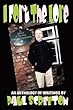
Paul Screeton. I Fort the Lore: An Anthology of Writings by Paul Screeton. CFZ Press, 2011.

The punning title refers to Paul Screeton's career as a Fortean, earth mysteries enthusiast, folklorist and journalist covering a period of over 40 years. Much of the material comes from a variety of now obscure and almost entirely unobtainable journals, and charts his gradual transformation from very much a child of the flower power age to his later role as an (almost) sober folklorist. They include accounts of his own personal experiences with UFOs, big cats, a shattering mystical vision and the strange story of the teleporting train.

We are also introduced to quite a range of eccentric characters including a Romany astrologer who predicated that Screeton would die abroad at 53, not very accurate as he is still going strong at 65; a businessman member of the Aetherius Society; a tramp who would only walk in straight lines, and not forgetting John Michell and a clutch of much more obscure authors of delightful eccentricity.

In his final piece, a talk given to a Fortean Unconvention, Screeton compares the reactions of Forteans and folklorists towards strange stories in the press. Forteans tend to see these as examples of true occurrences and find their multiplication evidence of their authenticity, while folklorists see them as legends and their repetition as further evidence of this. Screeton rather suspects that the answer is more complex that either extreme.

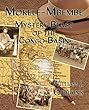
William J. Gibbons. Mokele-Mbembe: Mystery Beast of the Congo Basin Coachwhip Publications, 2010.

A history of encounters with this (alleged) strange animal and of the author's expeditions to find it. The latter provide many examples of the problems that such expeditions can encounter from officious officials to less than pleasant diseases. At the end of all this Gibbons is never actual able to locate such a beast or provide the physical evidence that could help convince the scientific community of its existence.

As with so many Fortean topics all we are left with is eyewitness testimony, Gibbons makes the valid point that local people know a lot about the local area and its wildlife and thus not liable to make dramatic mistakes. Of course the same has been said about things like the Loch Ness Monster, whose paws-and-pelts reality is much less probable than some beast in the jungles of Africa.

Gibbons has complete faith in the existence of this beast, and its status as a surviving dinosaur. The word faith is used quite literally here, because it is tied very much in with his fundamentalist Christian/creationist beliefs. These, and his association with the western missionaries and other organisations who promote them are not necessarily going to enamour him with the scientific mainstream, nor with all sections of opinion in the host countries, where they may regard those Westerners who assume that they are benighted savages who need to be rescued from the clutches of the devil by outsiders, with much the same distaste that radical Islamic clerics are viewed in the West.

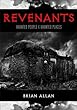
Brian Allan. Revenants: Haunted People and Haunted Places. Healings of Atlantis/11th Dimension Publishing 2010.

Rebecca E. Kedger. Hauntings: True Life Sightings and Experiences of Ghosts. Waverley Books, 2011.

Brian Allan's book describes personal researches into a variety of ghostly and allied experiences mainly from Scotland. The author seems to see all sorts of strange things from faces in photographs to people's faces changing, but there seems little here that could not be explained through a combination of suggestion and eye strain. In addition the 'investigations' like far too many in this field consist of hawking various mediums and psychics around. Such folk always come up with exiting stories, but no-one ever seems to make the slightest effort to corroborate these. Also like many such works it is badly written and very chunky.

The Kedger volume is better written and is actually readable but seems to be scissors and paste volume compiled from various web sites and filled with vague stories and endless weasel words of the "it is said that" and "it is believed that" variety. -- All reviewed by Peter Rogerson.

6.8.11

VERY FUNNY OLD WORLD

Regular Magonia readers may remember the 'phantom social worker' and 'phantom health visitor' panics that we've noted over the years. Plausible sounding people with clip-boards and briefcases turn up at peoples' houses (usually the houses of those with young children) ask intrusive questions, then either walk away or are despatched rapidly by the householder. Subsequent checks reveal that they have nothing to do with local government or health departments.

Generally, although these people can seem rather threatening, they do not actually do anything other than ask questions. So we must hope that this disturbing new phenomenon, reported in the 'Funny Old World' column of Private Eye (5-18 August) does not spread across the Atlantic.

"You are definitely not going to believe this," Police Sgt. Spencer Crum told reporters in Sonoma, California, "Because it's the weirdest case I've come across in my entire career Actually, we're not even sure if a crime has been committed, but what happened was certainly bizarre.

"On the afternoon of Sunday May 1st, a fifty-three year-old Sonoma man opened his front door, to be greeted by a woman who said she'd come to give him an enema. Because he had undergone intestinal surgery a few months previously, he assumed she must be from the local hospital, so he let her in. Once inside, the woman guided him swiftly to his bedroom, told him with some authority to drop his pants and to lie face down on his bed, then hurriedly whipped out some rubber tubes and equipment, gave him an enema and left. The whole incident lasted just a few minutes.

'After she had gone, the man began wondering who she was, and what had happened. On Tuesday, he finally contacted us, we made enquiries, and discovered that no doctor had prescribed an enema for him, or knew who the woman was. She left no calling card, and because the man is visually impaired, we have no clear description of her. We've turned the case our domestic and sexual assault unit, but as no coercion was involved, a prosecution may not be possible. It is all highly mysterious." (Sonoma News, 9/5/11. Spotter: Malcolm Spittey.)

3.8.11

CHASING CHUPACABRA

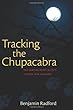
Benjamin Radford. Tracking the Chupacabra: The Vampire Beast in Fact, Fiction and Folklore. University of New Mexico Press, 2011

Benjamin Radford here explores the story of the mysterious blood-sucking Chupacabra from all angles. He first looks at the global history of vampiric beasts in the human imagination, showing these are almost universal, and existed long before the term Vampire became popular. Of particular interest is his treatment of how this myth surface in colonial societies, where the mainly European colonial powers and their representatives were seen as blood suckers. In modern times this has mutated into rumours of Europeans going round stealing organs for transplant, these rumours have led to several foreigners being attacked and even murdered in Central and South America.

This theme of colonial exploitation had a particular relevance in Puerto Rico, where citizens rather see themselves as being exploited by the continental United States, a situation not helped by Puerto Rico's anomalous status as neither a fully independent nation nor a fully integrated US state. This has led to exploitation by the military and its use as a waste dump for environmentally harmful products.

Of course, Radford argues, there is more to Chupacabra than this psychosocial approach might suggest, as people claim to have seen the things, as well as the aftermath of their activities. So Radford goes in search of the beast in the jungles of Nicaragua, where it was once allegedly seen. Needless to say he does not find it there.

If tracking the jungle does not provide evidence of the Chupacabra creature, perhaps the various claimed corpses might. Alas these prove to be mainly mangy old dogs and coyotes, with a battered racoon and neatly sculpted skate thrown in for good measure. One of the principle discoverers of a Chupacabra corpse, having got a great deal of publicity from its discovery was less than happy when a DNA test showed it was indeed a mangy old coyote, though she was rather mollified when another tester suggested it might just have a bit of wolf in it, which would presumably make it more special, though still not a blood sucker.

Radford examine the various claims made that animals have been 'mysteriously' killed and their blood drunk, and shows that much of this speculation comes from false ideas that many people entertain about animal predation and what happens to corpses, perhaps echoing the ignorance that helped feed the ancient vampire legends.

Radford then goes back to the original Chupacabra 'sighting' by Madelyne Tolentino, and shows how her account contains numerous contradictions, suggested she had truly preternatural vision, and that the description of the monster was almost identical with that in the science fiction movie Species which Ms Tolentino had recently seen.

He makes the important point, which goes for a huge range of UFOlogical, cryptozoological and paranormal investigation, which is that few of the 'investigators' actually do any investigation, rather they just record what witnesses say and take it all at face value, often adding in details of their own to spice things up. The same, even more so, goes for the tabloid press. Puerto Rico's version of this looks just the sort of paper Andy Coulson and Rebekah Wade-Brooks would fit into nicely.

The Chupacabra story shows in miniature the complex range of influences which generate many paranormal and Fortean claims: the influence of expectation on perception, peoples' false assumptions about the world and how it should look, the growth of wild rumour, the inadequate investigations by people who are often more interested in generating mysteries than solving them, and the deep background pof cultural beliefs, social tensions and fears which give such stories such emotional power. -- Reviewed by Peter Rogerson.

MAGONIA RECOMMENDS