30 September 2011

REINVENTING THE DEVIL

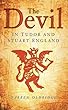
Darren Oldridge. The Devil in Tudor and Stuart England. The History Press, 2011

In this book, a revised edition of his The Devil in Early Modern England, Darren Oldridge is principally concerned with image of the devil in the imagination of the harder-line 'hottest' Protestant reformers or 'Puritans' in the 16th and 17th centuries. 
πŸ”»πŸ”»πŸ”»

27 September 2011

ART AND THE OCCULT

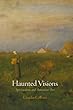
Charles Colbert. Haunted Visions; Spiritualism and American Art. University of Pennsylvania Press, 2011.

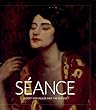
Jo-Anne Birnie Danzker and Gian Casper Bott (Eds.). SΓ©ance; Albert von Keller and the Occult. University of Washington Press/Frye Art Museum. 2011.

In 1855 the American artist William Sidney Mount received two letters from another artist, encouraging him in his work, and giving advice as to the manner in which his paintings should develop. Although critical of the “sameness of design” in some of Mount’s paintings he acknowledged the originality of much else of his work.
πŸ”»

25 September 2011

PHANTOM PRESENCES

Colleen E Boyd and Coll Thrush (Eds.) Phantom Past, Indigenous Presence: Native Ghosts in North American Culture and History, University of Nebraska Press, 2011.

The academic community has been producing studies into witchcraft beliefs for the best part of 40 years, but is only just beginning to turn its attention to the themes of ghosts and hauntings. Perhaps because these accounts and beliefs are much more present in the general community than those surrounding witchcraft, this is a much more fraught enterprise.
πŸ”»

17 September 2011

SCEPTICISM, OLD AND NEW


Michael Shermer. The Believing Brain: From Ghosts and Gods to Politics and Conspiracies. How We Construct Beliefs as Truths. Times Books/Henry Holt, 2011

Edmund Parish. Hallucinations and Illusions: A Study of the Fallacies of Perception. Facsimile reprint, Cambridge University Press, 2011 (Cambridge Library Collection: Spiritualism and Esoteric Knowledge)

Editor of Skeptic magazine Michael Shermer examines the possible neurological and evolutionary origins of our willingness to believe all sorts of things, for example the need to see patterns in events, and the tendency to attribute events to the actions of conscious agencies. Much of this is fairly well travelled ground by now but still worth going over again. In general much of what Shermer says makes a good deal of common sense, but there are problems in some of his arguments.
πŸ”»

10 September 2011

BEING HUMAN

Michio Kaku. Physics of the Future: How Science Will Shape Human Destiny and Our Daily Lives by the Year 2100. Allen Lane, 2011.

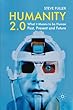
Steve Fuller. Humanity 2.0: What It Matters to be Human Past, Present and Future. Palgrave Macmillan, 2011.

Human beings have perhaps always wondered about the future and what the world might be like after their own lives. Perhaps for long periods no one assumed that the future would be any different than the past, but at least in the West over the last 200-300 years there has been an assumption of a future very different from the present. This different future has been the subject of countless dreams and nightmares.
 πŸ”»

7 September 2011

FRENCH PSYCHICS AND METAPSYCHICS

Sofie Lachapelle. Investigating the Supernatural: from Spirtism and Occultism to Psychical Research and Metapsychics in France 1853-1931. Johns Hopkins University Press, 2011.

Sofie Lachapelle here reviews the successive waves of interest in matters psychical in France, from what were essentially religious outlooks to the at least quasi-scientific. Unlike the rather free and easy development of spiritualism on Britain, French spiritism was organised on highly authoritarian lines by its founder, a maths teacher Denizard H. L. Revail, who adopted the name Allan Kardec because it sounded Celtic.
πŸ”»

4 September 2011

STRANGE TIMES, ODD SPACES

David A. J. Seargent. Weird Astronomy: Tales of Unusual, Bizarre and Other Hard to Explain Observations. Springer, 2011.

Lamont Wood. Out of Place in Time and Space. New Page, 2011.

Australian writer David Seargent may be remembered by our older readers as the author of UFOs: A Scientific Enigma (Sphere 1978), one of the few sensible books on the subject published in the wake of Close Encounters of the Third Kind
πŸ”»

2 September 2011

TRUTH, FATE AND UFOS

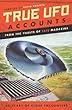
David Godwin (compiler). True UFO Accounts from the Vaults of Fate magazine: 60 years of Close Encounters. Llewellyn Publications, 2011

For a good number of years, before it was bought by Llewellyn and turned rather New-Agey. Fate magazine was actually quite a good Fortean journal, noted for its excellent book review section which featured the likes of Jerry Clark, J. Gordon Melton and D. Scott Rogo, and the always sensible comments of this then owner/editor Curtis Fuller. 
πŸ”½