31 October 2011

LIGHTS, CAMERA, PHANTOMS

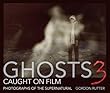
Gordon Rutter. Ghosts Caught on Film 3: Photographs of the Supernatural. David and Charles, 2011.

In his book Apparitions published in 1953, the then influential psychical research G. N. M. Tyrrell produced a list of the properties of what he considered to be the perfect apparition. One of these was that apparitions could not be photographed, for the simple reason that they were not physical objects present in the environment, but hallucinations, or as we might say today virtual experiences.
🔻

26 October 2011

LONDON CALLING

Simon Webb. Unearthing London; The Ancient World Beneath the Metropolis. History Press, 2011.

We tend to think of the prehistoric stone circles, henges, barrows and leys of the ritual landscape as being confined to the empty parts of the country - the 'Celtic Fringe', or the uplands of Pennines and Peak. But of course at one time all of Britain, including London, was the 'Celtic Fringe' of Europe.
🔻

23 October 2011

MEETING THE RELATIONS

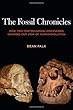
Dean Falk. The Fossil Chronicles: How Two Controversial Discoveries Changed Our View of Human Evolution. University of California Press, 2011.

The interest in this book for Magonia readers will be in the discussion of how science deals with dramatic anomalies, in this case in the field of human evolution. The examples given are the discovery of Australopithecus africanus by Raymond Dart in 1924, and the discovery of Homo floresiensis, nicknamed "The Hobbit" in 2004.
🔽

16 October 2011

SUPERSTITIONS OLD AND NEW


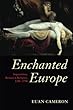
Euan Cameron. Enchanted Europe: Superstition, Reason and Religion 1250-1750. Oxford University Press, 2011.

William J. Birnes and Joel Martin. The Haunting of Twentieth Century America: Tom Doherty Associates, 2011.

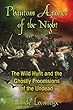
Claude Lecouteux. Phantom Armies of the Night: The Wild Hunt and Ghostly Processions of the Undead. Inner Traditions, 2011.

Euan Cameron notes in his introduction that superstition is a tricky concept, but as the definitions in the online Oxford Dictionary ("unreasoning awe or fear of something unknown, mysterious or imaginary especially in connection with religion; religious belief or practice founded on ignorance; more particularly an irrational religious belief or practice, a tenet, scruple or practice founded on fear and ignorance") show it revolves around the ideas of false religious belief and practice.
🔻

13 October 2011

A MIXED BAG OF HAUNTINGS

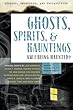
Michael Pye and Kirsten Dalley (editors), Exposed, Uncovered, and Declassified: Ghosts, Spirits, and Hauntings, New Page Books, 2011.

This is a collection of ten essays, most of which could benefit from concentrating more on the details of strange experiences and how they are investigated and less on indulging in verbose and often incoherent speculation.
🔻

11 October 2011

"BANDITRY AND THE DISTRESS OF NATIONS"

Jane Shaw. Octavia, Daughter of God: The Story of a Female Messiah and her Followers. Jonathan Cape, 2011.

British readers who are old enough may remember newspaper adverts back in the 1960s and 1970s which read something like "Crime, banditry and the distress of nations will increase until the bishops open Joanna Southcott's box". These strange adverts were the work of the Panacea Society, the subject of this book.
🔽

9 October 2011

SCANDAL OF KABBALAH

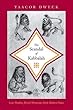
Yaacob Dweck. The Scandal of Kabbalah: Leon Modena, Jewish Mysticism, Early Modern Venice. Princeton University Press, 2011.

After Spain and Portugal expelled the Jews, north Italy, and in particular Venice, became a major centre for Judaism. Among the prominent Venetian rabbis of this period was Leon Modena (1571-1648), who wrote an autobiography at a time when that was an unusual thing to do, so that a great deal is known about him. 🔻🔻🔻

4 October 2011

TERRORS OF HISTORY

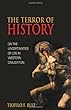
Teofilo F Ruiz. The Terror of History: On the Uncertainties of Life in Western Civilization. Princeton University Press, 2011

This seems an apposite book for the times we live in, as the spectre of the final crisis of capitalism looms ever larger. Ruiz discusses the various reactions to the 'terror of history', a phrase said by the 'historian of religion' Mircea Eliade to describe not just the grand catastrophes but also the quotidian mortality of everyday life in the West.
🔻