30.11.11

ALCHEMY: WORDS AND MEANINGS

Jordan Stratford. A Dictionary of Western Alchemy. Quest Books, 2011.

This is a useful book up to a point. It brings together a range of chemical symbols and offers a summary of the most important processes of laboratory alchemy and throws in a brief biography of a couple of dozen alchemists of note. But it is a curious book. It has been collected by a student of Gnosticism who is a great fan of the Jungian interpretation of Alchemy and yet it is, in most part, a collection of symbols and descriptions of chemical substances, such as would be useful to the purely laboratory alchemist.

Indeed, it doesn’t stop at alchemy, it contains symbolism and descriptions of chemical processes and substances (such as sugar and steel) which have little or nothing to do with pure mineral alchemy. One thing seems clear: that this is a work of general scholarship rather than a work written by a practising laboratory alchemist to be understood by his peers. It is possibly a work – given the ubiquity of the internet – which owes more to Wikipedia than to personal understanding.

Evidently, most of the symbolism is taken from a work on general chemistry, rather than from the fairly tight discipline of substances and processes that characterized alchemy until the late 17th century. These symbols for the elements, compounds and processes are important, both to interpret manuscript notes by alchemists like Boyle and Newton and to interpret the pictorial imagery which is so much a part of the alchemical message and which often gives the greater clues to the process than any associated words do. The ‘Mutus Liber’, for example, is a book relying solely on pictorial imagery and some of its images can only be deciphered if one knows the symbols for certain substances, since these are encoded into the pictures.

So this Dictionary is useful in this respect. But, it must be said, that the symbols are available in many other places on the Internet, most notably in Adam Maclean’s website and Jordan Stratford acknowledges the help given to him in his researches by Adam Maclean.

There are some obvious omissions in this Dictionary. Maybe the ‘dry’ work on Antimony has acquired some new terms during the current revival of interest in alchemy (especially in France) but on the alchemical web forums, there is much discussion about the Star Regulus, the ‘Eagles’ and the ‘Remora’ and these terms are not found in the Dictionary. Nor is the ‘Net’ (an alloy of copper and iron) of Eirenaus Philalethes, which was worked on by Isaac Newton. Nor is ‘Sal Mirabilis’ (Glauber’s Salt) or ‘Philosopher’s Wool’ (Zinc Oxide), the latter sometimes suggested as Archibald Cockren’s substitute for ‘Antimony’. Nor is ‘Adrop’ mentioned, nor ‘Sericon’, both possibly terms for Red Lead. And the ‘Green Lion’ is described as Sulphuric Acid which is not true in respect of Ripley’s ‘Green Lyon’.

Most significantly, in the book, is the lack of any reference to Spagyrics (plant alchemy), even though this field, named by Paracelsus, cannot be separated from the broader definition of Alchemy. So we have no indication of the Circulatum Minus of Urbigerus or of plant stones in general, though there is the odd reference to herbs like Valerian and Anise.

All this might seem like nit-picking but a good Dictionary is necessary. Alchemy, as a laboratory practice, is flourishing in the modern age. In the last 20 years, the Internet has thrown up at least a half dozen excellent forums, bringing together practising alchemists from around the world; and recent initiatives, such as those of Newman and Principe, to decipher Newton’s notebooks and replicate his alchemy have breathed life into this antique blend of art and science.

This Dictionary should step into that gap but, unfortunately, it does not have the legs to do so. It is too whimsical and patchy (something a good dictionary should not be) and spends a bit too much time concentrating on the etymology of the terms and too little explaining their place or relevance to the discipline as a whole. -- Caroline Robertson

28.11.11

ANCIENT ALIENS?

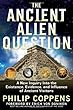
Philip Coppens. The Ancient Alien Question. New Page Books, 2011.

Oh my, what a busy book this is! From the minute you pick it up, it vies for your attention in a number of ways. The cover’s bold font is squeezed around a photograph of what looks to be a Central or South American pyramid plus four small, circular inlays of what are presumably meant to be ‘mysterious’ objects. The effect is to make one think that the publisher is after readers looking for sensation as opposed to careful, reasoned argument. This over-the-top approach to graphics, unfortunately in my view, carries on inside with ‘alien’ writing jarringly placed on the outer border of each page, along with very bold chapter headings and the body of the text in rather large print. Subtlety is obviously not the effect that New Page Books are going for, then.

This would have made my heart sink, were it not for the name of the author, Philip Coppens. Although I had not read any of his books before, I had read one of his articles in Nexus magazine concerning Operation Gladio, the Italian “stay-behind” secret army of guerrillas and saboteurs that were in place during the Cold War in order to fight Communist forces should they invade or take over. Coppens tells how this group was taken over by right-wing individuals affiliated to the Italian government and, instead of protecting the country, went on a bombing campaign whilst putting the blame on Communist organisations. I was impressed by what seemed to be a methodical approach to an issue about which I had heard nothing before. I was, therefore, intrigued to see how he was going to tackle an issue as broad and contentious as the ancient alien question, or rather, questions which, of course, are were there any and did they land here?

The second jarring note for me, after the lively attitude to graphics, was that the foreword was by that veteran (or should that be notorious) writer Erich von Däniken. I will be honest and say here that von Däniken was one of the first authors that I read whilst becoming very interested in the UFO and ancient astronaut themes at school, even to the extent of debating such matters with my Religious Education teacher. The heady rush of such a dramatic intervention in humankind’s history (and, of course, prehistory) from such a radical influence was by far and away much more interesting to me than my usual subjects.

However, I and the rest of the world were to learn that the Swiss author was prone to embellishment. He tended to pull artefacts in to back up his claims which were not what he claimed them to be. One is the Iron Pillar in Delhi. He told the world that it never rusted and no-one knew who put it there. In fact, it is rusty and the emperor Chandragupta II put it there. There is also the distinct probability that von Däniken took much of his - shall we say, inspiration – from The Morning of the Magicians (Le Matin des magiciens) by Louis Pauwels and Jacques Bergier. By way of contrast, later on in the book Coppens seems to single out the author Zecharia Sitchin and his works for criticism. The criticism does look to be justified but it seems in sharp contrast to the leniency he affords von Däniken, whilst the crucial difference between Sitchin and von Däniken is that Sitchin at least seems sincere, although maybe self-delusional. None of this bodes well for the book.

Encouragingly though, Coppens, when he is away from supporting or attacking other writers in this genre, seems more down-to-earth (or as down-to-earth as anyone can be, given the subject matter). Although he puts forward the story in the fashion by which it is known popularly, he then goes on to examine it in further detail. Sometimes, this will lead to his debunking the original story rather than just accepting it as it is initially found.

To give an example, The Sirius Mystery, a book written in 1976 by Robert Temple, details how two French anthropologists working with the Dogon tribe in Mali, West Africa, discovered that the tribe had knowledge of the star system that we see as Sirius. The claim is that this tribe, with no sophisticated technology, knew about the dwarf star Sirius B. Sirius B is invisible to the naked eye; therefore the Dogon had to have learned this from contact from somewhere – or someone – else. This someone else was supposed to be aliens from the star system around Sirius. However, after another expedition by other anthropologists, Coppens informs us that the new expedition could find no consensus amongst the Dogon about Sirius at all.

This continues throughout the book. An initial position is put forward then examined to see if it holds water and, for the most part, the author to his credit does not always take the statement at face value. However, there do seem to be some areas where the author lets his own faith in a viewpoint override his own good sense. It has long been a staple of alternative archæology that the pyramids on the Giza plateau mirror the layout of the stars that form the belt of the constellation Orion. A fair few astronomers have queued up to show that this may not be the case, and other alternative archæologists reckon that the constellation Cygnus is more accurately represented. Therefore, this is not something that can be taken as fact, and most certainly does not even have a consensus amongst alternative archæologists, yet it is uncritically accepted here.

This is important as it later becomes a central tenet to Coppens’ argument that, although there is no evidence to support major influence in humanity’s social evolution by extra-terrestrials in nuts-and-bolts spaceships, that in the distant past people managed to contact denizens of an inner-space akin to C. G. Jung’s collective unconscious who passed on the same information to people utilising shamanic rituals in different parts of the world, which would explain why many sights have similar, but not identical, layouts, buildings, pantheons of gods and mythologies. This does seem to be an answer that has some merit, and could even link into current UFO/UAP phenomena in a neater fashion than the (by now) quite clunky alien astronaut theory.

Philip Coppens has a straightforward writing style that is helpful in explaining some of the more intricate and technical areas that his book touched upon. Whether it is the ins and outs of geopolymers or the anomalies of the Piri Reis map, the explanation is fluid and easy to follow. This is very helpful indeed in a book that covers so much ground. He is capable of spotting flaws in accepted lore and exposing them so that we are not duped. This, then, raises the question as to why some subjects are let slip under the radar. It is, in my view, an inconsistent approach to answering the questions asked by the author himself. Maybe a re-examination and comparison of the layouts of the Giza Plateau, the pyramids at Teotihuacán and the Hopi reservations in Arizona, this time without star maps, might still back up the point that he is trying to make without having to use discredited information. – Review by Trevor Pyne

26.11.11

THE PSYCHOLOGY OF THE PARANORMAL

Tony Jinks. An Introduction to the Psychology of Paranormal Belief and Experience. McFarland, 2011

In this intriguing book, Tony Jinks, a lecturer on neuroscience at the University of Western Sydney, uses a wide definition of the paranormal, encompassing all the various topics covered by Magonia, and takes a detailed examination of the range of psychological explanations, both mainstream and exotic used to "explain" such experiences.

His introductory chapters discuss what is meant by the paranormal and the history of parapsychology. Here he points out some of the problems associated with the use of terms like "ESP" etc., most notably their often circular definition and lack of basis in mainstream science. He neatly sums up some of the many controversies in this field. However this does not mean that he is a die-hard skeptic, anything but as can be seen when he examines the various psychological theories in turn, broadly following a path of increasing complexity and heterodoxy.

These theories range from the simplest kind, such as those use to explain popular superstitions, through to theories of illusion, errors of judging probability, and the various studies which seek to correlate these with various personality types. Here he makes a number of very valid points, for example the automatic assumption among mainstream psychologists that not only do these things not happen, but that those who experience them must have some sort of syndrome or other. Another very valid point is that many of the terms used by psychologists to explain such experiences such as 'boundary deficiency', 'fantasy prone personality' or 'transliminality' (which strike me as possibly just different labels for the same thing, a tendency to confuse imagination with perception), can be every bit as circular as terms such as ESP.

He finds more convincing those explanations involving distinct neurological processes ranging from hypnogogic and hypnopompic hallucinations, highway hypnosis, sleep paralysis etc., through to temporal lobe epilepsy. Perhaps, though he underplays just how radical misperception can be in certain circumstances. In this set of discussions perhaps one noted omission is the role of false awakening, which may account for a number of dramatic paranormal experiences.
Having discussed the role of temporal lobe epilepsy, Jinks then goes into more exotic territory with a discussion of the (alleged) roles of electromagnetic fields, tectonic strain etc., and the work of Michael Persinger. I am not sure that these theories can rightfully be called psychological, perhaps 'environmental' theories would be a better description, though one might settle on psycho-enviromental as a decription. Though clearly intrigued by Persinger's ideas, Jinks correctly points out that they have come under fire from believers and sceptics alike though often for opposite reasons. He notes that attempts to replicate Persinger's findings by a Swedish team failed, and that it is not clear that some of the strange experiences undergone by those using Persinger's famous helmet are not simply the result of expectation and suggestion, The same may well also be true of alleged correlations between electromagnetic field anomalies and 'haunted' spots.

If these ideas are based at least to some extent on mainstream psychological theories, the next set are based on more controversial theories - the psychodynamic theories of Freud, Jung etc. In this section there is an extensive discussion of Alvin Lawson's birth trauma hypothesis, though Jinks concedes that this is controversial to say the least. In particular mainstream psychology denies that it is neurologically possible for memories of birth to survive multiple changes in the brain.

Jinks also discusses the theories, particularly those associated with UFO abductions, constructed by Hilary Evans, D. Scott Rogo and the younger Jerome Clark and Loren Coleman. These centre around such experiences being dramas which illuminate personal crises, and Jinks shows how they can be applied to the 'Kelly Cahill' abduction case. While intriguing, the theories of the latter two especially, involve mysterious paranormal processes, in Rogo's case the mysterious 'Phenomenon' which may or may not be a synonym for God. Such ideas are unlikely to appeal to mainstream psychology, or mainstream science in general. The same is probably true of speculative theories involving quantum mechanics.

While the coverage of psychological theories is wide, it is not exhaustive, and there could have been some discussion of theories involving family dynamics, and those which invoke social processes rather than individual pathology. Perhaps they could be covered in second edition, which might also correct the only other criticism I have, the fact that not all the references in the text are included in the bibliography.

But these should not detract from this very interesting study, one which makes a welcome exception from the usual partisan polemics by believers and sceptics, and which attempts a genuinely opened minded approach. We need more studies like this. -- Peter Rogerson


23.11.11

TWENTY-FIVE YEARS AGO: MAGONIA 24, NOVEMBER 1986

The appearance of Magonia 24 heralded a radical change in design and production of the magazine, being the first to be produced on a computer, the now legendary Amstrad PCW8512, with printout on a very noisy dot-matrix printer using a typewriter ribbon. It also marked our final A5 size issue, prior to the last of our numerous changes of format. It also heralded a period of experimentation with a variety of computer programs and production techniques, not all of which were, to say the least, entirely successful.

Most of the issue was devoted to the topic of BOLs , earthlights, fireballs or whatever, a subject which at one time dominated British ufology, but now seems to have faded into the background.

Mike Goss took us through a typically obscure aspect of folklore, with his investigation of the Japanese shito-dama, the ‘spirit fireball’. Like many such legendary manifestations of raw nature the shito-dama appeared to wreck vengeance on any individual or community that had offended it in someway, usually through some act of treachery or betrayal. Mike Goss then went on to demonstrate how similar phenomena have appeared in western folklore, manifesting themselves as ghostly ships or the corpse-candles which could be a warning of death or other calamity.

Spooklights and will-of-the-wisps (wills-of-the-wisp?) were the topic of David Clarke’s piece, which followed on. He noted the way that a quite genuine natural phenomenon became an object of mystery and fear, then generated its own legends, stories and reports, often bearing little resemblance to the original phenomenon. Much like UFOs then!

French researcher Claude Maugé took a long look at Michael Persinger’s ‘Tectonic Strain Theory’ which tried to show a a link between phenomena generated by geophysical activity in the Earth’s crust, and activity in the human brain which generated UFO related experiences. After looking at this in some depth, and with a degree of sympathy, Maugé concluded that “TST (Tectonic Strain Theory) seems to be unnecessary for the large majority of sightings”, but that if Persinger were able to develop his theory and clarift the processes involved, TST might still be able to earn the title of “the best scientific theory of UFOs.”

However, this never seems to have happened, and ufological interest in the subject veered off into fringe ‘electrical pollution’ theories.

Jenny Randles contributed some further information on the sequence of events surrounding Chris Allen and Steuart Campbell’s exposé in the previous Magonia of the man behind the Cedric Allingham hoax, popular British TV personality Patrick Moore. It was something of a (very small) tabloid sensation at the time, but I have no evidence that my phone was tapped as a result!

22.11.11

ALL OUR YESTERDAYS

John Hanson and Dawn Holloway. Haunted Skies, The Encyclopaedia of British UFOs: Volume 3, 1966-1967. CFZ Press, 2011.

Yet another great nostalgia fest for ageing ufologists, now covering the period in which the prehistoric ancestor of Magonia, the Merseyside UFO Group Bulletin operated. I note, in fact, that there are a number of references to MUFORG Bulletin and our archive website. This was perhaps the period of the high water mark of interest in UFOs in Britain, with large numbers of often ephemeral groups and little magazines, the brouhaha over Warminster and the "great waves" of the summer and autumn of 1967. Much of this material might be unfamiliar to today's ufologists, and reading this, they might discover that they have, in some cases, being trying to reinvent the wheel.

What strikes me is just how little of the material here relates to reports of "structured craft of unknown origin", and the wide variety of things which were reported as UFOs in those days. No doubt the vast majority of these reports were simply misidentifications and misperceptions of the usual meteors, fireballs, stars and planets (and I suspect more often than you would think) the moon, aircraft, helicopters and the like, as well as a variety of optical illusions. Some may however relate to a variety of uncatalogued and poorly understood natural phenomena. Some are very strange indeed, the pair of what look like flying boots seen in a car park in Bentilee, Staffordshire for example, or the encounters with "aliens" straight out of the pages of George Adamski (a testimony as to how influential his books were in British popular culture), the guy who invited "aliens" who twittered like birds as they bounced along, into his home and offered them whisky, cheese and biscuits (which they spat out), in return they gave him "diamonds" (rock crystals and seeds).

As an example of how wide a range of experiences were subsumed into the UFO mythos was the tale told by the novelist Dame Rebecca West of encountering a strange man on her land, and an object which "consisted of something like a metal band, grey-blue in colour, flattened at one point, so as to seem almost leaf like, crossed with a herringbone system of metal strips", attached to which was a sort of bag. The whole thing seemed to crumple to the ground. The stranger behaved suspiciously and made her uneasy. Presumably this was a deflated balloon or parachute with something attached, which might account for the case getting a 'restricted' category by the MOD.

This book is well illustrated with photographs, drawings and clippings, and provides faces to names. It is rather sad to see how people you remember from your youth have aged. The authors have done an excellent job in assembling this material, and just two years fills a substantial book. This is likely however to be the tip of the iceberg, as it is not clear as to whether they (or anyone else for that matter) had access to the archives of BUFORA let alone the many dozens of defunct groups and deceased personalities whose records and libraries are scattered to the winds. All of this stuff needs to eventually go to the AFU archives in Sweden to be preserved. -- Peter Rogerson.

19.11.11

NEW IN THE MAGONIA ARCHIVE

I'm pleased to say that we have added another original article to Magonia's online archive, which had not previously been published in the print magazine. It's by UFOlogist-turned-religious-studies-professor-turned-novelist David Halperin, who writes:

“Magonia has been a feature of UFOlogical discourse for more than forty years, since Jacques Vallee published his classic Passport to Magonia. What was the original Magonia, mentioned in a 9th-century Latin text by Archbishop Agobard of Lyon? Who were the four people — three men, one woman — said to have fallen to earth from a Magonian airship?" 

He compares Agobard’s story with a 17th-century sighting of a similar foursome on the moon, and comes to some startling conclusions.

The archived article may be read here: 

and you can read more of David Halperin's writings at his website:

16.11.11

GHOSTLY CREEPY HAUNTINGS!

Jeff Belanger. The World's Most Haunted Places. New Page, 2011.
Bob Curran. The World's Creepiest Places. New Page, 2011.
Jim Harold. Jim Harold's Campfire True Ghost Stories. New Page, 2011

I'm not too sure what the exact difference is between 'most haunted' and 'creepiest', even after reading the first two volumes reviewed here, as they cover the same sorts of places and stories in the same way. Although both 'Creepy' and 'Haunted' describe hauntings in classical locations like old castles, spooky churchyards and crumbling mansions, many of the most interesting accounts relate to more contemporary and less traditional locales.

New Page is an American publisher, so the emphasis is on American locations, but both books give a fair bit of coverage to places in Britain and Europe. Bob Curran was born and now lives in Northern Ireland, so he gives somewhat greater coverage to creepiness on this side of the Atlantic, with several cases from his native island. Both books give often quite detailed accounts of the history of the places they describe, and in most cases show the way in which the ghost legend has mutated over the decades.

American orphanages, hospitals and sanatoriums seem to be great generators of spookiness, with abandoned buildings in remote places accruing legends of screaming children, mad doctors and the terrifying results of medical experiments lurking in wooded areas across the country. The abandoned buildings, and abandoned creatures represent the disturbing fears, social, political, scientific, the threat of 'aliens' of all forms, and the worry that our comfortable existence depends on a great number of things that we would rather not know about. In the daylight world we wish these things would just disappear, but we know that they will always lurk around the edges, ready to come lurching back if our defences of rationality and reason fail for a moment.

Many of the stories in both 'Creepiest' and 'Most Haunted' are of what Bill Ellis christened 'Legend Trips' - places which have become the focus of visits by groups of young people seeking a spooky thrill at a well-known haunted spot, and developing the legend as they do so. Perhaps the most remarkable case recorded here, in Bob Curran's book, is the small settlement of Stull, Kansas. Here, for no historical reason at all, other than perhaps because its name sounds a bit like 'skull', a bizarre legend has developed that the abandoned Emmanuel Church covered a gateway to Hell. Helped along by films like The Exorcist, the hamlet attracted crowds of teenage visitors at Halloween, who eventually had to be barred from entering by the local police.

Stull is an example of just how remarkable little is needed to create a 'haunted' location. In fact some places seem desperately to need a haunting, and it's noticeable how many of the 'Most Haunted' sites also happen to be hotels, bars, or tourist attractions. Given time anywhere can develop its neatly crafted haunting. Bob Curran's account of the mysterious disappearance of the lighthouse keepers of the Flannan Isles certainly brought a shiver to my spine, but mostly because it evoked forgotten memories of my grandmother reciting William Gibson's poem about the mystery, in her gas-lit kitchen when I was aged about eight!

The stories in Jim Harold's book are anything but neatly crafted, and are the largely unmediated, 'It Happened to Me' type of narrative that features in Fortean Times each month. Jim Harold is the producer of an on-line radio show, and these stories are sent to him by his listeners. Of course, almost everyone knows what a ghost-story should be like, and many of the tales here try to conform to that template. However it is much easier to see the raw account in these two or three page first-person accounts, than in the 'authorised' versions in the other two books.

Although Harold divides the stories up into a few basic categories, most of the narratives in this book would turn out quite differently if they were collected by a ghost hunter, a cryptozoologist, a ufologist, an abductionist or a SPR researcher. Most of all these three entertaining books demonstrate the extent to which the supernatural has been commodified in contemporary Western culture. -- John Rimmer.

15.11.11

MIB ENCOUNTERS

I have just put a new page up on this site, as you will probably have noticed by the tab which has just appeared above. Clicking on this tab will take you to a listing, compiled by Gareth J. Medway, of accounts of experiences of Men in Black, and MIB-type entities. This is based on available published literatute and does not pretend to be a complete listing, although it does contain all the well-know cases and many more obscure ones. Although most of these accounts come from UFO-related experiences, this is by no means always the case.

I'm sure that many of our readers will know of other cases which could be added to this liting, and we would be most happy to hear from you. If you have anything to add please send a brief description of the characters and events of the case, as well as a full as possible list of sources. From time to time we will update this listing with new accounts. You may send any information you have to: pelicanist@rocketmail.com

11.11.11

UNCON 2011

It's been a couple of years since I went to a Fortean Times UnConvention, and this one was a slightly different format from what I've been accustomed to. Although the lineup of speakers was excellent, the location rather limited the programme. Finding a Central London location that does not cost a fortune is becoming increasingly difficult, and the Camden Centre, although well located for accessibility in the shadow of St Pancras Station, is a much smaller building than previous venues, with just one large hall for talks.

This meant that there was only one sequence of talks, and although the two-strand format of previous UnConventions has sometimes meant that you had to choose between two must-see presentations, it also allowed for a wider range of speakers. Space limitations at Camden also meant that the various ancillary attractions, such as ASSAP's experiments, and stalls for other fortean/psychic groups, were reduced to just two or three bookstalls. The limitations of the venue also meant less opportunity for socialising.

OK, that's enough of the griping, let's look at the content. An odd sort of 'speaking animal' theme seemed to be developing, with Jon Bondeson discussing the talking dogs of the early years of the 20th century - which he has written about in the latest (December) Fortean Times - and the German 'New Animal Psychology' movement which promoted it. This eventually mutated into an exotic mixture of show-business and pseudo-science (a bit like ufology when you come to think of it!), with some vaguely sinister links to the Nazis.

Talking animals - 'Hoover the Talking Seal' - also cropped up in Sarah Angliss's exploration of the curious social background to the early days of sound recording; people were apparently quite disturbed at the idea that through the phonograph it would be possible to hear the voices of dead people. Besides the booming sounds of Hoover, we were able to hear the voice of Florence Nightingale marvelling that people would indeed be able to hear her words after she died.

London University librarian Christopher Josiffe (librarians, they get everywhere) outlined the story of Gef the Talking Mongoose from the Isle of Man. Although no sound recordings were available of this prodigy, Christopher did a fair job of recreating the animal's voice as he recounted its often foul-mouthed tirades. As a librarian, the speaker had access to Harry Price's case-notes on Gef, which are stored at London University. One curious byway to this investigation was discovering that there was probably a population of feral Manx mongooses, introduced in the 1910s as a measure to control rabbits, there being no foxes on the Island.

It's impossible to come to any conclusion on this case, and it's clear that much depends on the social background, psychology, and I suspect the sexual dynamics, of the family in the case, but these were issues which were not easily approached in the 1930s.

Dave Clark and Andy Roberts gave two totally UFO-free presentations; Dave Clarke presenting the only recorded case of someone officially being declared to have 'died of fright' on their death certificate, and the duo examining the legends of cursed stones and so-called Celtic Heads which were declared to bring bad luck on anyone who came into contact with them. Dave and Andy brought along their very own Cursed Head in case anyone wished to take a chance with it!

Lynn Picknett and Clive Prince discussed the influence of Hermeticism on the rise of modern science, and considered whether contemporary developments in astronomy and quantum physics heralded a return to a Hermetical view of the universe. This produced some strong reactions from questioners in the audience. For another of Lynn and Clive's theories, check out the YouTube clip below.

Gail-Nina Anderson was as entertaining as ever, taking us through the impact of Egyptian Mummies on popular culture, including the artists' paint called Mummy Brown, which was actually made from ground-up mummies. Discovering this prompted the Pre-Raphaelite painter Holman Hunt to bury his tube of the colour in his garden in a simple ceremony. The pigment was apparently in production until the 1960s, when the director of a firm of London colourists found they had run out of mummies: "We might have a few odd limbs lying about", he said.

Ted Harrison, in reviewing apocalyptic predictions reassured us that the world had not ended in September, but alerted us to a few other dates to watch out for. I didn't see Brian Regal's Sasquatch presentation, or Richard Freeman on ape-men (cryptozoology is, I regret, a bit of a blind-spot with me, especially the paws-and-pelt variety) and only caught the end of Jon Ronson on psychopaths.

Despite the limitations of the venue, I think UnCon continued a great tradition, and it was good meeting so many fellow anomalists. And if any of you know of a spacious location in Central London, preferably with two lecture halls, exhibition space, and with a decent bar and cafe, available for hire at an unfeasibly uncommercial price, I'm sure the guys at Fortean Times would be glad to hear from you! -- John Rimmer

10.11.11

FISHY STORIES

Anthony Milne. Fireballs, Skyquakes and Hums: Probing the Mysteries of Light and Sound. Robert Hale, 2011.

Lars Thomas. Weird Waters: The Lake and Sea Monsters of Scandinavia and the Baltic Sea. CFZ, 2011

It is probable that the relatively small number of UFO reports that are not simply generated by misperceptions of well-established phenomena will include among their number a range of uncatalogued atmospheric and other natural phenomena.

The first half of this book lists a wide range of these, from various forms of balls of light, through curious mirages, odd meteorites and the like, to say nothing of Humazduzzes and other anomalous sounds. These clearly suggest that there are all sort of, often very strange, things going on in our atmosphere.

Milne has made previous studies of asteroids, space debris and the like, and had he followed the example of the late William Corliss and assembled his examples from the pages of reputable scientific literature this would have been a useful compilation of material which should be of interest to the scientific community. However the sources tend more to be popular books, UFO magazines, newspapers and the like.

Even worse in the second half Milne enters the world of the paranormal and ufology, with little indication that he knows much above either subject. Here he relies ever more on popular sources, such as pulp paperbacks, and uncritical renderings of the various tales told therein. Thus instead of references to scientific publications or even the more serious and responsible works on these subjects, we get them to Charles Berlitz, Frank Edwards, 'Richard Lazarus' and others. I suspect a number of the stories here are complete fabrications by these and related authors. Indeed we get the old story of the Wroxham Romans trotted out, despite the fact that it is a complete fiction from a book of spoof ghost stories, Charles Sampson's Ghosts of the Broads, originally published to raise money for a yacht club.

This sort of material is OK if it is clearly labelled as folklore or story telling, but not as evidence for something or other. There may well be evidence for some very interesting things in this book, but it is likely to be buried in a heap of dross, which simply serves to prevent anything in this book being taken seriously. A wasted opportunity.

Fortunately we have to hand a much better example of how to present a compilation of strange and bizarre experiences. Unlike a number of writers in field of marine cryptozoology, Lars Thomas is a professional marine biologist, and his book a mixture of modern day accounts and folklore avoids the temptation of invoking surviving dinosaurs or completely theoretical creatures to explain the various water monsters. The monsters here are a variegated bunch and include some things that sound like American swamp apes, to say nothing of alleged encounters with merpeople, water horses, water cows and much more.

While some of the waters are wide and deep and could hide almost anything, there are other accounts which seem impossible to explain in terms of any kind of flesh and blood animal. The mysterious creature, said to drag dogs down into the depths, in the 'lake', actually a large duck pond, complete with fountain, in a Copenhagen suburb, for example In another suburb there is a not much larger mere, which is not only associated with strange lake creatures, but also ghosts and UFOs. These creatures seem to be beasts of the waters, bogeys invented to scare the children away from the water's edge, rather like Jenny Greenteeth, than anything which might end up on a taxidermist's table.

Iceland has some of the weirdest water monsters, including the mercow, the mouse-eared whale, the scaly monsters and the like, which the enterprising Icelanders have featured on a set of special issue postage stamps.

Language barriers prevented the author from gathering all the information he could from Finland and the Baltic states. - Reviewed by Peter Rogerson.

8.11.11

DENYING SCIENCE

John Grant. Denying Science: Conspiracy Theories, Media Distortions and the War Against Reality. Prometheus, 2011

One of the blurbs on this book describes John Grant as "the living heir of Martin Gardener", this is, I think, less than fair to Grant. Martin Gardner often took on soft targets and subjected them to ridicule, Grant takes on the big boys.

The assaults on science that Grant dissects are not, by and large, the products of isolated cranks, who are either just badly educated or who have mental health issues, they are the products of major, often well-funded and politically motivated campaigns.

Of the principle assaults Grant discusses, those which are closest to the issues often covered in Magonia are the promotion of creationism and intelligent design, the various forms of alternative medicine and the hidden memory/satanic abuse myths. The other examples are much closer to the scientific and cultural mainstreams, the campaigns against the MMR vaccine orchestrated by Andrew Wakefield; the claims that AIDS is not caused by HIV; the attempts by the tobacco industry to argue that cigarette smoking was not responsible for cancer; and the attacks on the growing evidence that human caused carbon dioxide emissions are responsible for global warming.

What is revealing is the extent to which many of the these apparently disparate campaigns all seem to have connections to each other and to figures on the far right of the US Republican Party. In the case of the climate change "deniers" a significant number seem to be funded by the US oil giant ExonMobile.

Unlike some of the soft targets that tend to be the targets of the 'skeptics movement', these anti-scientific crusades can have catastrophic consequences, take for example the endorsement of the idea that aids isn't caused by HIV by the former South African president Thabo Mbeki, that led to thousands if not millions of unnecessary deaths, and it is possible that that figure could be dwarfed if actions are not taken to both cut carbon dioxide emissions and to develop technologies to counter the worst consequences of such warming.

While much of Grant's book does at times seem to have a rather parochial US focus, no doubt because of the desperate state of politics there, we in the UK should not feel too smug. Much of the climate change 'denial' is being orchestrated by the British right, including those noted Tory newspapers The Daily Mail and the Daily Telegraph.

Many of these campaigns get the support of credential scientists of one kind or another, the retired and those whose expertise is in distant subjects tending to predominate, and this can impress people who don't understand there isn't any position on any topic that you can't get some 'credentialed scientist' to endorse.

They also tend to rely on anecdotal evidence, appeals to emotion and to vague notions of 'fairness', in which any minority however tiny can claim equal status to the vast majority. Grant also notes how they often use fake statistics and quotes from their own publications.

It is perhaps from one the topics briefly mentioned that the final horror story comes; the execution of a prisoner in Texas for an alleged arson, the evidence for which was discredited. The governor responsible for refusing the appeal and thus sending a almost certainly innocent man to his death was Rick Perry, supporter of Creationism and climate change denier and now a Republican presidential contender. – Peter Rogerson

4.11.11

FOREWARNED

Colm Keane. Forewarned: Extraordinary Irish Stories of Premonitions and Dreams. Capel Island, 2011

This is a collection of mainly first hand accounts of premonitions, dreams, omens and etc. Given than such stories are self reported and after the event they possess little evidential value for psychical researchers and unlikely to convince the sceptic, Rather, accounts like these are best seen as collections of folk narratives and it as such that there interest lies. They show how human beings constantly tell stories of supernatural occurrences by which they help to make sense of their lives and reduce the terror of the randomness of life.

This collection includes stories dating from the 1960s up to the present and reading between the lines many of the social changes which have affected Ireland in recent years are hinted at. As benefits a society in transition they often contain both traditional motifs, there is material here which could easily have appeared in Lady Gregory's Visions and Beliefs in the West of Ireland yet set in the modern world of motor cars and television sets. Besides the general 'premonitions' and vague feelings which are remarkably similar to those in the collections of Louisa Rhine, there are more traditional motifs, the appearance of strange lights, the ominous significance of birds such as robins or blackbirds, or strange knockings. Rather prominent by its absence is the traditional banshee (is the banshee actual folklore or is it 19th/early 20th century fakelore?). Perhaps also of significance is that the majority of the narratives date from a time before the ubiquity of the mobile phone.

Through the stories there are a number of social historical motifs, most notably the role of emigration to the UK and North America, with the consequent family separation. However largely absent are the 'Troubles' in the North, perhaps some traumas are too raw for folkloric narrative.

MAGONIA RECOMMENDS