30 December 2010

GETTING GALILEO STRAIGHT

John L. Heilbron. Galileo. Oxford University Press, 2010.

Most of us are familiar with the popular writings in astronomy and cosmology which contain absurdly over-simplified and inaccurate accounts of Galileo's problems with the Inquisition, who allegedly refused to look through his telescope and declared his scientific theorising to be heretical. Well, it wasn't so simple. As the author of this work remarks: "Galileo's biographers tend to rush their gladiator into an imaginary arena filled with pig-headed philosophers and fire-spitting priests." 
🔽

23 December 2010

INVESTIGATOR'S CASEBOOKS

Chris A Rutkowski. The Big Book of UFOs. Dundurn Press, 2010.

Stan Gordon. Really Mysterious Pennsylvania: UFOs, Bigfoot and Other Weird Encounters, Casebook One, edited by John David Kudrick. Bulldog Design, 2010.

Clearly marketed as an introductory account, rather than a book for the seasoned ufologist, Rutkowski's book does that task admirably. It is mainly a chronological account with representative reports from the various decades, including old favourites and the less well known, interspersed with first-hand eyewitness accounts. There are also sections on abductions, crop circles and cattle mutilations, the latter two being treated with the appropriate scepticism.
🔻

20 December 2010

25 YEARS AGO: MAGONIA 21, DECEMBER 1985

The main article in this issue is Michael Goss' examination of the legend of the preserved pterodactyl. The classic literary example of this is Conan Doyle's The Lost World, where Professor Challenger returns from his expedition to the deepest jungles of South America with a living specimen, presenting the creature with its "putrid and insidious odour" to an amazed audience of zoologists at London's Queen's Hall.
🔻

15 December 2010

SWINGING BOTH WAYS

Antony Latham, The Naked Emperor: Darwinism Exposed, Janus Publishing, London, 2005.

Stephen Horne and Richard Robertson, Faith is Not Enough: A Rationalist Perspective on Religion and Other Irrational Beliefs, Janus Publishing, London, 2010.

The Janus Publishing Company of Gloucester Place, near Baker Street (not to be confused with Janus of Old Compton Street, Soho, who specialise in magazines full of photographs of young women being caned) is named after the Roman God who has two faces looking in opposite directions. This is appropriate, given the antipathetic nature of these two books that they have sent to Magonia for review.  ðŸ”»

11 December 2010

TO THE MANOR BORN

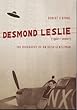
Robert O'Byrne. Desmond Leslie; The Biography of an Irish Gentleman. The Lilliput Press, Dublin. 2010.

You will probably know Desmond Leslie best for three things: he co-wrote Flying Saucers Have Landed with George Adamski; he once punched theatre critic Bernard Levin on the nose, live on prime-time TV; and he used to own the Irish stately home where Paul McCartney entered his ill-fated marriage to Heather Mills. These are, however, only the tiniest fragments from the life of a remarkable man.
🔽

10 December 2010

ALL IN THE MIND?

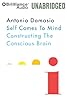
Antonio Damasio. Self Comes to Mind: Constructing the Conscious Brain. William Heineman, 2010.

Oliver Sacks. In the Mind's Eye. Picador, 2010.

Damasio's book is an important and impressive study of the rise of consciousness, and while much of it is of a more technical nature than I am competent to comment on, I want to draw attention to the main theme, consciousness as a product of the brain's interaction with the body.
🔻

6 December 2010

ONCE UPON A TIME IN THE SKIES

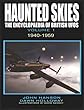
John Hanson and Dawn Holloway. Haunted Skies: The Encyclopaedia of British UFOs: Volume 1, 1940-1959. CFZ Press, 2010.

After the age of the UFOs comes to age of the UFO historians, following on from Clarke and Roberts's The Flying Saucerers comes the first volume of this projected set of histories. Haunted Skies is clearly written from a different and a much more 'believing' viewpoint than Flying Saucerers, one more concerned to produced evidence for 'real UFOs'.
🔽

2 December 2010

UNRULY SPIRITS

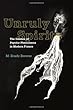
M. Brady Brower. Unruly Spirits: The Science of Psychic Phenomena in Modern France. University of Illinois Press, 2010.

The word 'modern' in the subtitle is perhaps a little confusing, for this book gives an account of the development of psychology and psychical research in France from c.1848 to c.1930. In it, Brower shows that psychical research did not develop as an isolated anomaly, but as an integral part of the general development of a secular science of psychology.
🔻