23 February 2011

LIFE AND SOUL

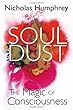
Nicholas Humphrey. Soul Dust: The Magic of Consciousness. Quercus, 2011.

One the great mysteries of neuroscience is the so called hard problem of consciousness, just how can patterns of electrical and chemical activity in a brain generate actual experience. It is one which has led a good number of workers in this field to hold up their hands in surrender and argue it is a question which can never be answered.
🔽

21 February 2011

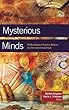
MYSTERIOUS MINDS

Stanley Krippner and Harris L. Friedman. Mysterious Minds: The Neurobiology of Psychics, Mediums and Other Extraordinary People. Praeger/ABC CLIO, 2010.

Neurobiology and the ability of modern technology to investigate the living human brain provide exciting new possibilities and it is no surprise that parapsychologists are now attempting to apply them to their own field, with mixed results.
🔻

19 February 2011

TO INFINITY AND BEYOND!

Brian Greene. The Hidden Reality: Parallel Universes and the Deep Laws of the Cosmos. Allen Lane, 2011
.

Brian Greene is Professor of Mathematics and Physics at Columbia University and one of the leading workers on string theory, which he outlined to a general audience is his two earlier books, The Fabric of the Cosmos and The Elegant Universe. In this book he looks at the various types of possible 'alternate universes' and multiverses which are implied by some interpretations at least of modern physics.
🔻

17 February 2011

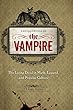
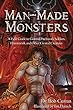
TWO CLASSIC MONSTERS

S. T. Joshi (editor). Encyclopedia of the Vampire; The Living Dead in Myth, Legend and Popular Culture. Greenwood, 2011.

Bob Curran. Man-Made Monsters: A Field Guide to Golems, Patchwork Soldiers, Homunculi and Other Created Creatures. New Page 2010.

Well, you wait ages for one gigantic encyclopaedia about vampires, and then two turn up! Following on from J. Gordon Melton's 900 page tome (LINK) we get a mere 450 pages in this volume, and the total weight is 1.1 kg. as against Melton's 1.5 kg. However in terms of content it is hard to decide which is the weightier.
🔽

13 February 2011

MAKING MYTHS: SPRING HEEL JACK, RENDLESHAM AND THE ABDUCTIONISTS

Mike Dash’s talk on Spring Heel Jack to the Barnes and Mortlake History Society on 5th February last, raised yet again a topic which is of importance to all students of anomalies: the role of the media in shaping our perception of such phenomena. Of course now we are used to the Internet, television and daily tabloid media and the way they spread and manipulate rumour, but we are perhaps less informed about the historical role of the media in reporting anomalies in the past. 
🔻🔻🔻

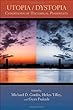
MAPPING UTOPIA

Michael D Gordin, Helen Tilley and Gyan Prakash (editors). Utopia/Dystopia: Conditions of Historical Possibility. Princeton University Press, 2010.

Utopia, the good place which is no place at all, and dystopia, the utopia gone wrong, still haunt our imagination, despite their official exorcism from modern culture. These essays cover a range of utopian imaginings, often in the form of petty utopias, ranging from urban design to preserving archives.
🔻

11 February 2011

DEEP CONSPIRACY

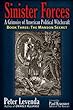
Peter Levenda. Sinister Forces: a Grimoire of American Political Witchcraft Book Three, The Manson Secret. TrineDay, 2011.

This is a paperback reissue of a book first published in 2006, and it certainly is a tour de force. After all what else can one say about a work which includes and somehow links together Charles Manson, Marilyn Monroe, Arthur Young (the mystically inclined inventor of the Bell Helicopter), Whitley Streiber and Wolfgang Pauli.
🔻

9 February 2011

ATLANTIS AND THE CYCLES OF TIME

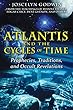
Joscelyn Godwin. Atlantis and the Cycles of Time. Inner Traditions, 2010.

With its Harry Potter-like title and cover showing celestial spheres and sunken classical columns I first thought this was yet another book on the secrets of lost civilizations and the revelation that we're probably all doomed - either to extinction or a boring-sounding Utopia - some time in the near future. 
🔻🔻🔻

BIGFOOT AND BIGGER


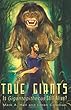
Mark A. Hall and Loren Coleman. True Giants: Is Gigantopithecus Still Alive? Anomalist Books, 2010.

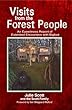
Julie Scott and the Scott Family. Visits From the Forest People: An Eyewitness Account of Extended Encounters with Bigfoot. Pine Winds Press, 2010.

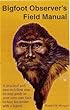
Robert W Morgan. Bigfoot Observer's Field Manual: A Practical and Easy to Follow Step by Step Guide to Your Own Face to Face Encounter with a Legend. Pine Winds, Press, 2008

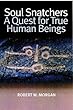
Robert W Morgan. Soul Snatchers: A Quest for True Human Beings. Pine Winds Press, 2008
    This collection of Bigfoot and related cryptids books covers a wide field. Hall and Coleman try to accumulate evidence for giant hominids even bigger than Bigfoot, and clearly want to present them as paws-and-pelts animals, related to gigantopithecus.
    🔻

    6 February 2011

    EXTRAORDINARY CLAIMS

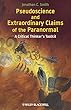
    Jonathan C Smith. Pseudoscience and Extraordinary Claims of the Paranormal: A Critical Thinker's Toolkit. Wiley-Blackwell, 2010. 

    Clearly aimed at a college or university undergraduate audience, psychologist Jonathan Smith examines various claims of the paranormal and suggests programmes of skeptical thinking. Smith suggests that critical thinkers should assess the value of their sources of information, whether the claims are logically consistent, and if there non paranormal alternative explanations. 
    🔻

    2 February 2011

    HOW OLD IS THE UNIVERSE?

    David A. Weintraub. How Old is the Universe? Princeton University Press, 2011


    There is a consensus among astronomers that the answer to the question posed by the title of this book is about 13.7 billion years. Professor Weintraub tells us how this figure was arrived at, beginning with Aristotle, who dealt with the problem by asserting that the universe had always existed and would always continue to exist. It was not until the 18th century that natural philosophers started to make the first scientific attempts to estimate the age of the Earth, instead of relying on interpretations of the Old Testament. However, real progress had to await the discovery of radioactivity towards the end of the 19th century.
    🔻