23.4.11

CONFRONTING THE OLD HAG

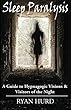
Ryan Hurd. Sleep Paralysis: A Guide to Hypnagogic Visions and Visitors of the Night. Hyena Press, 2011.

This short book is based on the author's own experiences of what used to be called 'aware sleep paralysis' and is now called 'isolated sleep paralysis'. It gives some of the basic background, tips on how to avoid it, and for the more adventurous, tips on how to induce and exploit it for psychological development.

ISP is one of the scariest things that people can experience, involving senses of paralysis, pressure on the chest, hallucinatory figures and noises, and it is not surprising that it has been associated with all sorts of supernatural and paranormal beliefs from ghosts, to witchcraft assaults, demonic possession, the work of fairies and other petty supernaturals, to their latest interpretation as alien abductors. (For an example of such an experience interpreted in UFO terms see Visions of the Night.)

Hurd argues that the apparitional figures encountered in these experiences are images of the experients' worst fears, and are moulded on their cultural expectation. They are images of the individual and cultural ideas of the "the worst thing there is". He makes the intriguing point that the 'bad doctors' of alien abductions reflect the somewhat ambivalent nature of the medical profession in modern society, and our fears of technocratic medicine. They also probably reflect the very scary nature or doctors and medical procedures for young children.

Hurd lists some of the precipitating factors which include shift work and disturbed sleep patterns, stress and anxiety, fatigue, personal and existential crises, overuse of stimulants and sleeping on your back. A history of childhood sexual abuse or of post traumatic stress disorder are also major contributors, and the incidence of ISP is particularly high among refugees and asylum seekers.

In examining UFO abduction stories it should be noted that Hurd, in many ways echoing the now largely forgotten work of Celia Green and Charles McCreery that ISP can lead into much more complex dream experiences, including visits to fabulous realms, and into lucid dreams. The similarities to abduction and contactee tales are obvious.

Hurd walks a fine line between neurological and depth psychological approaches, with an open mind towards possible paranormal influences, though unlike many writers in this field he does not seek to bludgeon other people into accepting these possibilities.

He suggests that whether one regards the figures that are encountered in these experiences as aspects of one's own personality or having some sort of autonomy, they can be communicated with and stop becoming sources of threat into sources of powerful psychological insight.

While this might not be to everyone's taste, this little book does suggest a much more balanced and healing approach to alien abduction and other anomalous personal experiences and I would recommend it to anyone having them, a far better choice than falling into the hands of abduction finders, exorcists, self proclaimed psychics etc.

22.4.11

ELECTION NIGHT DRAMA

Well, the votes are in and the counts completed in the great Disclosure Polls, here and on Kevin Randle's blog. The first thing to note is how many more people responded to Kevin's poll than to mine, which is probably a fair eflection of our blogs' respective standing in the UFO 'community'

In the Magonia poll, the 'nothing to disclose' party got a clear overall majority of 61%, finishing 32 votes ahead of 'sometime' and 'they know but won't tell us', who tie on 15 votes each. Now British readers will know that under our present 'first past the post' (FPTP) electoral system, the 'nothing to disclose' candidate is duly elected to serve for the constituency of Magonia Central, and even under the proposed 'alternative vote' (AV) system 'nothing to disclose' would have won on the first count.

However, over in Kevin Randles constituency, things are more complicated. He had five candidates and two-and-a-half times as many voters, and the result is as follows:

Nothing to disclose       58 votes (30%)
Not for years             52 votes (27%)
Never, but they know      34 votes (17%)
It is coming              27 votes (14%)
Disclosure is at hand     21 votes (10%)


A total of 192 votes. Now under the British (and American) FPTP system, the mayor stands up on the town-hall balcony and declares 'nothing to disclose' as the winner, but as no-one got over 50% (96 votes), under AV the second preferences of the 'at hand' voters are redistributed to the other candidates.

The Blogger polling program does not (at present) allow second or third preferences to be recorded, so we'll have to guess what they would do. I suppose most of the people who voted that there is likely to be disclosure soon would probably give their second votes to 'it is coming', but perhaps some would say that if we're not going to get disclosure soon, the authorities will just sit on it forever, so lets do a 1 - 3 split and add 14 votes to 'it is coming' and seven votes to 'never, but they know'. This gives us the following results for the second round:

Nothing to disclose      58 votes
Not for years            52 votes
It is coming             41 votes
Never, but they know     34 votes

Now the second preferences of the 'never, but they know' candidates are counted and resdistributed. Lets say that 'never but they know' voters decide that none of the three other options fit in with their ideas, being either too hopeful or too negative, so they have not given a second choice; but that the 'disclosure is at hand' voters, whose second votes were transfered to 'it is coming' give a reluctant third vote to 'not for years'. So the result after the third round of counting is then as follows:

Not for years            66 votes
Nothing to disclose      58 votes
Never but they know      34 votes

As the remaing 'never, but they know' voters did not give a further choice they are eliminated without any extra votes being given to the two leading candidates, so the winner is 'not for years'. But even he doesn't get more that 50% of the total number of voters, because the 'never, but they know' voters did not give a second option.

Well, all idle speculation, of course, and what it tells us about readers of our respective blogs is debateable, and it's probably even more debatable whether or not it has given our British readers any clues as to how they should vote in next week's referendum. But, as Robert Mackenzie used to say on the old BBC election night programmes, "it's just a bit of fun".

Any suggestions for future Magonia polls?

20.4.11

HOPKINS: A CLASH OF SYMBOLS

The latest excerpt from Carol Rainey's in-progress documentary about Budd Hopkins and his abduction research methods, has now been posted online. In her introduction to the clip Rainey says:

This segment shows Budd Hopkins revealing, for the first time, strikingly similar symbols that numerous abductees have reported seeing aboard alien spacecraft. But in the process of shooting the claims made by the world's best-known abduction researcher, the filmmaker begins to question Hopkins' confident assertions.

In this ongoing series, producer/director Carol Rainey looks at how the collection of "alien" symbols came into being and asks whether faulty research methods may have invalidated the use of these abductee drawings as evidence for the phenomenon

Particularly revealing in this excerpt is Hopkins' on-camera admission "I'm stacking the deck here", when Carol Rainey asks to see some of the documentation that he is hastily rushing through.


And don't you just love that cat?

17.4.11

QUANTUM OF MADNESS

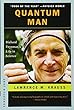
Lawrence M Krauss. Quantum Man: Richard Feynman's Life in Science. W. W. Norton, 2011.

It is a conceit among paranormalists and forteans that mainstream scientists are rather dull, conventional and staid folks. These were hardly the epithets which could be applied to Richard Feynman (1918-1988), the subject of this biography. He was what was known as a 'colourful character' which meant that aspects of his life were closer to those of a Hollywood star than the conventional image of the scientist.

This book, written by a physicist concentrates on Feynman's numerous contributions to the development of quantum and particle physics, and it perhaps says a lot about how most scientists make there most profound contributions to science when they are young, in that we are almost halfway through this book before reaching the end of the 1940s, and that the last 20 years of his life are given little treatment.

Perhaps for the lay reader the interest in Feynman's life lies in the thin line behind genius and madness. As a young man he seems to have been a brilliant but otherwise fairly conventional person, but in the mid 1940s his first wife, Arline who had been his high school sweetheart, and whom he had married despite her terminal TB, and against the advice of both families, died, followed shortly afterwards by the death of his father. This double tragedy seems to have provoked what was almost certainly a profound mental breakdown, one which probably today would have been diagnosed as a form of bipolar disorder. His private life went completely off the rails and his whole behaviour seemed to show a reckless disregard of any convention. He became pretty literally a sex addict, with an endless sequence of reckless affairs, took to playing bongos in a salsa band in Brazil etc.

Yet this crazy period which lasted from 1947 to his third marriage in 1959 was his most scientifically creative period, the one in which he was in the forefront of developments in his field. His return to a least relative normality on his third marriage seems to have signalled the end of this highly creative period. He then turned more to education, producing the lectures for which he became famous, but which Krauss suggests few of his students fully understood, becoming something of a public persona (his role on the Challenger panel for example), turning his attention to computing, and in physics, rather like Einstein become a more isolated figure.

Krauss argues that Feynman achieved much but could have achieved more if he followed through more, and been more open to the ideas of others, rather than feeling to work out everything himself from first principles.

It is a moot point as to whether had Arline lived and Feynman had had a "normal" life, he would have been an ever better physicist, or whether he would have lacked the reckless ability to think way beyond the box,, and the perhaps addictive compulsions which drove him.

His story is a also a salutary lesson in how madness and sanity are socially constructed. When Feynman received a very negative psychiatric report in 1947 he and a colleague Hans Bethe treated it as huge joke, and his behaviour seems to have been more or less tolerated, a suburban housewife of the same time and place exhibiting the same behaviour would almost certainly have been forcibly incarcerated into a psychiatric hospital, and today not even a college professor would have got away with it, without being pushed not very voluntarily into therapy or some upmarket clinic.

14.4.11

WILD TALENTS


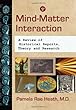
  • Pamela Rae Heath. Mind-Matter Interaction: Review of Historical Reports, Theory and Research. McFarland, 2011.
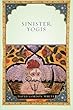
  • David Gordon White. Sinister Yogis. University of Chicago Press, 2011
Many cultures have traditions of religious or occult virtuosi who possess extraordinary wild talents. These are to at least some degree the subjects of these two books.

Pamela Ray Heath's book is a revised and expanded version of the author's book The PK Zone first published in 2002. In it she undertakes both literature searches on both accounts of spontaneous cases and research studies on various aspects of what she terms mind-matter interaction, along with her own interviews with various 'psychics'.

It is the first section of this book which contains accounts from the biographies of, and travellers tales about, religious virtuosi and wonder workers which includes these extraordinary wild talents which include levitation, bilocation, luminosity, spontaneous human combustion, matter duplication, indedia (living without food), matter transformation, apportation/teleportation, imperviousness to pain, the handling of fire and the like.

These are among the wild talents claimed by the yogis discussed by David G White. These are yogis very different from the kalisthenic meditators known in the west, closer to wonder workers such as Sai Baba, and certainly not always the sort of people whose claimed talents would be of the sort altogether suitable for a village church hall. Not least because other talents that they specialised in was the ability not only to duplicate their bodies as in bilocation, but to penetrate the whole cosmos, alter the size and shape of their bodies, as in western traditions of magicians/witches changing their bodies to those of animals.

They are clearly wild trickster figures who blur all sorts of boundaries not just of the self and others but between "real" and "unreal", religion and entertainment etc.

As I have argued several times before the modern psychics and wonder workers from the age of psychical research are also trickster figures. The earlier literature of psychical research still contains significant echoes of these old talents, along with new ones such as table turning, the production of ectoplasm, of direct voice or electronic voice recordings, psychic photographs etc. They too inhabit the debatable land between dream and reality, truth and fiction, and zones where religion science and show business meet.

In the realm of modern parapsychology these talents seem to have faded down to the claimed ability to influence random number generators and other powers only detectable through esoteric statistical analysis.

Clearly the world views in which these magico-religious traditions were very different from the world view of modern science, where most of these talents are viewed as very improbable to say the least, and some such as bilocation, teleportation and matter duplication, would appear to be as near to 'impossible' as one is going to get. It goes without saying that claims of their existence are unlikely to impress the more sceptically minded, not least because no one ever produces the sort of evidence which would be persuasive to most mainstream scientists.

This presents a problem for those like Dr Heath who are seeking to use such accounts as scientific evidence, for what she interprets in quasi-Cartesian terms as 'mind-matter' interactions. Interpretations by Indian philosophers tend to be much more complex and subtle, though in some ways (such as the belief that sight involves sending out rays from the eyes) even more removed from modern science.

Sceptics will also point out that while Dr Heath has clearly done a great amount of reading and brought to light some snippets of odd material, her granting of popular paperbacks and the like with the same status as academic studies and her willingness to take at face value the tales told by popular entertainment writers such as Vincent Gaddis and Martin Caidin suggests both a lack of critical faculty and a lack of knowledge of the wider Fortean field and its many debates.

Indeed from the point of view of modern science they do not seem to be any explanations, including popular paranormal ones, which could make any sense of these talents, certainly not half understood appeals to quantum physics.

This does not necessarily force critics back to the notorious cultural source hypothesis, as we might still argue that some of these traditions have been based on powerful subjective experiences in altered states of consciousness, and point to anomalies and lacuna of perception and memory.

Of course there is a realm where most, if not all, of these wild talents, including the claimed Yogic ability to occupy many bodies at once, and that is the virtual realm of cyberspace. Those living their lives in cyberspace may therefore be the true Yogis of modern times. -- Peter Rogerson

8.4.11

NEW IN THE MAGONIA ARCHIVES

I have added two new features to the main Magonia Archive. The first presents the almost complete text of the very earliest predecessor to Magonia, the newsletters and bulletins published by the Merseyside UFO Research Group in the mid-1960s. These give a vivid impression of the ufological issues and controversies of the period, and an insight into the almost defunct world of small local UFO societies and magazines. It also features some of the earliest reports on the Warminster scene.

Some of the more important contributions to MUFORG Bulletin have aready been archived as seperate entries, and it is likely that some more will be extracted as stand-alone archive entries.

The other new addition is John Harney's summary of Carl Grove's research into the strange 'Aldeburgh Floating Platform' case from the time of the First World War. This largely consists of correspondence between Grove and relatives of the original witness. A very strange episode, which will probably never be explained to anyone's satisfaction. Amongst the contributors was Charles Gibbs-Smith, distinguished aeronautical historian and regular contributor to Flying Saucer Review, who seemed as baffled as anyone by the report.

Both of these collections were first published in John Harney's original 'Magonia Extra' blog, which is no longer functioning. His new Magonia Extra blog can be accessed HERE. You can get to the MUFORG Bulletin and Aldeburgh pages by clicking on the buttons here:


7.4.11

CRACKPOTS, EGGHEADS AND BIGFOOT

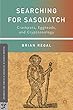
Brian Regal. Searching for Sasquatch: Crackpots, Eggheads and Cryptozoology. Palgrave Macmillan, 2011.

Brian Regal, a professor of the history of science, here looks not so much as the anomalous maybe animals themselves, as with the people who studied them. At the centre of the book is an account of the life and career the controversial anthropologist Grover S Krantz (1931-2002). Around his life Regal weaves the tale of the rise of cryptozoology, the study of Bigfoot and the often larger than life characters in the field.

Prominent among these characters were the pioneer cryptozoologists Bernard Heuvelmans and Ivan T Sanderson, and amateur researchers such as Tom Slick and Rene Dahinden. Regal examines the often conflictual relationships both between these personalities themselves and with mainstream science. For example Dahinden's relations with just about everybody, including Krantz were increasingly poisonous, he was, thinks Regal someone who spent much of his life resenting the lack of education his harsh upbringing and life had forced upon him.

Similar resentments, with rather less reason, seem to have fuelled both Sanderson and Krantz. Sanderson had abandoned his academic career to go into the field, and clearly felt some kind of agrievement against his more desk bound colleagues, who did not award him the status he felt he deserved. Krantz too seems to have felt out of step with the academic mainstream even before he took up with Bigfoot.

The Grover Krantz which emerges from the this book is not altogether a sympathetic character. It is clear that many of his personal and scientific problems were of his own making. In the latter he seems to have just lacked the ability to write acceptable scientific papers (insufficient referencing, arguments from personal conviction rather than agreed evidence etc.) or to keep up with research.

Regal makes the really important point that Krantz (like I may add a great number of "independent thinkers") was not a radical new thinker stalking out pioneer ground, he was on the contrary an old fashioned figure whose views on human evolution had just not kept up with either recent discoveries or approaches, especially the role of genetics.

In some ways I think that it was worse than Regal suggests, Krantz and the rest of the Bigfoot community's obsessions with Gigantopithecus seems to have come from their youth, when writers like Franz Weidenreich, Ralph Von Koenigswald and others had argued that Gigantopithecus was a human ancestor and that humanity had evolved from giant primates in Asia. In 1959 the discovery of an actual Gigantopithecus jaw showed that it was indeed an ape, and future discoveries in human origins moved to Africa. Though at an intellectual level Krantz seemed to grasp this, at an emotional level Giganto dominated his imagination as it might have done at the start of his career.

Krantz's old fashionedness also applied rather more disturbingly, and I suspect more damagingly than his championing of Bigfoot, to his adherence to deep race theories, the argument that racial differences went deep into the human past, way before Homo Sapiens. In this he followed the controversial anthropologist Carelton Coon, who argued not only did different populations of homo erectus mutate over time into Homo Sapiens, but that they did so at different rates, with Europeans being first to pass the Sapiens threshold and African's last. (Today most paleo-anthropologists argue that modern humans evolved in Africa and wholly or largely supplanted other human populations). Though Krantz himself, at least openly, did not share Coon's racist interpretation, his deep race theories led to misapprehensions at least.

Heuevelmans and Sanderson were even more isolated in their backwardness. Trying to link the notorious Minnesota iceman to Neanderthals went back even further than the lumbering ape men imagined by Marcellin Boule and portrayed by the Czech artist Zednak Burian.

Russian anthropologists such as Boris Porshnev also went into racist stereotyping, for example arguing that a person in Mongolia was descended from a presumably Neanderthal almasti because he was of "dark and ruddy complexion ... with simian facial features".

These examples show how both and amateurs and professionals based their interpretations of 'manimals' on the basis of old exploded folk images of ape men, rather than real fossils.

Though Regal takes no sides in the general debate as to whether or not Bigfoot exists he is clearly skeptical of the Minnesota iceman and the famous Patterson film, though pointing out the ambiguities of some of the exposes of the latter. He argues that what stood in the way of the Bigfoot hunters getting mainstream scientific support was not the vast conspiracy of mainstream scientists, quite a few of whom showed at least a provisional interest in the possibility of their existence, but their inability to come up with unambiguous evidence, allied with their tendency to engage in over the top populist abuse. Krantz in particular was also handicapped by his arrogance and sense of his own genius which meant not only was he deaf to much professional criticism and advice, but also an easy mark for hoaxes, as he considered none of them could fool a genius like himself.

This is an important contribution to the literature on Bigfoot and it is to be hoped that a more affordable paperback edition will be soon be published.

3.4.11

PRIESTS OF HIGH STRANGENESS - PART 2

Carol Rainey has now put online the second excerpt from the rough cut of her documentary 'Priests of High Strangeness'. She writes:

The ongoing series of excerpts focuses on the controversial research techniques used by some well-known alien abduction investigators.

Their subjects certainly are having inexplicable and baffling experiences and the researchers do offer the therapeutic, healing benefits that come from any empathetic listener.

But what have we actually learned about the phenomenon? The how, the why, the who, the where, and the when of it all? Coming out of the humanities and the arts, the few researchers making the most lurid claims are simply extra- polating far beyond what their actual data or evidence can support. The tools used - primarily hypnotic memory retrieval - are also so unreliable that testimony based on hypnosis is not allowed in U.S. courts of law.

Linda Cortile, main subject of the book Witnessed, has stated on several occasions that 80-85% of her memories of alien abduction were retrieved during hypnosis sessions. Her interactions with investigator Budd Hopkins are at the heart of this 18 minute segment.

This segment looks at the obligation an abduction researcher has to ensure that his/her subject is trustworthy - starting with the factual details of his/her past and present life history as they are presented to the researcher over a period of many years.

It also suggests reasons why both researcher and subject, when their story is challenged, only redouble their efforts to speak with absolute authority about the soundness of the questioned case.

View the excerpt here:


The previous excerpt can be seen here: http://pelicanist.blogspot.com/2011/03/nature-of-some-abduction-researcher.html

MAGONIA RECOMMENDS